@L91852UGL@Ulfgarss Te lo voy a simplificar, pero es pq más del 90% de la genética de esos cubanos blancos viene de Europa, y cualquier europeo es mucho más cercano a cualquier otro europeo que a cualquier asiatico.
@Ulfgarss@L91852UGL Yo sé cómo funciona g25. No soy tan estúpido para poner solo esas tres muestras en mi modelo. Escogí muestras bastante razonables para un modelo de la edad del hierro(no importa la edad del negro ni del indio te va a dar caso lo mismo). Si tienes una modelo mejor enséñamela.
@Ulfgarss@L91852UGL Nunca dije que g25 era perfecto, pero el modelo lo veo bastante bien. El modelo de g25 también concuerda con otra evidencia que he visto. No importa si colonial African no es de la edad del hierro, si usas otras muestras o hasta muestras modernas te da casi lo mismo.
@Ulfgarss@L91852UGL La muestra tiene 92% de ibérico, y tampoco tiene tanto del norte de África. Canarias le sale más cerca por el 3% de negro. https://t.co/ekRnbggrPu
@HistoriaEspanna Puede ser que el censo tenga ese “truco” en la distribución de los distritos rurales, tendré que investigarlo. Lo que dijiste de la auto identificación no creo que sea un problema pq la raza fue determinada por los trabajadores del censo, no por la auto identificación.
@HistoriaEspanna Los negros tenían una tasa de mortalidad muy alta en las plantaciones de caña, y estos españoles(y algunos chinos) eran los únicos que podían reemplazarlo cuando España abolió la trata.
@HistoriaEspanna No me sorprende mucho, la mayoría de los españoles que fueron a cuba eran canarios pobres que fueron a trabajar en el campo. Muchos fueron a cultivar tabaco, especialmente en los 1700.
@Fullantho The row for free blacks in that first chart is wrong btw, it’s supposed to be 1 mulatto and 25 free blacks in total.
I also accidentally cut off one of the images I sent for Puerto Rico, here’s the rest of it:
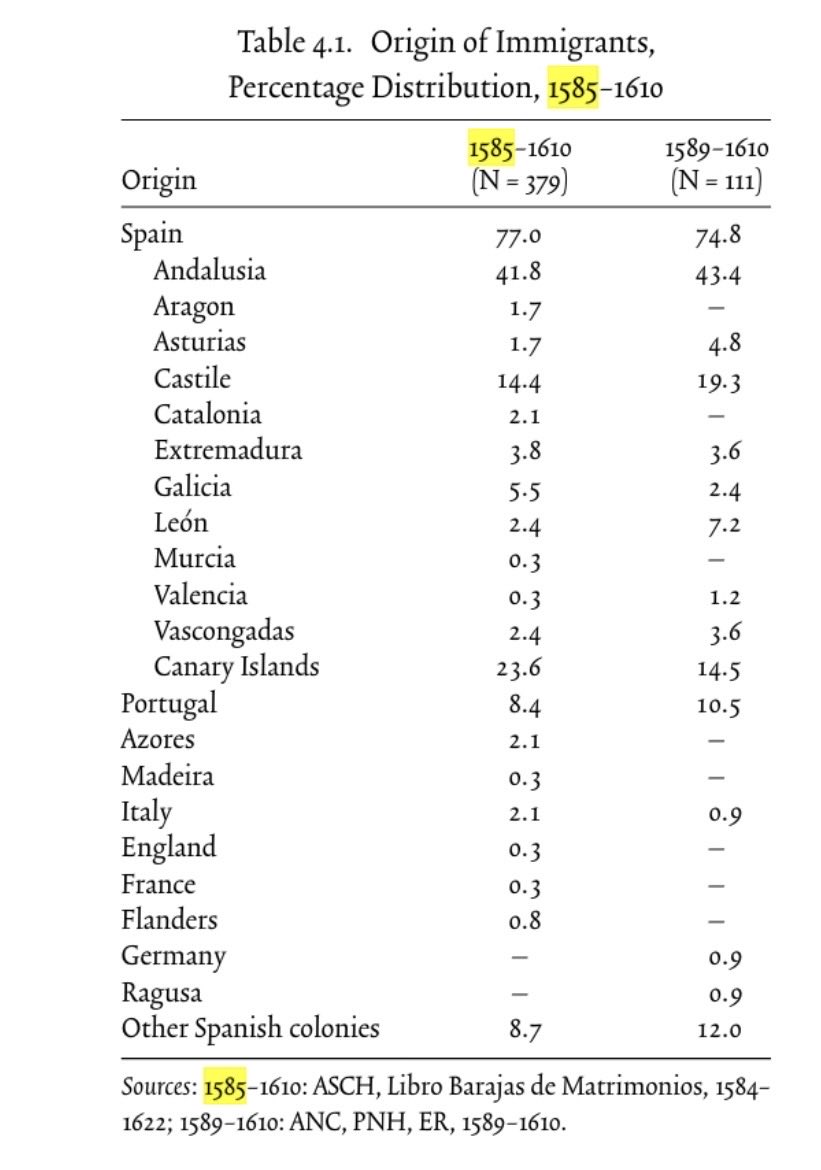
@Fullantho First 2 images are both for Havana Cuba, other 2 are both in Venezuela. For the second Cuban image, the right column is based in notarial records while the left column is based on marriage records:
@HolandaGetulio@Fullantho Part of the Portuguese in Uruguay is also Galician, although Uruguay does have a bit more direct Portuguese/brazilian ancestry than Argentina does due to the much greater historical connection of Uruguay with Portugal, Brazil and the Canary Islands.
@HolandaGetulio@Fullantho I only have 5 fully Argentinian matches so I wouldn’t give much weight to this. The average for these matches is 32% Portuguese/galician, 38% Castilian, 26% Basque, and 4% Catalan. Most of that Portuguese/Galician should be Galician though.
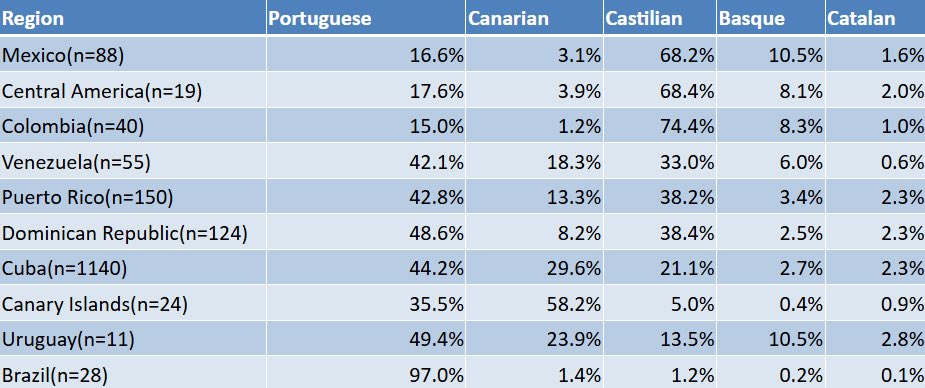
@Fullantho Just noticed that the numbers are messed up, I shouldn’t have trusted ChatGPT to be able to do basic arithmetic when making a chart lmao. Here’s the corrected numbers, the patterns are all still basically the same as before:
@Fullantho Also kind of unrelated, but I calculated average Iberian breakdowns for my Latin American matches on 23andMe if you are interested. Most of the sample sizes are small unfortunately, but they seem accurate: