@jurgen_nauditt Delaying allocated military aid while a nation fights for its very survival is not strategy, it is playing politics with human lives. Ukraine does not have until 2029 to defend its skies and cities from daily terror!!
Enlargement is absolutely important, but let's not forget what it should stand for.
Albania cannot be celebrated as a frontrunner while serious questions remain over the treatment of Erion Veliaj, the elected Mayor of Tirana, who remains in pre-trial detention without a conviction. The case still goes on...
Progress towards EU membership must go hand in hand with democracy, accountability and the rule of law. We cannot celebrate progress on paper while overlooking what is happening in practice.
European values must apply to everyone, including those already in power.
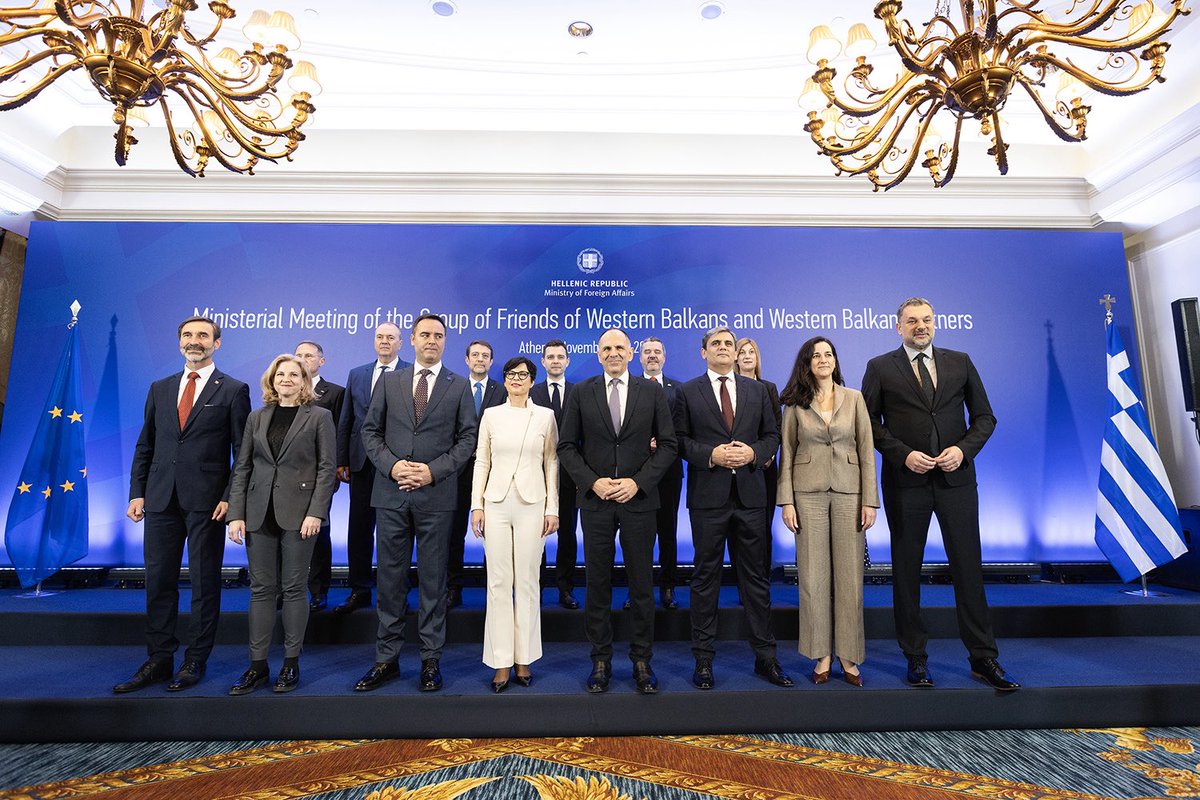
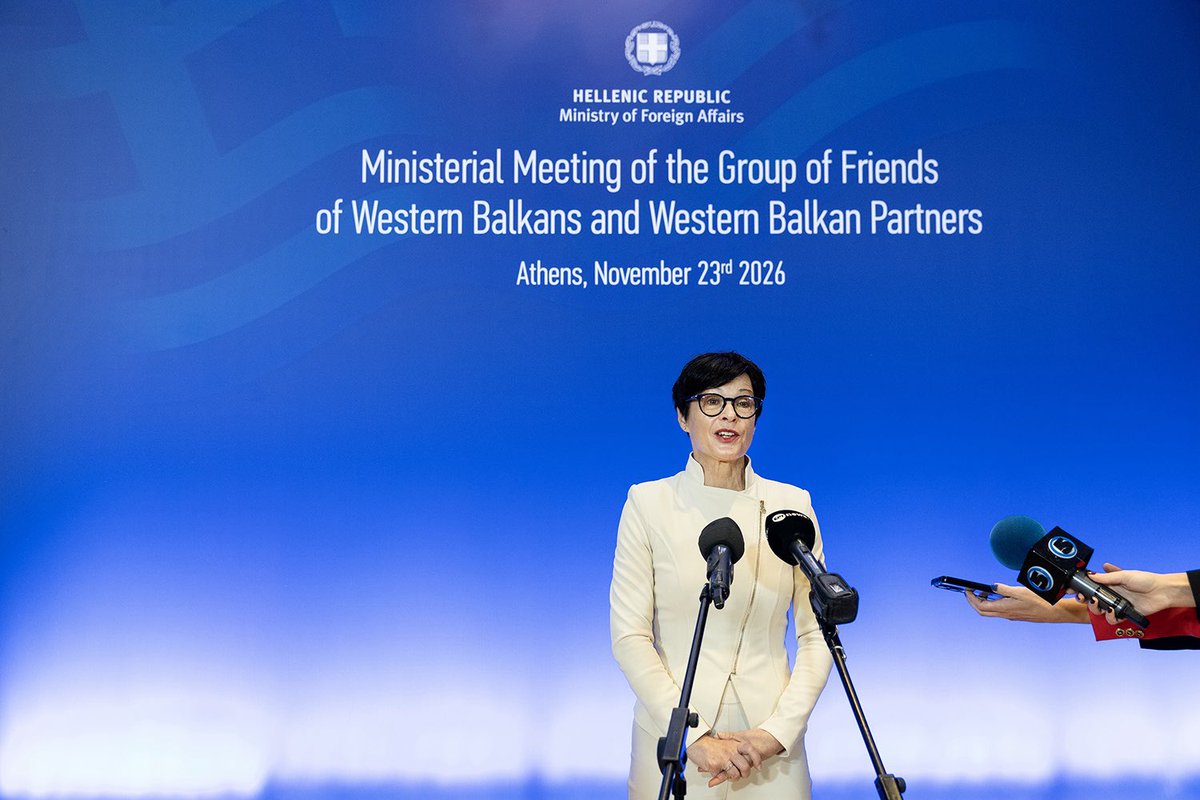
With Montenegro and Albania among the frontrunners for EU membership, we are implementing the vision set out 23 years ago in Thessaloniki.
At today’s Friends of the Western Balkans meeting in Athens, hosted by George Gerapetritis, we stressed that we should now focus on moving forward with all Western Balkan countries.
The success of Montenegro, which could finish negotiations by the end of this year, is an important signal and a source of motivation for the whole region.
Europe is heading towards an electoral supercycle that could reshape the EU for a generation.
From France and Spain to Italy and Poland, the coming elections could redefine Europe's political direction, its support for Ukraine, enlargement and the future of European integration.
The warning signs are there. But so are the reasons to fight for a stronger Europe.
Citizens need answers, not empty promises. Democracy, unity and the rule of law must deliver real results.
Europe's future will not be decided in Brussels alone. It will be decided by its people.
https://t.co/PJKMlPtQBr
3,000 Ilia State University students signed the petition for Georgian Dream Minister of Education Givi Mikanadze to come discuss the educational "reforms" with the students on November 18, 17:00 PM. It's now almost 18:00 PM, the auditorium is full of anticipating students and the "Minister" is nowhere to be found; the Ministry also responded to students that they have no information about Mikanadze's whereabouts.
Ilia State University faces the most brutal purge after educational deforms (as people call it) because the University was something the regime couldn't control. The absolute majority of programs were discontinued, and the student intake will have shrunk by 97% in a couple of years' time. They essentially abolished the university without officially doing so.
"Bring the programs back" banner.
📷 Beka Kobakhidze
Erion Veliaj's transfer to a higher-security prison raises serious questions that Albania (and EU) cannot afford to ignore.
The Albanian Helsinki Committee has now highlighted disturbing findings: Veliaj was placed in isolation for 10 days, the official reasons for his transfer remain undisclosed, and the transfer order has been classified as restricted for up to two years.
In other words, he cannot properly examine the reasons behind the decision or effectively challenge it.
The AHC identifies the lack of communication about the transfer order and its concrete grounds as one of the most disturbing findings.
This is not a minor administrative issue. It concerns due process, the right to an effective remedy and basic safeguards for someone held in pre-trial detention.
You cannot defend a decision by keeping its reasons out of reach of the person affected by it.
Veliaj has not been convicted. His rights must be respected.
Brussels should be paying attention. These are precisely the rule-of-law standards Albania must meet on its path towards EU membership. MEPs are you watching?
https://t.co/6JADxPzFJX
Elisa Spiropali, former Speaker of Parliament and Foreign Minister, and Plarent Ndreca have both been removed from the senior leadership bodies of Edi Rama's Socialist Party. What's going on in Albania?
They remain party members, but have lost their positions in its leadership structures. A proposal to expel them was reportedly considered but never put to a vote.
And then there is Erion Veliaj.
The elected Mayor of Tirana, still in pre-trial detention without a final conviction, has reportedly written to the Socialist Party Assembly calling for a no-confidence motion against Rama.
Three names. One increasingly difficult question: is there room for independent voices inside the party, or is loyalty to its leader becoming the price of political survival?
This matters far beyond the Socialist Party. Edi Rama leads a country negotiating EU membership. Yet democracy, internal accountability and respect for dissent remain fundamental concerns.
Brussels must look beyond accession promises.
Albania cannot become a functioning European democracy if democratic debate is treated as disloyalty and political power is concentrated around one leader.
EU accession requires more than alignment with European legislation. It requires European democratic standards in practice.
🇺🇦 PEACE MUST NOT COME AT THE PRICE OF UKRAINE'S FUTURE.
US envoys are now in Moscow to meet Vladimir Putin following another round of negotiations with Ukraine in Abu Dhabi.
A prisoner exchange is a welcome humanitarian step. But the biggest questions remain unanswered: territory, security guarantees and Russia's willingness to stop its aggression.
And there's something Europe must not overlook: Ukraine's future cannot be negotiated over the heads of Ukrainians, and Europe's security cannot be decided without Europe at the table.
A settlement that leaves Ukraine vulnerable to another Russian invasion is not lasting peace. It is simply postponing the next war.
The international community must stand firm on sovereignty, territorial integrity and credible security guarantees.
Ukraine deserves peace. But above all, it deserves a peace that lasts.
https://t.co/BpMwJsHW6W
The ECB needs more than a predictable monetary policy. It needs the flexibility to respond to reality.
Klaas Knot makes an important point: monetary policy should be driven by economic circumstances, not personal ideology or preconceived preferences.
Sometimes inflation demands a firm response. Sometimes economic weakness calls for a more accommodative approach.
The challenge is knowing when to do which, while protecting the ECB's independence and credibility.
Central banking is not about being permanently hawkish or dovish. It's about making the right decisions when circumstances change.
ECB contender Klaas Knot:
🎯“There are situations in which you have to pursue dovish policy, but there are also situations in which you are expected to conduct HAWKISH policy,” he said, adding that this was “driven by circumstances, not by personalities or predispositions”.
#ECB #EU
While the world prepares for another round of peace talks, Russia is bombing Kyiv's energy infrastructure, threatening electricity, water and heating supplies as winter approaches.
Let that sink in.
Missiles and drones are hitting critical infrastructure serving millions of civilians. At least two people have been killed and around a dozen injured in the latest attacks. Even Kyiv's bridges have been targeted.
And this is happening just days before US-brokered negotiations in Abu Dhabi.
What kind of peace can be built while one side continues to bombard the cities, homes and essential services of the other?
Ukraine should not have to negotiate under a rain of Russian missiles.
Peace cannot mean rewarding aggression, abandoning Ukrainian sovereignty or asking civilians to simply endure another winter without heat and electricity.
Europe and the international community must not look away. Ukraine needs protection, sustained support and a peace that actually delivers security.
A ceasefire must mean an end to the attacks, not a pause for Russia to prepare the next one.
https://t.co/o063E7FkRR
Albania's protests are about more than political discontent. They expose serious questions about corruption, accountability and the rule of law under Edi Rama's government.
Look at Erion Veliaj, the elected Mayor of Tirana, held in pre-trial detention since February 2025 without a final conviction. His case raises fundamental questions about due process, judicial independence and respect for democratic mandates.
How can Albania claim progress towards EU membership while these concerns remain unresolved?
Chapters 23 and 24 are not optional benchmarks. Democracy, justice and the rule of law cannot exist on paper alone.
Brussels must pay attention. Albania's European future depends on actions, not promises. 🇦🇱🇪🇺
Six years after Brexit, Britain is negotiating with the EU to get rid of some of the very barriers Brexit created.
There is something quite telling about that.
The UK and EU have reached a draft agreement to remove much of the paperwork, border checks and extra costs involved in trading food and agricultural products.
For British businesses, this could make a real difference.
Think about it: £200 export health certificates, additional inspections, phytosanitary certificates, sampling fees and other charges could all disappear. British sausages, burgers, shellfish and seed potatoes could once again be exported to EU markets.
The government estimates that the agreement could bring £5.1 billion in annual economic benefits.
And it's not just about businesses. Northern Ireland could finally see a significant reduction in the checks and paperwork affecting goods arriving from the rest of the UK. Even travelling with pets to the EU could become easier again.
But perhaps the bigger story is what this says about Britain's relationship with Europe.
For years, businesses have been dealing with unnecessary bureaucracy and delays when trading with their closest and biggest neighbouring market. Now, even the British Chamber of Commerce is calling for a serious discussion about going further, including exploring a customs union and closer ties with the single market.
Let's be honest: Europe isn't going anywhere, and neither is Britain's geographical or economic relationship with it.
We don't have to agree on everything to recognise that closer cooperation can make life easier for businesses, workers and ordinary people.
Brexit happened. But that doesn't mean Britain has to keep making the same mistakes forever.
It's time to build a relationship with Europe that actually works.
https://t.co/bwsvSXp6b2
THEY LOOKED UNBEATABLE. UNTIL THE PEOPLE DECIDED OTHERWISE. 🇭🇺🇷🇸
First Viktor Orbán in Hungary. Now Aleksandar Vučić in Serbia.
Two powerful leaders. Two governments that seemed firmly entrenched. Two political machines that appeared almost impossible to defeat.
And then came the voters.
In Hungary, Péter Magyar's Tisza movement ended Orbán's 16-year rule. In Serbia, a student-led movement, born out of anger over corruption and the deadly Novi Sad railway station disaster, has just delivered a landslide victory, ending Vučić's 14-year dominance.
But there's something particularly remarkable about these victories.
Young people didn't just take to the streets. They organised, mobilised voters, used technology and AI to monitor elections, identified vulnerable polling stations and helped protect the democratic process.
Hungarian activists even travelled to Serbia to share their experience.
Think about that for a moment: a democratic breakthrough in one country helped inspire another.
The lesson is bigger than either Hungary or Serbia.
No government is invincible. No political leader owns a country. And no generation should be told that change is impossible.
When people organise, when young people refuse to give up, and when citizens reclaim their democratic institutions, even the most established political structures can crumble.
Europe should pay attention.
Because democracy isn't defended by speeches alone. It's defended by people willing to stand up for it.
The people always deserve the last word.
https://t.co/Z4gYyNV8iw
Serbia’s students spent almost two years in the streets over corruption and a collapsed station roof, and this weekend it ended Vucic’s long run at the ballot box, according to Reuters.
Maya, a 19-year-old in Brussels, explains the logic in one sentence: they tried it quietly and nobody heard, and the cameras only came once things burned. A generation was told to be patient, and it noticed that patience gets filed away.
Governments like to call young protesters naive. Two years of Belgrade says the students understood how the system works better than the people running it.
The same piece asks young people in Albania where they see their future. Brussels loves to talk about candidate countries’ progress, but it rarely asks the people living there whether they believe it.
Maybe that is the real test of enlargement.
https://t.co/Yv7UvcXKBt
The detail in this Reuters explainer that stays with me: Moscow banned diesel exports in July because of fuel shortages at home. Ukraine’s drone campaign is working, and the pushback came within weeks.
Diesel prices are at record highs since the Iran war, and US midterms are on November 3. Read in that light, the demand that Kyiv stop hitting Russian refineries starts to look like energy price policy wearing a peace-talks badge.
Meanwhile Russia gets a US license to sell its diesel, Ukraine heads into winter after a Starlink disruption, and Putin frees one American prisoner and calls it goodwill.
A ceasefire that only stops the strikes hurting the aggressor will not buy much peace.
https://t.co/PWaH93jlkT
Freedom of religion does not stop at pre trial detention. Access to spiritual care is not a privilege reserved for the faithful, the powerful or the politically well connected. It is a fundamental right that must be protected for every detainee, regardless of their beliefs, status or alleged offences.
Article 9 of the ECHR and the UN Mandela Rules recognise the importance of religious practice and access to spiritual support in detention. Yet these protections mean little if they are not upheld in practice.
The reported refusal of faith leaders to visit Erion Veliaj, Tirana’s mayor, after twenty months in pre-trial detention raises precisely this concern. Whatever the allegations against him, a court has yet to determine his guilt.
Human rights are not tested by how we treat those who are easy to defend, but by whether we uphold them when the person concerned is controversial.
Check the article I wrote about this recently.
https://t.co/kyPf1nJQdB
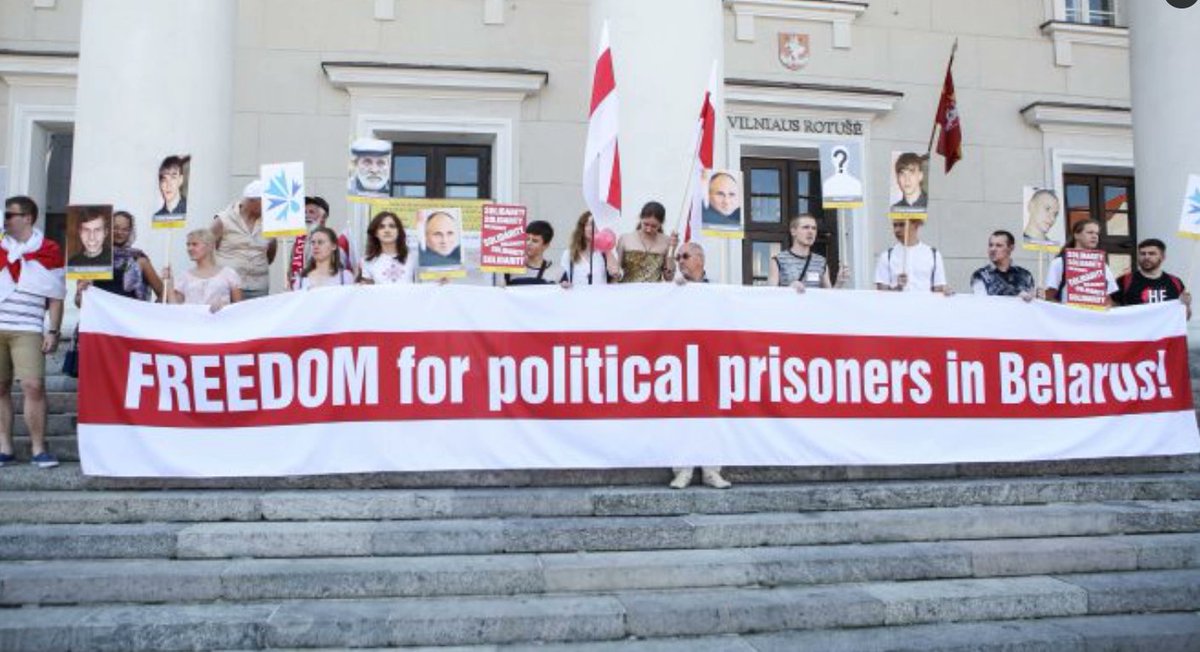
8,600 convictions is a number that sounds like a system, and it is one. Courts, prosecutors and prisons all doing their assigned part, so that dissent has a sentence attached to it.
What stays with me is the "documented" part. Viasna can only count what it can verify, which means the real figure sits somewhere in the dark, among families who are afraid to speak and cases nobody has been able to confirm.
A quarter of them are women. Behind each one is a household that has been quietly rearranged around an empty chair.
Releasing prisoners is the first step. The next is making sure nobody in Europe treats Belarus as a closed file.
Since 2020, over 8,600 people in Belarus have been convicted on political grounds. Almost a quarter are women.
These are only the cases @viasna96 has documented. Many more remain hidden. Every political prisoner must be released, and all repression must end.
#France is on edge. Violent demonstrations in recent days, with another manifestations planned for Saturday, are unfolding against a backdrop of a deepening financial and debt crisis. This will only fuel further tensions. One crisis feeds another. Unprecedented.
She was 21. Next week the headline will be about someone else, and that is exactly how a war gets normalized.
Every name we stop saying is a name Russia gets to delete twice. Say her name. Share the post. Do not scroll past.
In Kyiv, Russia has claimed another life. The enemy continues its hunt for civilians. Last night, Russian forces killed a 21-year-old woman, damaged transport infrastructure, and injured at least five people. Russia must be held accountable for every crime committed against the Ukrainian people. We remember every single life lost to Russian aggression.
It's good to see American politicians now turning their attention to Albania. But there is more going on than only protests on the streets.
Albania has one of the highest rates of pre-trial detention in Europe. At the end of 2025, 58% of prisoners were still held without a final verdict, four to five times the EU average.
In January, 76 mayors raised the alarm about this practice, and the Venice Commission has previously warned that pre-trial detention of elected officials can pose a serious threat to the rule of law.
The case of Erion Veliaj, mayor of Tirana, shows how this plays out in practice. He has been detained since February 2025, now twenty months, with no trial concluded. The Constitutional Court overturned a Supreme Court ruling and ordered a new review of proportionality. On September 15, the detention was upheld regardless.
Guilt is for a court to decide, and fighting corruption is rightly a core task for any candidate country. The question is whether pre-trial detention is still necessary and proportionate here, and whether rulings of the highest court have any practical effect.
So here is a call to American and European politicians: put these questions to Tirana before the next accession conference or debate is scheduled.
An accession process that only discusses rule of law doubts after the fact loses its credibility.