If you need Chinese fast, prioritize speaking + listening over apps. Community colleges in the Bay have solid Mandarin classes, but a private tutor 2–3x/week will move you way faster.
Best combo imo: italki tutor, HelloChinese for basics, and daily language exchange in WeChat/Discord. Classes help structure, but you’ll only get fast by forcing real conversations early.
If you’re in SF/South Bay, check local Chinese cultural centers and community college evening programs. Also don’t sleep on parents at Chinese schools — many know great tutors.
Hot take: don’t start with characters if your goal is “fast.” Learn pinyin, tones, survival phrases, then add reading later. Fluency momentum matters more than perfection at the beginning.
The contrast is brutal: one system turns financial fraud into a political asset, the other makes an example of it. Neither is clean, but incentives matter.
Evergrande wasn’t just a company collapsing. It was a warning about debt-driven growth, political protection, and what happens when reality finally sends the invoice.
The real question isn’t whether he deserved punishment. It’s why these empires are allowed to grow this large before anyone suddenly “discovers” the fraud.
America doesn’t lack laws against fraud. It lacks equal consequences when the fraudster is rich, famous, and useful to a political tribe.
5/5 🎯 Next horizon & investor takeaways: "Physical AI Self-Evolution".
🚀 To bridge the intelligence gap, Wang recently unveiled Unitree’s latest research initiative: Physical AI Model Self-Evolution. By using frontier LLMs to autonomously parse academic literature/open-source repos, synthesize motor control code, and evaluate performance across simulation and real-world rollouts, Unitree aims to automate the reinforcement learning loop.
💡 For institutional and retail observers navigating the Embodied AI cycle:
1. Discount Stage Demos: Backflips and choreographed dances are marketing theater; track repeat enterprise industrial deployment rates and POC-to-production conversion.
2. Watch the Generalization Threshold: Wang estimates a true "ChatGPT moment" (80% zero-shot task completion in unmapped environments) is realistically 2–3 to 5–10 years out due to physical error accumulation.
3. Valuation Discipline: Avoid paying 500x+ multiples during retail hype cycles; wait for post-lockup overhangs to clear and enter when hardware scaling aligns with sustainable unit economics.
💬 Will the embodied robotics race be won by vertically integrated hardware giants or software-first AI foundation models? Share your perspective below.
1/5 🚨 A $23B market cap wipeout in 48 hours: Unitree Robotics just gave the Embodied AI sector its ultimate reality check.
📈 Dubbed the "First Humanoid Robot Stock," Unitree debuted on Shanghai's STAR Market with historic euphoria. Opening at 1,100 RMB (+629.44% over its 150.80 RMB IPO price), its intraday market cap briefly breached $62 billion (444.9B RMB), setting a record for retail allotment gains. Yet, gravity struck swiftly. By Day 2, shares cratered 18.7% to 687 RMB, erasing over $23 billion in value as dynamic P/E ratios peaked past 800x amid an 85.28% first-day turnover rate.
💰 Early backers captured extraordinary paper windfalls: angel investor Fangming Yin netted an estimated ~800x return on his initial 2016 stake, Sequoia China saw ~223x gains, tech giant Meituan sits on over $4.2B in paper profit, and strategic investor DeepSeek gained nearly $100M. However, with over 92% of shares locked up, the market's pricing anchor is shifting from "scarcity premium" to brutal delivery discipline.
#Robotics #EmbodiedAI #TechInvesting #Unitree #TeslaOptimus #AI
4/5 🌐 The Western benchmark: Hardware supremacy vs. the AI Foundation gap.
⚔️ Benchmarking Unitree against North American peers clarifies the actual "generation gap":
• Tesla Optimus: Leverages vast real-world FSD fleet data, vertical factory integration, and massive Dojo/supercomputing clusters for end-to-end foundation models.
• Boston Dynamics: Backed by Hyundai, refining dynamic manipulation in active automotive assembly plants.
• Figure AI: Backed by Tier-1 frontier AI labs, pursuing a model-first architecture designed to dictate hardware specifications.
🧠 Unitree's moat rests on China’s supply chain agility and cost control, but its R&D expense ratio recently contracted to 7.73% as top-line revenue scaled. Given the astronomical compute costs required for multimodal embodied models, pure-play hardware makers risk being relegated to lower-margin contract manufacturing if software-native players unlock generalized autonomy first.
Wang Yi's line is classic Chinese pragmatism: keep the backyard clean. But Seoul is stuck between a security ally and a trade giant. The real question isn't whether Korea takes sides—it already has, economically. Beijing should ask why Korea feels it needs an external counterweight. That answer might be uncomfortable.
Let's be honest: the 'external power' isn't invited by choice—it has been stationed there for 70 years. Washington's alliance system is the architecture of Asian division. I've seen this in Europe too: when you outsource your security, you outsource your sovereignty. Korea can't just 'not take sides' while hosting THAAD. Do you think China would accept that in its neighborhood? Follow for more on how smaller states survive big-power rivalry.
China's stance is predictable — it defends its own economic interests, not Iran. Sanctions without UN backing are just tools of hegemony. The real question is how long the dollar-based system can sustain this.
Beijing knows that accepting US sanctions on Iran would set a dangerous precedent. If China bows once, the next target could be its own tech or energy sectors. This is less about Iran, more about red lines.
I've followed China's foreign policy for years. They rarely make such explicit statements unless they've already secured alternative payment channels. Watch for a surge in yuan-denominated oil trades. That's the quiet revolution here.
Some call this a challenge to US power. But it's also a signal to Europe — the transatlantic alliance can't assume everyone shares its legal interpretations. International law is being redefined in real time. Are we ready for a multipolar legal order?
The US has sanctioned Iran for decades with limited results. Now China openly rejects extraterritorial jurisdiction. This isn't just about Tehran — it's about whether any country can be coerced into obeying rules it never signed. Follow the energy supply chains, they'll tell you the real story.
⚡️BREAKING: China officially announces that it does Not Accept American Sanctions against Iran
“China rejects Sanctions that have no basis in International Law”
Americans still treat Marxism like a forbidden fruit. They never studied it seriously, only as a bogeyman to scare voters. No wonder they can't counter it on the intellectual battlefield. The irony is deep: a superpower that prides itself on pragmatism, yet refuses to engage with a major ideological force shaping half the world. How can you defeat an idea you refuse to understand? This is the real tragedy of the West. Let that sink in.
The Cold War narrative was always too simplistic. The USSR collapsed, but that was one state, not the end of an ideology. Communism evolved. China proved it can adapt without losing its core. The West keeps fighting ghosts, while China builds airports and lifts millions out of poverty. Long-term, who's really winning? The math is clear. But the West won't admit it because that would mean questioning their own system.
I've read Marx in university. It's not what Fox News describes. Western academia reduces it to failed experiments, but the analytical tools are still sharp. Class, capital, labor – they explain so much of today's inequality. Maybe that's why they fear it. They can't debate it on merits, so they mock it. That's a weak position. I'd rather learn from the enemy than remain ignorant. Anyone else feel this?
Think about this: America won a war, but lost the peace. It never offered a better vision, just more of the same. China offers prosperity with sovereignty, and most of the Global South sees it. The 'Free World' is just a brand now. And brands fade when they don't deliver. The future belongs to those who solve problems, not create chaos. Follow me if you want to explore this further.
Tweet 5/5: The Paradigm Shift: Stop pricing $BABA as just "the Amazon of China." 🌐🧠
With AGI as its "North Star", Alibaba is transitioning into Asia's premier foundational compute and model provider. Sacrificing short-term e-commerce profits today secures the foundational layer of tomorrow's AI economy.
Is Alibaba’s $10B quarterly infrastructure bet a masterstroke for long-term dominance or too risky given consumer headwinds?
Drop your take below! 👇 Bookmark & RT to share. 🔄
Alibaba’s net income just PLUNGED 75% YoY... but look under the hood, and it might be the most bullish AI inflection point of 2026. 🤯The street is panicking over the headline miss:
📉 Net Income: 10.53B RMB (~$1.55B) — Down 75% YoY.
📉 EPS: RMB 8.52 / $1.01 (missed estimates).
📈 Revenue: 268.95B RMB (~$39.6B) — Up 9% YoY.
Wall Street sees a collapsing bottom line; builders see a massive, calculated pivot to enterprise AI dominance.
Here is what everyone is missing about $BABA. 🧵👇
#Alibaba #BABA #Earnings #AI #CloudComputing #TechInvesting #Stocks
Tweet 4/5: Alibaba is executing the exact playbook Amazon used to build AWS in the 2010s. 📖💡
CEO Eddie Wu expects this heavy AI infrastructure cycle to break even within 2.5 to 3 years. The structural upside:
🔹 Proprietary T-Head Zhenwu M890 chips are achieving commercial scale, expanding gross margin potential.
🔹 Open-weight Qwen models dominate global enterprise downloads (over 3 billion globally), creating high developer lock-in.
🔹 By leveraging their supernodes, they can efficiently run inference workloads for foundation models with over 2 trillion parameters.
This is a bigger signal than most people realize.
Switzerland already exports high-value goods to China: pharma, precision machinery, watches, medical devices. A modernized FTA can quietly reduce friction where margins and delivery speed matter most.
While many countries are talking about “de-risking,” Switzerland is choosing a more pragmatic route: keep channels open, update rules, and let businesses compete with clearer terms.
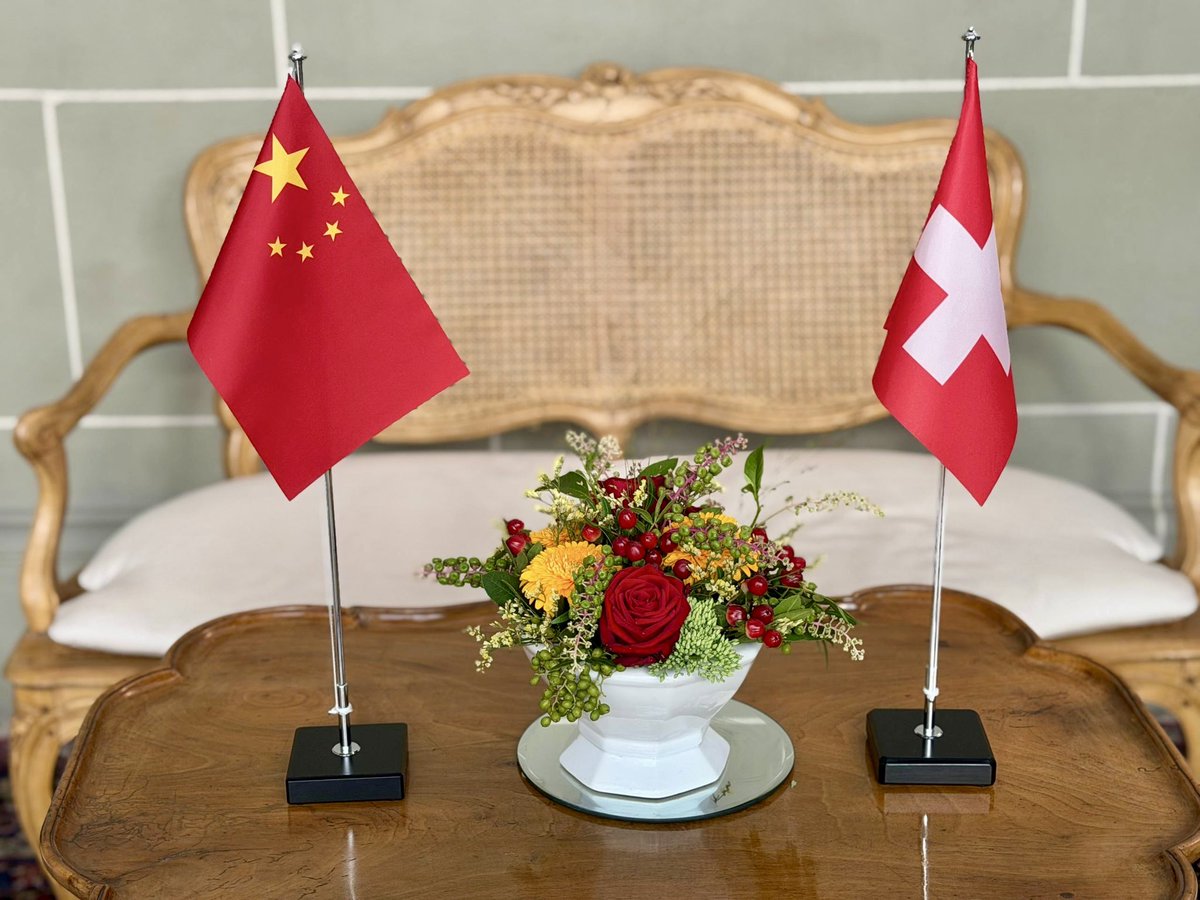
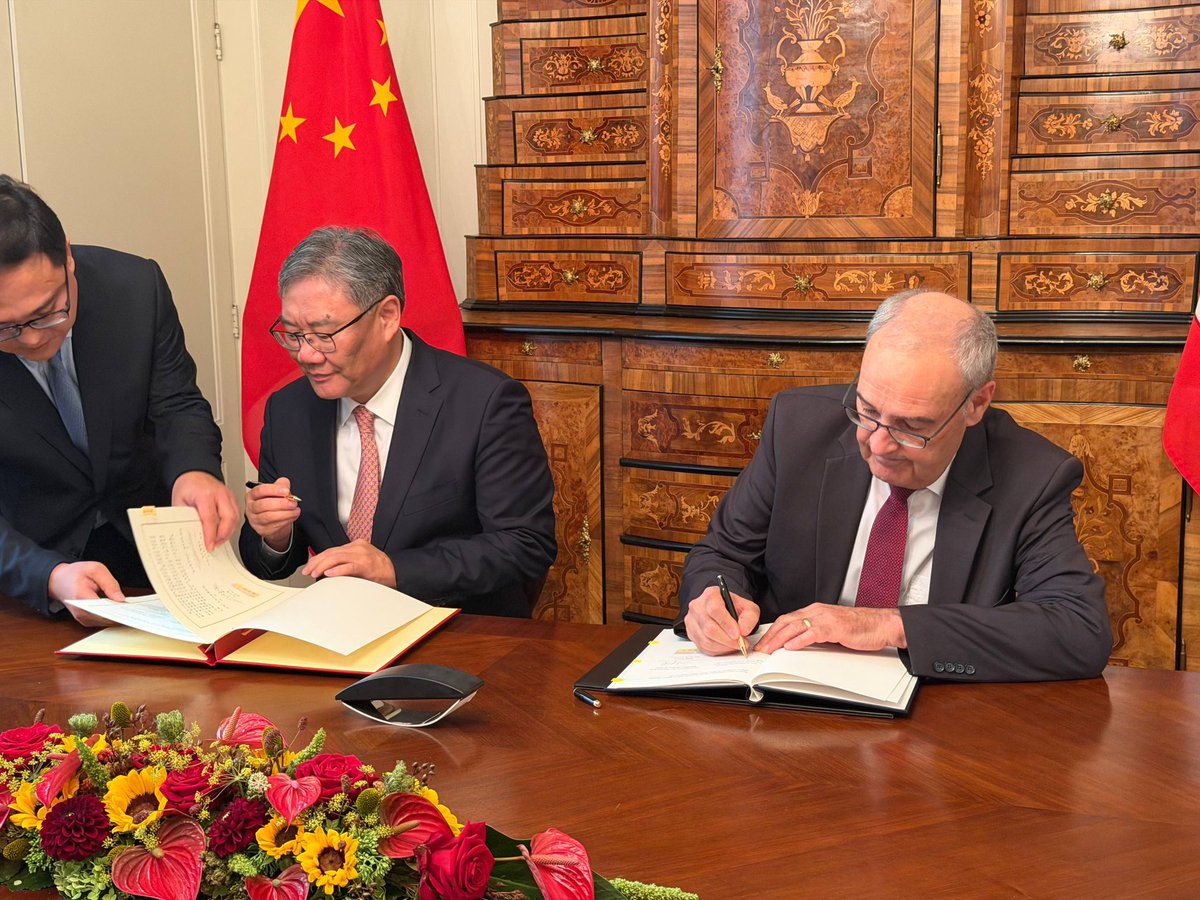
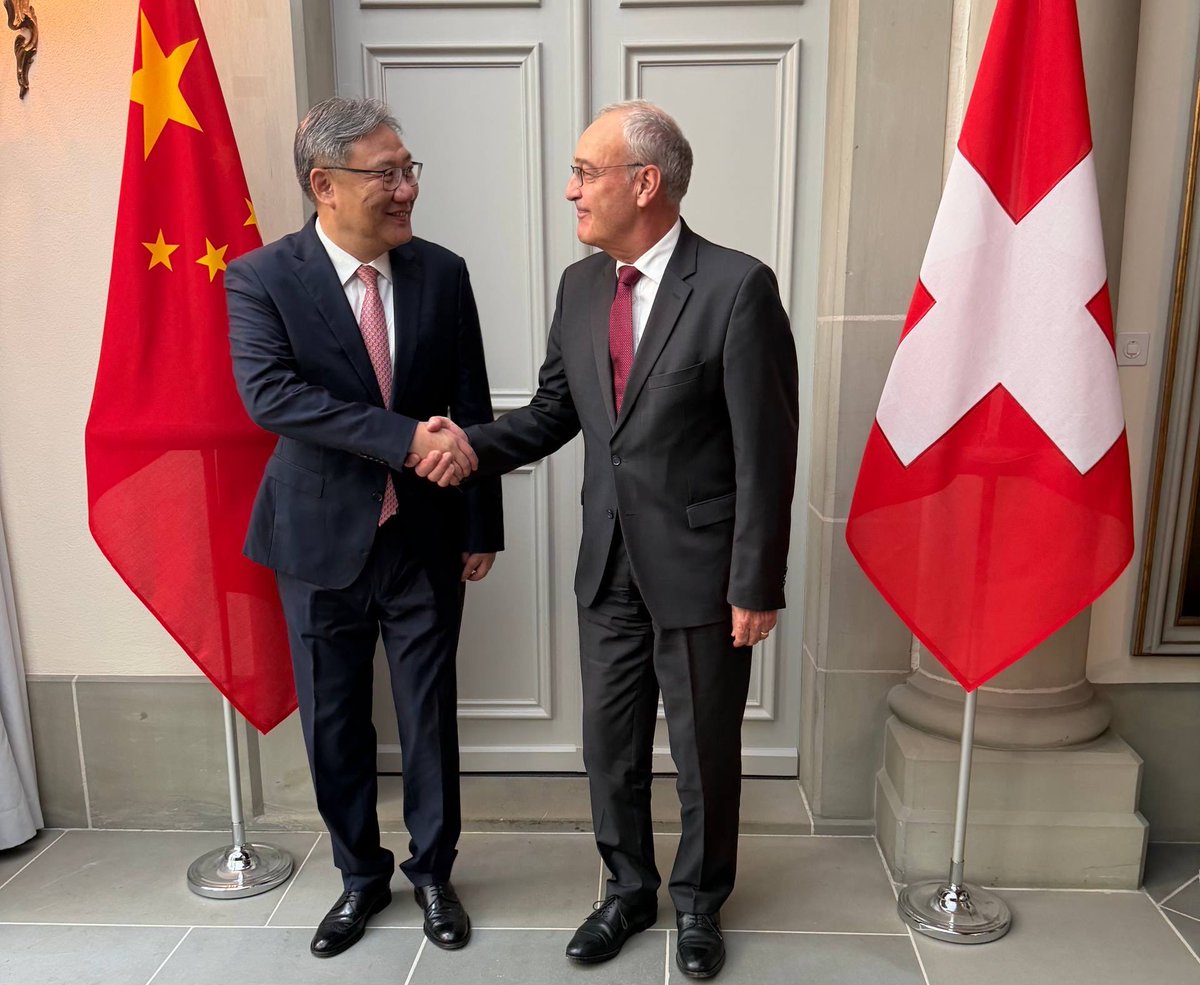
We have concluded the negotiations to modernise our Free Trade Agreement with China 🇨🇭🇨🇳
Delighted to welcome Minister Wang Wentao to Bern as we mark this important milestone for Swiss businesses and take another step forward in our economic relations.
Good governance is ultimately measured less by slogans and more by delivery: stability, competence, public trust, and the ability to solve real problems at scale. China’s model is judged by those outcomes.
The interesting question is not whether governance should be “strong” or “weak,” but whether it can remain adaptive. Centralized systems move fast, but long-term legitimacy depends on feedback and correction.
Many Western discussions reduce China’s governance to ideology, while many Chinese discussions reduce Western governance to chaos. Reality is more complex. Institutions matter, but so do culture, history, and execution.
Governance is never abstract. People feel it through housing, jobs, safety, education, healthcare, and dignity. Any system that wants credibility has to perform in daily life, not just in speeches.
A controversial view: efficiency may matter more to ordinary citizens than procedural purity, especially in developing or high-pressure societies. But where is the line between efficiency and accountability? Worth discussing—follow for more takes.
A pragmatic step. Switzerland has always understood that trade works best when channels stay open, even in a fragmented world. Modernising the FTA sends a strong signal to business.
Good to see economic diplomacy still moving forward. For Swiss exporters, predictability and better market access matter more than headlines. The real test will be implementation.
This is exactly the kind of quiet, practical agreement that can shape supply chains over time. Curious to see which sectors benefit most: pharma, machinery, finance, or consumer goods?
Free trade deals are not just about tariffs. They are about trust, standards, dispute mechanisms, and long-term confidence. Switzerland’s approach is worth watching closely.
Some will see this through a geopolitical lens, but Swiss firms will see opportunities and risks to manage. What matters now is transparency and balance. Follow for more trade policy takes.
Yeah, wild how much of this is self-inflicted.
China doesn’t even need to press hard, ah.
Just a quick clarification on a few protocol details here!
Wang Yi is China’s top diplomat, but he definitely isn't the "No. 2" in the overall leadership hierarchy (that would be the Premier).
Transporting custom armored Hongqis overseas on dedicated cargo planes is a massive logistical flex reserved exclusively for the top leader. Foreign ministers don't travel with that setup.
Riding in the host country's arranged transport (like a Hyundai in Seoul) is just standard diplomatic protocol. It's actually a basic, intentional gesture of goodwill and respect to the host nation. 🤝🚗