Although written by an author later disgraced, its value lies in the state's comprehensive military-strategic explanation of how it achieved victory in the war, overcoming not only the Italian and German occupiers but also internal collaborators. https://t.co/to96wPkG2X
New: "On the Experience of the National Liberation War and the Development of Our National Army," reflecting the post-war Albanian state’s interpretation of partisan military tactics during the Second World War, in relation to a regular army and Albanian specificities.
COMING SOON: The first English translation of Enver Hoxha's book "Years of My Childhood" - his version of his earliest years of life in Gjirokastra, including the Greek occupation during the Balkan Wars, until his thirst for education led him to leave his birthplace for Korça.
New: "Ideological Aggression and the Struggle Against It" by Sevo Tarifa, which presents the view of the then-Albanian party and state on the "psychological warfare" of imperialism, especially as a means of corrupting the youth and undermining the independence of states.
Tarifa puts forward the slogan: "The defence of the Homeland is the duty above all duties." As today’s world copes with numerous external pressures, it may be instructive to consider how a small independent country once approached not-so-distant problems. https://t.co/8KhM15wiCR
Our tribute to the long-time editor of Revolutionary Democracy, Vijay Singh, who sadly died on 17 April 2026. His extensive efforts will continue to inspire our own work! https://t.co/rCz6I6htUt
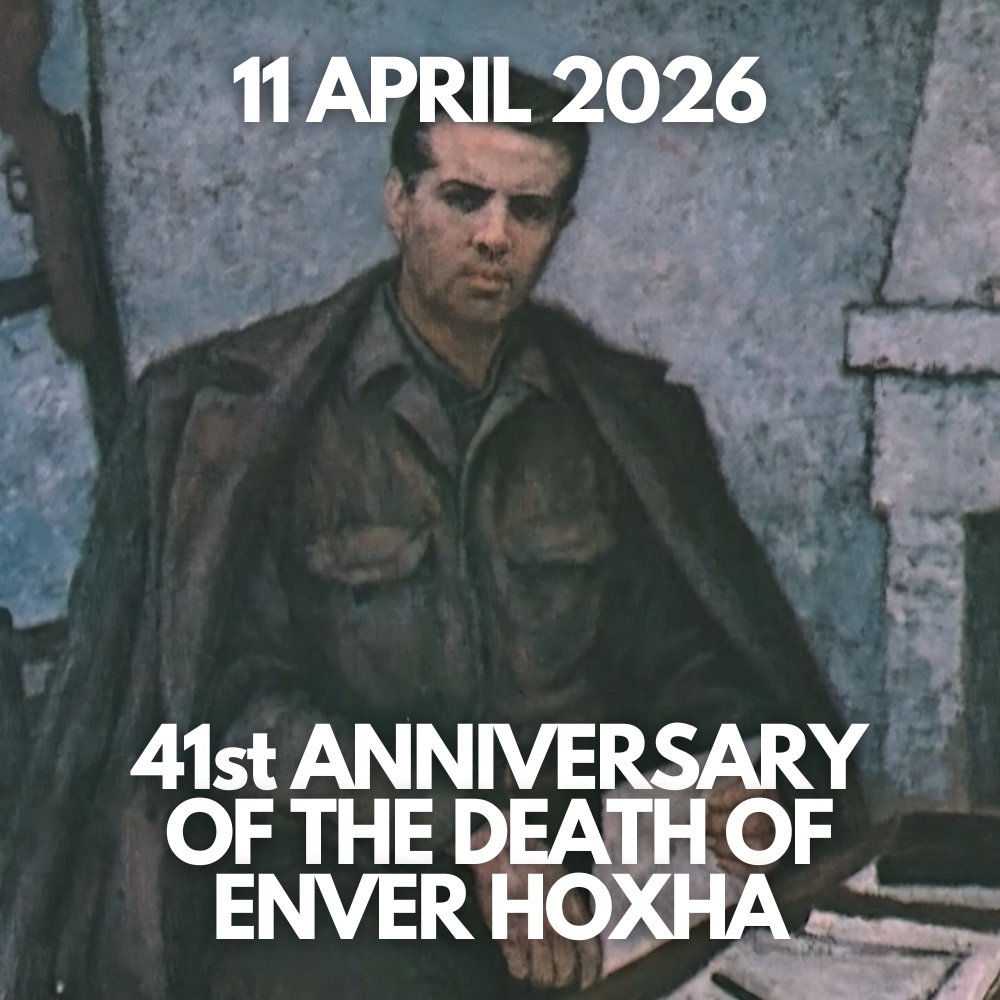
41 years ago, Enver Hoxha left behind an Albania of "granite rock," as he so often called it. Though many things have been said since then, it cannot be disputed that in his time, his Homeland achieved its greatest ever strength and worldwide respect. This was always Enver's aim.
March 5, 2026 marks the 73rd anniversary of the death of Joseph Vissarionovich Stalin. He was the architect of the Soviet Union's industrialisation and collectivisation, the Great Patriotic War against Hitlerite Germany and the monolithic socialist camp.
New: 2nd edition of "Zionist Relations with Nazi Germany" by Faris Yahya, which explores the historical relations between the Zionist movement and Hitlerite nazism. The reader will examine evidence regarding how, on more than one occasion, these two cooperated for definite aims.
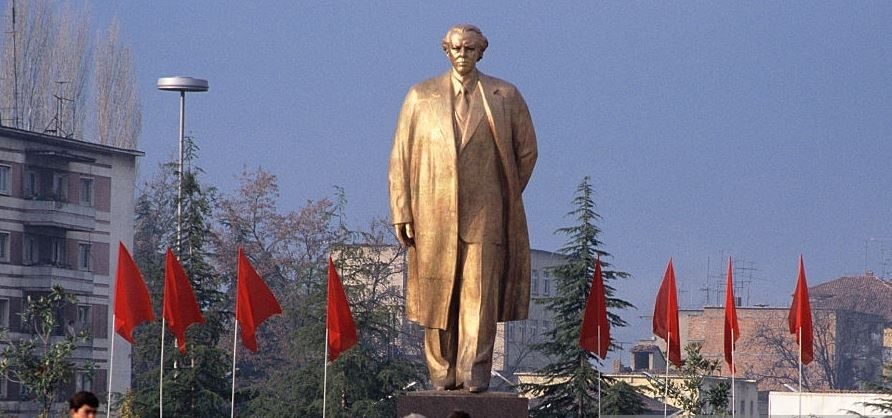
35 years ago today, on February 20, 1991, criminal elements illegally tore down Enver Hoxha's statue in Tirana. His personality represented all-sided development which transformed Albania from feudal conditions and war devastation into an independent, modern socialist country.
He asks and answers critical questions: Who was responsible for the purges? One "mad man" or were there other ambitions? What was Yezhov's role? What was the Tukhachevsky controversy? Why was Khrushchev, in his "secret speech," quick to blame Stalin? https://t.co/4HTJIlMnuK
New: "'Stalin's Purges' of 1937-38" by Russian historian Yuri Emelyanov, who relies on scholarship in his country to re-examine the causes and consequences of the famous purges, centring the international situation and the Soviet permission of excesses to rapidly industrialise.
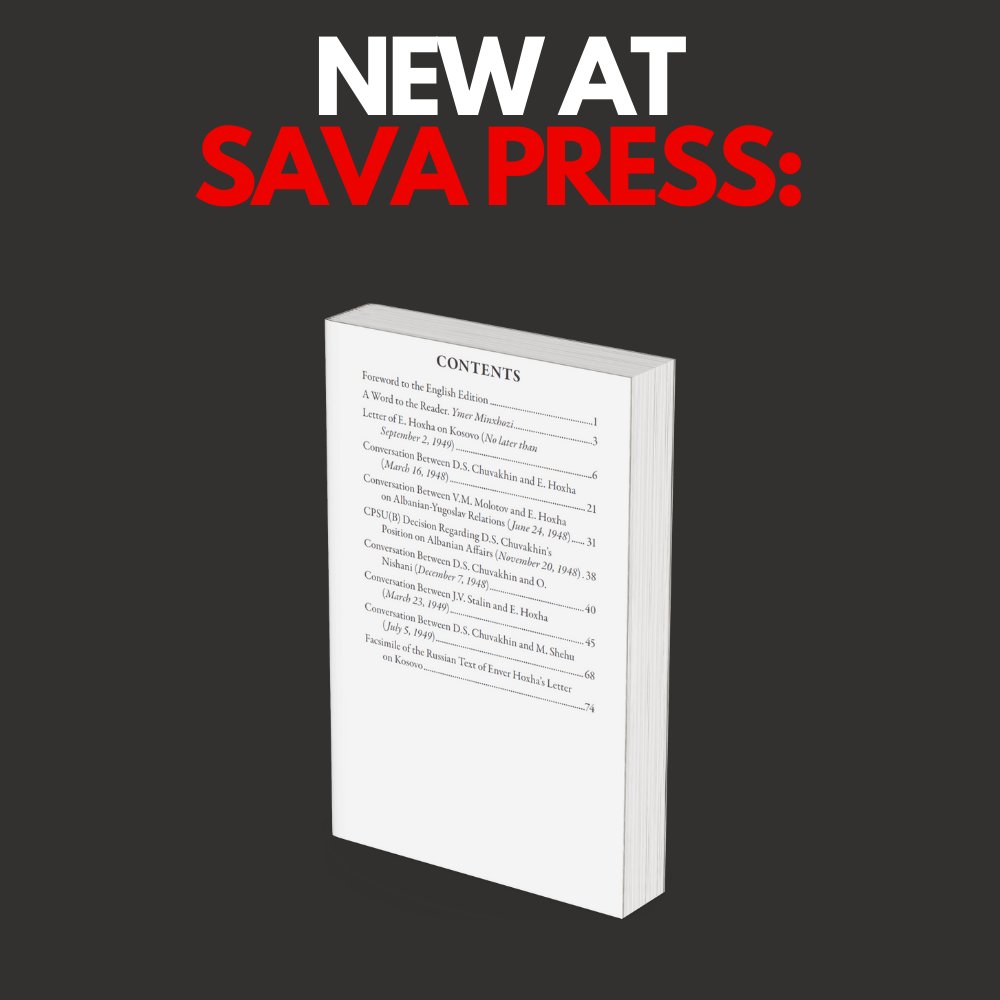
At the centre is a little-known 1949 letter by Enver Hoxha to the Communist Party of the Soviet Union, arguing that anticipated anti-Tito uprisings in Yugoslavia should, in Kosovo, raise the demand for national unification with Albania. https://t.co/pgylHPHEy1
New: Unknown Letter by Enver Hoxha on Kosovo, including previously obscure Cold War-era documents on the Kosovo question within Soviet-Yugoslav-Albanian relations, translated into English for the first time from Russian archival sources.
One of the most interesting overviews of the Albanian National Liberation War, extracted from Stalin-era Soviet historiography and written by one of the most respected Russian historians of Albania, Nina Smirnova https://t.co/f0jVnz65Xs
Burchett portrays reconstruction across Czechoslovakia, Poland, Hungary and Bulgaria — patiently, without narrow triumphalism. Measured by gradual results, the people's democracies emerged as concrete solutions to historical problems. https://t.co/qDyBEMh57i
New: "People's Democracies" by W.G. Burchett follows Eastern Europe in the brief interval after WWII, when power lay exposed and outcomes were not yet final. Fascism had officially fallen — but what replaced it in queues, elections, police stations, factories and villages?