Dots are connecting
Julius Malema was against the proposal of having General Khan appear before adhoc committee
When General Sinthumule appeared at the adhoc, Malema said something like she deserves to be National Commissioner
And he said Andrea Johnson is the new Winnie Mandela
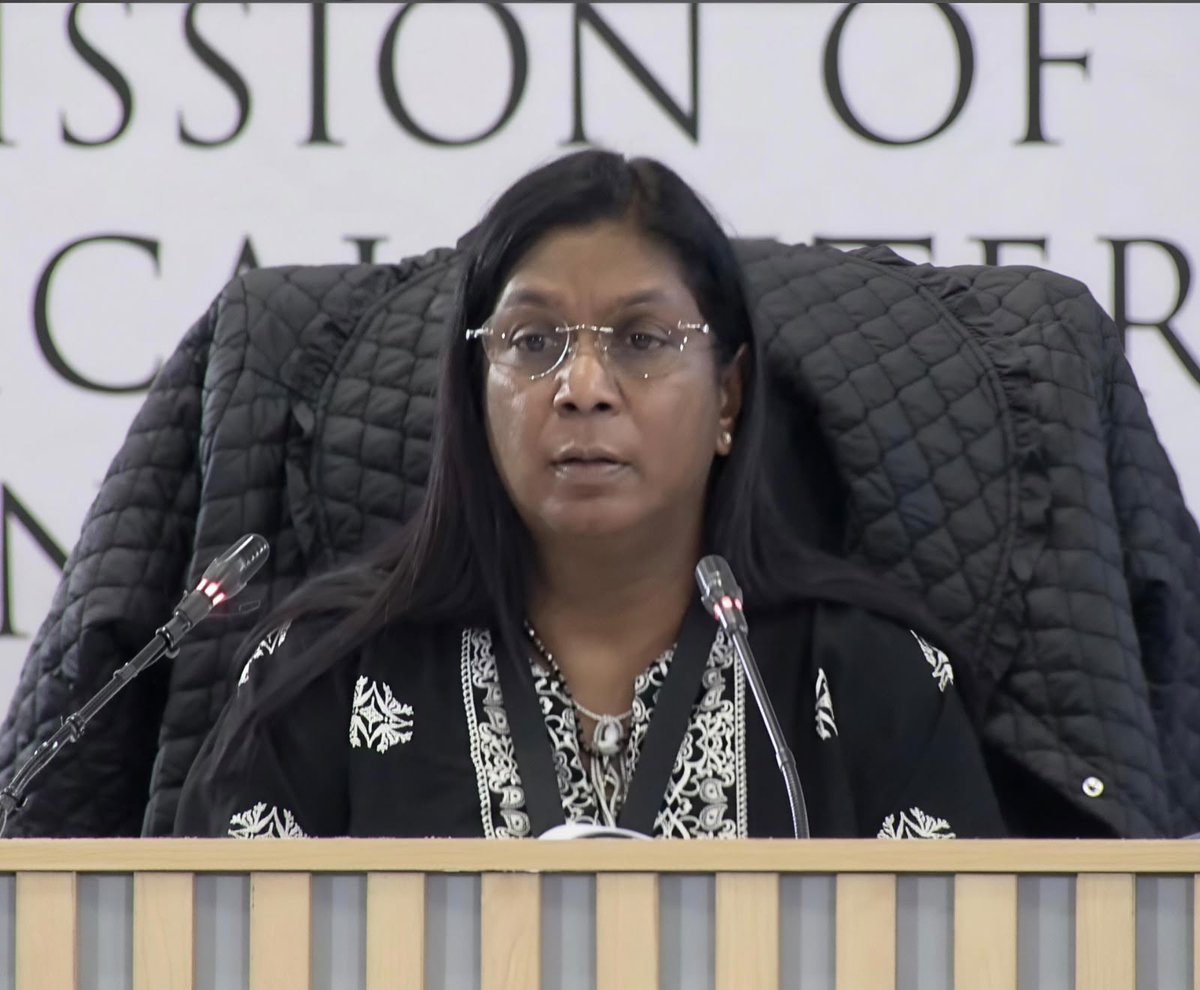
Madlanga Commission exposed the friendship of Andrea Johnson, Khan and Sinthumule
1+1=2
President Thabo Mbeki says the 2008 xenophobic violence was sparked by foreign agitators who wanted Zimbabweans to go back home to vote the ZANU PF out.
He also says South Africans don’t instinctively hate foreigners but “somebody else goes and organises them”.
This is very problematic because it blurs the line between a violent outbreak and generalised anti-immigrant sentiment. This muddying of waters causes a lot of anger among the people.
When Mbeki says, “It was not xenophobia in the sense of ‘We hate these Africans’, it was organised”, he is focusing on the trigger of the violent outbreak while completely dismissing the fact that many communities have pre-existing and ongoing problems with foreigners.
By claiming the violence was purely a political conspiracy orchestrated from above, he is presenting South Africa’s public as inherently free of prejudice and treats anti-immigrant feelings as an imported or manipulated phenomenon rather than addressing real, widespread issues that lead to anti-immigrant sentiments in everyday life.
By insisting that South Africans are just okay with immigrants, he ignores the fact that whatever organisers are there cannot incite people to turn violent out of nowhere.
There’s research showing that even if malign actors orchestrate a riot or march, their strategy only succeeds because they are exploiting existing desperation.
Mbeki’s argument that without organisers, there would be no violence, therefore, the core problem is political orchestration, not widespread anti-immigrant sentiment is the reason why people get angry whenever he speaks on this, because they know how they feel about this issue and he comes across as gaslighting them.
While listening to such statements, people are feeling genuine resentment over scarce jobs and services, and they blame immigrants for it. Being told by a former president that their anger isn’t real, but merely a trick played on them by shadow organisers, feels dismissive of their daily struggles.
The point here is that there’s a difference between how people feel about immigrants daily and any occasional anti-immigrant activity, especially the violent kind.
President Mbeki is conflating the two by using the fact that because most people are not violent over immigration, therefore they don’t have a problem with foreigners, which is just so obviously ridiculous.
President Zuma have just exposed how incompetent is Minister in the Presidency Khumudzo Ntshavheni and Ronald Lamola International Relations Minister are on issues of diplomatic importance.
Ajay Gupta was removed from fugitive list by HAWKS NPA and SAPS in 2019.
How embarrassing.
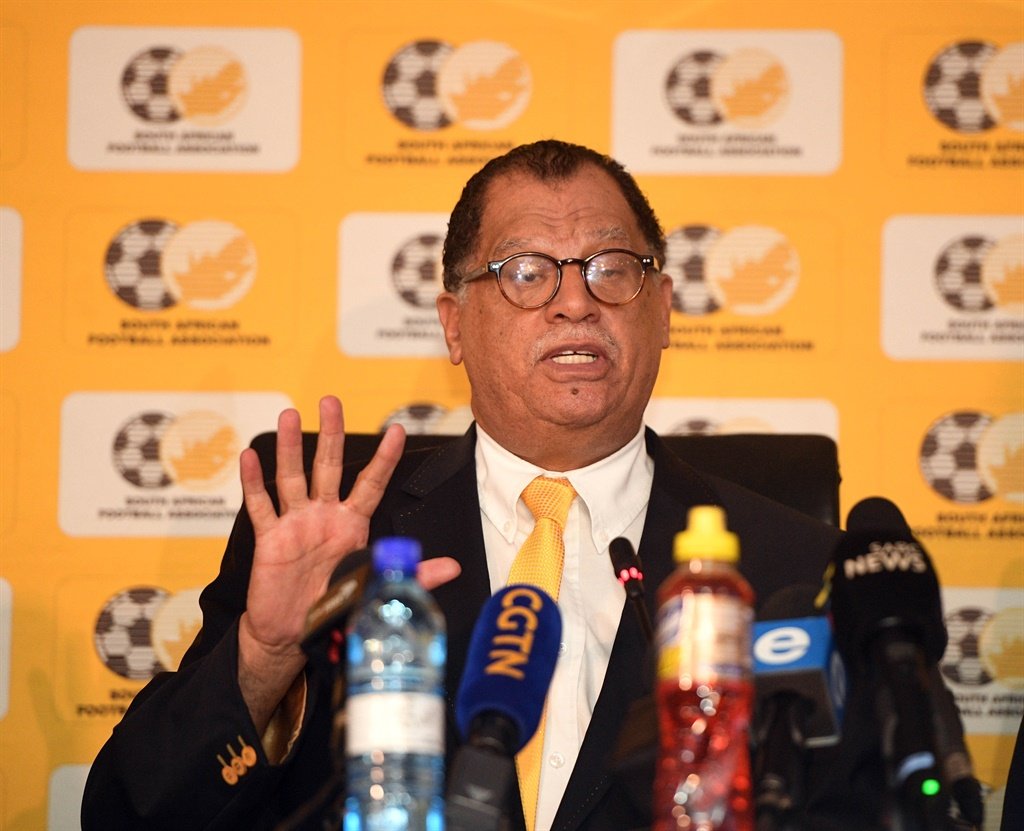
Dr Danny Jordaan deserves one more term.
SAFA and SA football are moving towards the right direction under his stewardship.
All our national teams are competing aggressively at the international stage.
SAFA finances are stabilizing. Football fans are back at the stadiums
PSL also knows its lane.
We are respected once against in World's football stage
Sandile Zungu has age on his side. He can always come back in 2030 & lead SAFA.
For now, he must focus on growing AmaZulu FC brand.
#SAFA
Vukani, vukani, kusile bo!
Ngu mhla ka 1 July 2026.
1. Petrol wehlile ezweni lethu.
2. Woolworths ine sale ka 50%.
3. Reebok ine sale ka 50%.
4. Ama firm ase Lenasia acele abantu abadinga umsebenzi baze nama CV ngoba kunezikhala ezivulekile.
5. Department of immigration ikhiphe circular yenqwaba yemisebenzi evulekile.
Namanje nisacananga ukuthi u Sis @JacintaNgobese ne March & March bayahlanya?
Why They Destroyed the Only Plant That Healed Every Illness.
The last known stalk of the world’s most valuable medicine was not rushed to physicians.
It was sent to Nero.
For nearly seven hundred years, the ancient Mediterranean world knew a plant called silphium. It grew in one narrow strip of North African coast near Cyrene, in what is now northeastern Libya, and nowhere else on earth.
Not in Greece.
Not in Rome.
Not in Egypt.
Only there.
The old writers did not describe it like a common herb. They spoke of it with the seriousness reserved for rare metals and gifts from the gods. It was used for fever, wounds, infection, coughs, digestive pain, skin disease, menstrual disorders, bites, stings, and conditions other medicines struggled to touch.
Its resin was worth a fortune.
Its image was stamped on Cyrene’s coins.
A city does not put a weed on its money.
On one side of the silver: a ruler.
On the other: the plant.
Power and healing, struck into the same coin.
For generations, Cyrene’s wealth and identity were tied to that living root. Physicians prescribed it. Traders carried it. Patients trusted it. Naturalists wrote about it. The plant was famous enough that the whole ancient world knew its name.
Then Rome inherited Cyrene.
No dramatic siege.
No burning city.
No single obvious moment where the story breaks.
Just power changing hands.
And after that, silphium disappeared.
The official explanation is tidy. Overharvesting. Grazing animals. Bad management. Too much demand, too little protection. A rare plant was pushed past its limit until it could no longer survive.
Maybe that is true.
Maybe goats and greed killed it.
But the silence around silphium is too clean.
Because the plant did not simply vanish.
The useful knowledge vanished with it.
The exact preparations.
The doses.
The harvesting methods.
The cultivation attempts.
The records of failure.
The instructions that would have allowed another age to test, preserve, or restore what had been lost.
The ancient world recorded poems, lawsuits, jokes, omens, tax lists, recipes, military speeches, and philosophical arguments. It copied books across empires. It preserved medical traditions through Greek, Roman, Byzantine, and Arabic scholars.
But for one of the most celebrated medicines of antiquity, what survived was mostly praise.
Not the method.
A name without a method cannot heal.
That is the first disturbing thing.
The second is what happened near the end.
By the time Pliny wrote about silphium, only one stalk was said to have been found.
One.
The possible final living remnant of a medicine treasured for centuries.
If people understood its value, it should have been protected. Seeds saved. Roots studied. Soil carried. Gardeners summoned. Physicians ordered to preserve it under guard.
Instead, the last stalk was sent upward.
To the emperor.
To Nero.
Not as the future of a cure.
As a curiosity for power to possess.
And then the record goes dark.
The plant leaves history there, in imperial hands, and the world is left holding coins, fragments, praise, and a question no historian can fully bury: did silphium die by accident, or did a living system of healing become too valuable, too independent, and too difficult to control?
The strangest part is that silphium was not the only medicine to become a ghost. Theriac, soma, kyphi—other ancient remedies once treated as powerful, sacred, or universal—also reached us as names, partial recipes, fragments, and arguments. Their reputations survived. Their living methods did not. Again and again, the use became memory, and the practice vanished.
https://t.co/O24igUPncn
#NDRSeminar Mbeki: We made a mistake in 2008 in Government, there was no Xenophobic attacks here , there was an intelligence report that spoke to this. We should have declassified that report. #sabcnews
They prepared 33K camera and drones to protect foreigners
But they can’t do the same to fight the gang violance in Cape Flats and crime in South Africa…
Umsunu we Government lo… 😭😭
If the government had listened to the Deputy Minister of Police in 2007 and taken decisive action against illegal immigrants, we wouldn't be here today.
In 2026, we are pretending to be shocked by this crisis 😳😳🙆♂️
FIFA’s broadcast cameras appeared to avoid showing this moment, likely due to rules around political gestures and protests.
But today, Lumumba covered his mouth and mimed a gun to his head in a powerful protest against the silence surrounding the conflict in eastern DR Congo.
One of the world’s most active crises has displaced thousands, and he used the World Cup stage to make sure people could not look away.
This is what true influence looks like. 🇨🇩👏