P𝐚n-A𝐟r𝐢c𝐚n D𝐞c𝐥a����a𝐭i𝐨n o𝐧 𝐭h𝐞 𝐅u𝐭u𝐫e o𝐟 𝐁i𝐨d𝐢g𝐢t𝐚l T𝐞c𝐡n𝐨l𝐨g𝐢e𝐬 𝐢n F𝐨o𝐝 𝐚n𝐝 𝐀g𝐫i𝐜u𝐥t𝐮r𝐞
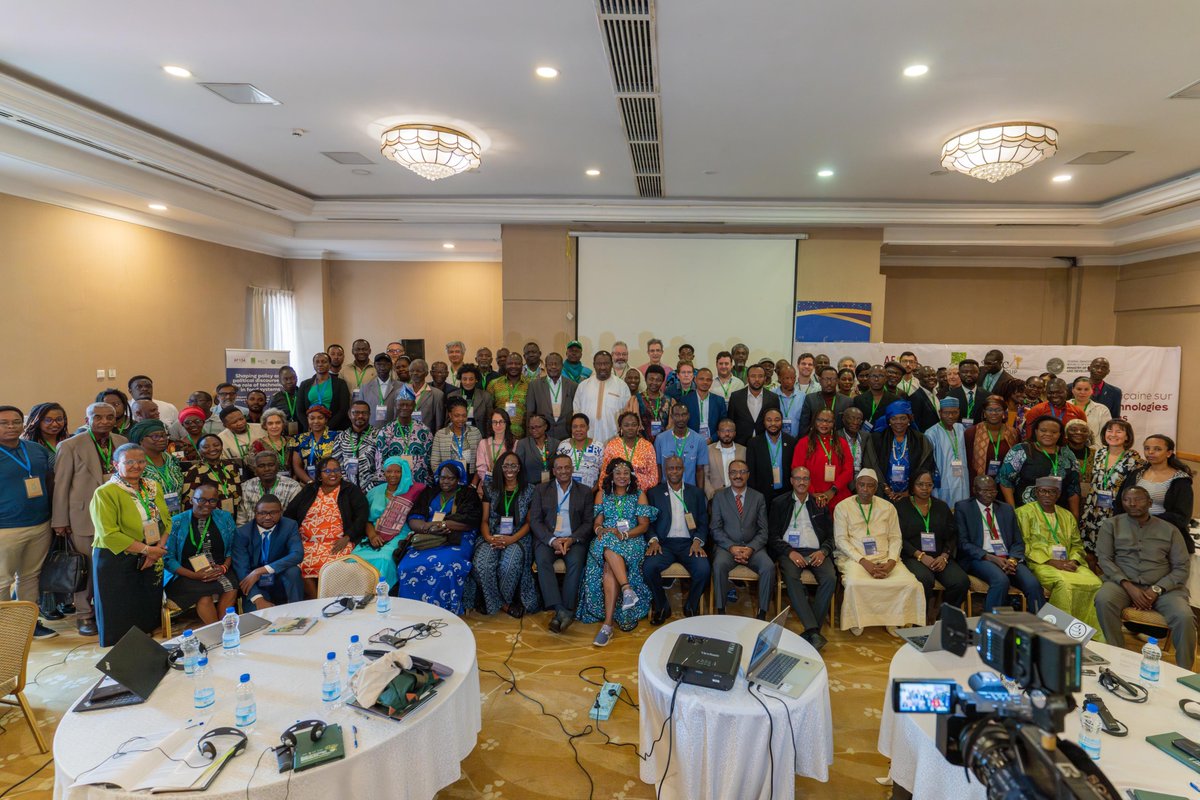
More than 130 participants from 33 African countries gathered in Addis Ababa, Ethiopia, from 2–4 October 2025, and issued the Pan-African Declaration on the Future of Biodigital Technologies in Food and Agriculture — a united call to defend the sovereignty, dignity, and resilience of African food systems against extractive and corporate-driven digitalization. The historic convening was co-organized by the Alliance for Food Sovereignty in Africa (AFSA), the African Technology Assessment Platform @afri_tap and the @ETC_Group.
The Declaration warns that the convergence of biology and digital technologies — artificial intelligence, synthetic biology, robotics, genomics, data platforms, and geoengineering — is reshaping power over food, land, and life itself. It asserts that technologies are not neutral; they reproduce systems of domination and exploitation. Africa, it declares, must not become a testing ground for corporate-driven biodigitalization. Instead, agroecology and food sovereignty must be the foundation of Africa’s digital future, with technologies co-created with communities and anchored in human rights.
The Declaration calls for collective control over data, genetic resources, and digital infrastructures. It urges African governments to support agroecological food systems, protect farmers’ data and seed sovereignty, ensure transparent public–private partnerships, and include women and youth in all digital decision-making spaces. It calls on the African Union and regional bodies to integrate agroecology into continental strategies and to build digital governance rooted in Ubuntu, the African Charter on Human and Peoples’ Rights, and international declarations such as UNDROP and UNDRIP.
It further emphasizes the importance of technology assessment through platforms like AfriTAP, empowering African communities and social movements to evaluate emerging technologies on their own terms and to promote community-based, gender- and youth-sensitive approaches that protect collective rights and local innovation.
Civil society and social movements are encouraged to build collective power against harmful technologies, promote grassroots innovation and farmer-led seed systems, and amplify agroecology and Indigenous knowledge as the bedrock of African agriculture. The Declaration also demands that corporations, philanthropies, and international institutions respect Africa’s sovereignty and support people-centred, agroecological alternatives.
All participants and allies are invited to endorse, amplify, and implement this Declaration as a living roadmap for Africa’s digital future — one rooted in justice, biodiversity, and the rights of African peoples.
Download the full document here
https://t.co/RSoXxVD0Ck
#BiodigitaltalTechnologies #TechAssessment #FoodSovereignty
IT’S OFFICIAL!! The 7th Annual National #Agroecology Actors’ Symposium is on the horizon!! Get ready to connect, learn, and grow with the nation’s leading agroecology minds. Save the Dates! 28th October 2025! More details coming soon!
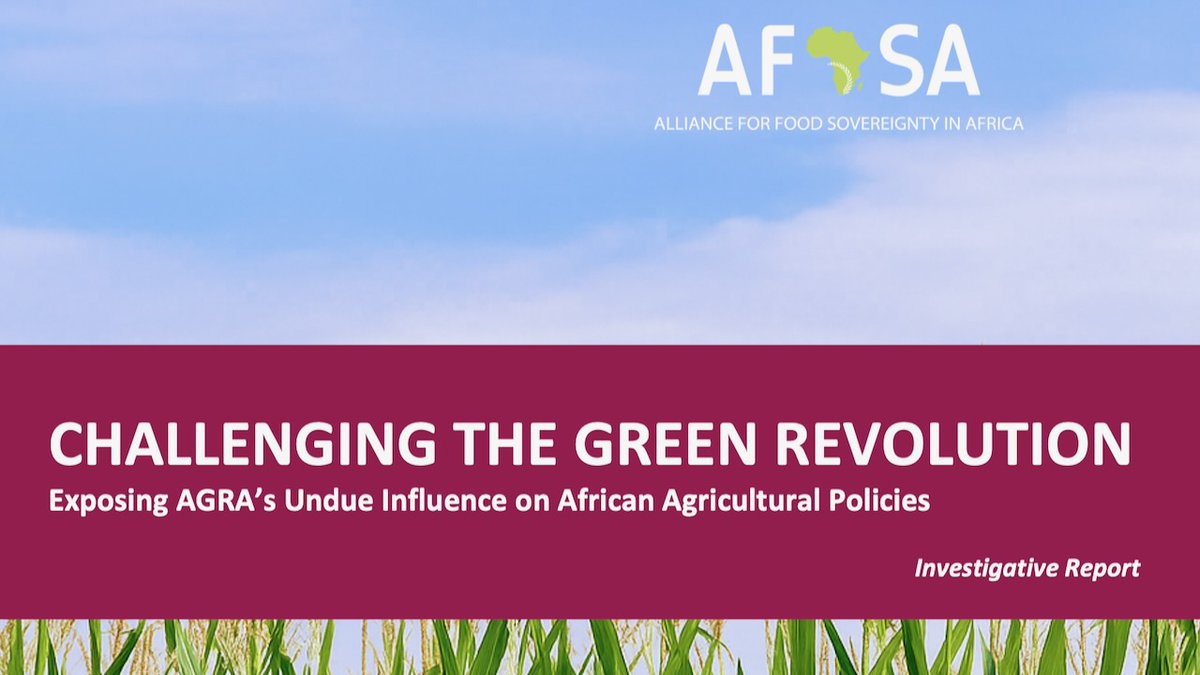
𝐍𝐞𝐰 𝐑𝐞𝐩𝐨𝐫𝐭: 𝐈𝐧𝐯𝐞𝐬𝐭𝐢𝐠𝐚𝐭𝐢𝐨𝐧 𝐄𝐱𝐩𝐨𝐬𝐞𝐬 𝐀𝐆𝐑𝐀’𝐬 𝐔𝐧𝐝𝐮𝐞 𝐈𝐧𝐟𝐥𝐮𝐞𝐧𝐜𝐞 𝐨𝐧 𝐀𝐟𝐫𝐢𝐜𝐚𝐧 𝐀𝐠𝐫𝐢𝐜𝐮𝐥𝐭𝐮𝐫𝐚𝐥 𝐏𝐨𝐥𝐢𝐜𝐢𝐞𝐬
As delegates gather in Dakar, Senegal for AGRA’s African Food Systems Forum, a powerful counter-narrative is emerging from civil society. The Alliance for Food Sovereignty in Africa (AFSA), together with West African partners in the 3AO platform, today launches a landmark investigative report “Challenging the Green Revolution: Exposing AGRA’s Undue Influence on African Agricultural Policies”, a groundbreaking investigative report that examines how the Alliance for a Green Revolution in Africa (AGRA) has steered agricultural policy across the continent.
Originally launched in 2006 with the promise to double productivity and incomes while halving hunger, AGRA has shifted its focus following a damning 2022 evaluation that revealed it had failed to meet these goals. Today, instead of empowering farmers, AGRA embeds consultants into ministries, promotes hybrid and genetically modified seeds, and pushes synthetic fertilizers and export-oriented supply chains — sidelining smallholder farmers and agroecological alternatives.
The report, commissioned by AFSA, draws on case studies from Ghana, Kenya, Mali, and Zambia. It uncovers consistent patterns: undue policy influence at national, regional, and continental levels; the marginalization of agroecology; lack of transparency and accountability; and a prioritization of corporate-driven farming systems over the food sovereignty and resilience of African people. AGRA’s fingerprints are evident in major continental frameworks such as the African Union’s Fertilizer and Soil Health Summit, which set a roadmap to triple fertilizer use across Africa. The consequences are stark — weakened farmer-managed seed systems, exclusion of civil society voices, and the entrenchment of models that threaten biodiversity, soil health, and local food systems.
Challenging the Green Revolution calls for urgent action. AFSA recommends that African governments and regional institutions prioritize agroecology, food sovereignty, and farmer-managed seed systems; enhance transparency in policymaking; safeguard smallholder farmers’ interests; develop monitoring frameworks to counter corporate capture; and hold external actors accountable.
The report underscores the urgent need for a paradigm shift away from corporate-driven industrial agriculture toward agroecology and food sovereignty, ensuring that Africa’s food systems are sustainable, inclusive, and resilient.
AFSA’s General Coordinator Dr. Million Belay @Million_Belay warns, “AGRA’s fingerprints are all over Africa’s agricultural policies. They represent an attack on African food sovereignty.”
This timely publication offers evidence, analysis, and a call to mobilize. AFSA invites policymakers, civil society, and communities to use this report as a tool for reclaiming Africa’s agricultural future.
Download the Full Report
https://t.co/yVDW9u7ztG
A𝐢r𝐰a𝐯e𝐬 𝐨f K𝐚l𝐨m𝐨 𝐑a𝐝i𝐨 𝐁r𝐢n𝐠 𝐀g𝐫o𝐞c𝐨l𝐨g𝐲 𝐭o t𝐡e P𝐞o𝐩l𝐞
In September 2024, Kalomo Community Radio Station in Zambia made a groundbreaking move by offering ten free radio slots to ZASHO (Zambia Smallholder Farmers Organisation). These slots broadcast My Food is African programs focused on agroecology, marking the first media engagement of its kind in the region. For smallholder farmers in Kalomo and neighboring Zimba District, these broadcasts have become a vital source of knowledge, awareness, and action.
Kalomo District, one of Zambia’s main food-producing regions, faces growing threats from soil depletion, deforestation, and climate change. Through interactive weekly shows, farmers now learn sustainable practices such as composting, mulching, traditional seed saving, natural pest control, and crop rotation. Supported by ZASHO and ZAAB (Zambia Alliance for Agroecology and Biodiversity), the programs are rooted in community engagement, with training sessions and dialogues involving farmers, traditional leaders, and local authorities.
The results are already visible: farmers are applying agroecological methods, creating gardens, reducing reliance on chemical inputs, and forming groups to share seeds and knowledge. The initiative has sparked demand for even more content, with plans to expand broadcasts, add youth-focused programs, and develop complementary training guides.
Kalomo’s experience shows how community radio can be a low-cost, high-impact model for agroecology education. By blending local storytelling with practical farming knowledge, the broadcasts are empowering farmers, strengthening resilience, and advancing food sovereignty from the ground up.
📥 Read the full inspiring story here
https://t.co/0GHZvk86ZM
🌾: #FundAgroecology
“We have successfully influenced the integration of agroecological principles into the African Union’s Land Governance Strategy and nurtured vital platforms like Our Land is Our Life.”
~ @BALIRAINEH, Board Chair | @Afsafrica
We are continuing strong into Day 3 of the #FundAgroecology convening in Kenya 🇰🇪
Taking center stage today is Building the movement - A roadmap to Financial Transformation.
We are here because we recognize that the current financial system overwhelmingly
favors industrial agriculture—an extractive, monoculture-driven model that undermines our food sovereignty, depletes our soils, and erodes the resilience of our
farmers
In order to catalyze a true transition to agroecology and food sovereignty, @Afsafrica recognizes that financial flows represent a critical intervention point.
Le troisième jour de la conférence #FundAgroecology au Kenya 🇰🇪 se poursuit.
Le thème central aujourd'hui est Construire le mouvement - Une feuille de route pour la transformation financière.
Nous sommes ici parce que nous reconnaissons que le système financier actuel favorise massivement l'agriculture industrielle, un système extractif et monoculturel.
favorise l'agriculture industrielle - un modèle extractif, axé sur la monoculture, qui sape notre souveraineté alimentaire, épuise nos sols et érode la résilience de nos agriculteurs.
agriculteurs
Afin de catalyser une véritable transition vers l'agroécologie et la souveraineté alimentaire,
@Afsafrica
reconnaît que les flux financiers représentent un point d'intervention critique.
PRESS RELEASE
7th March 2025
Court of Appeal Halts Government Promotion of GMOs in Landmark Ruling
Nairobi, Kenya – In a historic victory for food sovereignty, farmers' rights, and environmental justice, the Kenya Court of Appeal blocked the Kenyan government from importing genetically modified organisms (#GMOs) into the country. This decision marks a significant step in protecting the rights of small-scale farmers and consumers while safeguarding Kenya’s biodiversity and ecological balance.
The ruling comes in response to an appeal by the Kenya Peasants League, Biodiversity and Biosafety Association of Kenya (BIBA) @BIBA_Kenya and 18 other parties, which challenged the government's October 2022 decision to lift its ban.
Defending Farmers’ Rights and National Food Sovereignty The ruling acknowledges the serious concerns posed by GMOs to local agricultural systems, health, and the environment.
“We celebrate this ruling as a major victory for small-scale farmers across Kenya,” said David Otieno, a representative of the Kenya Peasants League. “GMOs are not the solution to food insecurity in our country. Instead, they deepen dependency on multinational agribusinesses, threaten biodiversity, and compromise farmers’ ability to control their food systems.”
Upholding the Public Interest The Court of Appeal, in its ruling, emphasized that the public interest is best served by maintaining the ban while the legal and policy questions surrounding GMOs are fully addressed. There is a need for a comprehensive legal and institutional framework to address the potential adverse health, environmental, and socio-economic impacts of GMOs before any policy shifts are implemented.
A Call for Agroecological Solutions Kenyan farmers and food sovereignty advocates are now calling on the government to prioritize agroecology as the sustainable alternative to industrial agriculture. “A key milestone was in November 2024 when the Kenya National Agroecology Strategy for Food Systems Transformation was launched by the Ministry of Agriculture” said Anne Maina, the National Coordinator of the Biodiversity and Biosafety Association of Kenya.
“We urge the government to invest in smallholder farmers, indigenous seed systems, and agroecological farming practices rather than pushing harmful technologies that serve corporate interests,” said Million Belay, General Coordinator of the Alliance for Food Sovereignty in Africa. @Million_Belay
Next Steps Following this ruling, all government actions related to the introduction and promotion of GMOs in Kenya must cease immediately. The case will proceed to a full hearing, where the Court of Appeal will determine whether the lifting of the GMO ban was lawful and in the best interests of the country.
Kenyan farmers, civil society organizations, and allies around the world stand united in defending Kenya’s food sovereignty.
For further inquiries, please contact:
David Otieno, [email protected]
Anne Maina, [email protected]
END
#NoGMOs #Agroecology #FoodSovereignty #SeedIsLife #SeedSovereignty
Today we have kicked off a 3-day meeting bringing together different stakeholders, including activists, researchers, academia, farmers, and international allies, to develop a comprehensive roadmap for a continental campaign that will disrupt financial flows to industrial agriculture, promote and amplify funding for agroecology, develop concrete advocacy actions and strengthen partnerships and collaboration to coordinate efforts in shifting the financial landscape in favour of agroecology.
The legacy of colonialism remains deeply embedded in African agriculture today, with industrial agriculture serving as a major tool for financial exploitation. This system primarily benefits corporations, financial institutions, and foreign governments rather than African farmers and communities.
Colonial policies prioritized cash crops over food production, while land grabbing and unfair Structural Adjustment Programs (SAPs) weakened local food systems. As a result, global agribusiness giants, foreign investors, banks, and political elites continue to profit often at the expense of small-scale farmers, local economies, and the environment. This exploitation has led to severe consequences, including soil degradation and water depletion, further threatening Africa’s agricultural sustainability.
Agroecology stands as a system of resistance that rejects colonial food building a strong movement for sovereignty, justice, and true independence. We must challenge industrial agriculture financing at all levels. Updates of this meeting are being shared on #FundAgroecology.
Shifting Financial Power: Defunding industrial agriculture, Redirecting funding to Agroecology.
AFSA is hosting a groundbreaking three-day gathering in Nairobi, #Kenya, bringing together farmers, activists, researchers, and policymakers to develop a continental campaign roadmap aimed at challenging financial flows to industrial agriculture and redirecting funding to #agroecology.
With African governments increasingly aligning with corporate-driven industrial agriculture, this gathering is a bold step towards shifting the financial and policy landscape in favor of sustainable, farmer-led food systems.
Building on AFSA’s Healthy Soil, Healthy Food initiative, this gathering will map financial flows, strategize divestment from industrial agriculture, and mobilize action to ensure that agroecology gets the investment it deserves.
Participants will explore ways to challenge the status quo, push for policy change, and amplify African food sovereignty. Stay tuned for key takeaways and action points as we shape the future of agriculture on our terms!
#AgroecologyNow #Agroecology #FoodSovereignty
Did you Know: The Theory of Change (ToC) is a key M&E Framework that has evolved over the years supporting impact-focused evaluation and strategic planning?
On December 13th, 2024, we start our journey by Unlocking the ToC concept through lived experiences from global experts
Today brings us to the conclusion of AFSA’s trailblazing Tripartite event in #Harare. Watch the highlights from Day 3 as we reflect on yesterday’s impactful activities, which were filled with insightful discussions, dynamic presentations, and vibrant exchanges.
As we continue to deepen our understanding of Africa’s food systems and the vital role agroecology plays in sustaining communities, stay tuned for more thought-provoking discussions and action-oriented outcomes as we close this transformative event.
#MyFoodIsAfrican #SeedIsLife #FoodSovereignty #Agroecology
"The journey and impact of the Food and Seed Festival began several years ago, after severe inflation in 2008 that halted our agricultural initiatives "_ John Wilson, Citizens & Agroecology Working Group Chair at @Afsafrica .
#AAE2024 #MyFoodIsAfrican#SeedIsLife
Today marks the official launch of AFSA's 5th Biennial Food Systems Conference, alongside the Zimbabwe Good Food and Seed Festival, happening concurrently at the beautiful Harare Botanical Gardens!
This exciting convergence celebrates Africa's rich food heritage and promotes sustainable, agroecological practices. Organized by PELUM Zimbabwe the festival highlights the importance of farmer-managed seed systems, healthy indigenous foods, and resilience in the face of climate challenges.
Join us as we embark on this journey to empower communities, foster food sovereignty, and showcase Zimbabwe’s vibrant food diversity!
#MyFoodIsAfrican #SeedIsLife #GoodFoodAndSeedFestival #FoodSystems #Harare
Hakim Baliraine, AFSA's Chair, reflects on the significance of AFSA's upcoming tripartite event in Harare, Zimbabwe, from September 11th to 14th, 2024.
These events—the 2nd African Agroecological Entrepreneurship and Territorial Markets Convening, the 5th Biennial Food Systems Conference, and the Zimbabwe Good Seed and Food Festival—are pivotal in advancing Africa’s food sovereignty, agroecological transformation, and climate resilience. @BALIRAINEH
#AAE2024 #TerritorialMarkets #Agroecology #FoodSecurity