@RishiJoeSanu Isn't the problem that govt. workers are incompetent, caste not withstanding? And pensions and benefits at the expense of others.
There are ways to weaken them buy enabling firing but no party does it.
You wouldn't need national-testing at this scale if schools actually tested kids and failed those who weren't upto the level. Technological shenanigans at the school level will have a seismic impact for industrialising.
Delhi | On NEET paper leak issue, Infosys Co-founder Nandan Nilekani says, "Why do we need to have something called 'a' question paper? Because the moment you have a question paper, then that creates an economic incentive for that to be sold... So, the way to solve this is to really have a massive bank of questions, and only at the last minute generate the question paper for that day, and therefore the question of 'a' question paper goes away, and there's no economic incentive for that. The other thing is, of course, how to make sure all exams are done on a computer-based testing, and that requires a network of locations. We have 150,000 locations where a young boy or girl can take a test. That needs to be expanded. I think these are all systemic issues which we will address in our committee. And the Prime Minister is very keen to implement our decisions..."
(file pic)
@Ninelxarm@supersayan68200 Economies of scale. Have a large, proper school and bus kids instead as roads are better now. Easier to monito. Village schools seat multiple classes together.
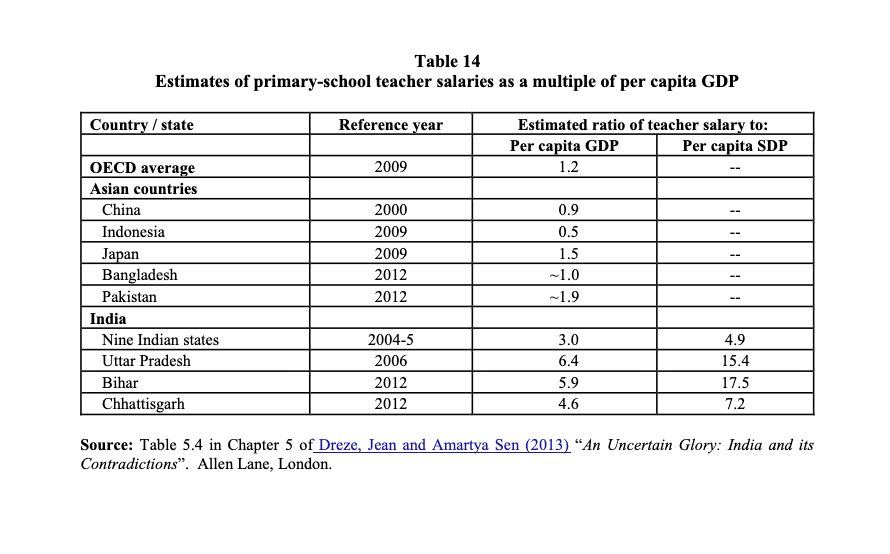
On pay-
https://t.co/kYVnRFY7Hm
Meanwhile, see this chart. OECD and Asian countries spend relatively less than India. Yet, most of them get better outcomes than India does for all its spending.
9/12
@PunishedKebbin Opposite likely, might have led to class consolidation if a threshold system is implemented. Hard to predict. Would have made politics less elitist and more competitive.