Australian company Boresight is expanding its presence in the U.S. to increase production capacity and meet growing demand for unmanned aerial vehicles.
The company announced that it has leased a new production facility in Huntsville, Alabama, covering 812 m², which is approximately 15 times larger than its current U.S. plant.
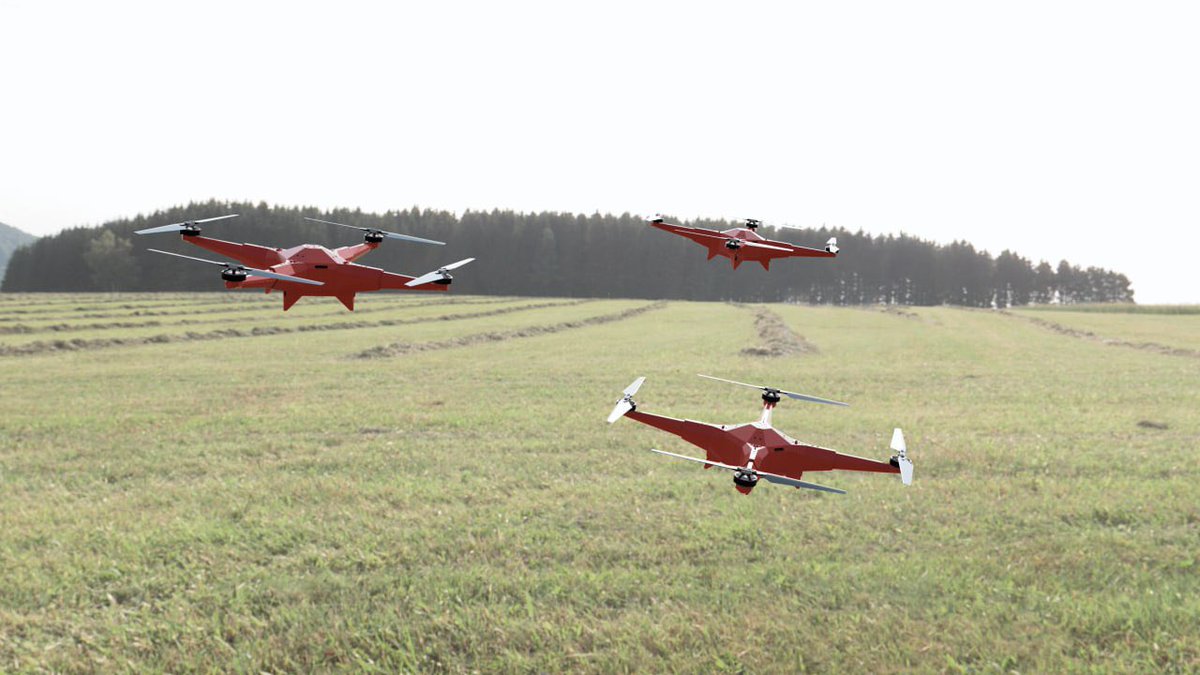
The new facility will produce BQ-400 unmanned aerial vehicles and the new BQ-750 Block 2.
BQ-400 is a small quadcopter weighing 1.3 kg with a flight range of 2.5 km, a speed of 17.5 m/s, and a flight duration of up to 25 minutes. BQ-750 is a 3-kilogram UAV. It has the same flight range and speed as the BQ-400, but its flight duration reaches 45 minutes.
According to Boresight, the facility will initially support the production of more than 5,000 BQ-400 UAVs per year.
#Boresight #Drones #UAV #UAS
Galiba bu yıl bitmeden bir tane mini enjeksiyon makinası alacağım.
Uzun yıllardır niyetliydim, bir kez kendim yapmaya da başladım ama kaldı.
Ufak tefek kalıplar yapıp üretip satacak o kadar çok şey var ki.
Amatör (İHA-0 ve İHA-1 lisanslı) bir drone pilotu ve Weather4Fly'ın babası olarak, güncel bilgilerle ilgili bir video paylaşmak istiyorum.
İHA'larla ilgili yaşanan pek çok sıkıntı artık sona erdi ve Sivil Havacılık Genel Müdürlüğü, yeni İHA Sistemleri Talimatnamesini yayınladı ve yürürlüğe soktu.
Talimatnameyi aşağıdaki adresten inceleyebilirsiniz. https://t.co/NDcuCSQIdr
Konu ile ilgili Meraklı Kuş kanalının hazırladığı güzel bir video linkini de paylaşayım.
https://t.co/T1Q2N6ra7Y
After a certain age,
your parents slowly become your children.
They ask same questions again.
They repeat stories you've heard a thousand times.
They forget little things.
Their steps become slower.
Their world becomes smaller.
And without realizing it...
The people who once carried you through life begin depending on you.
Very few people recognize this role reversal.
What feels like an inconvenience is often just time reminding us that nothing lasts forever.
Don't rush them.
Don't correct them harshly.
Don't make them feel like a burden.
One day, their voice will be silent.
The questions will stop.
The stories will never be told again.
And you'll wish for just one more interruption...
One more repeated story...
One day, you'll give anything to hear those same stories again.
One more chance to hear them call your name.
Growing old is a privilege not everyone receives.
Care for them the way they once cared for you
It’s repayment.
It's the final way we say...
Thank you for spending your life loving me .
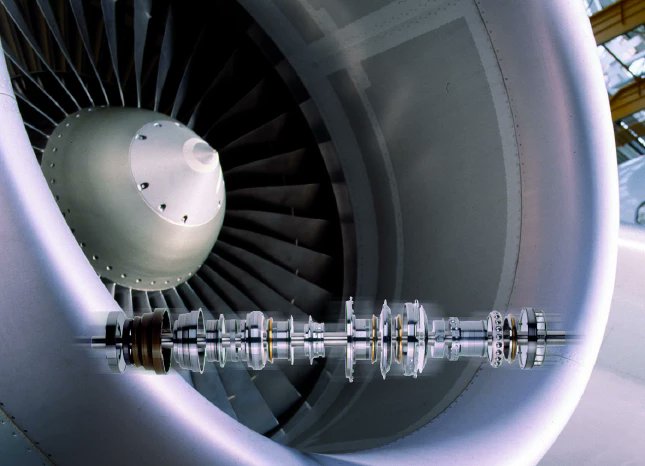
A modern commercial turbofan is often celebrated for its fan, compressors, and turbine blades. Yet one of its greatest engineering challenges is almost invisible at its core, keeping multiple rotating shafts, each spinning at different speeds and transmitting enormous power, perfectly aligned for decades.
That task falls to just 5-8 critical bearing locations precision components some small enough to fit in one hand, yet responsible for keeping an engine worth $40-50 million alive while allowing rotating shafts to survive enormous forces, thermal expansion, and extreme operating conditions.
A modern turbofan is not one rotating machine but several concentric systems.
The low-pressure spool, which drives the massive front fan, typically rotates at 2,000-4,000 RPM, while the high-pressure core can exceed 10,000-20,000 RPM.
These shafts rotate independently through specialised ball, roller, thrust, and intershaft bearings, continuously absorbing enormous radial and axial loads while maintaining microscopic alignment. Conventional industrial bearings would rapidly overheat, deform, and fail under these conditions. Aerospace bearings, by contrast, are engineered to survive 20,000-50,000 flight hours, accumulating an estimated 30-70 billion rolling contacts before major overhaul.
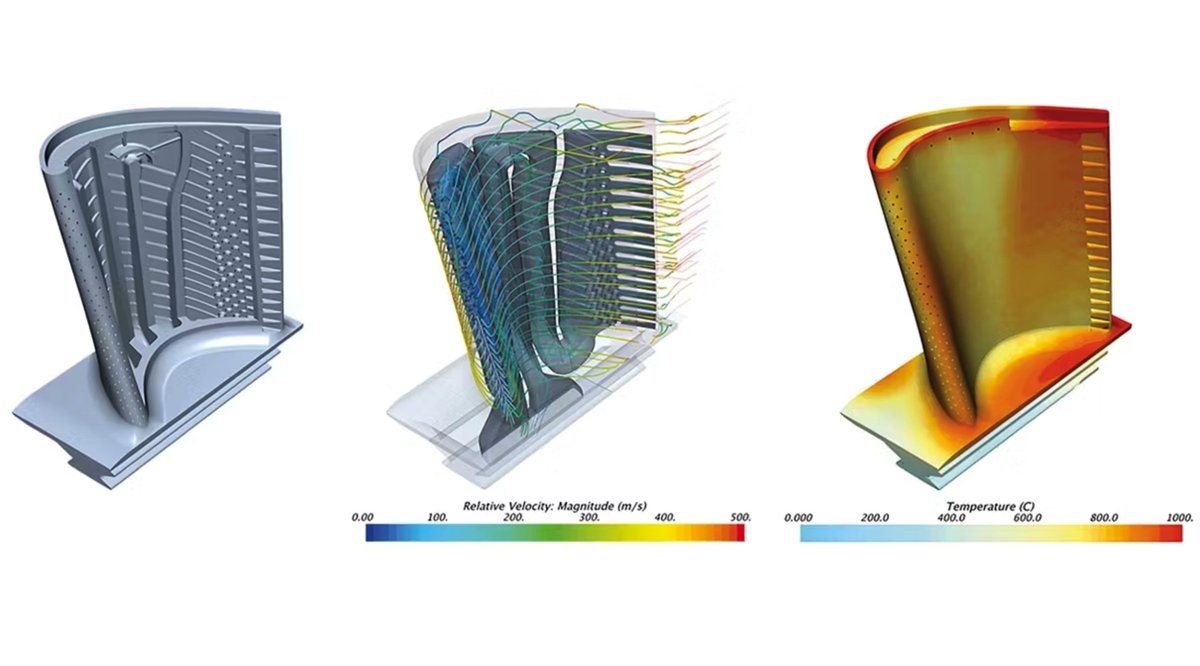
The environment makes the challenge even more extraordinary. Only a short distance away, turbine gases exceed 1,500°C, with single-crystal turbine blades surviving through internal cooling channels and thermal barrier coatings.
The bearings themselves, however, must remain within a much narrower operating window of roughly 120-200°C, with extreme conditions approaching 300°C at peak power.
This is achieved through sealed bearing compartments, compressor bleed-air cooling, and sophisticated lubrication systems that maintain a protective oil film typically only 1-5 micrometres thick around twenty times thinner than a human hair while continuously carrying heat away from the bearing. If that microscopic film breaks down, metal-to-metal contact can occur almost instantly, rapidly leading to catastrophic jet engine failure in seconds.
The bearings themselves are built from materials far beyond conventional engineering steels. Aerospace manufacturers use specialised alloys such as M50 and M50NiL bearing steels, chosen for exceptional hardness, fatigue resistance, and high-temperature strength, while many modern engines incorporate silicon nitride ceramic rolling elements that are around 60% lighter than steel.
The reduced mass significantly lowers centrifugal forces at high rotational speeds, allowing higher operating limits with less friction, lower heat generation, and longer fatigue life.
Manufacturing these components is a discipline of its own. The steel undergoes vacuum melting, remelting, precision heat treatment, grinding, and superfinishing to eliminate microscopic inclusions that can become fatigue cracks after billions of cycles.
Final dimensional tolerances are measured in microns, while raceway surface finishes approach nanometre-scale precision. Producing the bearing is only half the challenge, every aerospace design must then survive years of fatigue testing, thermal cycling, overspeed testing, and certification before it is approved for commercial flight.
Companies such as Timken, NTN Corporation, and NSK are among the global leaders. A conventional industrial bearing may cost $100-1,000. By contrast, large aerospace mainshaft bearings are widely estimated to cost $30,000 to well over $140,000 per bearing once aerospace-grade materials, precision manufacturing, inspection, and certification are included. Their value lies not in their size, but in the fact that a single bearing failure can destroy an engine worth tens of millions of dollars and risk the lives of hundreds of people onboard.
Jet engines are often associated with combustion, compressors, and turbine blades. In reality, none of those technologies could operate for more than moments without a handful of aerospace grade precision bearings quietly controlling friction, heat, and fatigue at the very limits of metallurgy.
Shenzhen’s DAMODA has a mobile drone system that charges, deploys, and launches light shows directly from the vehicle.
At dusk, hydraulic-supported containers deploy layered drone racks. the drones lift off in sequence from this extended platforms.
🇨🇳 You probably don't realize how common drones have become in China. Delivering packages, spraying crops, inspecting bridges. All before lunch. 40M+ made in a year. This isn't the future. This is Tuesday. What would you like to see next? 🚁🌉
Drones with pepper gel began testing in American schools
Testing of the security system has started in several U.S.states. Drones are placed in charging boxes on the ceiling – within a few seconds after activation via an app or button, they are ready for launch.
#USA#School
#WATCH In the city of Qingdao, a patrol drone with a loudspeaker and flashing lights stopped a man who wanted to enter the sea after the onset of darkness.