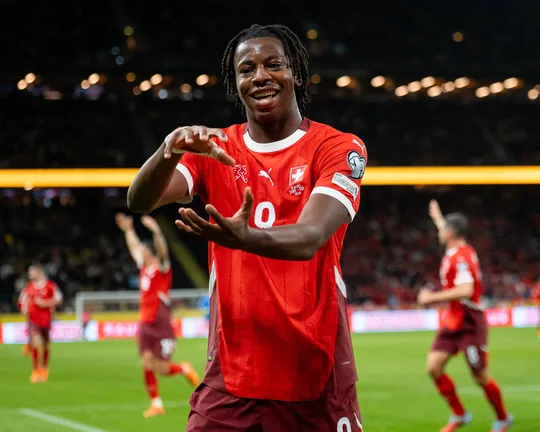
Players to monitor closely during World Cup 2026🚨
Group D:
🇺🇸 Alex Freeman & Ricardo Pepi
🇵🇾 Diego Gómez
🇹🇷 Orkun Kökçü
🇦🇺 Jordan Bos, Mohamed Touré & Lucas Herrington
#mundialdefútbol#mundialdefútbol2026#mundialmexico2026
Alguns apontamentos sobre o México vs África do Sul 🎥
A adaptação da Hugo Broos condicionou o seu jogo ofensivo e não trouxe grandes melhorias defensivas. A pressão mexicana e o controlo através da posse, além dos problemas de distância da Bafana Bafana a atacar e a defender.
Players to monitor closely during World Cup 2026🚨
Group C:
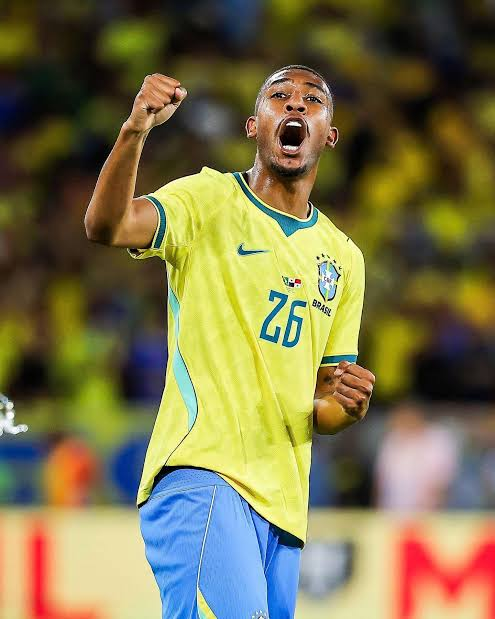
🇧🇷Rayan
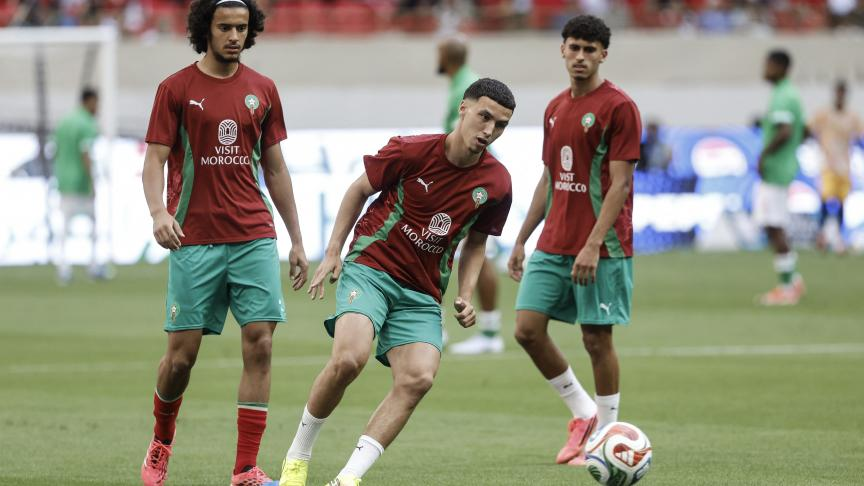
🇲🇦Ayyoub Bouaddi, Bilal El Khannouss & Ayoub Amaimouni
🏴Ben Gannon-Doak
🇭🇹Danley Jean-Jacques
#mundialdefútbol#mundialdefútbol2026
Cooling breaks
The introduction of extended cooling breaks at the 2026 World Cup could have a bigger tactical impact than many people realise.
In my view, these stoppages risk reducing some of football's unpredictability. During a three-minute break, coaching staffs will have the opportunity to provide real-time tactical corrections, adjustments and instructions using visual aids and match footage.
As shown in the video, players are no longer relying solely on information received before the match or from the touchline. Instead, teams can effectively hold a mini tactical meeting in the middle of a game.
Could this make World Cup matches more controlled and less chaotic?
Brazil Tactical Analysis
Under Carlo Ancelotti, Brazil enter the 2026 World Cup as one of the tournament's most tactically versatile teams.
The depth, quality and adaptability of the squad allow Brazil to operate in multiple structures both in and out of possession, making them extremely difficult to prepare for. Rather than relying on a single system, Ancelotti has developed a team capable of constantly changing its shape depending on the phase of play and the opponent.
Build-Up Structure: 3-2-4-1
One of Brazil's most common attacking structures resembles a 3-2-4-1.
The left-back often moves into central areas, allowing Vinícius Júnior to hold the width on the left flank where he can isolate defenders in 1v1 situations. On the opposite side, the right-back provides width, stretching the pitch horizontally and creating space for Brazil's central overload.
In the middle of the pitch, four players occupy central zones, often forming a box midfield that creates numerical superiority between the lines. The striker remains high to occupy the opposition centre-backs and create space for the attacking midfielders.
Raphinha plays a particularly important role within this structure. He can either drop closer to the midfield to support progression or attack the space behind the defensive line. His movement complements Vinícius perfectly: when one comes short, the other attacks depth, constantly forcing defenders into difficult decisions.
Defensively, this system usually transforms into a high-pressing 4-4-2 shape, with Vinícius joining the striker in the first line of pressure. Raphinha typically drops into the midfield line, helping to protect the flank and maintain compactness.
Alternative Structure: 4-3-3
In this setup, both full-backs remain deeper during the build-up while the midfield forms a triangle consisting of a holding midfielder and two box-to-box players.
The objective is to create overloads in wide areas through combinations and rotations. Brazil frequently look to form triangles on the flanks before switching play to exploit space on the opposite side.
When the winger moves into receive the ball short, the holding midfielder also comes short to create passing options, while the advanced midfielder attacks the space behind the opposition full-back.
Out of possession, Brazil generally maintain the same structure and continue to defend aggressively in a high block.
Alternative Structure: 4-4-2
Brazil are also capable of attacking through a 4-4-2 system.
Within this structure, the two forwards perform complementary movements. One striker drops deeper to support the build-up, almost acting as an additional midfielder, while the other stretches the defensive line with runs in behind.
These opposite movements create more space between the opposition's defensive and midfield lines, giving Brazil greater control in central areas.
Defensive Vulnerabilities
When defending in a 4-4-2 shape, the central midfield can occasionally become exposed against teams capable of creating numerical superiority through central overloads.
Furthermore, Brazil's aggressive pressing approach often results in man-oriented defensive situations high up the pitch. If opponents successfully break the first line of pressure, Brazil's centre-backs can be left defending large spaces in isolated 1v1 situations.
Teams with technically gifted forwards capable of receiving under pressure, turning quickly or linking play beyond the press may find opportunities to attack Brazil's defensive structure.
Key Players
Raphinha
Arguably Brazil's most tactically important attacking player.
Provides positional flexibility.
Contributes both offensively and defensively.
Can operate as a creator, wide forward or runner in behind.
Essential to Brazil's structural fluidity.
Bruno Guimarães
The team's midfield connector.
Comfortable occupying multiple zones.
Links defence and attack effectively.
Excellent decision-maker in possession.
Consistently arrives in dangerous areas in the final third.
Wesley
Wesley would likely have been one of Brazil's most important tactical weapons at this tournament due to the unique profile he offered compared to the other full-backs in the squad.
However, his recent injury means he will miss the World Cup, removing a valuable option from Ancelotti's tactical toolbox.
Sweden Tactical Analysis
Sweden enter the 2026 World Cup under the management of Graham Potter, who was appointed relatively recently. As a result, tactical adjustments and structural variations should not be ruled out as the team continues to evolve under his leadership.
Defensive Structure
Out of possession, Sweden generally defend in either a 5-3-2 or 5-4-1 shape, with one of the forwards dropping deeper to support the midfield when required.
The team's defensive organisation is built around compactness. Sweden keep their lines close together, limiting space between the lines and forcing opponents towards the flanks. Once the ball is moved wide, they rely on their physicality and strong aerial presence to defend crosses and direct play into the box.
One potential weakness appears when opponents circulate possession quickly from side to side. While the wing-back on the far side can occasionally be isolated in 1v1 situations, the nearest centre-back is usually quick to provide support. However, this movement can create gaps between centre-backs, leaving space for late runs from midfield.
Defensive Transition to Attack
When possession is regained, Sweden are capable of transitioning quickly, particularly when facing high pressure.
If building from the back becomes difficult, they are comfortable playing directly into their forwards. Both Viktor Gyökeres and Alexander Isak frequently drift into wide areas, where they can exploit favourable 1v1 or even 1v2 situations. Their ability to carry the ball and attack defenders in open space makes Sweden particularly dangerous during transition phases.
Possession Phase
In possession, Sweden often push their wing-backs high up the pitch, pinning the opposition full-backs and creating additional space in central areas.
The movement of the front two is key to the team's attacking structure.
Alexander Isak frequently drops between the opposition's midfield and defensive lines or drifts towards the left flank, often creating overloads in that area. His movement helps connect play and creates space for teammates to exploit.
Meanwhile, Viktor Gyökeres provides a different profile. He regularly occupies the opposition centre-backs, attacks depth with powerful runs - particularly in the channels between centre-back and full-back -and is equally comfortable moving wide to isolate defenders in direct duels.
The complementary movement of Isak and Gyökeres constantly forces defensive lines to adjust, creating opportunities for Sweden's midfielders to receive possession and progress play through central areas.
Offensive Transition to Defence
Following a turnover, Sweden initially attempt to press aggressively through a man-oriented approach.
However, if the opposition successfully bypasses the first line of pressure, Sweden generally retreat into a compact mid-block. While the team is well organised defensively, they can be vulnerable against opponents capable of switching play quickly, escaping pressure through combination play, or using long diagonal passes to exploit the far-side wing-back in isolated situations.
Key Players
Viktor Gyökeres
Currently Sweden's primary attacking reference point.
Powerful runner in behind.
Excellent ball carrier.
Constant threat in transition and penalty-box situations.
Alexander Isak
When fully fit, Isak provides a level of versatility that few players can match.
Drops between the lines.
Creates overloads in wide areas.
Combines creativity with goalscoring threat.
A key link between midfield and attack.
Isak Hien
While players such as Victor Lindelöf may be more familiar to casual observers, Hien is arguably Sweden's most complete defender.
Strong in individual duels.
Excellent covering defender.
Provides balance and security to the back five.
Are they being overlooked heading into the 2026 World Cup?
DR Congo: Tactical Analysis
Under Sébastien Desabre, who took charge in 2022, DR Congo have developed into one of Africa's most organised and competitive national teams. Their progress under the French manager culminated in qualification for the 2026 FIFA World Cup, marking a major achievement for the nation.
Defensive Structure
Out of possession, DR Congo typically defend in a compact 5-3-2 shape.
The front two are tasked with screening the opposition centre-backs and defensive midfielder, while the midfield trio shifts aggressively towards the ball side. This approach allows the team to remain compact and protect central areas, but it also presents some vulnerabilities.
Quick switches of play can create 2v1 situations on the weak side, particularly against teams capable of circulating possession at a high tempo. Furthermore, the midfield's constant shifting can occasionally leave pockets of space between the lines, which technically gifted opponents can exploit through central overloads and combination play.
Another recurring weakness appears on the left side of the back three. The left centre-back is often drawn towards his direct opponent, leaving space behind him that can be attacked with well-timed runs.
Defensive Transition to Attack
DR Congo's attacking transitions are relatively simple but highly effective.
Upon recovering possession, the primary objective is to find Cédric Bakambu as quickly as possible. The striker either attacks the space behind the opposition defence or receives with his back to goal to link play.
Yoane Wissa plays a crucial role in this phase. Given significant freedom of movement, he regularly drops into pockets of space to receive, carry the ball forward and connect midfield with attack. Once progression is achieved, the wing-backs advance aggressively to provide width and deliver crosses into the penalty area.
Possession Phase
When a direct transition is not available, DR Congo are comfortable building through their back line, often adopting a 3-5-2 or 3-4-3 structure.
The team seeks to attract pressure centrally before progressing the ball into wide areas. Wissa and the midfielder operating on the opposite side frequently perform complementary movements: when Wissa drops towards the ball, his teammate attacks the space behind the defensive line, and vice versa.
The overall objective remains consistent: draw opponents into central areas before exploiting the flanks.
Offensive Transition to Defence
Following a turnover, DR Congo immediately attempt to apply pressure to the ball carrier in order to prevent vertical progression.
If the initial press is unsuccessful, the team quickly retreats into a compact mid-to-low block. One of the defining characteristics of Desabre's side is their collective commitment to defensive recovery, with players consistently working to regain numerical superiority behind the ball.
Key Players
Cédric Bakambu
The focal point of DR Congo's attacking transitions.
Attacks space behind the defence.
Provides an outlet under pressure.
Capable of holding up possession and linking play.
Yoane Wissa
The creative engine of the team.
Operates with significant positional freedom.
Connects midfield and attack.
Drives progression through intelligent movement and ball carrying.
Chancel Mbemba
The leader of the defensive unit.
Organises the back line.
Dominant in defensive duels.
Comfortable carrying the ball into advanced areas.
A major threat in both attacking and defensive aerial situations.
Set Pieces
DR Congo predominantly defend set pieces using a man-oriented marking system.
Given the physical profile of the squad and their strength in aerial duels, they are comfortable matching opponents individually rather than relying heavily on zonal structures.
DR Congo are a team built on organisation, intensity and efficiency. How far do you think they can realistically go?