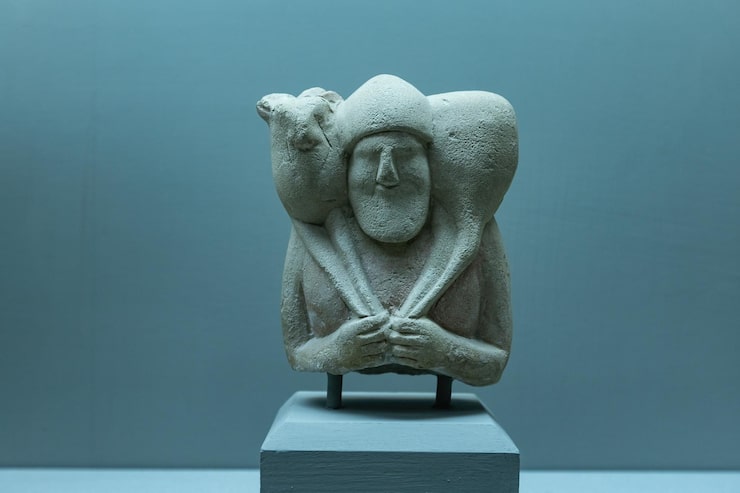
A "Kriophoros" figure, which translates to "ram-bearer" in Greek. This type of sculpture depicts a figure, often Hermes, carrying a ram or lamb on their shoulders. It commemorates the solemn sacrifice of a ram in ancient Greek religion, with Hermes Kriophoros being one of the god's epithets. The motif of the ram-bearer later found its way into Christian imagery, symbolizing the biblical "Good Shepherd".
These artifacts, typically carved from picrolite (a form of soapstone), are among the most famous examples of ancient Cypriot art. They are believed to represent a fertility goddess or a symbol of life and rebirth. What makes them so compelling is their stylized, minimalist design—a seated figure with a second, smaller figure suspended from its body. This design, which is found in numerous variations, is a powerful visual motif that has captivated archaeologists and visitors alike for decades.
Seeing these figures pop up again and again in different rooms and contexts truly gives a sense of the culture that created them. It highlights the importance of these symbols in daily life and ritual, showing how a single, powerful image could permeate an entire civilization. It’s a great example of how a museum’s collection can tell a cohesive story over time.
Cyprus Archaeological Museum, Nicosia
#archaeohistories
@kowalcwks@LegiaWarszawa@Conf_League A karnety obowiązywały na ten mecz? Bo ja, jako karneciarz musiałem kupić bilet... Te dane mówią, że nieobecnych był0 399 osób które kupiły bilet i 86 zaproszonych. Co ciekawe 160 "bileciarzy" to kibice gości, więc tylko 240 kibiców Legii kupiło bilet i nie przyszło.
@Dr_TheHistories The photo shows the theater in Orchomenos. The theater in Thorikos is different. The theater is unusual in its design, as it is elongated instead of the typical semicircle. I'm attaching a photo I took last year in Thorikos.