The answer is D, ovum. The ovum is the female egg, and it is the largest cell in the human body by volume, measuring roughly 0.12 mm in diameter. Interestingly, it is the only cell that is visible to the human eye. Neurons are nerve cells, and they are the LONGEST cells in the human body, followed by myocytes (specifically skeletal muscle cells). Erythrocytes are red blood cells, and they are much smaller than the other cells listed above.
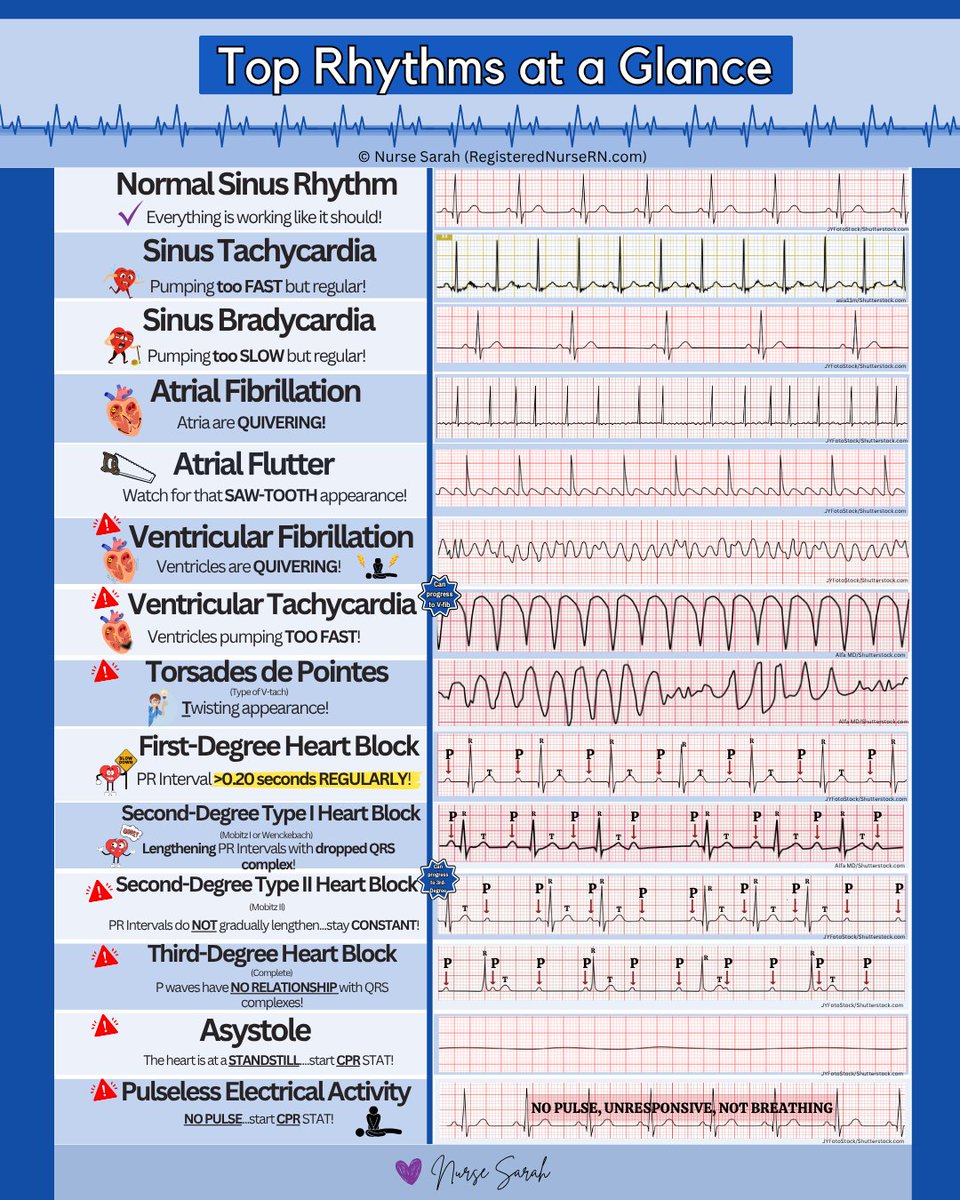
Top ECG rhythms you want to know:
Normal sinus rhythm = everything is working as it should
Sinus tachycardia = pumping too fast but regular
Sinus bradycardia = pumping too slow but regular
Atrial fibrillation = atria are quivering
Atrial flutter = saw tooth appearance
Ventricular fibrillation = ventricles are quivering
Ventricular tachycardia = ventricles are pumping too fast
Torsades de Pointes = twisting appearance
First-degree heart block = PR interval >0.20 seconds regularly
Second-degree heart block = Lengthening PR intervals with dropped QRS complex
Third-degree heart block = P waves have no relationship with QRS complex
Asystole = heart is at a standstill. Start CPR STAT!
Pulseless electrical activity (PEA) = no pulse; start CPR STAT!
NCLEX: Know when to cardiovert vs. defibrillate!
-CARDIOVERT: Pulse PRESENT. Used for UNSTABLE a-fib, svt, a-flutter, v-tach w/ pulse. Goal: CONVERT rhythm. SYNCHRONIZED shock w/ R-wave. Sedate if possible.
-DEFIBRILLATE: Pulse GONE. Used for v-fib & pulseless v-tach. NOT used for PEA or asystole. Goal: RESET the heart. Shock IMMEDIATELY.
#nclex #nursing #nursingschool #nurse
Congratulations to all of the 2026 nursing school graduates, as well as all of the other students graduating! This is a BIG DEAL! You have accomplished something so amazing, and I am so proud of you and excited for your future. I love you all and wish you nothing but the best!!
NCLEX Study Tip: Don't mix up your anticoagulants!
-HEPARIN: Works fast. IV or SubQ. Monitor aPTT. Antidote Protamine Sulfate.
-WARFARIN: Works slow. Oral (PO), Monitor PT/INR. Antidote Vitamin K.
NCLEX traps to Avoid:
1. Don’t judge your performance by question difficulty. The NCLEX is adaptive, so questions change based on your answers. Focus on one question at a time.
2. Don’t panic if the test doesn’t shut off at 85. You can pass or fail at the minimum or maximum number of questions. Keep going and stay focused.
New Nurse Reminder: There is NO such thing as a stupid question. If you’re unsure about something, ask. Even the most experienced nurses still ask questions. That’s not weakness....it’s being smart and keeping patients safe.
Happy Nurses Week to all nurses: past, present, and those on the way. It’s a privilege to be part of this amazing profession that works tirelessly to care for others. I'm so thankful for the pioneers of our field and those in the profession today who continue to raise the standard of patient care and shape the future of nursing. Over the years, I've been shaped, encouraged, and taught by some exceptional nurses whom I deeply admire. It's an honor to be counted among you. I love you all 💜💜💜
#nurses #nurse #nursesweek #nursing
Nurse burnout is REAL, but before you leave the profession, it's worth asking:
1. Am I taking adequate time off to rest & enjoy life? All work and no play makes a nurse lose their way. 2. Am I in the right specialty? A switch could be life-changing. 3. Is this just new-job stress? Many things improve with time.
If you still decide nursing isn't for you, that's okay. But those things are worth checking first.
#nurse #nursing #nursingschool