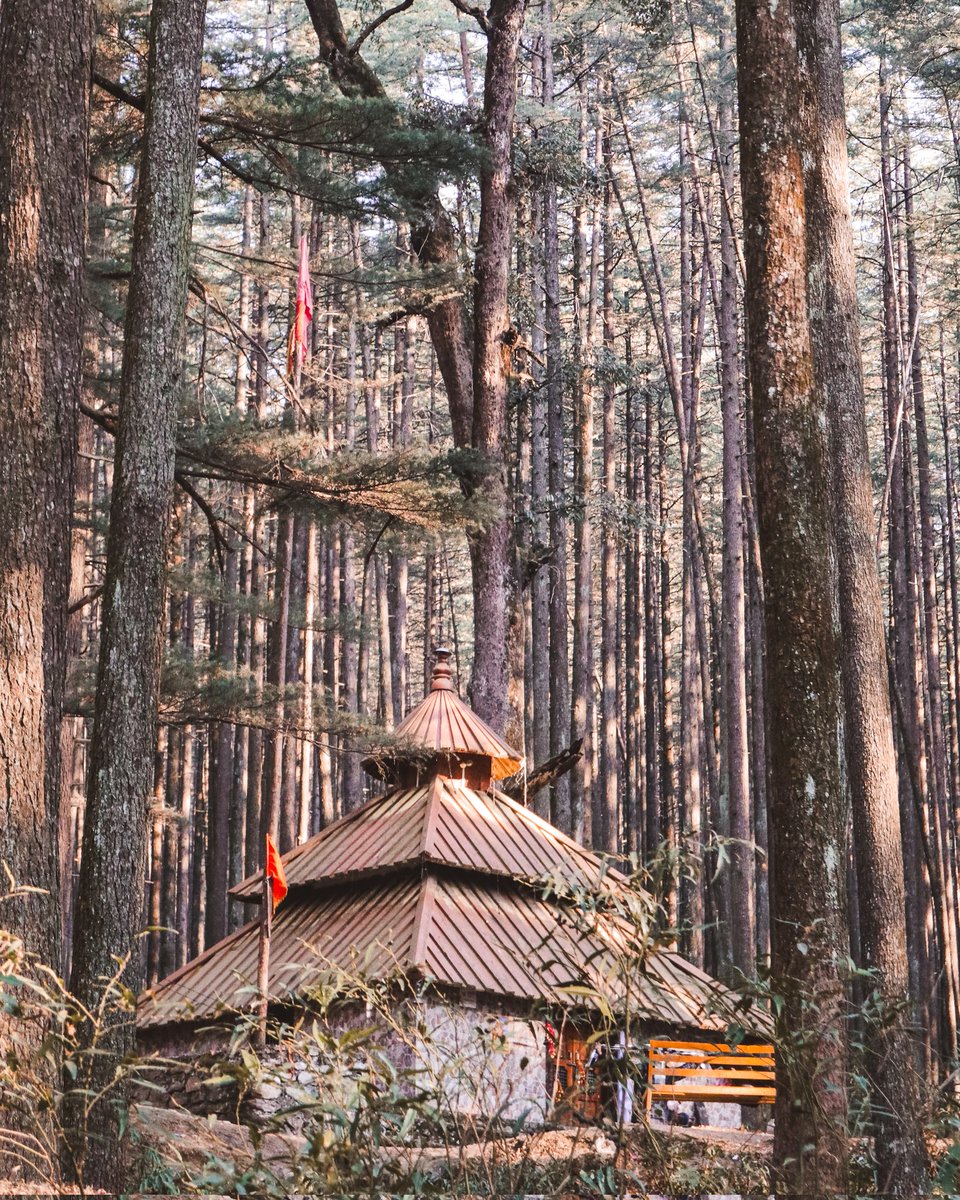
The famous Devalsari Shiva Temple of the Aglar Valley, in Tehri Garhwal District. It is said to have been built in the 1600's and is surrounded by tall deodar trees. 600 years ago, the area had no deodar forests but was used to grow Jowari.
#devalsari#uttarakhand#india
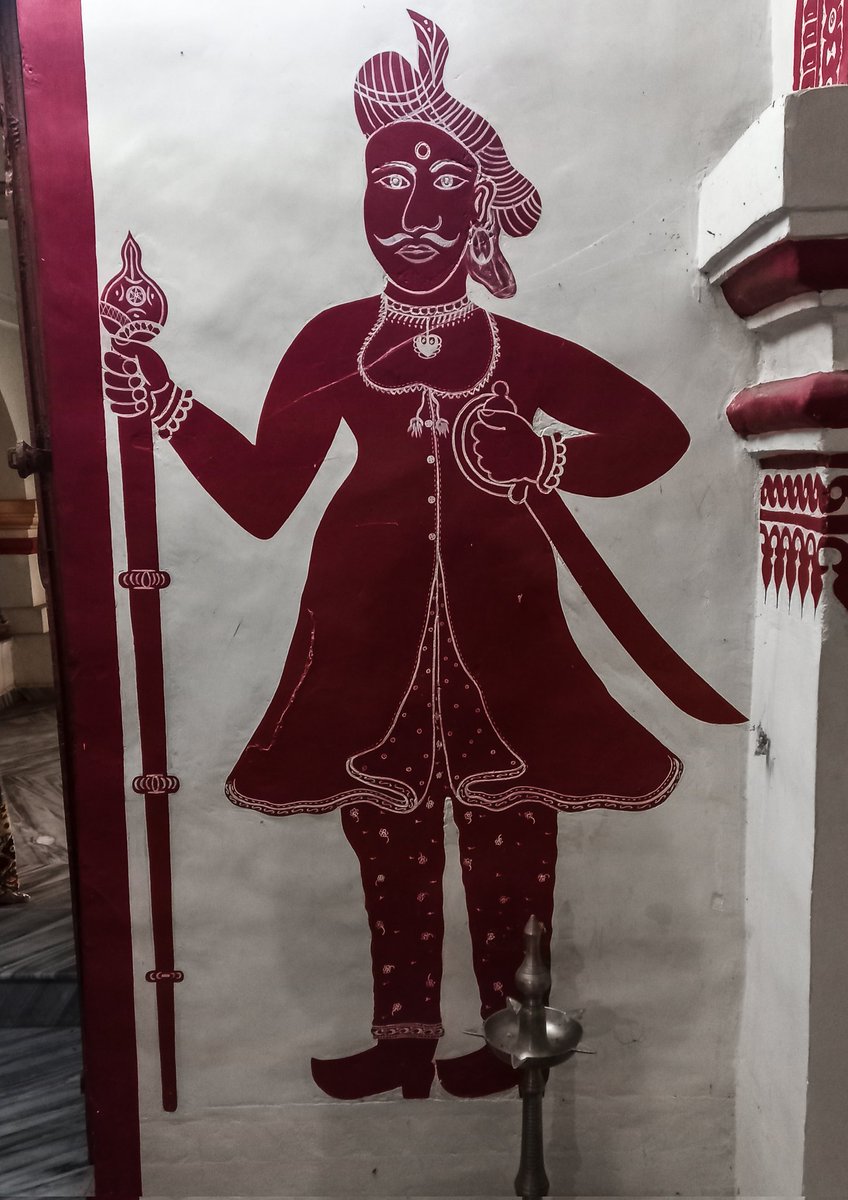
Before the Kaav dried, a required design template was used to etch out the areas not required, leaving the required design on the wall. The difference between Kaavi art & Graffito, though they look similar is that Graffito art design can be felt, the Kaavi design cannot be felt.
KAAVI ART- The technique Kaavi Art required etching a semi-wet lime coat (white)of a wall, with the required design, and then filling it up with a burgundy coloured mud, called as “Kaav”, - duly treated. This was allowed to dry. After drying, the wall was polished smooth.
This allowed the kaav to embed itself in the wall, and could not be felt with the fingers. This was found in Hindu temples and mansions. The exact opposite of this is the Graffito Art seen in old Church walls. Here a thin coat of “Kaav” was applied on a dry white wall.