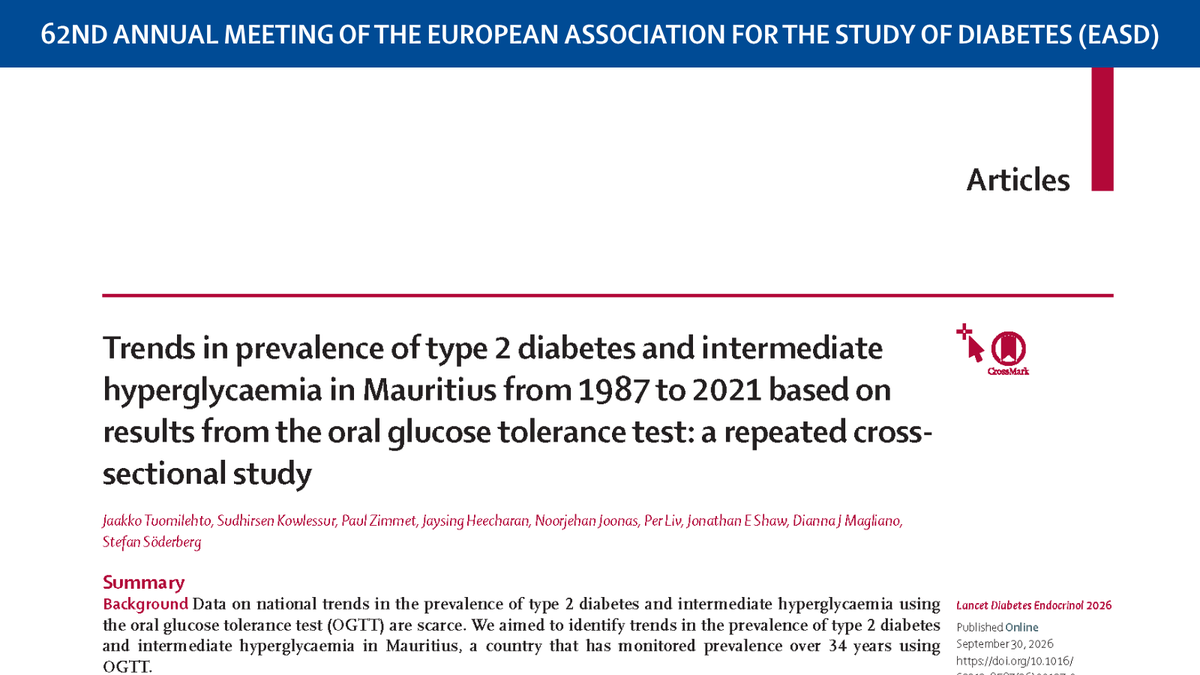
Presented at #EASD2026—Mauritius is the first country to show a decreasing prevalence of diabetes and intermediate hyperglycaemia over time, using the objective, gold standard OGTT-based diagnostic criteria recommended by WHO. More in The Lancet Diabetes & Endocrinology: https://t.co/YrWo7z2VzG #EASD2026
FOODS THAT HELP REPAIR YOUR ARTERIES
1. OLIVE OIL ON EVERYTHING – replaces the seed oils destroying your arteries.
2. BEETS AT DINNER – nitrates drop blood pressure within hours.
3. POMEGRANATE – the only fruit clinically proven to reverse arterial plaque.
4. RAW GARLIC WITH YOUR LAST MEAL – allicin relaxes blood vessels for 6–8 hours.
5. TURMERIC WITH BLACK PEPPER ��� anti-inflammatory stronger than ibuprofen without the gut damage.
6. WALNUTS BEFORE BED – lower LDL cholesterol while your body rests.
7. YOUR BODY DOES ITS DEEPEST REPAIR between midnight and 4 AM. What you eat at dinner decides whether it heals or keeps breaking down.
A lactic acid bacterium isolated from kimchi can help promote the removal of nanoplastics from the body by binding to them in the intestine.
https://t.co/R8CaiyiDz6
Fact Check: Long-term cetirizine use causes dementia and stops dreams? Here’s what doctors say
Viral Instagram reels claim long-term use of cetirizine and other newer antihistamines suppresses REM sleep, stops people from dreaming and increases the risk of memory loss and dementia.
This informative article published in @NewsMeter_In has my quotes.
https://t.co/N9ccc02fla
"नियति ने इस बच्ची को 2 बाजू नहीं दिए तो क्या हुआ, इस बिटिया ने अष्ट सिद्धियों को सिद्ध करके सभी शक्तियों को अपने बस में कर लिया हे"
हाथों के बिना बॉडी का इतना बैलेंस वाकई कमाल हे ।
हार्दिक बधाई के साथ ढेरों आशीर्वाद💐
Most people train abs the wrong way for real-world balance.
Crunches? They barely touch the deep stabilizers that keep you steady on your feet.
Enter the side plank:
This is a move that torches your obliques, quadratus lumborum, transverse abdominis, glutes, and hips, the lateral chain that controls side-to-side stability.
Stronger side core = better balance, fewer falls, smoother movement, and a bulletproof lower back.
Research shows core stability moves like side planks improve postural control and reduce injury risk.
No fancy equipment needed. Just your body and consistency.
Try this:
Hold a side plank for 20-30 seconds per side (or build up from your knees).
Do 3 rounds, 3x/week.
Watch your balance transform.
What’s your biggest balance struggle — stairs, single-leg stands, or just feeling wobbly? 👇
#BalanceTraining
#CoreStrength
#FunctionalFitness
Diet + physical activity works. An umbrella review of 112 reviews, 2,332 RCTs & 5lack participant-observations across 50+ countries highlights this
Published in Obesity Pillars Journal… pl read - https://t.co/E5COGQxFGg
@ICMRDELHI@MoHFW_INDIA@DeptHealthRes@OMAsocial
Small but mighty: pumpkin seeds are nutritional powerhouses in disguise.
Just one handful packs nearly a third of your daily zinc—a mineral your immune system can’t do without.
But the benefits don’t stop there. These tiny seeds bring fiber, plant-based omega-3s, iron, magnesium, and protein to the table.
Action plan:
1. Snack on a small handful (about 1 oz) daily for a zinc and nutrient boost.
2. Sprinkle them on salads, yogurt, oatmeal, or blend into smoothies.
3. Top creamy soups, like butternut squash or tomato, with a spoonful of toasted seeds.
4. Blend roasted seeds in a high-speed food processor until smooth to create a nutrient-dense spread. Excellent alternative for sandwiches or as a dip for apple slices.
5. Store raw or roasted seeds in an airtight container for freshness and grab-and-go ease.
#PumpkinSeeds
#ZincBoost
One of the best ways to improve your balance? Get stronger.
Balance isn’t just about standing on one leg. When you trip, stumble, or step off a curb awkwardly, your muscles have to react quickly enough to keep you upright.
That’s where strength training comes in.
Exercises like lunges, step-ups, split squats, and single-leg deadlifts challenge strength + stability + coordination at the same time.
And this becomes increasingly important with age: r
Resistance training can improve balance and physical function in older adults and may help reduce fall risk when iyou include it in a well-designed exercise program.
Try adding 1–2 unilateral exercises to your strength workouts.
Strong legs are your emergency balance system.
#StrengthTraining#BalanceTraining
The Promise at Bedside 12
It was my first year as a young doctor at CMC Vellore in 1994. I was in my twenties, still learning that medicine was as much about people as it was about diseases.
One rainy evening, an elderly man named Raman was admitted to our ward with a severe stroke. He could barely move his right side and had lost the ability to speak.
By his bedside sat his wife, a frail woman in a faded green sari. Every few minutes, she would lean towards him and whisper, “I am here.” He could not answer. But each time she spoke, his eyes moved towards her.
The next morning, I explained the situation to the family. His two sons had travelled overnight from different towns. They listened quietly as I described the stroke, the treatment and the uncertainty ahead.
“Will he become normal again, doctor?” one of them asked.
It was the question every young doctor feared. I looked at Raman lying silently on the bed and then at his wife, clutching the edge of her sari.
“I don't know how much he will recover,” I said honestly. “But we will do everything we can. And we will take one day at a time.”
His wife looked at me for a few seconds. Then she said something I have never forgotten.
“Doctor, you treat him. We will give him a reason to get better.”
Over the next few weeks, Raman became part of our daily lives. Physiotherapy was painful and frustrating. Speech therapy seemed to produce little progress. Some days he appeared discouraged. But his family never gave up.
His wife brought photographs from home and showed them to him. His grandchildren visited whenever they could. His sons took turns sitting beside him at night. And every morning, before I could even ask how he was doing, his wife would tell me proudly about the smallest improvement. “Today he moved his finger.” “Yesterday, he smiled.” “Doctor, I think he understood what I said.”
To an outsider, these may have seemed like insignificant victories. To that family, they were miracles.
One afternoon, while examining him, I asked Raman to squeeze my hand.
Nothing happened. I tried again.
“Mr Raman, can you squeeze my hand?”
Slowly, almost imperceptibly, his fingers tightened around mine.
I looked at his wife. She had seen it too. Her eyes filled with tears.
“Did you see, doctor?” she asked.
“Yes,” I said, smiling. “I saw it.”
She folded her hands before me in gratitude. I immediately stopped her.
“Please don't thank me. Your family is doing half the treatment.”
She smiled and said, “No, doctor. We could have sat here and cried. You gave us hope without giving us false promises.” That sentence taught me something no textbook had taught me.
Patients and families do not always expect miracles from doctors. They understand, often better than we imagine, that medicine has limitations. What they seek is honesty, competence and the feeling that someone has not abandoned them in their most difficult moment.
Several weeks later, Raman was discharged. He still needed assistance to walk and his speech had not fully returned. His recovery was far from complete.
As they were leaving, his wife came to find me. She held out a small packet.
“I made these at home,” she said. “Please take them.”
Inside were a few homemade sweets. I hesitated. “You really don't need to give me anything.”
She smiled. “Doctor, these are not for treating my husband. These are for treating a young doctor's heart.” I still remember those words.
Years later, I came to realize that the doctor-patient relationship is not a one-way street. Doctors treat illness, but patients and their families often teach doctors what healing truly means. Medicine today has extraordinary technology; scans that can see inside the body, medicines that can transform lives and procedures that were once unimaginable.
But sometimes, the most powerful thing a doctor can offer is much simpler: time, attention, honesty and hope. And sometimes, the greatest reward for a doctor is not a fee, an award or a headline. It is the memory of a family who trusted you when their world was falling apart, and the knowledge that, for a brief moment in their journey, you were allowed to walk beside them.
That is the privilege of being a doctor.
Dr Sudhir Kumar @hyderabaddoctor
(Name has been changed to protect privacy)
Whether it’s at your desk or on a couch, sitting for hours on end is bad for your health. It’s linked with obesity, heart disease, and high cholesterol. When you sit for too long, an enzyme that turns harmful LDL cholesterol into good HDL cholesterol drops by 95%. To protect your heart, take frequent breaks. Stand up at least every 30 minutes and, if you can, go for a 5-minute walk every hour. Find out what might be bumping your LDL levels up. https://t.co/B64OFoLdDp
Most people soak chia seeds in water and think they’re optimizing gut health.
They’re not.
Here’s the upgrade most miss:
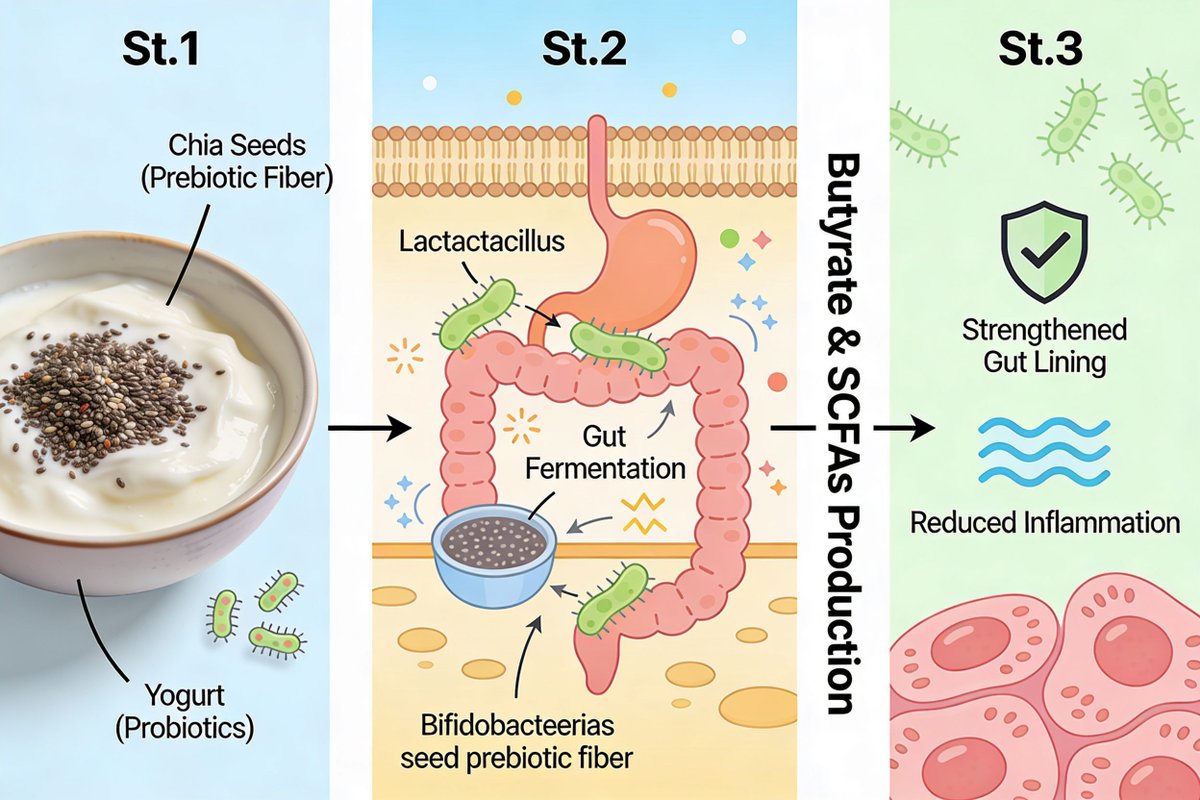
Chia’s soluble fiber (about 10 g per ounce) is a potent prebiotic.
Pair it with live-culture yogurt and you create a natural synbiotic.
The probiotics get fed immediately, ramping up production of short-chain fatty acids—especially butyrate.
Butyrate is the preferred fuel for your colon cells.
It calms inflammation, tightens the gut lining, and helps break the vicious cycle of
Leaky gut → more inflammation → even weaker barrier.
Skip the plain chia water.
Stir 1–2 tablespoons of chia seeds into plain yogurt, let it gel for 10–15 minutes, and eat it.
One small daily tweak. Real gut payoff.
Have you made the switch from chia water to chia yogurt yet?
Reference: Kwon et al., J Dairy Sci 2019 (chia enhances LAB growth & yogurt bioactivity); supporting SCFA data from chia fiber fermentation studies
Worried that running will “wear out” your knees?
This is one of the most persistent myths about osteoarthritis (OA).
Here are 7 evidence-based ways to protect your knees & hips.
1️⃣ Keep moving
✅Walking, cycling, swimming and other aerobic activities are good for your joints.
🔸Exercise does NOT “wear out” healthy joints.
✅In fact, regular exercise is one of the best-supported strategies for maintaining joint function and reducing OA-related pain and disability.
2️⃣ Running is NOT necessarily bad for your knees
🔸Recreational runners do not appear to have a higher risk of knee/hip OA than sedentary people.
✅Some studies find lower OA occurrence among recreational runners.
🔸The concern is more relevant to very high-volume/high-intensity running, previous major joint injury and certain individual risk factors.
So:
❌ “Running destroys your knees” is a MYTH
✅Sensible, progressive running is generally fine for healthy joints.
3️⃣ Strength training may be your knee’s best friend
✅Build the muscles around the quadriceps, hamstrings, glutes, calves and hips.
✅Stronger muscles improve joint function and load tolerance.
✅And you don't need a gym; squats, step-ups, lunges, resistance bands and other progressive exercises can work.
4️⃣ Maintain a healthy weight
🔸This is particularly important if you are overweight or obese.
🔴Excess body weight increases mechanical loading on the knee and hip and is an important modifiable risk factor for OA.
✅If you are overweight, weight loss + exercise is a powerful combination.
5️⃣ High-impact vs low-impact exercise: which is better?
🔸There is no single “best” exercise for everyone.
✅Walking, strengthening, neuromuscular exercises and aquatic exercises can all be useful.
🔸Current guidelines do not establish a hierarchy in which one type is universally superior.
✅The best exercise is often the one you can do consistently and progressively.
6️⃣ What about calcium, vitamin D & protein?
✅Adequate protein, calcium and vitamin D are important for overall muscle and bone health.
▶️“Important for bones/muscles” does not mean “prevents osteoarthritis.”
🔸There is no good evidence that routinely taking calcium or vitamin D supplements prevents knee/hip OA in people who are not deficient.
✅Supplement when there is a genuine indication; not simply because you have reached a certain age.
✅Similarly, adequate protein supports muscle maintenance, but protein supplements are not proven OA-prevention drugs.
7️⃣ What if you already have knee pain?
🔸Don't automatically stop exercising.
✅For most people with knee OA, exercise is part of the treatment, not something to fear.
✅Walking, cycling, swimming and strength training can often be modified according to symptoms.
🔸Even people with OA can often continue running, provided the condition is appropriately assessed and running is introduced/continued progressively.
🟠If pain is persistent, swelling is significant, the knee locks/gives way, or symptoms are worsening, you should get assessed.
🚨 5 myths to remember
❌ “Running causes knee arthritis.”
❌ “You should rest if you have knee OA.”
❌ “Only low-impact exercise is safe.”
❌ “Calcium + vitamin D supplements prevent arthritis.”
❌ “Once you have OA, exercise will damage the joint further.”
✅The truth:
Your joints are designed to move. The goal is not to avoid loading your knees and hips. It is to load them appropriately, build strength, maintain a healthy weight and avoid preventable injuries.
Dr Sudhir Kumar @hyderabaddoctor
Cutting sugar during pregnancy and early childhood protects the brain decades later.
A breakthrough study leveraged the UK’s historical sugar rationing as a natural experiment to study the first 1,000 days of life (conception through age 2).
The findings on lifelong brain health are striking:
▶️Key Findings in Later Life:
✅Alzheimer’s Disease: Up to 46% lower risk
✅All-Cause Dementia: 27% lower risk (and onset delayed by ~2.5 years)
✅Depression: 11% lower risk
✅Anxiety: 20% lower risk
▶️MRI Brain findings were amazing too:
Brain MRI scans revealed decelerated brain aging in those with early-life sugar restriction:
✅Higher total gray matter volume
✅Larger hippocampal (memory center) and thalamus volumes
✅Lower white matter hyperintensities (fewer microvascular brain changes)
Why Does Early Sugar Consumption Matter So Much?
1. Fetal & Infant Neurodevelopment: Excess sugar in early life triggers insulin resistance, maternal hyperglycemia, and systemic inflammation, impairing early synaptic maturation.
2. Preventing Midlife Disease: Early low-sugar environments lower the risk of midlife Type 2 Diabetes and Hypertension, which jointly account for ~25% of dementia risk.
3. Lifelong Taste Preferences: Children with low early sugar intake naturally develop less preference for sweet, ultra-processed foods as adults.
Takeaway for Expectant Mothers & Parents:
🔸The first 1,000 days lay the neurobiological foundation for life.
✅Eliminating added and free sugars during pregnancy and avoiding introduced sugars for infants/toddlers protects cognitive and mental health 50+ years down the line!
Dr Sudhir Kumar @hyderabaddoctor