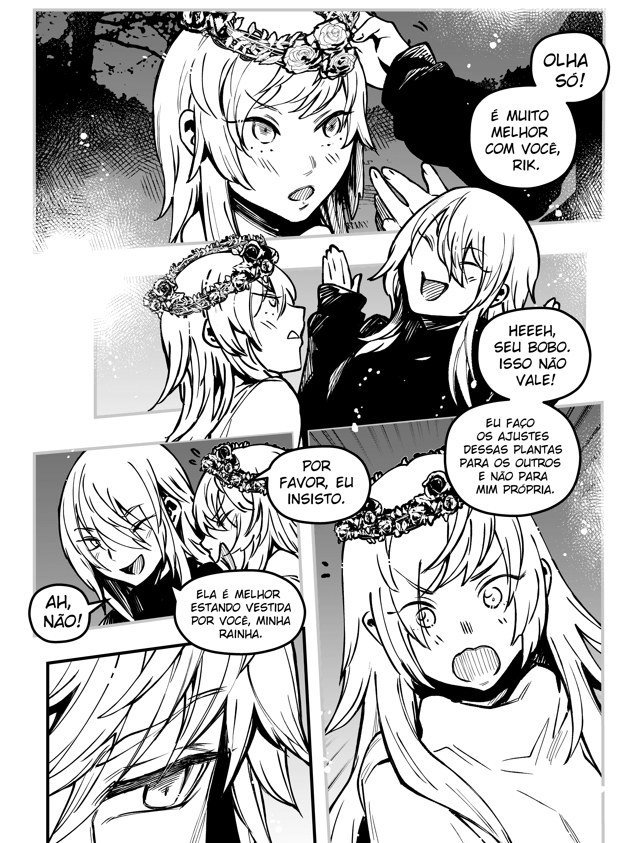
Estou confirmadíssima na Comic Market Brasil ! Após a pré-venda no apoiase, o lançamento oficial do volume 02 de Lost Lilled será feito no evento! Também estarei lançando mais produtos inéditos de meus quadrinhos em primeira mão! Nos vemos lá! https://t.co/UCFgvC2h3d
I have my complains about it to be a circle..... c'mon i'll miss my square box. ç--ç
Hope i can have a way to split it to be a way bigger to get both faster on my smol tablet LOL
“The Meaning of Paying for Manga”
There was a time, in the late 1990s, when I believed that all manga should be sold and purchased.
Today, I no longer think that way.
Manga can be distributed in many different ways.
Some manga can be free.
Some can be supported by advertising revenue.
In some cases, the manga and comics themselves may function as promotion or publicity for something else.
However, I still believe that the core of the manga industry must be supported by readers who choose to pay for it.
But that raises an important question: What does the reader gain?
The creators and publishers receive revenue, so it is easy to understand why they benefit.
But what does the person who buys the manga actually receive?
If the answer is simply, "You should pay because the law says so," then people may pay, but something still feels missing, right?
Why does it sometimes feel less satisfying than when people used to read piracy manga for free?
Perhaps because, if payment exists only to gain access to the content itself, then the experience is incomplete.
And I believe this is where the future of manga services must evolve.
First, there is the value of ownership.
When you buy a printed manga tankōbon volume, you gain something physical.
Anyone who has collected books understands the pleasure that comes from that.
The joy of a manga tankōbon volume is not only in the short time spent reading it.
In many ways, it is the years it spends sitting on your bookshelf afterward that matter even more.
For a long time, I believed printed books would eventually disappear.
Now I believe the opposite.
I believe printed books should exist forever.
Because the pleasure of physical ownership is real.
Even in a future centered around digital services, we should continue exploring ways to preserve that sense of ownership and attachment.
Books will remain important, but digital platforms should also think creatively about how physical collections and digital experiences can support each other.
There is another point that deserves attention.
Human beings often enjoy spending money on things they truly love.
When we share a meal with someone we care about, we often want to pay.
When we love a pet, we want to buy things for that pet.
The idea that "everyone prefers everything to be free" is not only simplistic—it misunderstands human nature.
When people spend money on a manga they love, the happiness does not come only from reading it.
There is also joy in the act of supporting it.
The moment of purchase itself can be meaningful.
In some ways, it is similar to buying a car.
The excitement is not only in driving it later—the moment of purchase is often one of the happiest moments.
Of course, it would be naïve to assume that people will happily pay simply because spending money feels good.
That would be no different from assuming that everyone automatically prefers things to be free.
If readers are paying, the industry must provide real value of service in return.
Platforms that are funded by consumers have the ability—and the responsibility—to do that.
After all, if consumers are paying the bills, then consumers should matter more than advertisers.
And I believe we can imagine services that are much better than the ones that currently exist.
This is the central point I want to make.
Paying for manga is about more than buying a book.
It is about more than receiving a service.
When you pay for manga, you are helping to build and sustain a system.
That is my core argument.
But what kind of system?
A system called manga culture.
When readers support manga, they help create a world where manga culture can flourish within their own country.
And what does that mean?
It means manga conventions, cosplay events, dōjinshi culture, and independent manga and comic creators.
It means communities of readers, critics, journalists, and commentators.
It means a healthy relationship between creators and audiences(readers and fans), where readers are not merely spectators but participants whose voices matter.
It means districts and cultural spaces that become gathering places for fans.
It means the growth of related industries—animation, games, merchandise, film, and many others—that enrich the manga experience and create opportunities for new creators.
It means living in a society where loving manga is respected rather than dismissed.
It means seeing your country's creators recognized around the world.
It means feeling proud when works born from your own culture reach global audiences.
These are the things that readers ultimately receive.
They may not arrive immediately.
But when someone chooses to save some lunch money and buy a manga volume instead of spending it elsewhere, they are contributing to something much larger than a single purchase.
They are helping build a system.
A MANGA CULTURE!
YOUR OWN MANGA CULTURE!
🚨 TÁBULA EDITORA ANUNCIA REPUBLICAÇÃO DE RYUKO, MANGÁ NOIR DE ELDO YOSHIMIZU
Tábula Editora anunciou, durante uma transmissão ao vivo em seu perfil no Instagram, que irá republicar o mangá Ryuko, de @RYUKOyoshimizu. A previsão é que os dois primeiros volumes cheguem ao mercado ainda em 2026.
A obra havia sido publicada anteriormente no Brasil pela Skript Editora, em 2023, em um volume único que reunia todo o material disponível até então. No entanto, após o lançamento da edição brasileira, Yoshimizu confirmou a continuação da série. Os novos capítulos serão posteriormente compilados nos volumes 3 e 4, inéditos no mercado brasileiro.
Na trama, Ryuko, integrante do alto escalão da máfia japonesa, vê sua vida tomar rumos inesperados ao se envolver com uma misteriosa organização terrorista. Em meio a conspirações internacionais, disputas políticas e segredos do passado, a protagonista embarca em uma jornada marcada por violência, suspense e reviravoltas, após o sequestro de sua mãe, um acontecimento que pode estar ligado à morte de seu pai. O resultado é um thriller policial intenso, no qual as fronteiras entre o bem e o mal se tornam cada vez mais nebulosas.
Segundo a editora, a nova publicação seguirá o formato original japonês, com os volumes sendo lançados individualmente. Os dois primeiros estão previstos para este ano, enquanto o terceiro deve chegar ao mercado entre o final de 2026 e o início de 2027. Já o quarto volume tem lançamento planejado para ocorrer simultaneamente à edição japonesa.
Mais informações sobre a publicação, incluindo detalhes de formato, acabamento e cronograma de lançamento, deverão ser divulgadas em breve pela Tábula Editora.
Hello there! It's been awhile!
I'm currently in a huge financial crisis and genuinely need help rn. Long story short I got screwed by my old accountant and now I owe a lot in taxes and the amount is absolutely insane. I have an online store and patreon!
A NOVA VERSÃO DA MINHA HISTÓRIA VAI SER PUBLICADA EM UMA EDITORA DE MANGÁS ! ! !
✨⭐️🚌48km - Edição Definitiva🚌⭐️✨
será uma publicação dois em um, com a história completa em 384 páginas
eu nunca vou entender artista ou qualquer freelancer que da calote
tipo, mermao, tua profissão depende de confiança com cliente, se tu dê calote em um É OBVIO QUE VC N VAI TER MAIS CLIENTE PQ NINGUEM CONFIA EM VC
é burrice pura, não faz sentido nenhum