two projects looking at the same Solana problem: blockspace predictability.
Jito’s BAM and Raiku take different routes.
→ BAM uses a coordinator layer. Transactions get ordered inside TEEs before validators sign.
→ Raiku runs alongside validators through a sidecar. AOT handles planned execution, while JIT targets same-slot inclusion.
Raiku’s founder argues TEEs limit flexibility. He also says Raiku was built from scratch in Rust, giving validators and developers more control.
That’s Raiku’s view.
BAM has its own design, and Jito already has a long track record in Solana infra.
The bigger question is how validators will use both systems at scale.
Speed matters.
Predictable execution matters for apps relying on specific blockspace.
most blockchain infra asks you to compete for inclusion.
Raiku takes a different approach with Engineering Contracts.
▶ you reserve or prioritise space in an upcoming block
▶the infrastructure provider commits to a specific outcome
▶ the contract covers confirmation, timing, and delivery
▶ the commitment comes from the underlying architecture, not best-effort delivery
The wording looks small. The practical difference is big.
Best effort means you hope the transaction lands.
A contract means the execution was booked.
For a liquidation, scheduled settlement, or time-sensitive quote, timing is the whole point.
Solana solved the speed problem.
Raiku is working on the commitment problem.
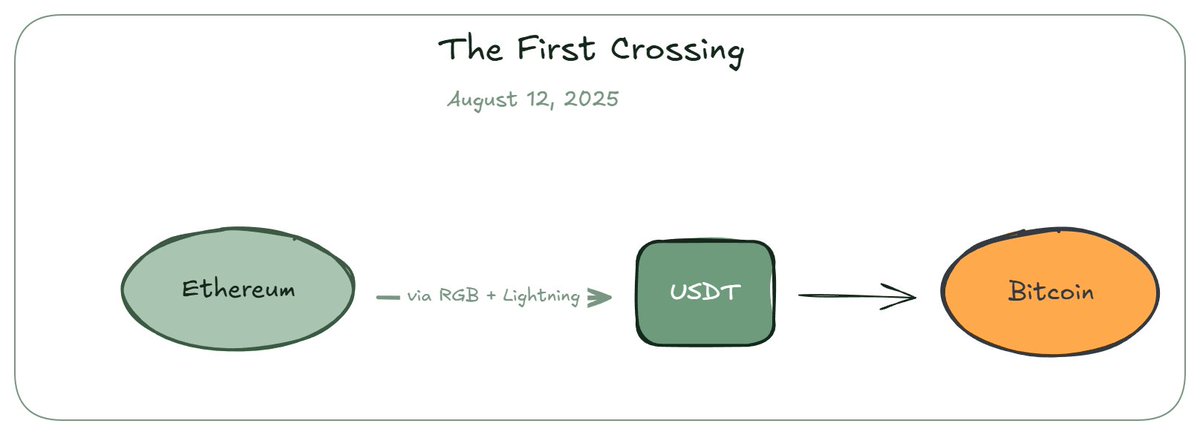
August 12, 2025. The first RGB bridge went live on Bitcoin.
USDT moved from Ethereum to RGB for the first time, with settlement over RGB Lightning.
• Tricorn built the bridge before joining @utexocom.
• At launch, access was limited to developers and the close community.
• Broader public access was announced as coming through Utexo.
• Bitcoin Magazine reported this as the first USDT issuance as an RGB asset on Bitcoin.
• The design focused on low fees, fast settlement, and peer-to-peer transfers.
Utexo is now building the user-facing tools around this infrastructure.
The team behind the first proof is now part of the team scaling the infrastructure.
RGB isn't run by one company. That's important for why @utexocom is building on it.
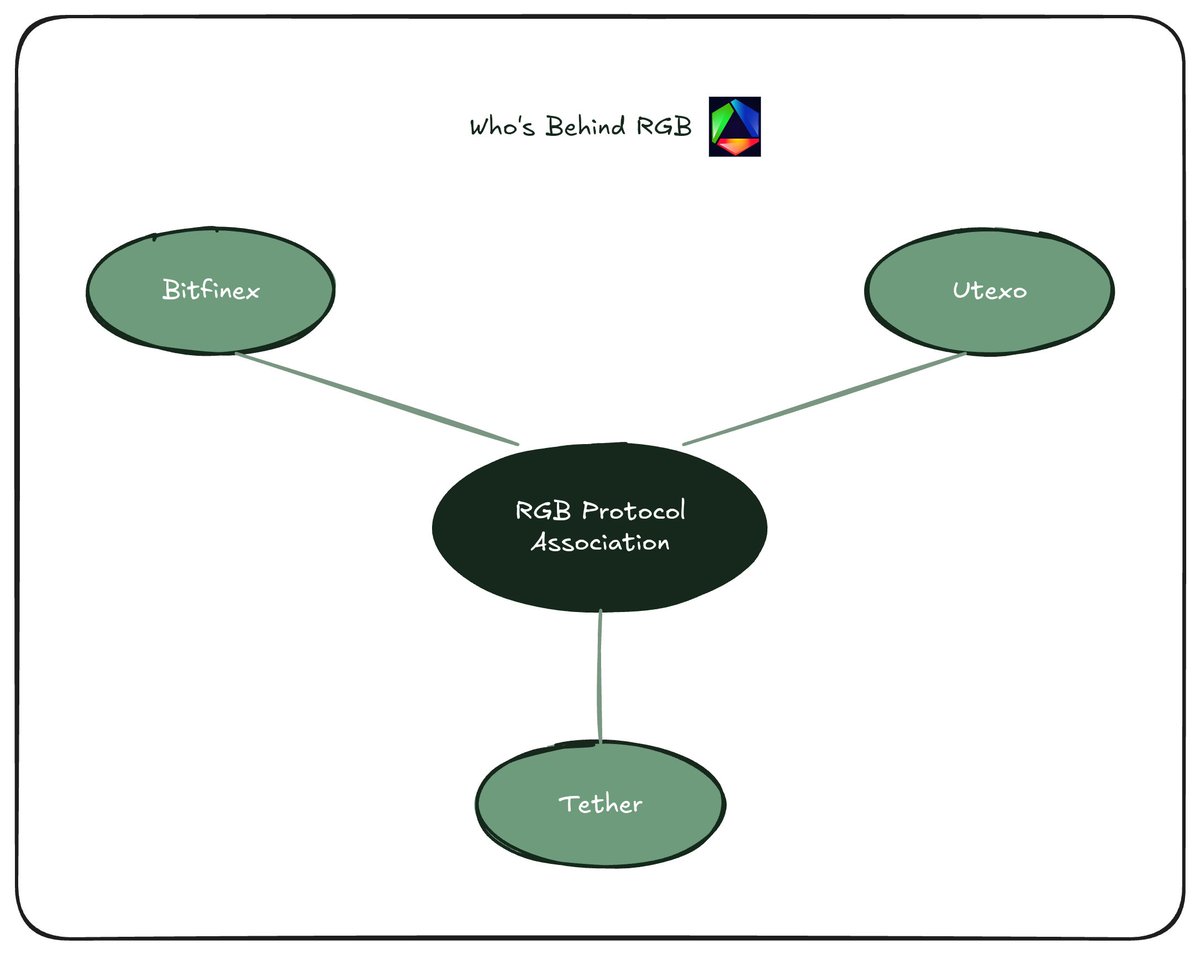
Before RGB reached mainnet in July 2025, developers and companies working on RGB formed the RGB Protocol Association.
The Swiss non-profit helps coordinate:
• Protocol standards
• Developer tooling
• Protocol releases
• Grants for independent infrastructure work
Who is involved?
→Bitfinex is a founding member and sponsor. Its RGB team, led by Federico Tenga, works on rgb-lib, RGB Lightning Node, and Iris Wallet.
→Other independent teams build wallets, business tools, and Lightning infrastructure.
→Tenga also sits on the Association's board and helps coordinate Lightning integration.
This matters for Utexo.
Utexo is building on an open protocol with multiple teams contributing to its development.
There isn't one company setting every rule or controlling the entire stack.
When Tether chose RGB for bringing USDT back to Bitcoin, the choice went beyond the technology itself.
It also meant choosing an ecosystem with independent contributors, institutional backing, and a governance structure designed around shared standards.
For infrastructure, who controls the protocol matters as much as the technology itself.
most blockchain infra asks you to compete for inclusion.
Raiku takes a different approach with Engineering Contracts.
▶ you reserve or prioritise space in an upcoming block
▶the infrastructure provider commits to a specific outcome
▶ the contract covers confirmation, timing, and delivery
▶ the commitment comes from the underlying architecture, not best-effort delivery
The wording looks small. The practical difference is big.
Best effort means you hope the transaction lands.
A contract means the execution was booked.
For a liquidation, scheduled settlement, or time-sensitive quote, timing is the whole point.
Solana solved the speed problem.
Raiku is working on the commitment problem.
every chain pitch obsesses over average speed. TPS, latency, finality time. all real. all optimized for years now.
but average speed was never the problem for the trades that matter most.
→ a liquidation doesn't care about the network's average speed. it cares whether it lands before the price moves again
→ a market maker's quote doesn't care about throughput. it cares whether the cancel beats the fill
→ a redemption doesn't care about TPS. it cares whether it settles inside its window, not eventually
tradfi solved this decades ago, and not by making everything faster.
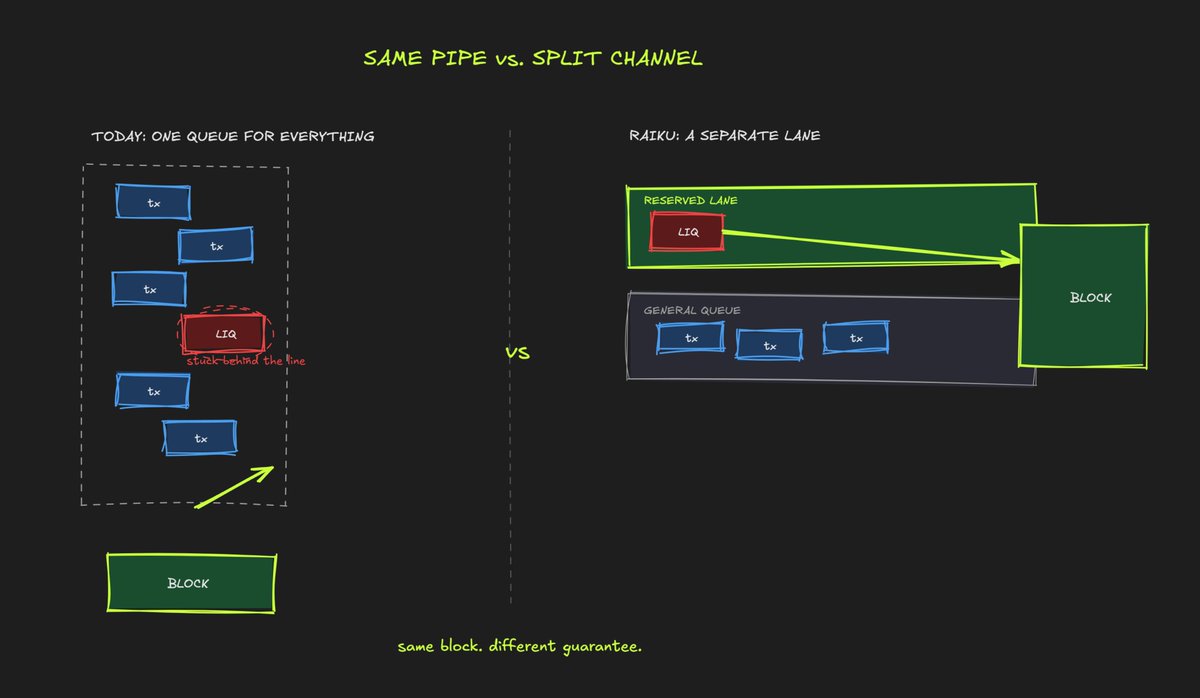
→ they split the flow: colocation, direct market access, block desks, prime brokerage
→ a separate channel for the trade that can't afford to lose the race, away from everything else competing for the same pipe
solana never built that channel.
every transaction, from the one deciding a protocol's solvency to the one creating background traffic, competes for execution.
→ raiku's AOT and JIT reservations are that channel
→ not a faster lane for everyone
→ a reserved lane for the transaction that actually needs one
speed is a network-wide average.
certainty is a property of one specific transaction.
solana has had the first for years.
this is what building the second looks like.
RGB isn't run by one company. That's important for why @utexocom is building on it.
Before RGB reached mainnet in July 2025, developers and companies working on RGB formed the RGB Protocol Association.
The Swiss non-profit helps coordinate:
• Protocol standards
• Developer tooling
• Protocol releases
• Grants for independent infrastructure work
Who is involved?
→Bitfinex is a founding member and sponsor. Its RGB team, led by Federico Tenga, works on rgb-lib, RGB Lightning Node, and Iris Wallet.
→Other independent teams build wallets, business tools, and Lightning infrastructure.
→Tenga also sits on the Association's board and helps coordinate Lightning integration.
This matters for Utexo.
Utexo is building on an open protocol with multiple teams contributing to its development.
There isn't one company setting every rule or controlling the entire stack.
When Tether chose RGB for bringing USDT back to Bitcoin, the choice went beyond the technology itself.
It also meant choosing an ecosystem with independent contributors, institutional backing, and a governance structure designed around shared standards.
For infrastructure, who controls the protocol matters as much as the technology itself.
Bitcoin critics often say it can’t do what Ethereum does.
And honestly, that’s the point.
Ethereum aims to support smart contracts, tokens, dApps, and many other use cases from one platform.
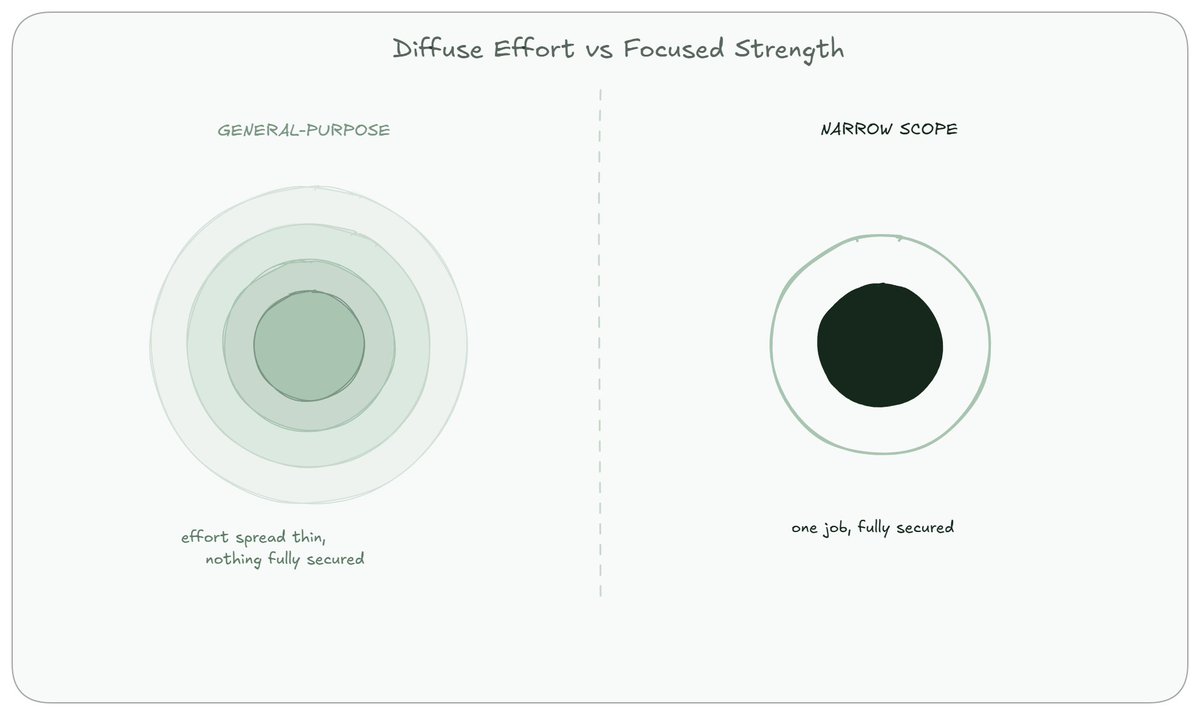
RGB takes a narrower approach.
Instead of turning Bitcoin into a general-purpose execution layer, RGB keeps Bitcoin focused on settlement and finality.
The rest happens outside the base layer:
• Contract logic • Asset history • Transaction execution • Wallet and infrastructure activity
This gives RGB a much more focused role.
RGB focuses on asset issuance and transfers. Utexo builds on this approach for stablecoin settlement.
The tradeoff is clear. You give up some flexibility in exchange for keeping Bitcoin’s base layer unchanged.
For stablecoin payments, this approach has a practical benefit:
Bitcoin stays focused on what Bitcoin already does well.
RGB handles the asset layer around it.
@utexocom builds the payment infrastructure on top.
Sometimes a narrower scope makes the system easier to reason about.
every chain pitch obsesses over average speed. TPS, latency, finality time. all real. all optimized for years now.
but average speed was never the problem for the trades that matter most.
→ a liquidation doesn't care about the network's average speed. it cares whether it lands before the price moves again
→ a market maker's quote doesn't care about throughput. it cares whether the cancel beats the fill
→ a redemption doesn't care about TPS. it cares whether it settles inside its window, not eventually
tradfi solved this decades ago, and not by making everything faster.
→ they split the flow: colocation, direct market access, block desks, prime brokerage
→ a separate channel for the trade that can't afford to lose the race, away from everything else competing for the same pipe
solana never built that channel.
every transaction, from the one deciding a protocol's solvency to the one creating background traffic, competes for execution.
→ raiku's AOT and JIT reservations are that channel
→ not a faster lane for everyone
→ a reserved lane for the transaction that actually needs one
speed is a network-wide average.
certainty is a property of one specific transaction.
solana has had the first for years.
this is what building the second looks like.
rkuSOL brings a different yield model to Solana LSTs.
▶Earn staking rewards plus blockspace auction revenue
▶ Revenue comes from Raiku’s AOT/JIT blockspace reservations
▶ Adds revenue tied to transaction demand
▶ Live on Kamino, Exponent Finance, and Loopscale
▶Exponent offers a 1-click APY multiplier
Solana staking yield relies heavily on inflation. rkuSOL adds another revenue source through blockspace demand.
Mainnet is tracking for Q4. Worth watching if you already stake SOL.
Bitcoin critics often say it can’t do what Ethereum does.
And honestly, that’s the point.
Ethereum aims to support smart contracts, tokens, dApps, and many other use cases from one platform.
RGB takes a narrower approach.
Instead of turning Bitcoin into a general-purpose execution layer, RGB keeps Bitcoin focused on settlement and finality.
The rest happens outside the base layer:
• Contract logic • Asset history • Transaction execution • Wallet and infrastructure activity
This gives RGB a much more focused role.
RGB focuses on asset issuance and transfers. Utexo builds on this approach for stablecoin settlement.
The tradeoff is clear. You give up some flexibility in exchange for keeping Bitcoin’s base layer unchanged.
For stablecoin payments, this approach has a practical benefit:
Bitcoin stays focused on what Bitcoin already does well.
RGB handles the asset layer around it.
@utexocom builds the payment infrastructure on top.
Sometimes a narrower scope makes the system easier to reason about.
If there’s one industry where fast, private, predictable payments matter a lot, it’s iGaming.
And this is where @utexocom starts to make sense.
iGaming platforms handle deposits and withdrawals all day, every day.
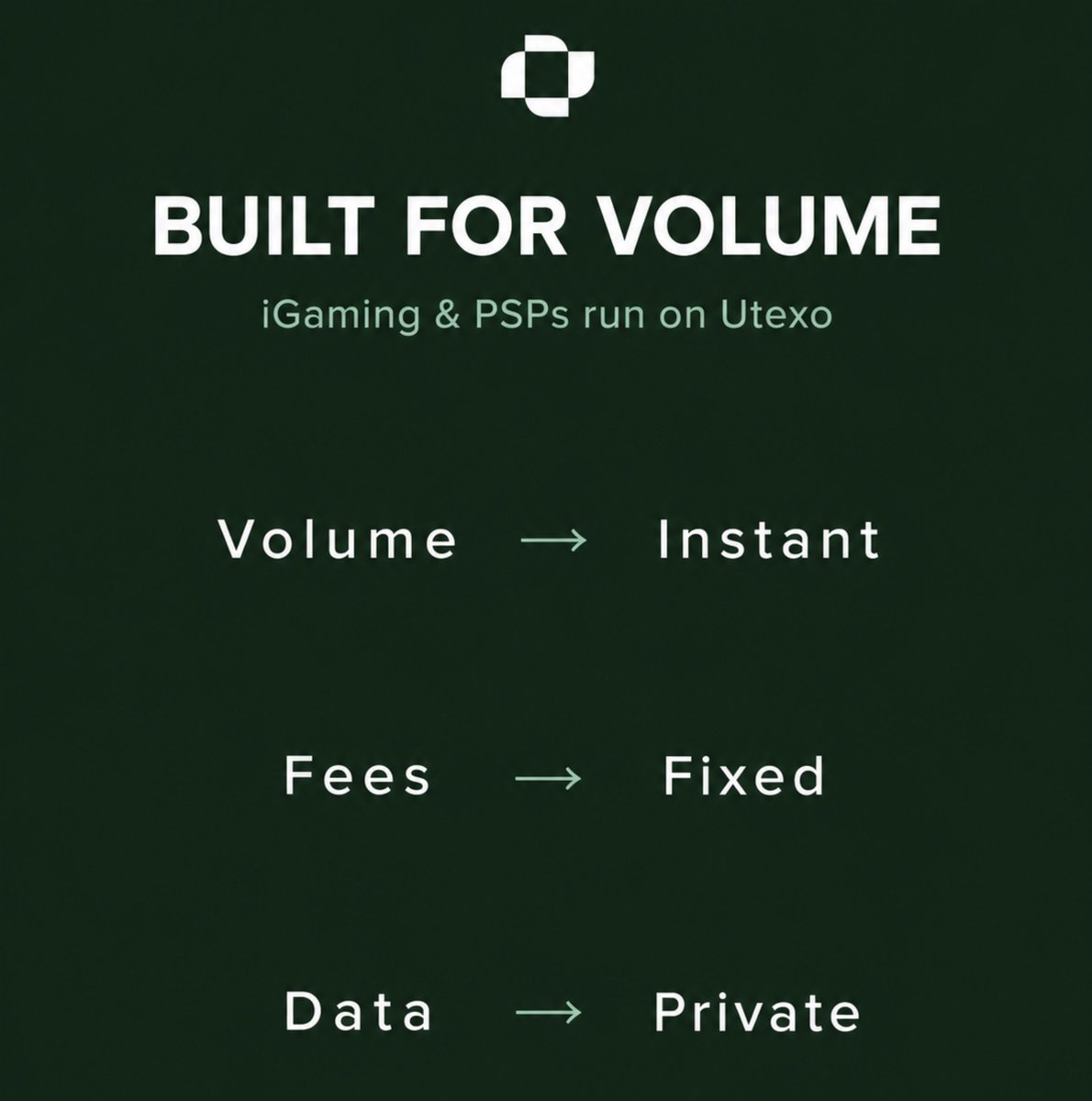
𝗩𝗼𝗹𝘂𝗺𝗲 𝗶𝘀 𝗰𝗼𝗻𝘀𝘁𝗮𝗻𝘁. Players don’t want to wait for their money. Even small delays can affect the user experience.
𝗙𝗲𝗲𝘀 𝗻𝗲𝗲𝗱 𝘁𝗼 𝘀𝘁𝗮𝘆 𝗽𝗿𝗲𝗱𝗶𝗰𝘁𝗮𝗯𝗹𝗲. When you process thousands of transactions, changing network fees make it harder to plan your costs and margins.
𝗣𝗿𝗶𝘃𝗮𝗰𝘆 𝗺𝗮𝘁𝘁𝗲𝗿𝘀 𝘁𝗼𝗼. Payment volumes, transaction flows, and settlement activity are sensitive business data. Public ledgers expose much of this information.
PSPs face a similar problem.
If you charge merchants a fixed processing fee, unpredictable payment rail costs make your margins harder to manage.
Utexo takes a different approach:
• USDT settles off-chain over Lightning
• RGB keeps payments private by default
• Fees stay fixed regardless of volume
• Bitcoin provides the underlying settlement layer
For iGaming and PSPs, these details matter.
High transaction volume needs fast settlement, predictable costs, and private payment flows.
That’s the problem Utexo is built around.