@TrenchyIdol@RobertsSpaceInd Bruh you play on your own shard with green drink and people can’t kill you so how we gonna have an event to go after you 😝
If someone makes something their self and wants to use it in ai for what ever fucking reason then they should without getting backlash from stuck up ai haters js 🤷♀️
@TrenchyIdol Lmao guess they didn’t like my response either 🤣 god forbid I use my own model that I MADE for what ever the fuck I want to >_> people i fucking swear are snowflakes
Girl issues as a gamer…
Long nails do not cooperate
With WASD and gaming 😭
I swear
I’m about to cut them short
And keep right hand long
So I can play my mmos
~~~Prompt start~~~
Create a high-quality, ultra-photorealistic product photograph of a hand-struck 17th-century Spanish-style gold doubloon featuring a character portrait struck into the center, professionally encapsulated in a clear grading slab and displayed upright on a small elegant black stand as if offered for sale in a high-end coin shop or collector’s showcase.
CORE SUBJECT
A large hand-struck 17th-century Spanish gold doubloon, approximately 8 escudos size, imperfectly minted as if hammered by hand in the 1600s. The coin has an irregular, slightly organic oval shape with mild asymmetry, crude thickened edges, visible hammer marks, and a slightly off-center strike.
The gold is rich warm yellow with authentic antique patina: bright metallic highlights on raised surfaces, deeper golden-brown tones in aged areas, and darkened recesses where grime and oxidation have settled. The surface shows hammered-metal texture, micro-scratches, worn softened relief, tiny dents, uneven pressure marks, and natural variations in relief depth.
COIN DESIGN
The coin has a thick raised rim, an inner ring of small evenly spaced raised dots, and an ornate repeating border of small pointed leaf-like, flame-shaped, floral, or heraldic decorative motifs following the irregular edge.
In the exact center of the coin, replacing the original cross or crest, is a highly detailed embossed portrait of the referenced character in classical 1600s coin-portrait style. The portrait is struck into the gold as true sculptural relief, not printed, painted, or pasted on. The face has strong high relief, believable facial structure, clear planes of the cheeks, nose, lips, eyes, brow, and hair, with the same depth and craftsmanship as the border details.
The portrait should preserve the character’s recognizable face, expression, silhouette, hairstyle, distinctive features, and core identity, but translated into antique gold coin relief. Any fantasy, animal, supernatural, royal, military, gothic, angelic, demonic, or symbolic traits from the reference should be simplified into raised engraved coin details so they feel historically integrated rather than modern or cartoon-like.
The four quadrants around the central portrait retain small raised ornate period symbols, monograms, heraldic marks, colonial-style decorative icons, tiny crowns, shields, stars, scrolls, flowers, or abstract emblems. These symbols should look old, worn, and partially imperfect.
REFERENCE CONTROL
Use the provided character reference image as the primary source for the character’s face and identity. Preserve the character’s facial features, proportions, expression, age appearance, and core identity with high fidelity.
Do not copy the reference sheet layout, body poses, text, labels, UI elements, outfit chart, color palette blocks, or background. Use the reference only to inform the portrait’s face, hair, expression, silhouette, and distinctive identity traits. Translate everything into a believable antique coin engraving and relief style.
GRADING SLAB PRESENTATION
The coin is professionally encapsulated in a premium clear rigid plastic grading slab, similar in format to a high-end collectible coin holder, but with no real-world grading company logo. The slab has a crystal-clear front and back, realistic plastic thickness, beveled transparent edges, subtle refraction, clean molded seams, and realistic soft reflections.
The slab is upright on a small elegant black display stand with a stable base, smooth matte or satin finish, and slight forward tilt. The stand should look like a quality coin-collector accessory, not cheap plastic.
HARD TEXT REQUIREMENT — GRADING LABEL
The grading slab must include a clearly readable printed label at the top of the slab.
The label is a cream parchment-colored rectangular insert with black serif text, subtle gold accent lines, and a premium archival grading-certificate look. The text must be sharp, straight, centered, and legible. The label must not be blank, decorative-only, blurry, hidden by glare, or replaced by fake unreadable symbols.
Use this readable label structure:
Top line, largest:
[FICTIONAL GRADING HOUSE NAME]
Second line:
[CHARACTER OR COIN NAME] — 8 ESCUDOS STYLE
Third line:
GOLD FANTASY ISSUE
Right-side grade box:
GRADE: [RATING]/10
The grade box should be clearly visible on the right side of the label, like a collectible grading score. The label text should be secondary to the coin, but still plainly readable in the final image.
Do not put readable modern text on the coin itself. The only modern readable text should be on the grading label. The coin may have worn symbolic marks, heraldic icons, and antique-style monograms, but not clean modern lettering.
COMPOSITION
Show the entire setup: the cased gold doubloon inside the grading slab, mounted upright on the black stand. Center the full display in the frame with modest breathing room around the edges.
Use a slightly angled three-quarter product-photography view that clearly reveals the coin’s relief through the plastic, the slab thickness, the label area, the transparent edges, and the stand. The image should feel like a premium auction-house or high-end coin-shop product photograph.
CAMERA AND PERSPECTIVE
Natural perspective, no extreme distortion. The slab is upright and slightly angled, with the coin fully visible through the transparent front. The portrait relief should be clear and recognizable. The text label should face the viewer enough to be readable.
Use shallow depth of field: the slabbed coin, label, and stand are tack-sharp; the immediate background is softly blurred.
LIGHTING AND COLOR
Dramatic side lighting from the upper left, creating strong highlights on the raised coin portrait, rim, beaded border, and decorative motifs while casting soft natural shadows in the recesses. The lighting should reveal the coin’s three-dimensional relief and aged hammered texture.
The clear plastic slab catches subtle realistic reflections and edge highlights, but no glare should obscure the coin or the label text. Warm gold tones dominate the coin. The background is neutral dark, softly blurred, with a subtle upscale coin-shop or collector’s showcase ambiance.
MATERIALS AND DETAILS
Render the gold as real aged metal with convincing reflectivity, patina, micro-scratches, softened wear, darkened recesses, and irregular hand-struck texture. The portrait must look physically struck into the gold, not printed.
Render the grading case as expensive crystal-clear acrylic or plastic with realistic thickness, transparent edges, minor refraction, and a clean professional finish. The label insert should look printed on archival paper under plastic.
The display stand should look smooth, stable, understated, and premium.
QUALITY CONTROL
Ultra-photorealistic. High-resolution product photography. Crisp but naturally softened antique coin relief. Strong readable central portrait. Clear slab edges. Clear readable label text. Realistic reflections. No low-resolution artifacts. No muddy details. No warped coin anatomy. No cheap toy-like materials.
NEGATIVE CONTROL
Avoid perfectly round modern-minted coins, machine-struck precision, flat relief, overly clean new gold, plastic-looking gold, fantasy-medallion styling, cartoonish portrait rendering, painted-on portrait, printed portrait, cheap foggy slab, heavy scratches on the case, harsh glare, unreadable label text, blank label, fake gibberish text, distorted letters, modern text on the coin, price tags, sale stickers, cluttered background, low-detail borders, and overexposed highlights.
FINAL PRIORITY
The final image must clearly show a premium slabbed antique-style gold doubloon with the referenced character’s face embossed in the center and a readable grading label using the provided label text.
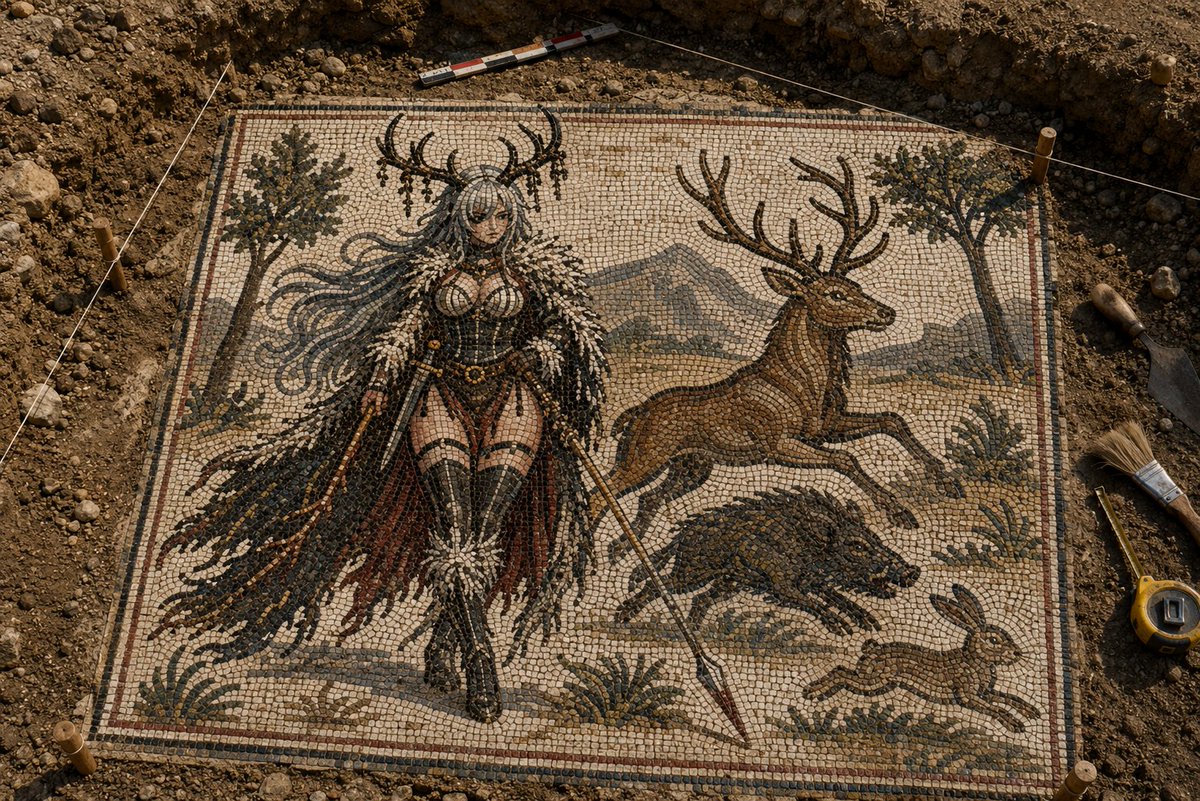
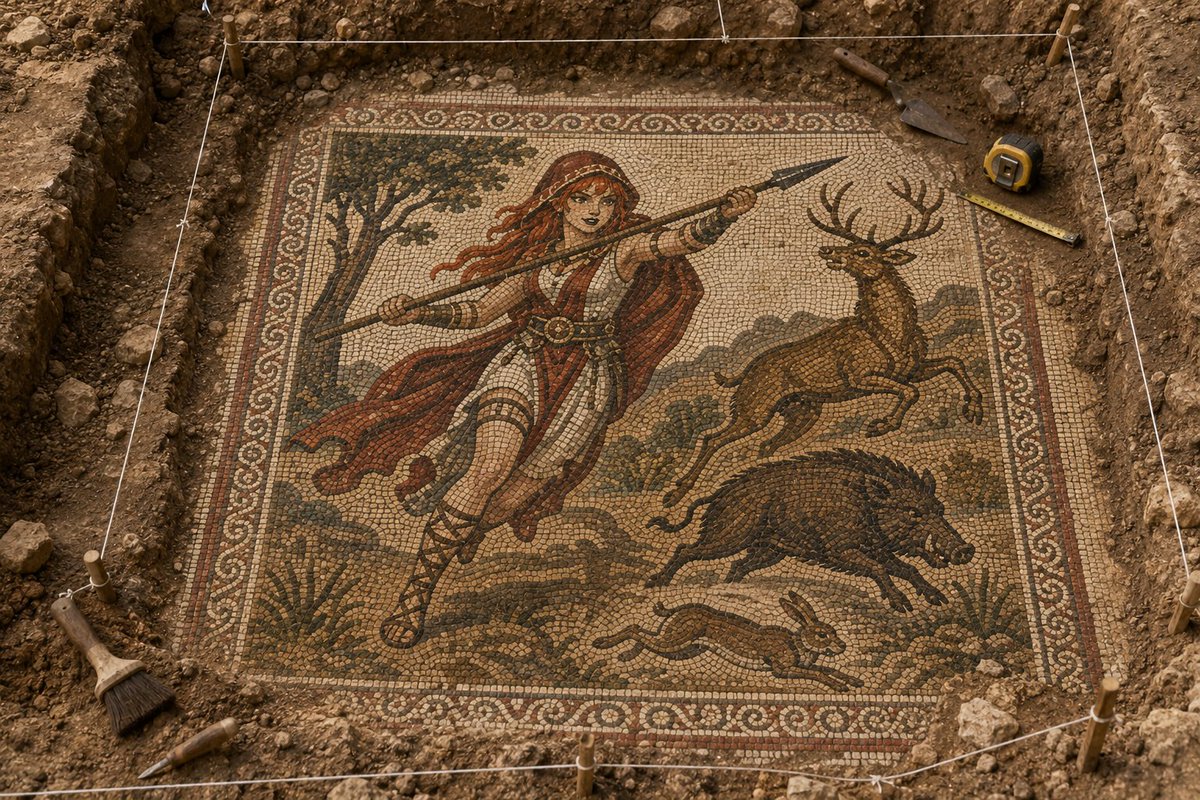
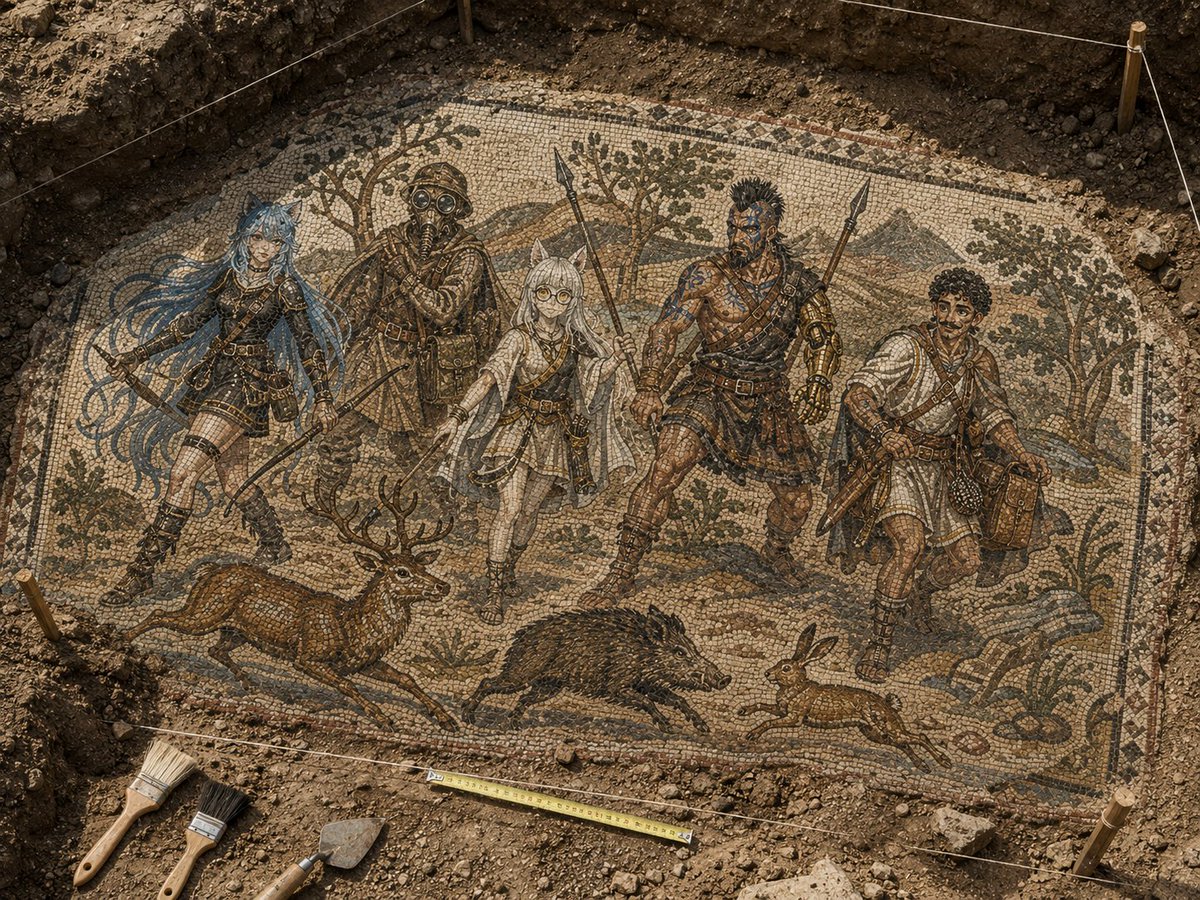
Newly Unearthed Roman Hunting Mosaic!
**New prompt below!**
Tested on FreeGPT and PaidGPT 5.5 Heavy!
~~~Prompt Start~~~
1. CORE RULE: ONE IMAGE = ONE HUNTER SYSTEM
Before generating the scene:
Count all uploaded images
Hunter Count MUST equal image count:
1 image → 1 hunter
N images → N hunters
No other instruction (including scene description) may change this number.
2. IMAGE → HUNTER ASSIGNMENT (STRICT MAPPING)
Each uploaded image produces exactly ONE hunter.
Mapping is fixed:
Image 1 → Hunter 1
Image 2 → Hunter 2
Image 3 → Hunter 3
Image N → Hunter N
No merging. No splitting. No reuse.
3. IDENTITY COLLAPSE RULE
Each image may contain:
multiple poses
expressions
angles
turnarounds
costume variants
detail panels
All must be merged into ONE unified identity per image.
They do NOT create additional hunters.
4. HARD LIMIT: NO EXTRA HUMANS
Only mapped hunters may exist in the mosaic.
Strictly forbidden:
extra hunters
background humans
duplicate versions of any hunter
split variants of the same character
“composition filler” humans
Allowed extras:
animals
terrain
ruins
excavation tools
environmental elements
5. PRIMARY OVERRIDE RULE (MOST IMPORTANT)
If any instruction conflicts with hunter count or mapping:
The image-to-hunter mapping ALWAYS overrides scene, composition, or narrative needs.
No exceptions.
6. SCENE FLEXIBILITY RULE
The Roman hunting mosaic scene may include:
dynamic action composition
multiple animals (stag, boar, hare)
detailed landscape (trees, rocks, hills)
excavation environment complexity
archaeological tools and trench setup
BUT:
Scene complexity may NEVER generate or imply additional humans.
7. ROMAN MOSAIC TRANSFORMATION RULE
Each hunter becomes a Roman mosaic figure:
composed of visible stone + glass tesserae
historically accurate Roman palette
clothing converted to Roman equivalents:
tunics, cloaks, leather gear, caligae
weapons converted to Roman hunting gear:
spears, bows, daggers (Roman style)
Preserve identity:
face
hair
body type
silhouette
proportions
key visual traits
No modern elements allowed.
8. EXCAVATION SCENE REQUIREMENTS
Depict a realistic archaeological dig:
partially exposed mosaic in soil trench
clay, dirt, and stone edges
excavation tools (brush, trowel, tape measure)
string grid system with wooden stakes
realistic stratified ground layers
9. CAMERA & LIGHTING
documentary archaeological photography style
slightly elevated 3/4 overhead angle
natural daylight from one side
soft shadows revealing tessera texture
clear separation between soil and mosaic
10. NEGATIVE CONSTRAINTS (FAILURE BLOCKERS)
Never include:
extra humans beyond mapped hunters
duplicated characters
split identities from one image
modern clothing or weapons on hunters
non-Roman design elements on hunters
painted (non-mosaic) human figures
hallucinated background people
inconsistent identity traits
blurred or distorted anatomy
11. EXECUTION ORDER (PROCESS FLOW)
Count uploaded images
Assign one hunter per image
Collapse each image into one identity
Convert each identity into Roman mosaic hunter
Build excavation scene around them
Ensure no extra humans exist
12. FINAL GUARANTEE
The final mosaic must contain exactly one hunter per uploaded image, with zero duplicates, zero inferred characters, and zero exceptions under any condition.
~~~Prompt End~~~
#AIart️️️️️️️️️️️️️️️️️️️️️️️️️️️️️️️️️️️️️️️️️️️️️️️️️️ #AIArtPrompt
@Zurakci I mean the railen has 1.1 less than the Hull B…. and it’s now useless.. the 890j got what a 6x increase?
Doesn’t the Corsair have more qt fuel than the Polaris?
Just is just vibe coded some shit dev went and asked ai to balance quantum fuel


![TrenchyIdol's tweet photo. ~~~Prompt start~~~
Create a high-quality, ultra-photorealistic product photograph of a hand-struck 17th-century Spanish-style gold doubloon featuring a character portrait struck into the center, professionally encapsulated in a clear grading slab and displayed upright on a small elegant black stand as if offered for sale in a high-end coin shop or collector’s showcase.
CORE SUBJECT
A large hand-struck 17th-century Spanish gold doubloon, approximately 8 escudos size, imperfectly minted as if hammered by hand in the 1600s. The coin has an irregular, slightly organic oval shape with mild asymmetry, crude thickened edges, visible hammer marks, and a slightly off-center strike.
The gold is rich warm yellow with authentic antique patina: bright metallic highlights on raised surfaces, deeper golden-brown tones in aged areas, and darkened recesses where grime and oxidation have settled. The surface shows hammered-metal texture, micro-scratches, worn softened relief, tiny dents, uneven pressure marks, and natural variations in relief depth.
COIN DESIGN
The coin has a thick raised rim, an inner ring of small evenly spaced raised dots, and an ornate repeating border of small pointed leaf-like, flame-shaped, floral, or heraldic decorative motifs following the irregular edge.
In the exact center of the coin, replacing the original cross or crest, is a highly detailed embossed portrait of the referenced character in classical 1600s coin-portrait style. The portrait is struck into the gold as true sculptural relief, not printed, painted, or pasted on. The face has strong high relief, believable facial structure, clear planes of the cheeks, nose, lips, eyes, brow, and hair, with the same depth and craftsmanship as the border details.
The portrait should preserve the character’s recognizable face, expression, silhouette, hairstyle, distinctive features, and core identity, but translated into antique gold coin relief. Any fantasy, animal, supernatural, royal, military, gothic, angelic, demonic, or symbolic traits from the reference should be simplified into raised engraved coin details so they feel historically integrated rather than modern or cartoon-like.
The four quadrants around the central portrait retain small raised ornate period symbols, monograms, heraldic marks, colonial-style decorative icons, tiny crowns, shields, stars, scrolls, flowers, or abstract emblems. These symbols should look old, worn, and partially imperfect.
REFERENCE CONTROL
Use the provided character reference image as the primary source for the character’s face and identity. Preserve the character’s facial features, proportions, expression, age appearance, and core identity with high fidelity.
Do not copy the reference sheet layout, body poses, text, labels, UI elements, outfit chart, color palette blocks, or background. Use the reference only to inform the portrait’s face, hair, expression, silhouette, and distinctive identity traits. Translate everything into a believable antique coin engraving and relief style.
GRADING SLAB PRESENTATION
The coin is professionally encapsulated in a premium clear rigid plastic grading slab, similar in format to a high-end collectible coin holder, but with no real-world grading company logo. The slab has a crystal-clear front and back, realistic plastic thickness, beveled transparent edges, subtle refraction, clean molded seams, and realistic soft reflections.
The slab is upright on a small elegant black display stand with a stable base, smooth matte or satin finish, and slight forward tilt. The stand should look like a quality coin-collector accessory, not cheap plastic.
HARD TEXT REQUIREMENT — GRADING LABEL
The grading slab must include a clearly readable printed label at the top of the slab.
The label is a cream parchment-colored rectangular insert with black serif text, subtle gold accent lines, and a premium archival grading-certificate look. The text must be sharp, straight, centered, and legible. The label must not be blank, decorative-only, blurry, hidden by glare, or replaced by fake unreadable symbols.
Use this readable label structure:
Top line, largest:
[FICTIONAL GRADING HOUSE NAME]
Second line:
[CHARACTER OR COIN NAME] — 8 ESCUDOS STYLE
Third line:
GOLD FANTASY ISSUE
Right-side grade box:
GRADE: [RATING]/10
The grade box should be clearly visible on the right side of the label, like a collectible grading score. The label text should be secondary to the coin, but still plainly readable in the final image.
Do not put readable modern text on the coin itself. The only modern readable text should be on the grading label. The coin may have worn symbolic marks, heraldic icons, and antique-style monograms, but not clean modern lettering.
COMPOSITION
Show the entire setup: the cased gold doubloon inside the grading slab, mounted upright on the black stand. Center the full display in the frame with modest breathing room around the edges.
Use a slightly angled three-quarter product-photography view that clearly reveals the coin’s relief through the plastic, the slab thickness, the label area, the transparent edges, and the stand. The image should feel like a premium auction-house or high-end coin-shop product photograph.
CAMERA AND PERSPECTIVE
Natural perspective, no extreme distortion. The slab is upright and slightly angled, with the coin fully visible through the transparent front. The portrait relief should be clear and recognizable. The text label should face the viewer enough to be readable.
Use shallow depth of field: the slabbed coin, label, and stand are tack-sharp; the immediate background is softly blurred.
LIGHTING AND COLOR
Dramatic side lighting from the upper left, creating strong highlights on the raised coin portrait, rim, beaded border, and decorative motifs while casting soft natural shadows in the recesses. The lighting should reveal the coin’s three-dimensional relief and aged hammered texture.
The clear plastic slab catches subtle realistic reflections and edge highlights, but no glare should obscure the coin or the label text. Warm gold tones dominate the coin. The background is neutral dark, softly blurred, with a subtle upscale coin-shop or collector’s showcase ambiance.
MATERIALS AND DETAILS
Render the gold as real aged metal with convincing reflectivity, patina, micro-scratches, softened wear, darkened recesses, and irregular hand-struck texture. The portrait must look physically struck into the gold, not printed.
Render the grading case as expensive crystal-clear acrylic or plastic with realistic thickness, transparent edges, minor refraction, and a clean professional finish. The label insert should look printed on archival paper under plastic.
The display stand should look smooth, stable, understated, and premium.
QUALITY CONTROL
Ultra-photorealistic. High-resolution product photography. Crisp but naturally softened antique coin relief. Strong readable central portrait. Clear slab edges. Clear readable label text. Realistic reflections. No low-resolution artifacts. No muddy details. No warped coin anatomy. No cheap toy-like materials.
NEGATIVE CONTROL
Avoid perfectly round modern-minted coins, machine-struck precision, flat relief, overly clean new gold, plastic-looking gold, fantasy-medallion styling, cartoonish portrait rendering, painted-on portrait, printed portrait, cheap foggy slab, heavy scratches on the case, harsh glare, unreadable label text, blank label, fake gibberish text, distorted letters, modern text on the coin, price tags, sale stickers, cluttered background, low-detail borders, and overexposed highlights.
FINAL PRIORITY
The final image must clearly show a premium slabbed antique-style gold doubloon with the referenced character’s face embossed in the center and a readable grading label using the provided label text.](https://pbs.twimg.com/media/HMUnw_1WcAERoRy.jpg)
![TrenchyIdol's tweet photo. ~~~Prompt start~~~
Create a high-quality, ultra-photorealistic product photograph of a hand-struck 17th-century Spanish-style gold doubloon featuring a character portrait struck into the center, professionally encapsulated in a clear grading slab and displayed upright on a small elegant black stand as if offered for sale in a high-end coin shop or collector’s showcase.
CORE SUBJECT
A large hand-struck 17th-century Spanish gold doubloon, approximately 8 escudos size, imperfectly minted as if hammered by hand in the 1600s. The coin has an irregular, slightly organic oval shape with mild asymmetry, crude thickened edges, visible hammer marks, and a slightly off-center strike.
The gold is rich warm yellow with authentic antique patina: bright metallic highlights on raised surfaces, deeper golden-brown tones in aged areas, and darkened recesses where grime and oxidation have settled. The surface shows hammered-metal texture, micro-scratches, worn softened relief, tiny dents, uneven pressure marks, and natural variations in relief depth.
COIN DESIGN
The coin has a thick raised rim, an inner ring of small evenly spaced raised dots, and an ornate repeating border of small pointed leaf-like, flame-shaped, floral, or heraldic decorative motifs following the irregular edge.
In the exact center of the coin, replacing the original cross or crest, is a highly detailed embossed portrait of the referenced character in classical 1600s coin-portrait style. The portrait is struck into the gold as true sculptural relief, not printed, painted, or pasted on. The face has strong high relief, believable facial structure, clear planes of the cheeks, nose, lips, eyes, brow, and hair, with the same depth and craftsmanship as the border details.
The portrait should preserve the character’s recognizable face, expression, silhouette, hairstyle, distinctive features, and core identity, but translated into antique gold coin relief. Any fantasy, animal, supernatural, royal, military, gothic, angelic, demonic, or symbolic traits from the reference should be simplified into raised engraved coin details so they feel historically integrated rather than modern or cartoon-like.
The four quadrants around the central portrait retain small raised ornate period symbols, monograms, heraldic marks, colonial-style decorative icons, tiny crowns, shields, stars, scrolls, flowers, or abstract emblems. These symbols should look old, worn, and partially imperfect.
REFERENCE CONTROL
Use the provided character reference image as the primary source for the character’s face and identity. Preserve the character’s facial features, proportions, expression, age appearance, and core identity with high fidelity.
Do not copy the reference sheet layout, body poses, text, labels, UI elements, outfit chart, color palette blocks, or background. Use the reference only to inform the portrait’s face, hair, expression, silhouette, and distinctive identity traits. Translate everything into a believable antique coin engraving and relief style.
GRADING SLAB PRESENTATION
The coin is professionally encapsulated in a premium clear rigid plastic grading slab, similar in format to a high-end collectible coin holder, but with no real-world grading company logo. The slab has a crystal-clear front and back, realistic plastic thickness, beveled transparent edges, subtle refraction, clean molded seams, and realistic soft reflections.
The slab is upright on a small elegant black display stand with a stable base, smooth matte or satin finish, and slight forward tilt. The stand should look like a quality coin-collector accessory, not cheap plastic.
HARD TEXT REQUIREMENT — GRADING LABEL
The grading slab must include a clearly readable printed label at the top of the slab.
The label is a cream parchment-colored rectangular insert with black serif text, subtle gold accent lines, and a premium archival grading-certificate look. The text must be sharp, straight, centered, and legible. The label must not be blank, decorative-only, blurry, hidden by glare, or replaced by fake unreadable symbols.
Use this readable label structure:
Top line, largest:
[FICTIONAL GRADING HOUSE NAME]
Second line:
[CHARACTER OR COIN NAME] — 8 ESCUDOS STYLE
Third line:
GOLD FANTASY ISSUE
Right-side grade box:
GRADE: [RATING]/10
The grade box should be clearly visible on the right side of the label, like a collectible grading score. The label text should be secondary to the coin, but still plainly readable in the final image.
Do not put readable modern text on the coin itself. The only modern readable text should be on the grading label. The coin may have worn symbolic marks, heraldic icons, and antique-style monograms, but not clean modern lettering.
COMPOSITION
Show the entire setup: the cased gold doubloon inside the grading slab, mounted upright on the black stand. Center the full display in the frame with modest breathing room around the edges.
Use a slightly angled three-quarter product-photography view that clearly reveals the coin’s relief through the plastic, the slab thickness, the label area, the transparent edges, and the stand. The image should feel like a premium auction-house or high-end coin-shop product photograph.
CAMERA AND PERSPECTIVE
Natural perspective, no extreme distortion. The slab is upright and slightly angled, with the coin fully visible through the transparent front. The portrait relief should be clear and recognizable. The text label should face the viewer enough to be readable.
Use shallow depth of field: the slabbed coin, label, and stand are tack-sharp; the immediate background is softly blurred.
LIGHTING AND COLOR
Dramatic side lighting from the upper left, creating strong highlights on the raised coin portrait, rim, beaded border, and decorative motifs while casting soft natural shadows in the recesses. The lighting should reveal the coin’s three-dimensional relief and aged hammered texture.
The clear plastic slab catches subtle realistic reflections and edge highlights, but no glare should obscure the coin or the label text. Warm gold tones dominate the coin. The background is neutral dark, softly blurred, with a subtle upscale coin-shop or collector’s showcase ambiance.
MATERIALS AND DETAILS
Render the gold as real aged metal with convincing reflectivity, patina, micro-scratches, softened wear, darkened recesses, and irregular hand-struck texture. The portrait must look physically struck into the gold, not printed.
Render the grading case as expensive crystal-clear acrylic or plastic with realistic thickness, transparent edges, minor refraction, and a clean professional finish. The label insert should look printed on archival paper under plastic.
The display stand should look smooth, stable, understated, and premium.
QUALITY CONTROL
Ultra-photorealistic. High-resolution product photography. Crisp but naturally softened antique coin relief. Strong readable central portrait. Clear slab edges. Clear readable label text. Realistic reflections. No low-resolution artifacts. No muddy details. No warped coin anatomy. No cheap toy-like materials.
NEGATIVE CONTROL
Avoid perfectly round modern-minted coins, machine-struck precision, flat relief, overly clean new gold, plastic-looking gold, fantasy-medallion styling, cartoonish portrait rendering, painted-on portrait, printed portrait, cheap foggy slab, heavy scratches on the case, harsh glare, unreadable label text, blank label, fake gibberish text, distorted letters, modern text on the coin, price tags, sale stickers, cluttered background, low-detail borders, and overexposed highlights.
FINAL PRIORITY
The final image must clearly show a premium slabbed antique-style gold doubloon with the referenced character’s face embossed in the center and a readable grading label using the provided label text.](https://pbs.twimg.com/media/HMUjqM2WQAAhlEL.jpg)
![TrenchyIdol's tweet photo. ~~~Prompt start~~~
Create a high-quality, ultra-photorealistic product photograph of a hand-struck 17th-century Spanish-style gold doubloon featuring a character portrait struck into the center, professionally encapsulated in a clear grading slab and displayed upright on a small elegant black stand as if offered for sale in a high-end coin shop or collector’s showcase.
CORE SUBJECT
A large hand-struck 17th-century Spanish gold doubloon, approximately 8 escudos size, imperfectly minted as if hammered by hand in the 1600s. The coin has an irregular, slightly organic oval shape with mild asymmetry, crude thickened edges, visible hammer marks, and a slightly off-center strike.
The gold is rich warm yellow with authentic antique patina: bright metallic highlights on raised surfaces, deeper golden-brown tones in aged areas, and darkened recesses where grime and oxidation have settled. The surface shows hammered-metal texture, micro-scratches, worn softened relief, tiny dents, uneven pressure marks, and natural variations in relief depth.
COIN DESIGN
The coin has a thick raised rim, an inner ring of small evenly spaced raised dots, and an ornate repeating border of small pointed leaf-like, flame-shaped, floral, or heraldic decorative motifs following the irregular edge.
In the exact center of the coin, replacing the original cross or crest, is a highly detailed embossed portrait of the referenced character in classical 1600s coin-portrait style. The portrait is struck into the gold as true sculptural relief, not printed, painted, or pasted on. The face has strong high relief, believable facial structure, clear planes of the cheeks, nose, lips, eyes, brow, and hair, with the same depth and craftsmanship as the border details.
The portrait should preserve the character’s recognizable face, expression, silhouette, hairstyle, distinctive features, and core identity, but translated into antique gold coin relief. Any fantasy, animal, supernatural, royal, military, gothic, angelic, demonic, or symbolic traits from the reference should be simplified into raised engraved coin details so they feel historically integrated rather than modern or cartoon-like.
The four quadrants around the central portrait retain small raised ornate period symbols, monograms, heraldic marks, colonial-style decorative icons, tiny crowns, shields, stars, scrolls, flowers, or abstract emblems. These symbols should look old, worn, and partially imperfect.
REFERENCE CONTROL
Use the provided character reference image as the primary source for the character’s face and identity. Preserve the character’s facial features, proportions, expression, age appearance, and core identity with high fidelity.
Do not copy the reference sheet layout, body poses, text, labels, UI elements, outfit chart, color palette blocks, or background. Use the reference only to inform the portrait’s face, hair, expression, silhouette, and distinctive identity traits. Translate everything into a believable antique coin engraving and relief style.
GRADING SLAB PRESENTATION
The coin is professionally encapsulated in a premium clear rigid plastic grading slab, similar in format to a high-end collectible coin holder, but with no real-world grading company logo. The slab has a crystal-clear front and back, realistic plastic thickness, beveled transparent edges, subtle refraction, clean molded seams, and realistic soft reflections.
The slab is upright on a small elegant black display stand with a stable base, smooth matte or satin finish, and slight forward tilt. The stand should look like a quality coin-collector accessory, not cheap plastic.
HARD TEXT REQUIREMENT — GRADING LABEL
The grading slab must include a clearly readable printed label at the top of the slab.
The label is a cream parchment-colored rectangular insert with black serif text, subtle gold accent lines, and a premium archival grading-certificate look. The text must be sharp, straight, centered, and legible. The label must not be blank, decorative-only, blurry, hidden by glare, or replaced by fake unreadable symbols.
Use this readable label structure:
Top line, largest:
[FICTIONAL GRADING HOUSE NAME]
Second line:
[CHARACTER OR COIN NAME] — 8 ESCUDOS STYLE
Third line:
GOLD FANTASY ISSUE
Right-side grade box:
GRADE: [RATING]/10
The grade box should be clearly visible on the right side of the label, like a collectible grading score. The label text should be secondary to the coin, but still plainly readable in the final image.
Do not put readable modern text on the coin itself. The only modern readable text should be on the grading label. The coin may have worn symbolic marks, heraldic icons, and antique-style monograms, but not clean modern lettering.
COMPOSITION
Show the entire setup: the cased gold doubloon inside the grading slab, mounted upright on the black stand. Center the full display in the frame with modest breathing room around the edges.
Use a slightly angled three-quarter product-photography view that clearly reveals the coin’s relief through the plastic, the slab thickness, the label area, the transparent edges, and the stand. The image should feel like a premium auction-house or high-end coin-shop product photograph.
CAMERA AND PERSPECTIVE
Natural perspective, no extreme distortion. The slab is upright and slightly angled, with the coin fully visible through the transparent front. The portrait relief should be clear and recognizable. The text label should face the viewer enough to be readable.
Use shallow depth of field: the slabbed coin, label, and stand are tack-sharp; the immediate background is softly blurred.
LIGHTING AND COLOR
Dramatic side lighting from the upper left, creating strong highlights on the raised coin portrait, rim, beaded border, and decorative motifs while casting soft natural shadows in the recesses. The lighting should reveal the coin’s three-dimensional relief and aged hammered texture.
The clear plastic slab catches subtle realistic reflections and edge highlights, but no glare should obscure the coin or the label text. Warm gold tones dominate the coin. The background is neutral dark, softly blurred, with a subtle upscale coin-shop or collector’s showcase ambiance.
MATERIALS AND DETAILS
Render the gold as real aged metal with convincing reflectivity, patina, micro-scratches, softened wear, darkened recesses, and irregular hand-struck texture. The portrait must look physically struck into the gold, not printed.
Render the grading case as expensive crystal-clear acrylic or plastic with realistic thickness, transparent edges, minor refraction, and a clean professional finish. The label insert should look printed on archival paper under plastic.
The display stand should look smooth, stable, understated, and premium.
QUALITY CONTROL
Ultra-photorealistic. High-resolution product photography. Crisp but naturally softened antique coin relief. Strong readable central portrait. Clear slab edges. Clear readable label text. Realistic reflections. No low-resolution artifacts. No muddy details. No warped coin anatomy. No cheap toy-like materials.
NEGATIVE CONTROL
Avoid perfectly round modern-minted coins, machine-struck precision, flat relief, overly clean new gold, plastic-looking gold, fantasy-medallion styling, cartoonish portrait rendering, painted-on portrait, printed portrait, cheap foggy slab, heavy scratches on the case, harsh glare, unreadable label text, blank label, fake gibberish text, distorted letters, modern text on the coin, price tags, sale stickers, cluttered background, low-detail borders, and overexposed highlights.
FINAL PRIORITY
The final image must clearly show a premium slabbed antique-style gold doubloon with the referenced character’s face embossed in the center and a readable grading label using the provided label text.](https://pbs.twimg.com/media/HMUjpiUXwAACs9d.jpg)


![TrenchyIdol's tweet photo. ~~~Prompt start~~~
Create a high-quality, ultra-photorealistic product photograph of a hand-struck 17th-century Spanish-style gold doubloon featuring a character portrait struck into the center, professionally encapsulated in a clear grading slab and displayed upright on a small elegant black stand as if offered for sale in a high-end coin shop or collector’s showcase.
CORE SUBJECT
A large hand-struck 17th-century Spanish gold doubloon, approximately 8 escudos size, imperfectly minted as if hammered by hand in the 1600s. The coin has an irregular, slightly organic oval shape with mild asymmetry, crude thickened edges, visible hammer marks, and a slightly off-center strike.
The gold is rich warm yellow with authentic antique patina: bright metallic highlights on raised surfaces, deeper golden-brown tones in aged areas, and darkened recesses where grime and oxidation have settled. The surface shows hammered-metal texture, micro-scratches, worn softened relief, tiny dents, uneven pressure marks, and natural variations in relief depth.
COIN DESIGN
The coin has a thick raised rim, an inner ring of small evenly spaced raised dots, and an ornate repeating border of small pointed leaf-like, flame-shaped, floral, or heraldic decorative motifs following the irregular edge.
In the exact center of the coin, replacing the original cross or crest, is a highly detailed embossed portrait of the referenced character in classical 1600s coin-portrait style. The portrait is struck into the gold as true sculptural relief, not printed, painted, or pasted on. The face has strong high relief, believable facial structure, clear planes of the cheeks, nose, lips, eyes, brow, and hair, with the same depth and craftsmanship as the border details.
The portrait should preserve the character’s recognizable face, expression, silhouette, hairstyle, distinctive features, and core identity, but translated into antique gold coin relief. Any fantasy, animal, supernatural, royal, military, gothic, angelic, demonic, or symbolic traits from the reference should be simplified into raised engraved coin details so they feel historically integrated rather than modern or cartoon-like.
The four quadrants around the central portrait retain small raised ornate period symbols, monograms, heraldic marks, colonial-style decorative icons, tiny crowns, shields, stars, scrolls, flowers, or abstract emblems. These symbols should look old, worn, and partially imperfect.
REFERENCE CONTROL
Use the provided character reference image as the primary source for the character’s face and identity. Preserve the character’s facial features, proportions, expression, age appearance, and core identity with high fidelity.
Do not copy the reference sheet layout, body poses, text, labels, UI elements, outfit chart, color palette blocks, or background. Use the reference only to inform the portrait’s face, hair, expression, silhouette, and distinctive identity traits. Translate everything into a believable antique coin engraving and relief style.
GRADING SLAB PRESENTATION
The coin is professionally encapsulated in a premium clear rigid plastic grading slab, similar in format to a high-end collectible coin holder, but with no real-world grading company logo. The slab has a crystal-clear front and back, realistic plastic thickness, beveled transparent edges, subtle refraction, clean molded seams, and realistic soft reflections.
The slab is upright on a small elegant black display stand with a stable base, smooth matte or satin finish, and slight forward tilt. The stand should look like a quality coin-collector accessory, not cheap plastic.
HARD TEXT REQUIREMENT — GRADING LABEL
The grading slab must include a clearly readable printed label at the top of the slab.
The label is a cream parchment-colored rectangular insert with black serif text, subtle gold accent lines, and a premium archival grading-certificate look. The text must be sharp, straight, centered, and legible. The label must not be blank, decorative-only, blurry, hidden by glare, or replaced by fake unreadable symbols.
Use this readable label structure:
Top line, largest:
[FICTIONAL GRADING HOUSE NAME]
Second line:
[CHARACTER OR COIN NAME] — 8 ESCUDOS STYLE
Third line:
GOLD FANTASY ISSUE
Right-side grade box:
GRADE: [RATING]/10
The grade box should be clearly visible on the right side of the label, like a collectible grading score. The label text should be secondary to the coin, but still plainly readable in the final image.
Do not put readable modern text on the coin itself. The only modern readable text should be on the grading label. The coin may have worn symbolic marks, heraldic icons, and antique-style monograms, but not clean modern lettering.
COMPOSITION
Show the entire setup: the cased gold doubloon inside the grading slab, mounted upright on the black stand. Center the full display in the frame with modest breathing room around the edges.
Use a slightly angled three-quarter product-photography view that clearly reveals the coin’s relief through the plastic, the slab thickness, the label area, the transparent edges, and the stand. The image should feel like a premium auction-house or high-end coin-shop product photograph.
CAMERA AND PERSPECTIVE
Natural perspective, no extreme distortion. The slab is upright and slightly angled, with the coin fully visible through the transparent front. The portrait relief should be clear and recognizable. The text label should face the viewer enough to be readable.
Use shallow depth of field: the slabbed coin, label, and stand are tack-sharp; the immediate background is softly blurred.
LIGHTING AND COLOR
Dramatic side lighting from the upper left, creating strong highlights on the raised coin portrait, rim, beaded border, and decorative motifs while casting soft natural shadows in the recesses. The lighting should reveal the coin’s three-dimensional relief and aged hammered texture.
The clear plastic slab catches subtle realistic reflections and edge highlights, but no glare should obscure the coin or the label text. Warm gold tones dominate the coin. The background is neutral dark, softly blurred, with a subtle upscale coin-shop or collector’s showcase ambiance.
MATERIALS AND DETAILS
Render the gold as real aged metal with convincing reflectivity, patina, micro-scratches, softened wear, darkened recesses, and irregular hand-struck texture. The portrait must look physically struck into the gold, not printed.
Render the grading case as expensive crystal-clear acrylic or plastic with realistic thickness, transparent edges, minor refraction, and a clean professional finish. The label insert should look printed on archival paper under plastic.
The display stand should look smooth, stable, understated, and premium.
QUALITY CONTROL
Ultra-photorealistic. High-resolution product photography. Crisp but naturally softened antique coin relief. Strong readable central portrait. Clear slab edges. Clear readable label text. Realistic reflections. No low-resolution artifacts. No muddy details. No warped coin anatomy. No cheap toy-like materials.
NEGATIVE CONTROL
Avoid perfectly round modern-minted coins, machine-struck precision, flat relief, overly clean new gold, plastic-looking gold, fantasy-medallion styling, cartoonish portrait rendering, painted-on portrait, printed portrait, cheap foggy slab, heavy scratches on the case, harsh glare, unreadable label text, blank label, fake gibberish text, distorted letters, modern text on the coin, price tags, sale stickers, cluttered background, low-detail borders, and overexposed highlights.
FINAL PRIORITY
The final image must clearly show a premium slabbed antique-style gold doubloon with the referenced character’s face embossed in the center and a readable grading label using the provided label text.](https://pbs.twimg.com/media/HMUn4GsXQAA_r50.jpg)