Norway has worked with partner countries and international organisations to improve statistics on refugees, displaced and stateless people, helping strengthen both national data systems and international standards.
🔗 Download the @OECD Guidance: https://t.co/bxgQN6Ymcj
#LNOB
More equitable partnerships are about who gets to shape priorities and decisions. When developing its national multidimensional poverty index, the Planning Institute of Jamaica held focus groups with 357 people across 17 rural and urban communities. 🔗 https://t.co/bxgQN6Ymcj
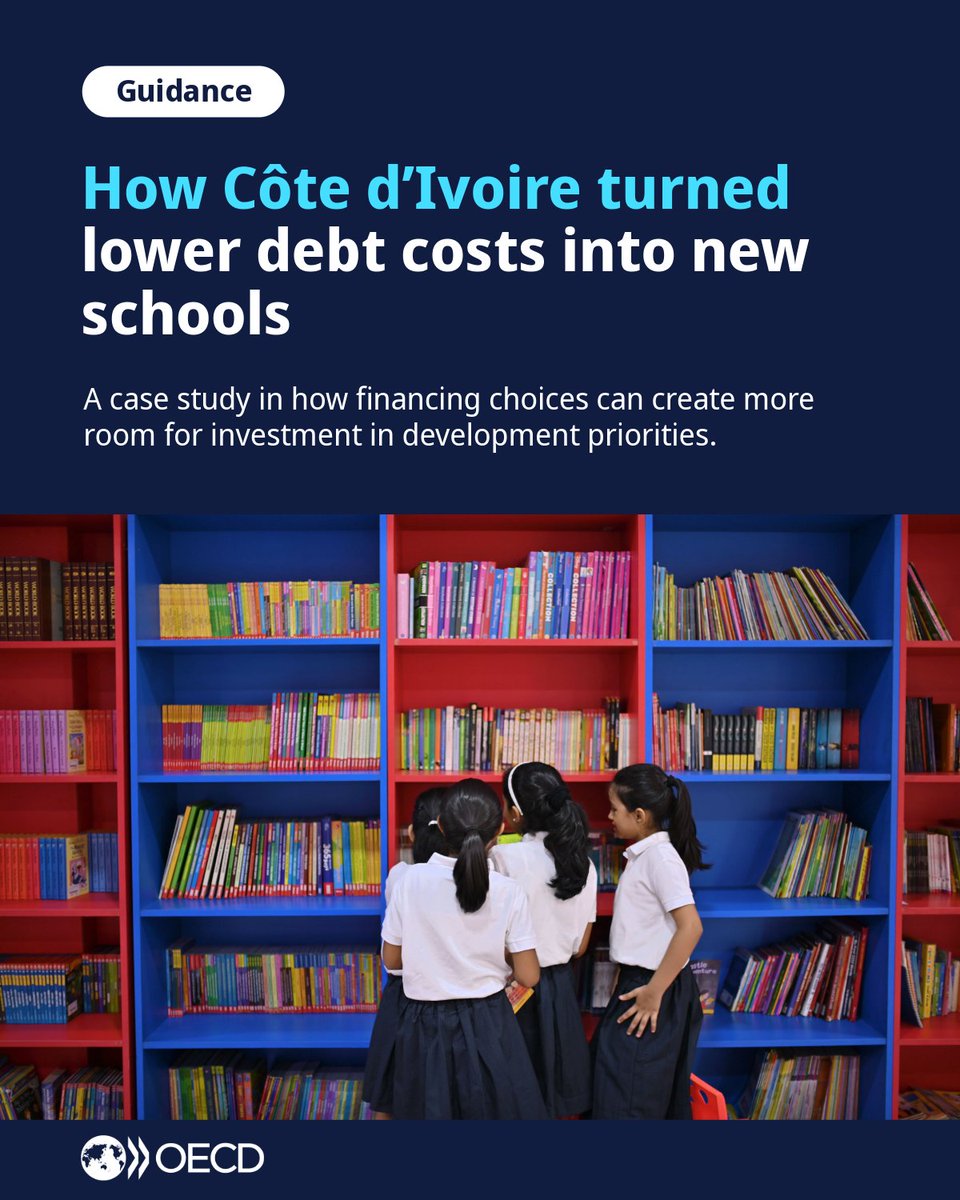
In 2024, with support from the World Bank, Côte d’Ivoire refinanced EUR 400 million of commercial debt, replacing more expensive debt with a cheaper, longer-term loan. The transaction is expected to help financing the construction of 33 schools. 🔗 https://t.co/bxgQN6Ymcj
Poverty and inequality commitments can lose focus as they move from high-level strategies into operational decisions. Spain provides one example of how these objectives can be anchored at the highest level and then carried into strategic planning. 🔗 https://t.co/bxgQN6Ymcj
Ahead of the International Day for the Eradication of Poverty, @OECD data show extreme poverty is increasingly concentrated in countries and regions facing the greatest needs, while their share of ODA has fallen from earlier peaks. 🔗Read more: https://t.co/bxgQN6Ymcj
#IDEP2026
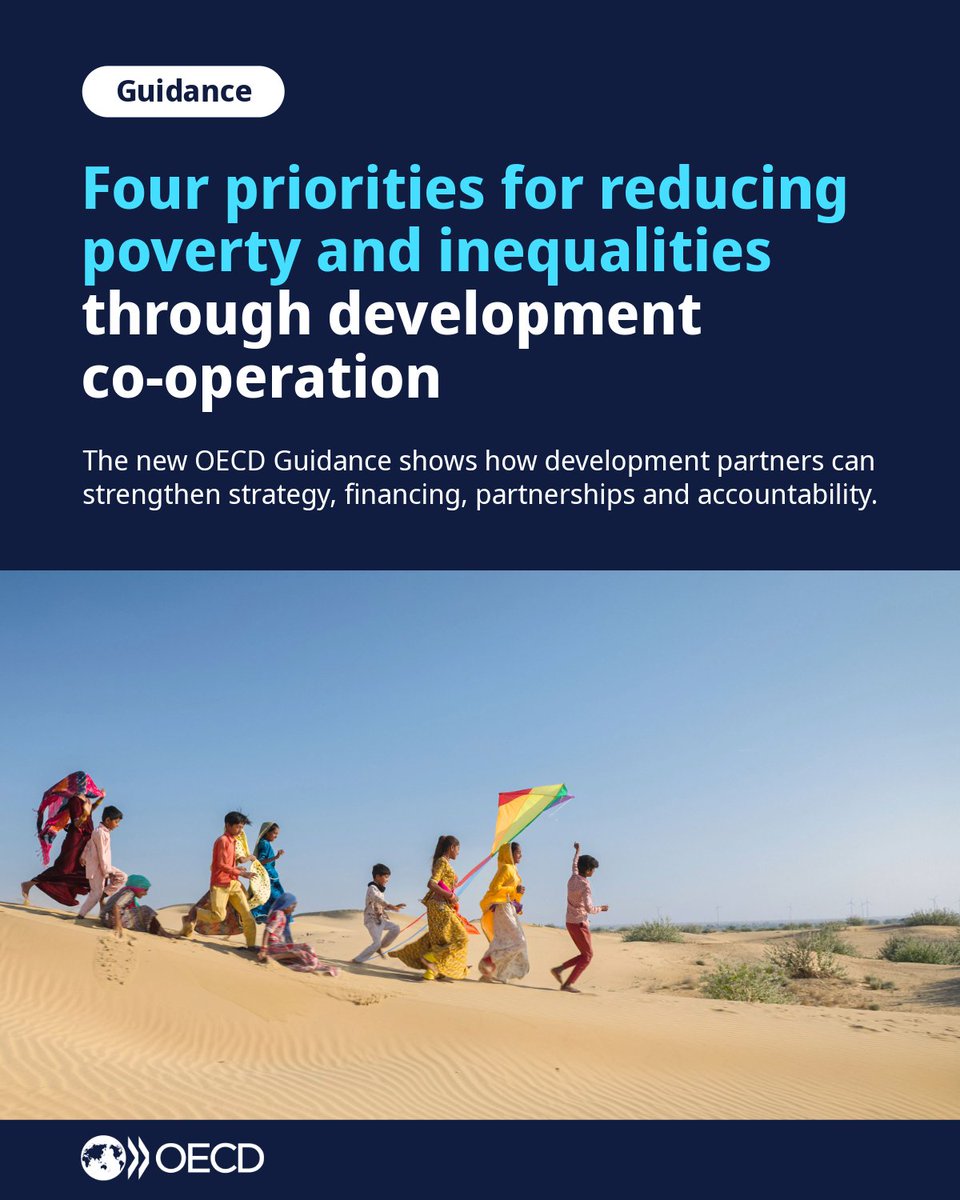
Poverty and inequality reduction is a core objective of development co-operation. In practice, outcomes are shaped by a much wider set of factors. The new @OECD Guidance groups these choices around four connected priorities.
🔗 Guidance highlights: https://t.co/bxgQN6Ymcj
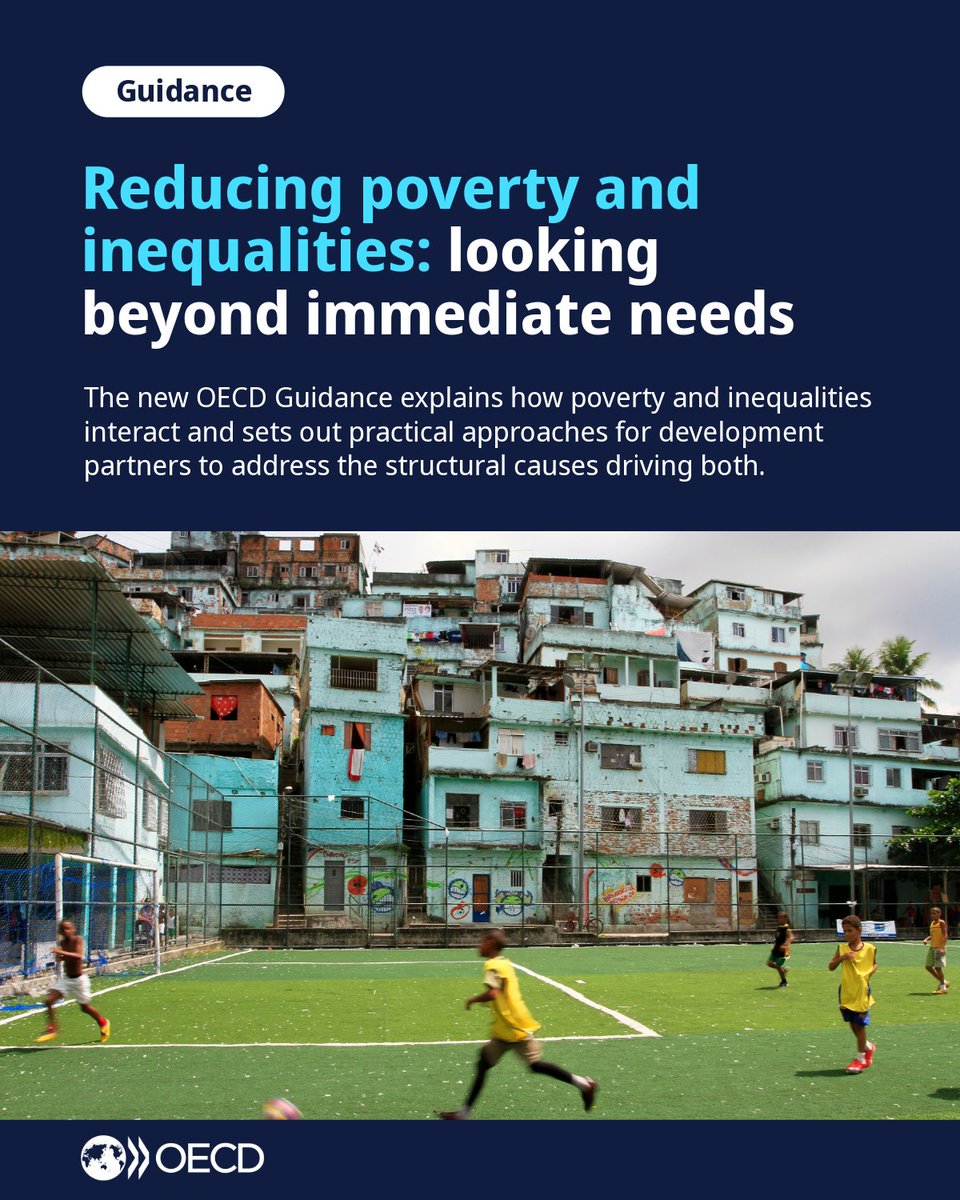
The new @OECD Guidance explains why poverty and inequalities need to be addressed together and outlines how development partners can strengthen their focus and impact.
🔗Download the Guidance: https://t.co/uwx0Z8k0MI
🔗Register to attend the launch event: https://t.co/6uRnf5oDgB
The new @OECD Guidance provides strategic and operational advice to help development partners turn commitments into practice across the policy and programming cycle.
🔗Register to attend the launch event: https://t.co/6uRnf5oDgB
🔗Download the Guidance: https://t.co/uwx0Z8k0MI
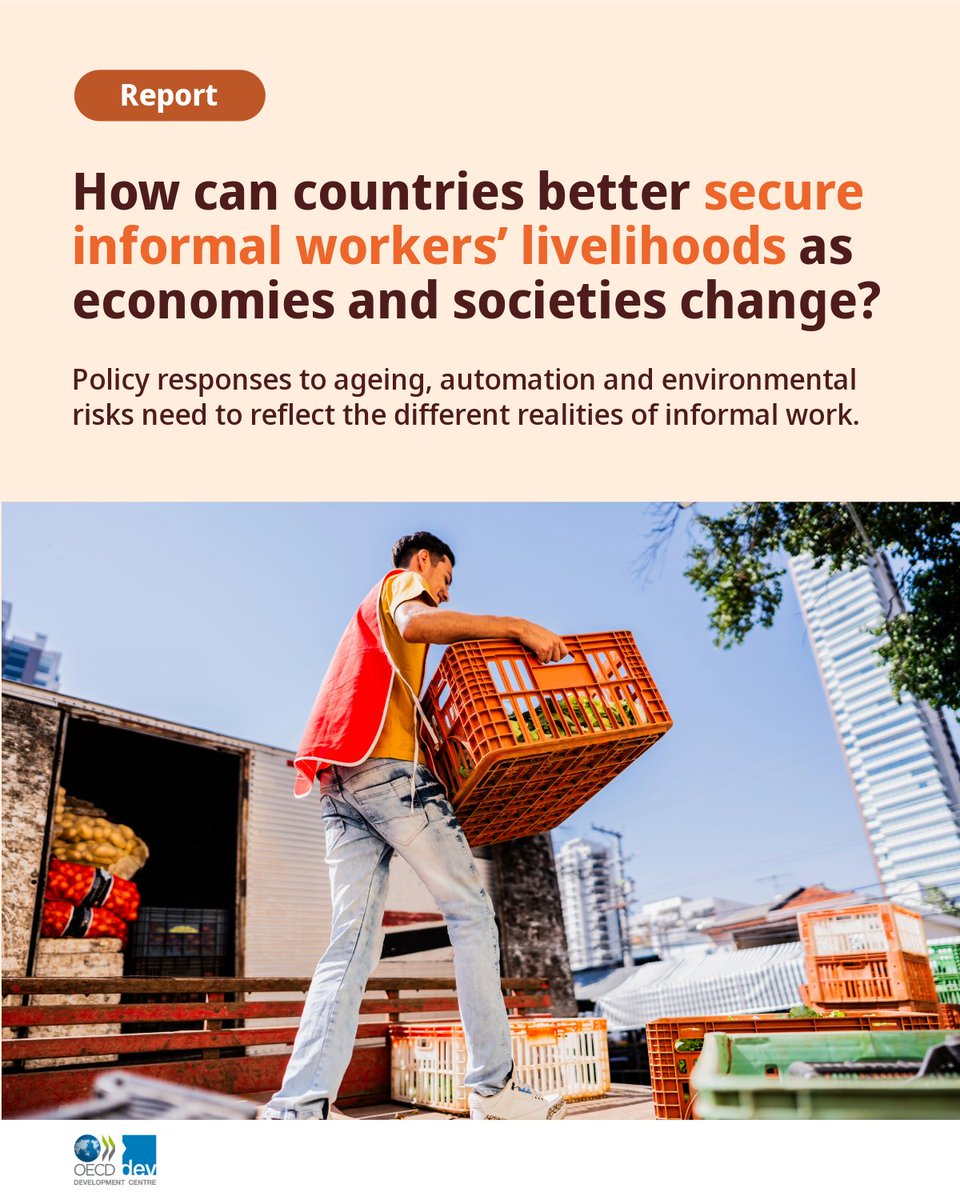
The new @OECD report on informal employment shows that many informal workers depend more directly on the natural environment for their livelihoods and have fewer resources to adapt when environmental shocks occur.
🔗 Download the report: https://t.co/tUj15xs0sW
The new @OECD report finds that traditional automation poses a particular challenge for informal workers. Across the countries analysed, 77% of informal workers perform routine or non-routine manual tasks, compared with 42% of formal ones.
🔗 Read more: https://t.co/tUj15xs0sW
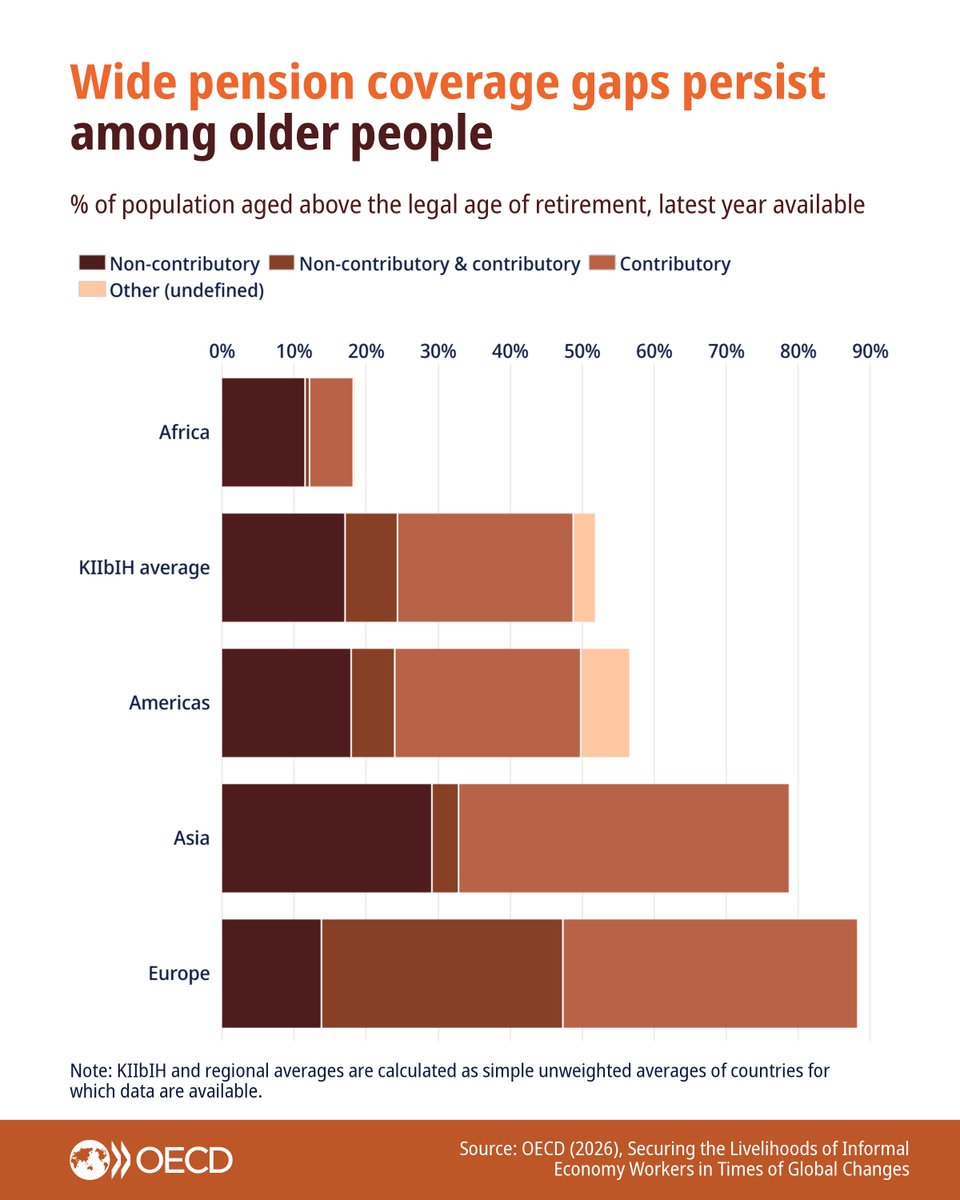
Across countries covered by the new @OECD report, only 52% of older people receive pension benefits. As populations age, gaps in pension protection are particularly pronounced among women, rural populations and poorer households.
🔗 Download the report: https://t.co/tUj15xs0sW
The new @OECD report on informal employment identifies several areas for policy action, which combine measures to protect workers from immediate risks with longer-term efforts to expand access to more productive and secure livelihoods.
🔗 Read more: https://t.co/tUj15xs0sW
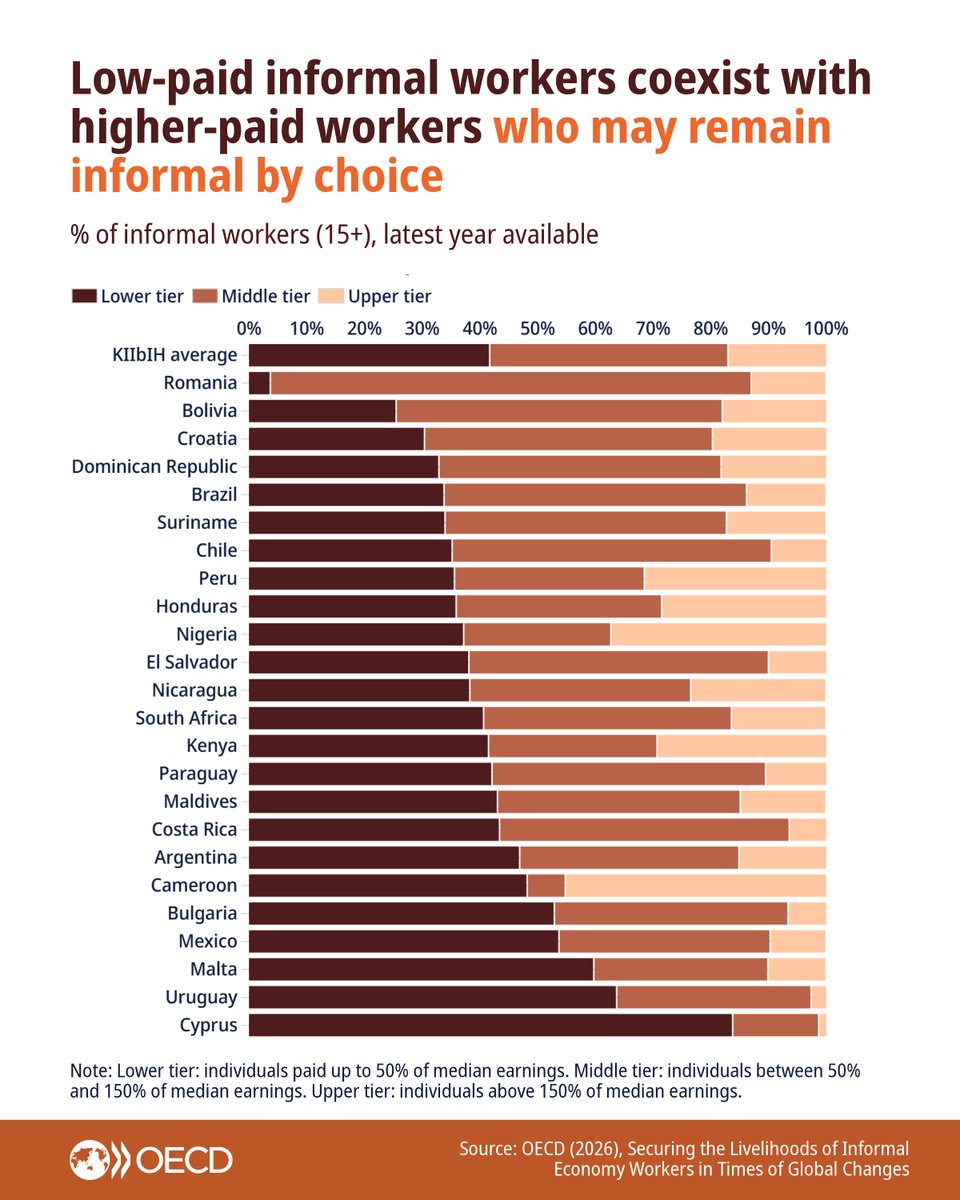
The latest @OECD data show wide differences within the informal economy, alongside major gaps in protection and exposure to global changes. Low-, middle- and high-paid informal workers coexist, with very different capacities and vulnerabilities.
🔗 https://t.co/tUj15xs0sW
Informal employment is often associated with low pay and insecurity, but the picture is more complex. In countries analysed in a new @OECD report, 81% of workers living in poor households are informal, yet 16% of informal workers are in high-paid jobs.
🔗 https://t.co/tUj15xs0sW
📬 The latest OECD Development newsletter is out!
This edition covers Africa’s climate and urban future, West Africa’s food trade, new data on fragility, development co-operation effectiveness and more.
🔗 Read: https://t.co/zBwdhIqkf6
🔗 Subscribe: https://t.co/16YLv6fODe
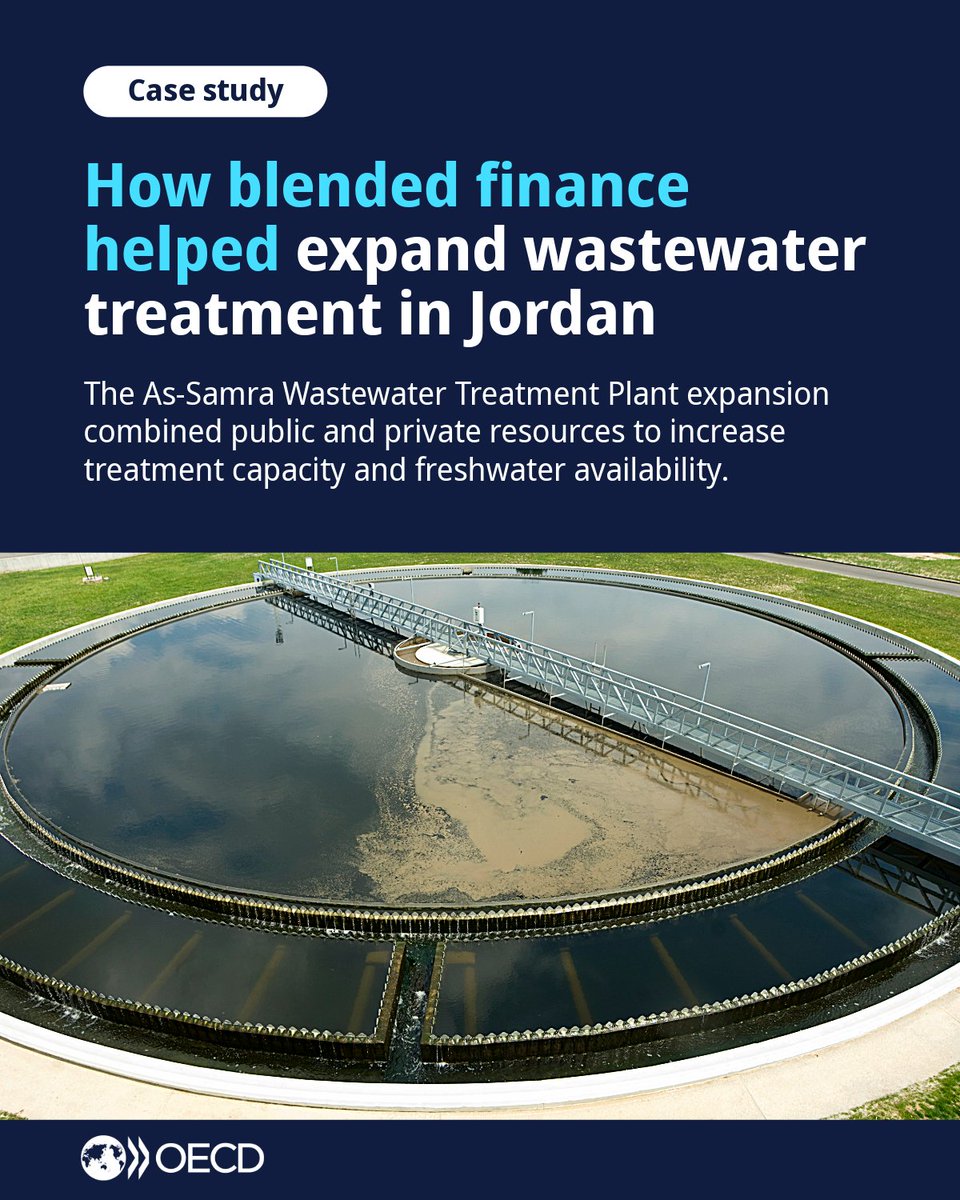
The new @OECD report highlights the expansion of Jordan’s As-Samra Wastewater Treatment Plant as an example of how public and private finance can be combined to make major infrastructure investment financially viable.
🔗 Download the report: https://t.co/RrEYQvVpRF
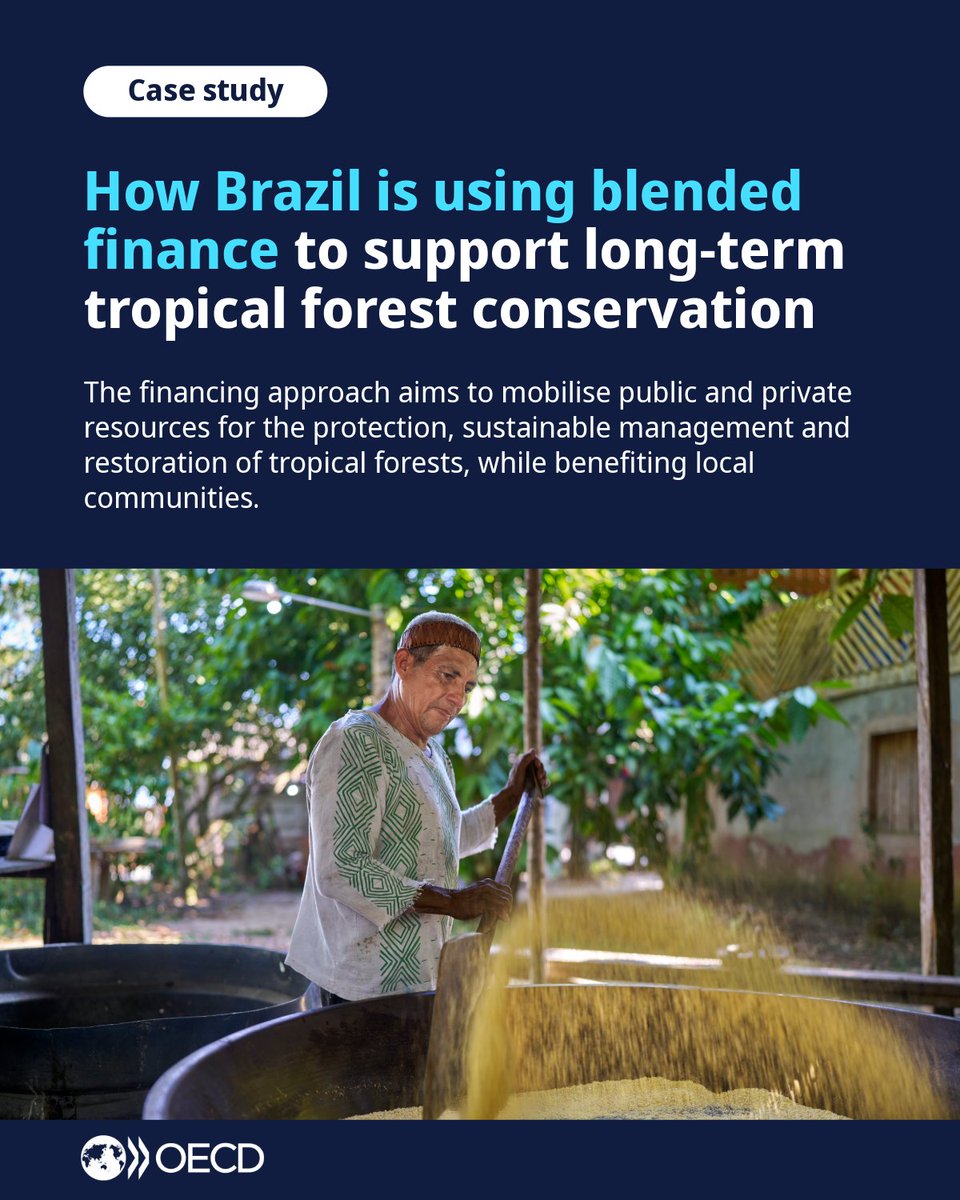
The new @OECD report highlights the Brazil-led Tropical Forest Forever Facility (TFFF) as an example of how blended finance can mobilise resources for the protection, sustainable management and restoration of tropical forests.
🔗 Download the report: https://t.co/RrEYQvVpRF
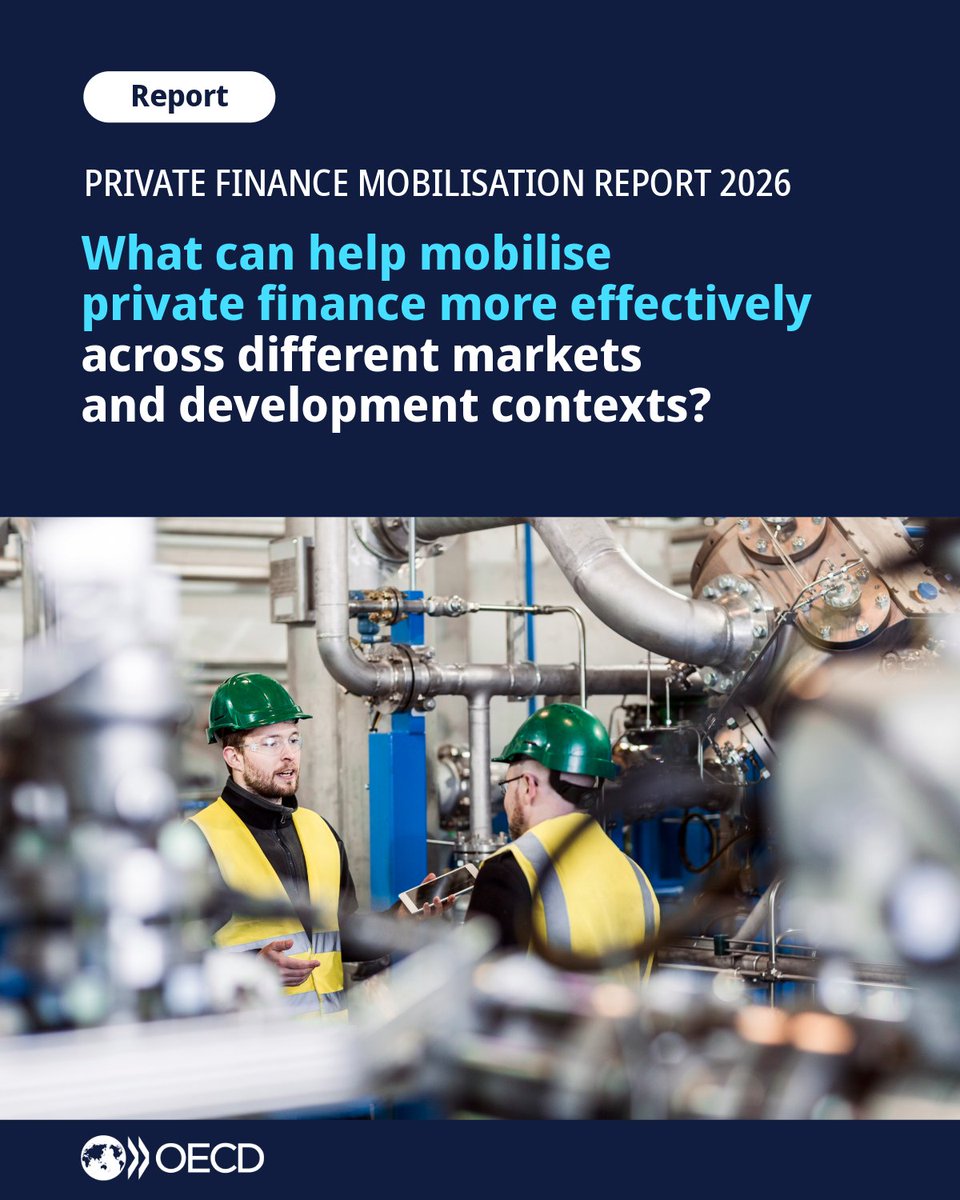
When mobilising private finance for development, investors need reliable information to assess risks and opportunities, alongside more aligned approaches and standardised financing structures across markets.
🔗 Download the report: https://t.co/RrEYQvVpRF
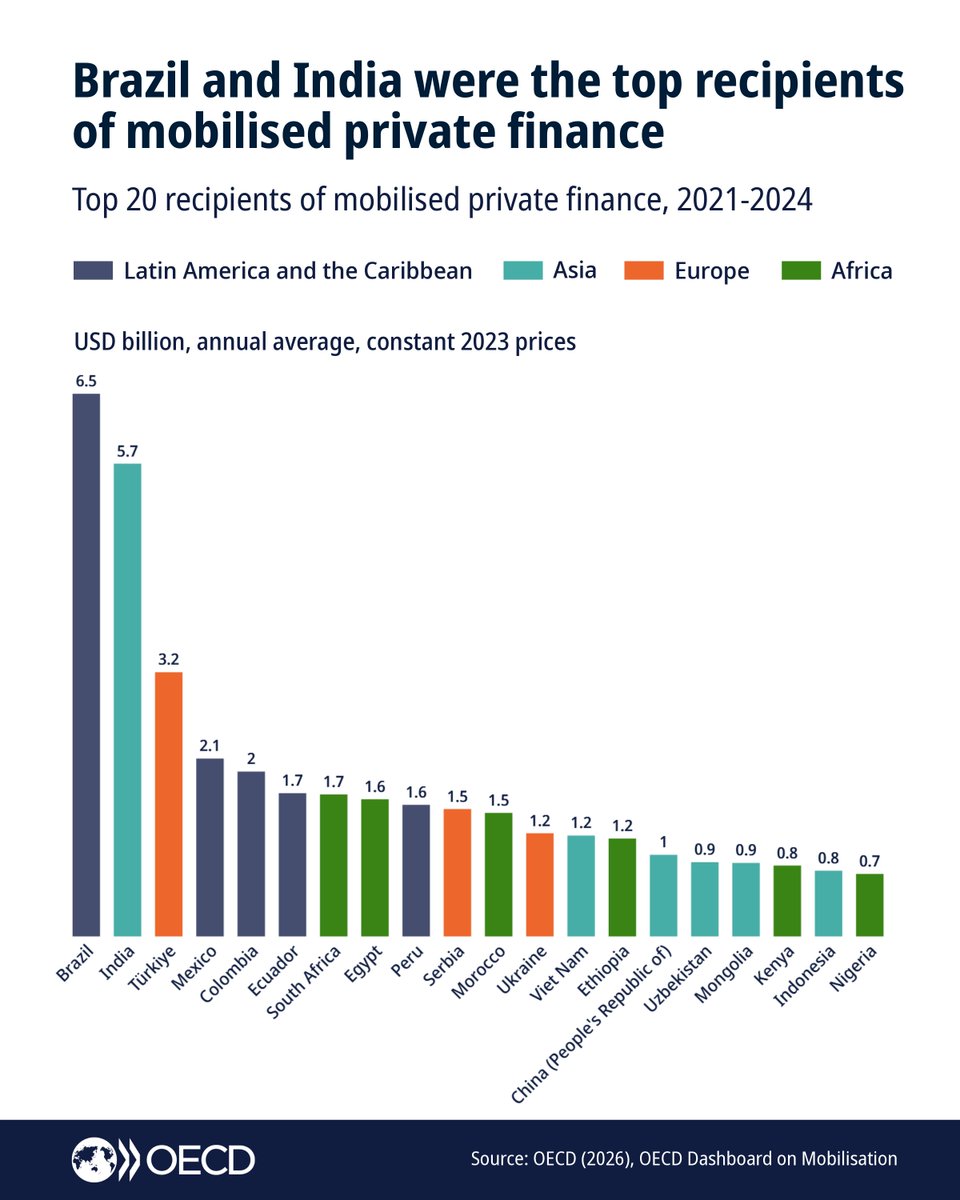
The new @OECD report shows that mobilised private finance remains concentrated in middle-income countries, while low-income and more fragile contexts continue to face greater barriers to attracting private investment.
🔗 Download the report: https://t.co/RrEYQvVpRF
The new @OECD report provides internationally comparable data and analysis on how official development finance attracts private investment, tracking trends across countries, sectors, providers and financial instruments.
🔗 Read more: https://t.co/Fv76d80yIX