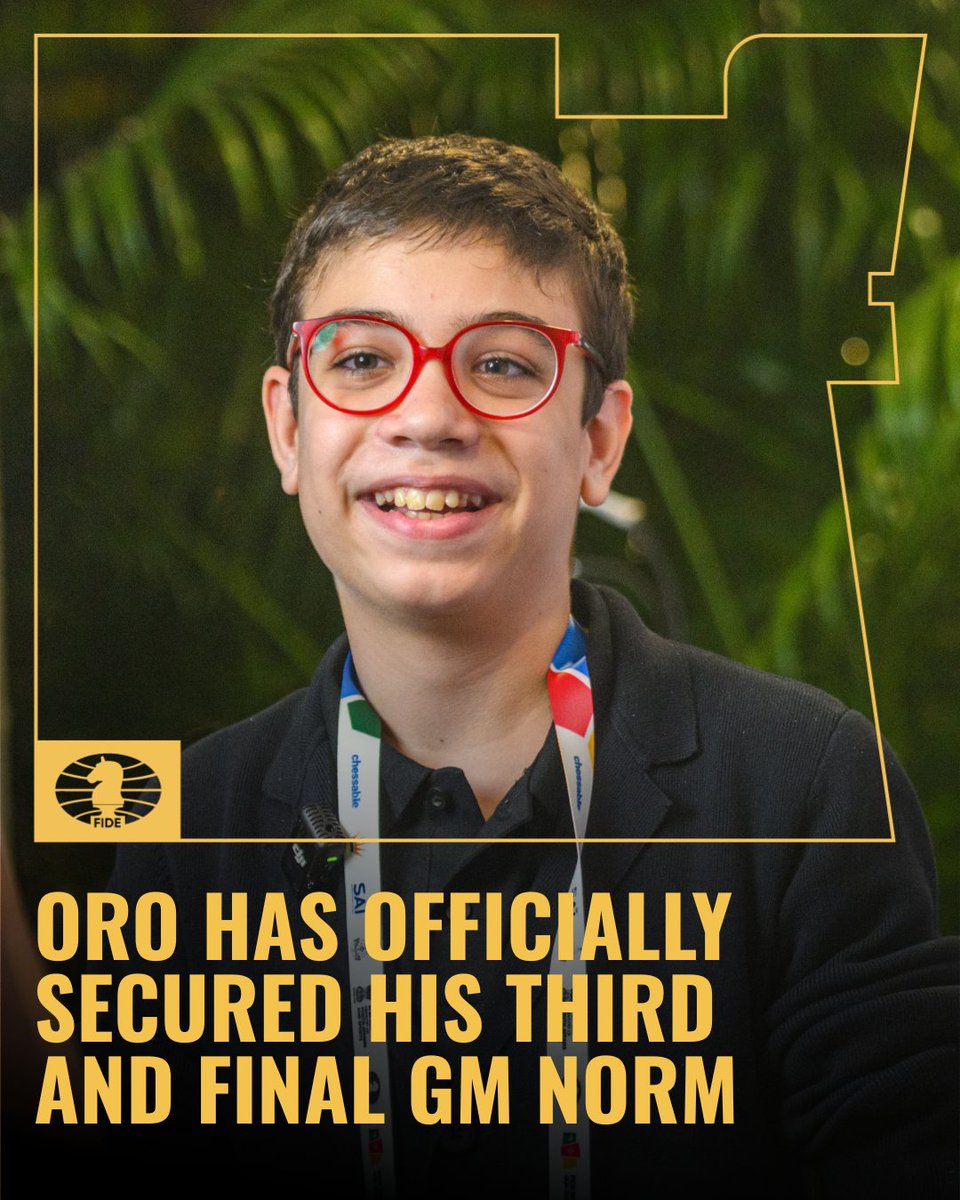
🇦🇷 12-year-old Faustino Oro has officially secured his third and final Grandmaster (GM) norm at the Sardinia World Chess Festival in Italy. By achieving this and maintaining a 2500+ FIDE rating, he becomes one of the youngest Grandmasters in chess history.
#FaustinoOro#Chess
@Argentina Ojalá algun periodista deje la obsecuencia de lado y les pregunte porque no los motiva el esfuerzo que hace la gente para ir a verlos gastando mucha guita, tiempo y contra un ignoto rival...
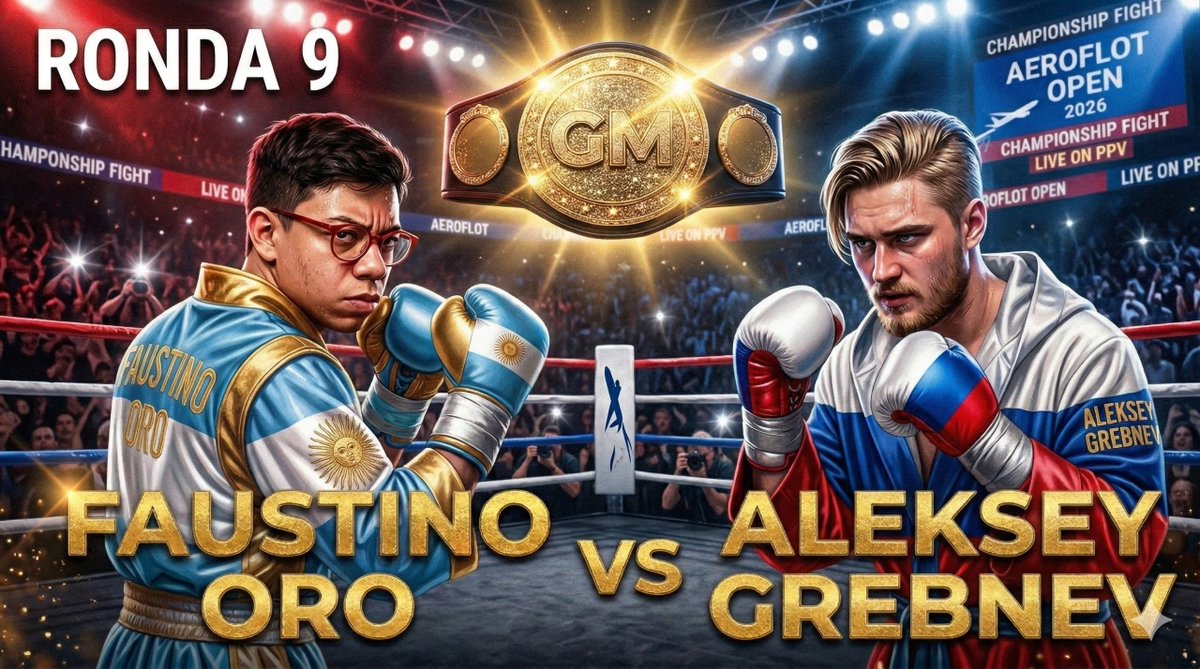
🚨FAUSTINO ORO 🇦🇷 vs EL RUSO GREBNEV 🇷🇺🚨
Mañana es la batalla final por el título de Gran Maestro. A todo o nada, Faustino debe ganar de negras contra el GM ruso Grebnev (2621).
🇦🇷 06:00 AM
🔴EN VIVO por Ajedrez de Primera
👇Retuiteá para que el mundo se entere👇
Sigo en busqueda de jugar la @eLPF , actualmente pasando el suizo de eLIBERTADORES con un 5/2 y llegando a 3er ronda de loser brackets, Cush cap de enero pasando el suizo 6/1 y quedando top 32.
cualquier mg o rt me ayudas😌
Guillermo Vilas is not “the world No.1 who was stripped of his title”.
He is the player who was never recognised because the APT chose not to fully confront its own data.
The story begins in the 1970s, when the ATP ranking was not weekly, not transparent and, above all, was never designed as a historical record. Rankings were published irregularly and the system was based on an average of results that penalised players who competed frequently. Vilas played all the time.
In 2013, Argentine journalist Eduardo Puppo decided to check a basic question. If all the missing weeks were recalculated using the official ATP rules of the time, what would the rankings actually show.
To do that, he involved Marian Ciulpan, a mathematician specialised in statistical models. Not a fan, not a former player, a mathematician.
The work was massive. Minor tournaments, forgotten results, weeks that were never officially published. Years of reconstruction, fully documented. The conclusion was clear. Vilas emerged as world No.1 for several weeks between 1975 and 1976. Not by opinion, by calculation.
The ATP received the study.
It did not dismantle it.
It did not challenge the methodology.
It did not publish alternative calculations.
It simply said no.
The official justification was bureaucratic. Retroactive recognition would set a precedent. Translation: the archive matters more than the truth.
From that moment on, the issue stopped being sporting. It became institutional.
Meanwhile Guillermo Vilas fell ill. A neurodegenerative disease, progressive and irreversible. The person who should be at the centre of this story is no longer able to defend it himself.
That is where Mats Wilander steps in. In a recent interview with CLAY @_claymagazine , he said explicitly:
“Every day that passes is an additional injustice, especially considering his state of health. Tennis owes him a lot.”
This is not rhetoric. It is an indictment.
Because at this point the ATP is not protecting history, it is protecting itself. It is choosing not to correct a mistake while time makes that choice increasingly indefensible.
The Vilas case is not about the past.
It is about what kind of institution the ATP is today.
And as long as it hides behind its paperwork, the message is clear. In tennis, the official record matters more than people.
It matters to do it now, before Guillermo Vilas himself forgets.
#ATP #VILAS #WILANDER @ATPMediaInfo @GuilleVilasOK
David Nalbandian habló sobre la polémica final de Copa Davis 2008 vs. España:
🗣️ "Fue una serie que tendríamos que haber ganado, sin ninguna duda. Llegamos en distinta sintonía todos los que jugamos. También la armamos para jugar más en contra de Rafa que el resto y, cuando vamos a jugar a Mar del Plata, nos beneficiaba que Rafa no había venido”.
🗣️ "Sentí que Del Potro llegó con poca energía de todo el año. Él fue a jugar el Masters. Se estaba quedando sin batería. Jugar la final de la Davis no es algo que juegues todos los días y te tenés que preparar, no podés llegar con la inercia del final del año. Si es buena, buenísimo, pero iba para el otro lado. Llegó cansado. Pierde con Feliciano, no debería perder. Juega 1000 partidos y creo que gana 1002, ja. No tuve ningún tipo de problema con él. El que estaba metido en ese momento era el padre, él no estaba”.
🗣️ "Se había propuesto la sede en Córdoba por un tema de altura, y que sea más en contra de Rafa, porque hasta ese momento venía. No le gusta jugar en altura, la pelota se le escapaba un poco. Tanto Juan Martín como yo sentíamos que teníamos más chances de ganarle en una ciudad con un poco de altura que al nivel del mar. Y aparte es porque es España. Si era cualquier otro país, jugábamos en Parque Roca. No nos movemos de ahí. El único que te saca del esquema de jugar en polvo de ladrillo es España... Ahí pasaron cosas, pero está perfecto que haya sido Mar del Plata. Esas cosas que pasaron no me gustaron, por supuesto, pero hay que jugar y ganar igual”.
🗣️ “Juan Martín no quiso jugar el cuarto punto y el Gordo Calleri tampoco. Le tocó jugar a Chucho, que no estaba ni para jugar el dobles".
🗣️ "Tampoco creo que se haya hecho mal todo. Si hubiésemos ganado, ¿qué? Hay tres jugadores más... Cada uno llegó en un momento distinto del año. El Gordo Calleri y Chucho creo que no jugaron París Bercy o perdieron rápido. Faltaba un mes para la Copa Davis y no estaban en ritmo de competencia. Tampoco estaba en los planes que uno de los dos tenga que jugar el singles. El singles era Juan Martín y yo. Y yo iba a jugar el dobles, o no. Ellos nunca pensaron que iban a jugar el singles. Cuando uno no quiere jugar y el otro tampoco, ¿quién juega? Las cosas se pensaron de una manera y que no te juegue Juan Martín es un montón“.
🎙️ Clank!