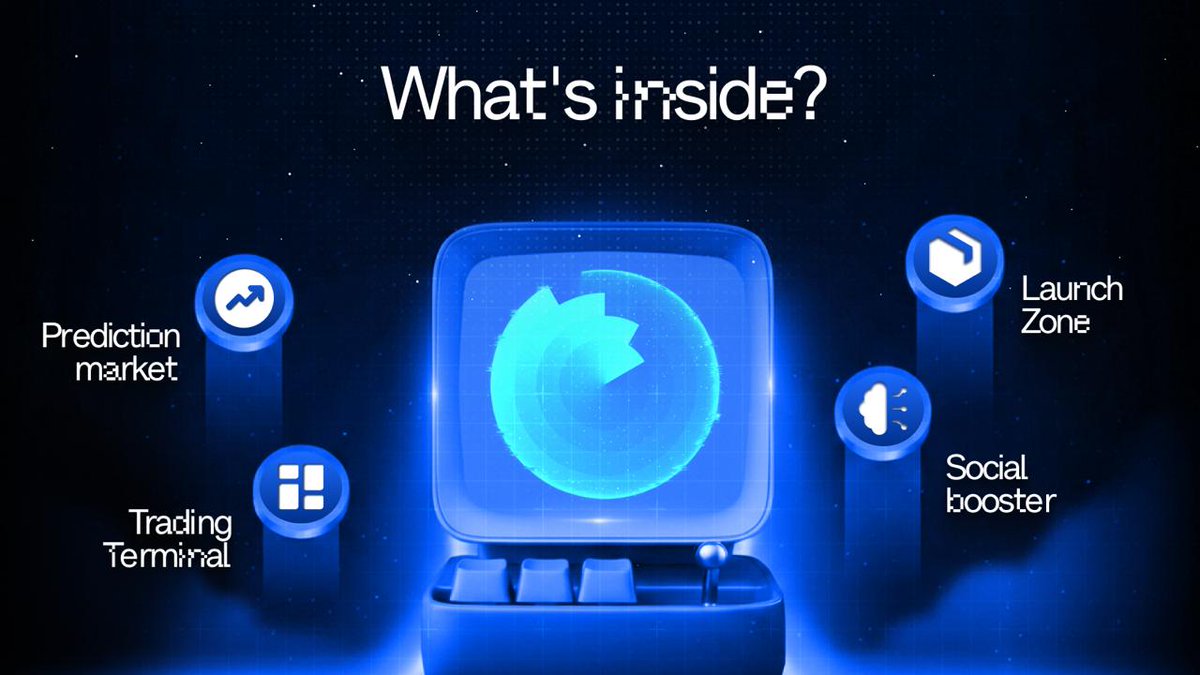
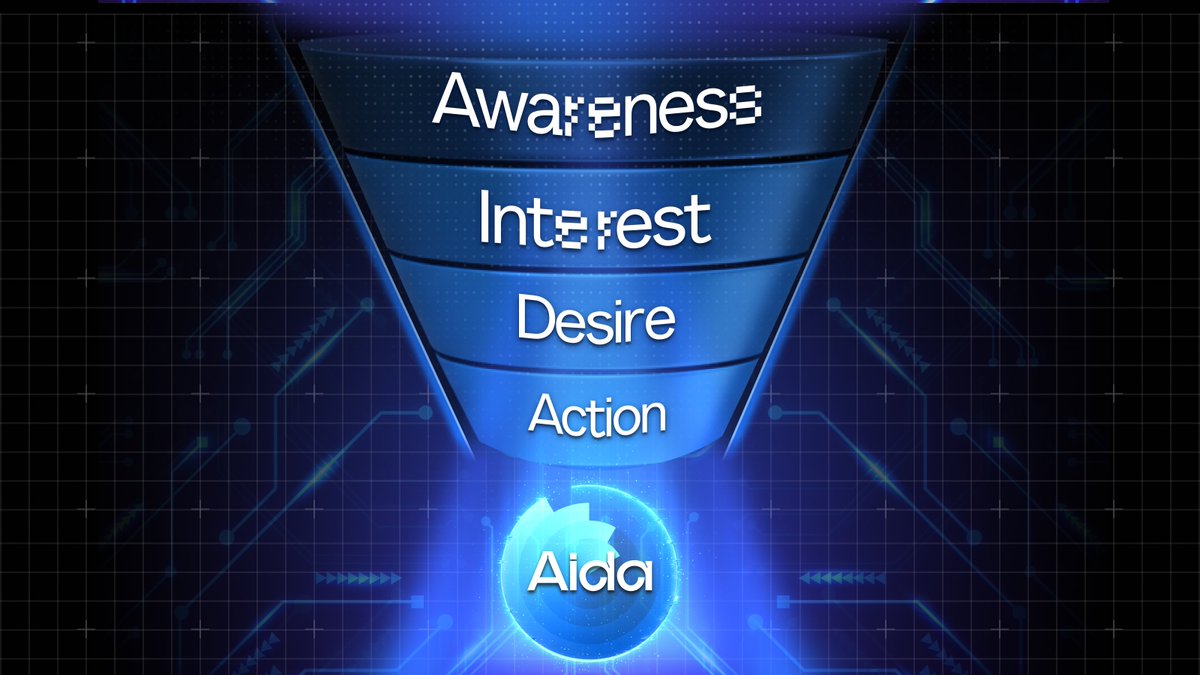
A lot of people look at AIDA and think there is too much going on or that it might be complicated to understand at first.
But when you break it down, it is actually pretty straightforward.
At the core, it comes down to four parts that all connect with each other in a simple way.
- LaunchZone is where things start, where you can create and launch.
- Prediction Markets are where people take positions and express what they think will happen.
- Social Booster is where attention builds and projects get visibility.
- And the Trading Terminal is where all the activity comes together and trades happen.
Each part has its role, and once you see how they fit together, the whole system starts to feel much more intuitive.
If you were wondering how AIDA works, this is really all there is to it.
Markets usually move in a simple way. Something gets people’s attention, they form a view on it, put money behind that view, and the price starts to reflect what the market believes.
Attention is where it all begins. And events such as a political race, a championship game, a tech launch, or major breaking news can suddenly draw huge interest. On large social platforms, a trending topic can attract hundreds of thousands or even more than 1M views within a few hours, which means a large number of people are now focused on the same question.
As attention grows, people start forming their own views about what is likely to happen. Some believe the odds are lower, others think they are higher. In prediction markets, those views show up directly in prices, and when an outcome trades at 40%, 60%, or 75%, the market is simply showing how participants currently judge the probability.
Interestingly, those views turn into action when people start trading, and large prediction markets can attract tens of thousands of participants and generate millions of dollars in volume around a single question, and each trade reflects someone backing their judgment with capital.
As buying and selling continue, the price keeps adjusting and becomes a live signal of what the market believes at that moment. What began as attention eventually turns into a measurable probability shaped by thousands of independent decisions.
You can now see this process in action and follow aggregated prediction markets directly inside AIDA to watch how probabilities change in real time.
Prediction markets get called gambling all the time, but that misses the point. They are information engines that turn scattered opinions into real-time probabilities backed by money.
When a market sits at 70%, it is not a random guess. Thousands of people are putting capital behind what they believe the true odds are. When new information hits, whether it’s a poll moving, a jobs report coming out, a star player getting injured, a movie opening weekend, or major breaking news, the price reacts right away. The same thing happens across politics, sports, entertainment, tech launches, and global events. As people buy and sell based on what they believe will happen next, the odds keep updating. It becomes a live forecast that gets sharper with every trade, shaped by real money and real conviction
This started in 1988, when the Iowa Electronic Markets was set up by University of Iowa economists to test if real-money bets could beat polls. Top platforms have shown how powerful this model can be, and during major political and economic events, markets there have reached accuracy levels in the 80–90% range. Billions of dollars in cumulative volume across crypto-based prediction platforms show that people are not just speculating for entertainment, they are using markets to process information.
Money has a way of filtering noise, and that is why prediction markets are better understood as information engines.
You can now access aggregated prediction markets directly inside AIDA and see what the market is pricing in today