Official account for the OHSU Geriatric Psychiatry Fellowship, training psychiatrists in the rewarding subspecialty of geriatric psychiatry for 30+ years.
Nice job! In CSF, changes observed are a reduction of Ab42 due to amyloid deposition and an increase in p-Tau and total Tau (t-Tau). The increases in both forms of Tau are thought to be due to neurodegeneration with p-Tau being a more specific marker for Alzheimer's disease.
Great participation! This is an example of PERSEVERATION and is a common symptom in disorders of executive function, like the behavioral variant of frontotemporal dementia.
A 68-yo woman comes to clinic with her husband, w/a 2 year h/o decline in cognition and function, with notable executive and social deficits. Short term memory is intact on cognitive testing. Her performance on Luria loops is shown below.
Mentorship is important for personal and professional growth. Our PD @davidmansoor with four of his mentors. There are three “generations” of geriatric psychiatrists in this photograph! #aagp#getiatricpsychiatry
Dr. Trevino joined the faculty at OHSU in July of 2014 in outpatient geropsychiatry. Her interests include cognitive disorders and late life depression, as well as resident education.
Faculty highlights!
Dr. Trevino completed medical school at University of California, Davis and residency at University of New Mexico. She pursued a fellowship in geriatric psychiatry at Yale University.
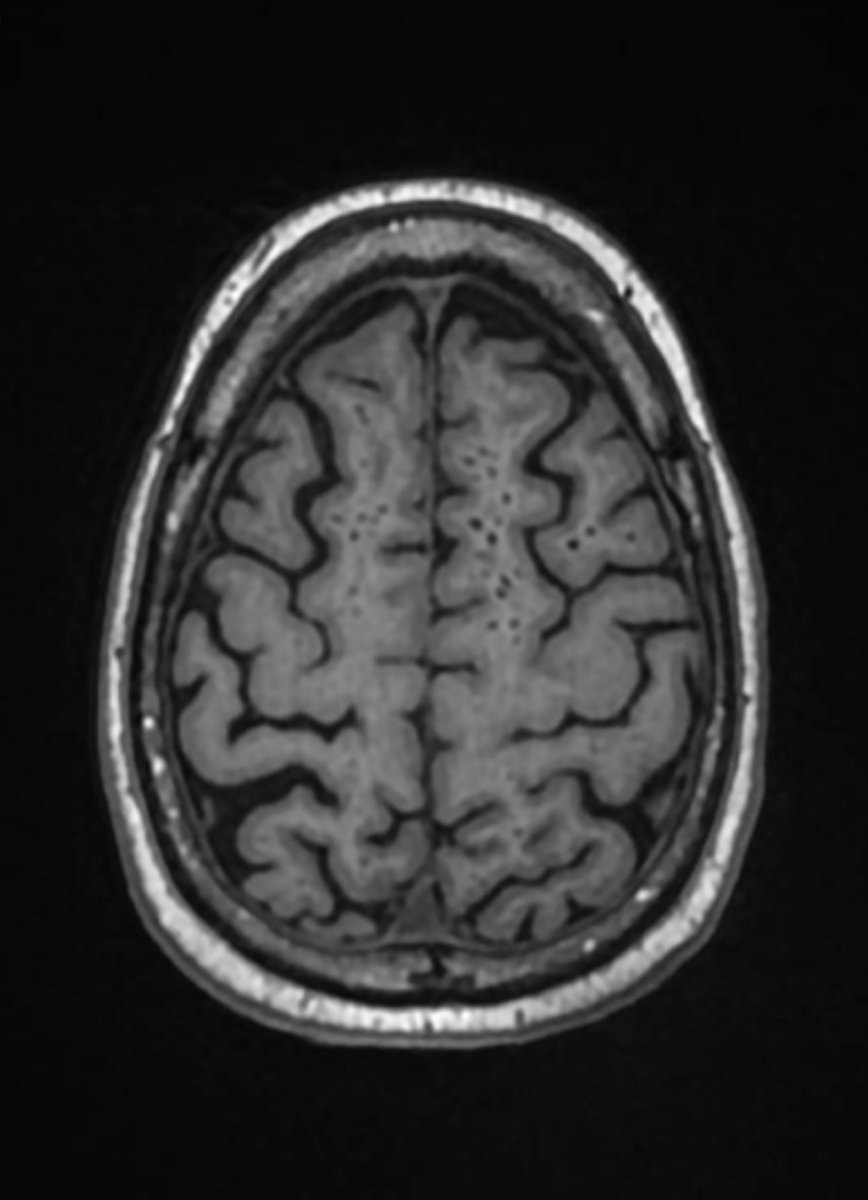
The correct answer is perivascular space. This space surrounds the walls of vessels as they travel from the subarachnoid space through the brain parenchyma. They can become enlarged with age and are associated with cognitive impairment.
76yo otherwise healthy man w/MCI. T1 MR shows numerous well defined hypointense round lesions in the white matter (see image) and basal ganglia. The signal intensity is identical to that of CSF on T2, and w/out an increased signal on FLAIR. What is the likely etiology?