@emmaluna22 I am not aware of the structure of the TMS business objects, but if you want to learn about BOPF, you might find this collection of links useful: https://t.co/Xy1mGG1SEp
@ulfkar@Morl99@RalfDMueller Ach komm, RFID ist so was von 2010!
Gesichtserkennung FTW
https://t.co/tJGGadyxAE
Oder – bei Freigängern –
https://t.co/B9KrIJ2ApK
Probably the best thing you'll see today.
In 2017, a group of developers hilariously competed for who could create worst volume control interface in the world.
The results 🧵
1/22
Hands-down: @tylermcginnis is the most entertaining, but also one of the most skilled instructors I’ve seen in software development so far. I might just go back to learning React to enjoy the course. Since I’m sure: I’ll not only the framework, but a ton about other concepts too
🎉 After nearly a year of building in secret, I'm excited to finally announce what we've been working on.
Introducing 🕹️ https://t.co/3SzmKDia5V - The interactive way to master modern React.
Here's why we're excited about it and why it took so long to create.
Most fundamentally different for me with an #SAP dev background though: there is no difference between “business functions” and “analytical features”. With #flink, everything is just an output. Whether you directly connect a machine or a human doesn’t matter 🤩 #toldyouso
Just dipping my toes into stateful stream processing with #flink. What an amazing world. 20 years of business software architecture are being shaken to the very core. Thanks to @fhueske and @OReillyMedia for the great company starting this journey!
If the previous part sounded cryptic, here are some software architecture fundamentals I can revisit thanks to #flink: “what is an application? How can we couple business functions? How persistent does state need to be and who cares about that?”
At the same time I have to agree to this hypothesis: People will not share mobility. Sharing is a result of costs being too high – and I Europe, we’re still far too wealthy. #sharedmobilityrocks#uncomfortable
Aftermath of #sharedmobilityrocks and cars, particularly in 🇩🇪 It's not only about liking these metal boxes on four wheels: It's deeply integrated into our families very own structures. More than 11% of manufacturing jobs are in the car industry. https://t.co/Sdpf4d2FAG
Considering a family (incl. aunts & uncles), a decent share of families generates wealth from it. How could you not enjoy something that brought wealth to you and your loved ones? @mmmart1 I'd wish to find more quantitative data on how many families depend on automotive income
@RuedigerKurz Ja. Das war ja meine Ausgangsthese. Wenn allerdings entweder MIV unerschwinglich wird oder Shared mobility andere Qualitäten mit sich bringt, die einfach „als besser“ bewertet werden, brauchen wir vielleicht keine weiteren Werte.
@RuedigerKurz Das ist mir ehrlicherweise zu einfach. Das Auto ist nicht immer komfortabel (Stau stehen). Auch gibt es andere besitzorientierte Verkehrsmodi. Und dann kommt noch dazu, dass in 🇩🇪 Viele Familien durch Auto-Produktion ihren Wohlstand verdienen. Aber sicher dauert eine Entwöhnung
Hannes at #sharedmobilityrocks: „which mode is chosen for a trip is being decided at a home‘s door step […] 6/7 trips are starting and ending there. This, we need to bring mobility hubs at these places“
Michael of the city of Bremen: „we don’t need a fancy design […] we need the area to be visible, provide the space where it’s needed and offer the demanded services“ #mobilpunkt#sharedmobilityrocks
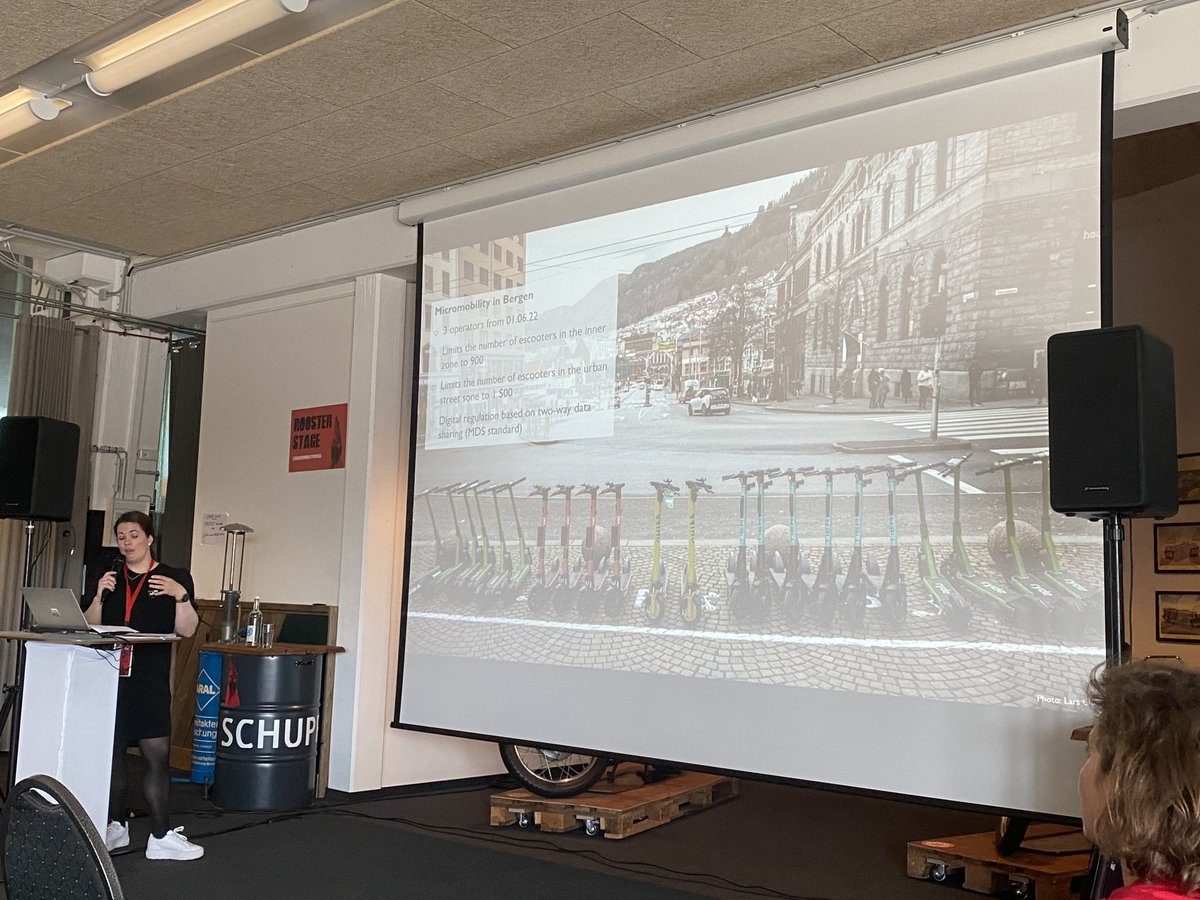
Marina Magerøy shares Micro mobility in the city of Bergen: Evaluate providers, include #MDS in the process – and limit who is allowed to provide their services. #sharedmobilityrocks







![OJaegle's tweet photo. Hannes at #sharedmobilityrocks: „which mode is chosen for a trip is being decided at a home‘s door step […] 6/7 trips are starting and ending there. This, we need to bring mobility hubs at these places“ https://t.co/hwBl9WgBFP](https://pbs.twimg.com/media/FTm88GhWYAURR9_.jpg)
![OJaegle's tweet photo. Michael of the city of Bremen: „we don’t need a fancy design […] we need the area to be visible, provide the space where it’s needed and offer the demanded services“ #mobilpunkt #sharedmobilityrocks https://t.co/jJyctgCUHS](https://pbs.twimg.com/media/FTmku5PWQAA4aHA.jpg)