The Maverick with the Silver Streak
If you had stood in a crowd in northern Kenya during the twilight of the twentieth century, your eyes would have naturally gravitated toward him. He was a lanky, imposing figure carrying a thick black goatee and a distinctive, defiant strip of white hair running through his afro. His name was Ahmed Mohammed Khalif.
Born in 1950 into a family of rebels and leaders, Ahmed inherited a tradition of challenging authority. His father was among Kenya's first African police inspectors, while his brothers made headlines by confronting both colonial and post-independence governments. One demanded secession at the Lancaster talks; another was jailed after publicly criticizing President Jomo Kenyatta's salary.
When Ahmed entered politics in 1979 at just 29, he carried forward that spirit of independence. A trained journalist and former voice of the BBC, he understood the power of words and used them not to comfort the powerful, but to defend the forgotten.
The Shield of Wajir
When the horrific Wagalla Massacre of 1984 stained the nation's history, Ahmed stood tall in parliament as the thunderous face of the outcry, exposing the atrocities committed against his community. Soon after, when the state introduced the discriminatory "Red Cards" to racially segregate Kenyan Somalis, Ahmed refused to bow. He hired a sharp young lawyer named Mohammed Ibrahim and successfully fought the state to a standstill, securing a landmark victory for human dignity.
Yet, Ahmed’s rebellion was never about tearing the nation apart; he fought passionately to prove that the people of the northern frontier belonged to Kenya. He was a true iconoclast. In the historic 2002 election, when his entire region voted almost to a man for the independence party KANU, Ahmed stood entirely alone. He ran on Mwai Kibaki’s NARC ticket and won, bridging the deep chasm between the periphery and the center of national power.
A Flight Cut Short
Recognizing his immense moral courage, President Kibaki appointed Ahmed as his Minister for Labour and Manpower Development in 2003, making him the pride of Wajir and the county's very first Cabinet Minister.
But history is often as fragile as it is fleeting.
Barely twenty days into his historic appointment, after a weekend celebrating the dawn of a new, democratic Kenya, Ahmed boarded an ill-fated flight at the Busia airstrip. The aircraft failed to gain sufficient height, clipped power lines, and crashed. At just 53 years old, Ahmed’s life was cut tragically short, leaving him as the shortest-serving minister in Kenya’s history.
Honour Delayed, but not Denied
For decades, the name Ahmed Mohammed Khalif lingered like a whisper of smoke over the plains of Wajir, revered locally, yet awaiting its rightful place in the grand tapestry of national honor.
That waiting finally came to an end on Madaraka Day.
As the nation gathered to celebrate its self-governance, President William Ruto officially renamed the Wajir Stadium to the Ahmed Mohammed Khalif Stadium. Decades after Ahmed stood at the Wajir airstrip defending his people from the shadows of oppression, his name has been permanently etched into the earth of the county he loved.
The dust has settled in Wajir, the flags are flying high, and the energy is unmatched! The 63rd Madaraka Day celebrations made history as Northern Kenya took centre stage, and the vibe was absolutely electric.
Led by His Excellency President William Ruto, the nation converged on Wajir to honour our foundational milestones while boldly casting a vision for the days ahead. We didn't just celebrate our freedom; we celebrated our growth, our resilience, and the incredible brilliance of Kenyan talent shaping the tomorrow we all share. Happy Madaraka Day!
The air in Wajir is thick with anticipation, and history is already unfolding in the sands of Northern Kenya. For the first time since independence, the heartbeat of our national Madaraka Day celebrations moves to this historic region, setting a magnificent stage for the 62nd anniversary.
Under the powerful theme "Education, Skills and the Future", the ongoing thematic exhibitions and plenary sessions are doing more than just showcasing displays, they are weaving a tapestry of our nation’s shared journey, rich heritage, and collective destiny.
Step into the exhibition grounds, immerse yourself in the stories, and lend your voice to the conversations shaping the next chapter of Kenya's greatness.
Karibuni Wajir!
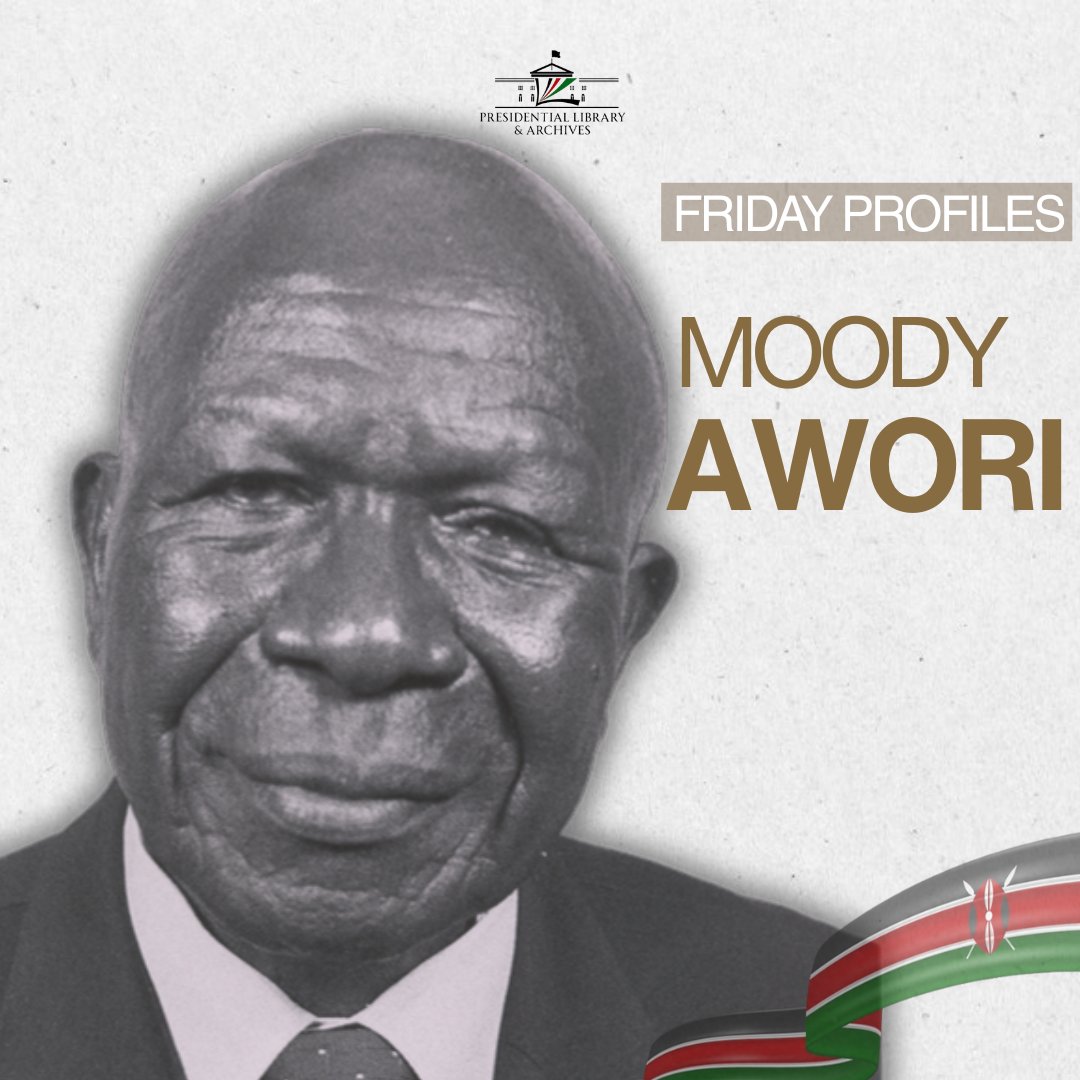
FRIDAY PROFILES: 'Uncle Moody'
For two decades, he was whispered about in the corridors of power as the "permanent Assistant Minister" -a polite political euphemism for a man marooned on the periphery of the Cabinet. To the casual observer, it was a profound puzzle. Moody Awori possessed the sharp intellect of a Makerere alumnus, the refined grace of a Mang’u old boy, and the deep-seated integrity of a pioneer missionary’s son. Yet, in an era where political sycophancy was the currency of survival, his independent mind was viewed with deep suspicion. He was left to bide his time, riding the tempestuous tiger of Kenyan politics, waiting for a season that valued substance over servitude.
That season arrived in the historic dawn of 2003. When the NARC administration swept into power, President Mwai Kibaki finally called the gentleman from Funyula out of the shadows and into the sun. Given the Home Affairs portfolio, Awori did not just step into office; he hit the ground running.
It was during this vibrant chapter that the nation bestowed upon him an enduring, affectionate moniker: Uncle Moody. With his signature cowboy hat and an easygoing yet deeply serious mien, he became the affable uncle to millions of compatriots who carried none of his blood.
But Uncle Moody’s truest legacy was not found in the warmth of his smile; it was forged in the cold, forgotten concrete of Kenya’s prisons.
Before 2003, national culture dictated that prisons were "not five-star hotels" and that offenders should be locked away and the keys forgotten. It was a colonial hangover of systemic degradation. Uncle Moody single-handedly shattered that culture. He became the enthusiastic champion of a policy that recognized prisoners as human beings, infusing rehabilitation into a system that had only known retribution. It was a triumph of social reform that touched the ordinary wananchi more deeply than any macroeconomic blueprint ever could.
When tragedy struck the nation with the passing of Vice President Michael Kijana Wamalwa, President Kibaki turned to the steady, unblinking leadership of Awori to occupy the nation’s second-highest office. What followed was perhaps the smoothest, most seamless vice-presidency in Kenya’s modern history. In a landscape where deputies so often plotted to overshadow their bosses, Uncle Moody harbored no presidential ambitions of his own. He was comfortable in his own skin, serving a President who was entirely unbothered by paranoia. Together, they steered the ship of state through the grand architecture of Vision 2030.
In his memoirs, Uncle Moody reflected on leadership using the ultimate metaphor of selflessness: the biblical Moses. He noted that Moses never sought the personal glory of standing in the Promised Land; he was content to guide his people through the wilderness and groom a Joshua to take them home.
Arguably, most of those who knew Uncle Moody remember him as that wise elder who planted trees under whose shade he knew he might never sit.
MEMORIES MONDAY
A lighter moment with President Daniel arap Moi in Eldoret. Caught in the rain during a visit, the President reportedly stepped into a local supermarket and purchased himself an umbrella.
FRIDAY PROFILES
Stanley Shapashina ole Oloitipitip
For two decades, Stanley Shapashina ole Oloitipitip bestrode Maasai politics like a colossus. A towering conservative figure, his shadow stretched from the snow-capped peaks of Kilimanjaro to the high-stakes corridors of power in Nairobi. Yet, in the volatile theater of early Kenyan politics, the higher one climbed, the sharper the precipice. For Oloitipitip, a storied career that shaped the very map of local government would ultimately collapse like a house of cards.
FROM THE FRONTLINES TO LANCASTER HOUSE
Born in 1924 at the foot of Kilimanjaro, Oloitipitip’s world changed when World War II bled onto the borders of Kajiado. At just 19, he joined the King’s African Rifles as a nursing orderly, rising to sergeant while deployed to the grueling Eastern theaters of Burma, India, and Ceylon.
When he returned home in 1945, the colonial government sought his help to crush the Mau Mau uprising. But Oloitipitip flatly refused, choosing to side with the independence movement and even convinced his clan to do the same.
But as freedom approached and land became the ultimate battleground, Oloitipitip, fearing the Maasai would lose even more land to larger communities post-independence, became Chairman of the Maasai United Front.
Then on a Saturday noon, June 25, 1960, inside the modest Ngong African District Council Hall, he hosted a meeting of regional factions that birthed KADU. The move fractured KANU’s perceived dominance and thrust Oloitipitip directly onto the national stage, taking him all the way to the Lancaster House Conference to fight for his people's rights.
RICHES, RANCHES, AND A 'THICK BLANKET'
At independence, however, Oloitipitip pragmatically crossed the floor to join Kenyatta’s ruling KANU, sparking a 23-year parliamentary career and a bitter rivalry with John Keen.
Keen accused him of keeping the Maasai "under a thick blanket" of traditionalism, while Oloitipitip proudly defended his community's lifestyle.
Nowhere was his influence clearer than in the Amboseli Game Reserve. When international conservationists proposed carving out a national park, Oloitipitip skillfully brokered a deal that brought schools and tourism dollars directly to his people. He even marched to President Kenyatta to personally claw back 130 square kilometers of land for the community. He became the indispensable gatekeeper of the plains and, as tourism boomed, his own personal wealth and ranch holdings grew exponentially.
KING OF TOWNS
Oloitipitip’s true genius lay in fierce, transactional loyalty. In 1976, when political heavyweights tried to change the constitution to block Daniel arap Moi from succeeding Kenyatta, Oloitipitip fearlessly stepped into the line of fire. He single-handedly collected 98 protest signatures from MPs to kill the motion, earning the eternal gratitude of Moi and the powerful Charles Njonjo.
Once in power, Moi rewarded Oloitipitip with the influential ministry of Local Government. Oloitipitip went straight to work and with the stroke of a pen, began elevating obscure, rural shopping centers and small outposts into municipal and town councils overnight, promising vast government funding for water and sewerage systems.
While the move made him immensely popular in those newly minted towns, it left many of them severely cash-strapped, straining under responsibilities they were ill-equipped to handle.
And when critics like MP Martin Shikuku questioned the sudden, immense wealth of Cabinet ministers, Oloitipitip famously dismissed them as a "bunch of communist agents too lazy to work to get rich".
FATAL MISCALCULATION
But the shifting tides of palace politics are notoriously unforgiving. By the early 1980s, a bitter proxy war erupted within the presidency. Oloitipitip firmly anchored himself to the Njonjo axis, openly clashing with Vice President Mwai Kibaki and telling him he was ignorant of how government operated.
It was a fatal miscalculation.
When the explosive "traitor debate" was unleashed to dismantle Njonjo’s powerful network in 1984, Oloitipitip found a bullseye painted squarely on his back.
Though he was the only Njonjo-aligned minister to survive the snap election of 1983, his fall from grace was swift and absolute. Moi banished him to the backbenches. Soon after, the state went after his vast business empire and Oloitipitip was arrested for flouting tax laws, specifically failing to pay taxes on his Maasai Boarding and Lodging hotel in Loitokitok.
The colossus of Maasai politics was sentenced to a 12-month jail term, expelled from KANU, and his parliamentary seat promptly filled by a rival.
He emerged from prison an ailing, broken man and retreated to his rural home in Rombo. Troubled by severe obesity, the man who had once negotiated with international billionaires and state presidents spent his final moments under the care of a traditional medicine man. On January 22, 1985, at the age of 61, Stanley Oloitipitip breathed his last.
MEMORIES MONDAY
Did you know?
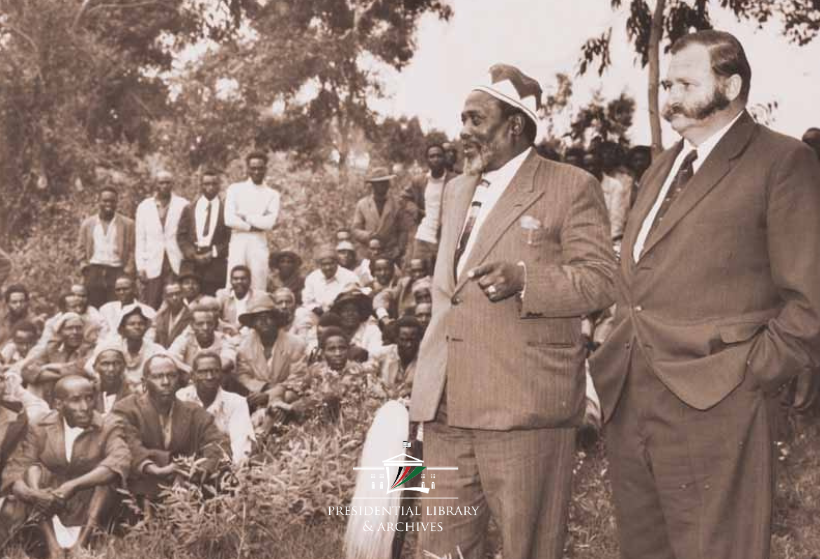
Before becoming Kenya’s first Prime Minister and later President, Mzee Jomo Kenyatta served in government as a Cabinet Minister. In 1962, Colonial Kenya Governor Patrick Renison formed a Coalition Government that served from 1962 to 1963, bringing together KANU and KADU leaders.
Under the arrangement, Jomo Kenyatta and Ronald Ngala jointly served as Ministers of State for Constitutional Affairs, with Kenyatta overseeing Economic Planning and Ngala handling Administration.
Here, on June 1, 1962, Kenyatta stands alongside fellow minister Bruce McKenzie as they address about 500 indigenous settlers at the Muguga Forest Settlement Scheme in Kiambu.
FRIDAY PROFILES: Kyale Mwendwa
Imagine growing up in one of Ukambani’s most influential households; a home with seven wives, many children, sprawling livestock herds, and siblings destined to become national figures. In that household in Matinyani, Kitui, a young boy named Kyale Mwendwa spent his childhood herding cattle, more for adventure than responsibility. There were enough workers to do the real work.
Few could have predicted then that the playful village boy would become one of the men who would help shape young Kenya’s education system.
Born on 25 May 1926, Kyale came from a family of trailblazers. His father, Mwendwa Kitavi, was among Ukambani’s pioneer colonial chiefs and counted among Kenya’s powerful traditional leaders of the era. The Mwendwa family would later produce an extraordinary line of public figures, among them Chief Justice Kitili Mwendwa, Cabinet minister Eliud Ngala Mwendwa and later, Winfred Nyiva, Kenya’s first female Cabinet minister.
But Kyale chose a different path: education.
His journey took him from Matinyani Primary School to Kitui High School and then to the prestigious Alliance High School. Interestingly, among his classmates were several young men who would later rise to become Cabinet ministers and national leaders. The future was quietly sitting in those classrooms.
Kyale continued his studies at Makerere University, later Rhodes University in South Africa, and eventually Michigan State University in the United States. By the time he returned home, he had found his calling, education.
And he dedicated himself to it.
Rising through the Ministry of Education, Kyale served as Education Officer, Kenya’s first African Director of Education and eventually Permanent Secretary. During this period, Kenya witnessed rapid growth in schools, teacher-training institutions and educational opportunities across the country. The education sector became one many African countries looked at with admiration.
Yet politics would eventually call.
Following the death of his elder half-brother, former Chief Justice Kitili Mwendwa, Kyale entered elective politics and won the Kitui West parliamentary seat in 1986. President Moi appointed him Minister for Water Development, perhaps hoping that a man raised in the dry landscapes of Kitui could help solve the persistent water challenges facing Kenya’s arid regions.
But life has a way of surprising even the most accomplished people.
Despite his brilliance in education, his tenure in Water did not produce the impact many had expected. Two years later, after the controversial 1988 mlolongo elections, he was dropped from Cabinet.
Still, Kyale returned to what he knew best: building through education. Through institutions such as St Austin’s Academy and other educational ventures, he continued investing in learning long after leaving the political stage.
Mwendwa died in 2020 aged 94.
On Jamhuri Day 1965, Jomo Kenyatta reflects on Kenya’s early strides as a young nation, speaking on unity, development, and the promise after independence.
MEMORIES MONDAY
1964: Kenya African Democratic Union (KADU) leaders Masinde Muliro (in glasses) and Ronald Ngala (in beaded cap) oversee the dissolution of their party ahead of its merger with the ruling Kenya African National Union (KANU). The move marked a major turning point in Kenya’s early post-independence politics, ushering in a de facto one-party state
FRIDAY PROFILES
John Koech
One afternoon in Nakuru, after a graduation ceremony at Egerton University, Cabinet Minister John Koech headed to President Daniel arap Moi’s Kabarak home for the traditional post-event luncheon. But at the gate, he was turned away.
Humiliated and furious, Koech drove straight to the Nation Media Group bureau in Nakuru and drafted a resignation letter. The following morning, just as the country was starting to buzz, he called a press conference to retract his letter. Nobody knows what transpired overnight but Koech went back to work having learned the bitter lesson that when you were appointed by Moi, you served at his pleasure. And you stopped serving at his pleasure, not yours.
That dramatic episode perfectly captured the complicated political life of John Koech: brilliant, independent-minded, loyal at times, but never fully comfortable playing politics by the rules of the day.
Born in 1946 in Olbutyo, Chepalungu, Koech’s journey began in the classroom. After studying at Tenwek High School, he graduated from Makerere University with a degree in Economics in 1972. He worked as a teacher and later as an education officer before plunging into politics during the turbulent transition from the Jomo Kenyatta era to the Moi presidency.
He first lost the Chepalungu parliamentary race in 1974, but by 1979, with Moi now firmly in power, Koech won the seat and quickly emerged as one of the South Rift’s rising political stars. Education became his calling card. Roads, schools, and electrification projects followed him across Chepalungu and the wider South Rift.
But in Moi’s inner circle, loyalty mattered as much as performance.
Koech’s independent streak often placed him on a collision course with powerful figures in Government. In 1988, he was appointed Minister for Public Works, only to be dismissed barely a year later. Allies claimed he had blocked influential individuals from exploiting his ministry for personal gain. After the sacking, his relationship with KANU deteriorated rapidly.
By 1990, he was expelled from the ruling party altogether, a political death sentence in the one-party era. His parliamentary seat was declared vacant and he was pushed into the cold.
Yet Koech was not finished.
After being politically rehabilitated, he reclaimed his Chepalungu seat in the 1992 elections and eventually returned to Cabinet in the late 1990s. But even then, his diplomatic style and refusal to embrace confrontational politics made him an uneasy fit within Moi’s hardline political machinery.
Outside politics, Koech remained deeply invested in development and education. He is remembered for helping establish Moi Siongiroi Girls Secondary School and pushing for rural electrification in Chepalungu. Unlike many politicians of his era, he openly criticised the culture of political handouts, insisting that true leadership meant empowering people rather than buying loyalty.
John Koech’s story is one of ambition, defiance, exile, and return. A story of a man who thrived in Moi’s system, yet never entirely belonged to it.
September 1, 1999: President Daniel arap Moi officially opens the Kenya Post Office Savings Bank (Postbank) branch in Mombasa. The bank, established in 1910, is wholly owned by the Government of Kenya and reports to the Ministry of Finance.
Memories Monday
June 1971: Then Minister for Finance and Economic Planning, Mwai Kibaki, walks hand in hand with his wife, Lucy Kibaki, during a street parade in support of President Jomo Kenyatta.
On the right is Chief Justice Kitili Mwendwa, among the dignitaries joining the public show of solidarity.
History buffs, what major political currents were shaping Kenya in the early 1970s?
Friday Profiles:
Meet Dr Newton Wanjala Kulundu.
He wasn’t the most polished speaker. His words sometimes came slowly, shaped by a childhood in rural Kakamega and years in modest classrooms before medicine and public health opened the world to him.
He was easy to underestimate at first glance. But beneath that exterior was a man who thrived in tension—combative, blunt, often undiplomatic, yet remarkably effective when it came to getting things done.
His time in the environment ministry captured this duality vividly. In 2003, he found himself working alongside Nobel Laureate, Wangari Muta Maathai, a globally respected environmentalist with an uncompromising stance on conservation. Their working relationship was anything but smooth. Maathai pushed for strict protection of forests, advocating for a total ban on human activity, while Kulundu, ever the politician, worried about alienating the very farmers who had elected him. They clashed often –science versus politics, idealism versus pragmatism.
Yet, despite their differences, they shared a fierce determination to clean up the sector. Together, they took bold and often unpopular steps; dismissing corrupt forest officers, destroying illegal plantations, and cracking down on widespread abuse of forest land.
One of their toughest decisions was the ban on the ‘shamba system’. It was a necessary move for conservation, but it came at a heavy political cost, especially for Kulundu, who knew it would hurt his own support base. Still, he pushed it through, choosing long-term national interest over short-term political survival.
Kulundu’s deep sense of national pride also defined his legacy. Nowhere was this clearer than in the 2005 elephant translocation. The ambitious conservation effort was carried out with precision and, importantly to him, without relying on foreign expertise. He wanted to prove that Kenya could stand on its own, free from what he saw as overbearing external influence.
But that same pride often spilled over into confrontation. He had a very public falling-out with Richard Leakey, accusing him of trying to exert undue influence over state affairs. In another incident that stunned diplomats, Kulundu openly criticised the United States and the United Kingdom, calling them major violators of human rights. The moment was so charged that US Ambassador, Michael Ranneberger publicly refused to shake his hand, a rare and telling snub.
When he later moved to the Labour Ministry, Kulundu stepped into a sector riddled with tension and unrest. He focused on reform, breathing new life into the Tom Mboya Labour College and earning the respect of trade unionists who saw in him a leader willing to stand with workers rather than systems.
But perhaps the clearest picture of the man came in 2007.
Politics shifted. Allies moved. ODM was the popular option. Survival meant switching sides.
Kulundu didn’t.
He stayed loyal to the National Rainbow Coalition (NARC)–and lost.
Three years later, Kulundu passed away, leaving behind a legacy that is difficult to neatly define. He had been many things; a doctor, a reformer, a fiercely independent leader. His record was marked by real achievements yet at the same time, he carried a reputation as a difficult figure, especially in diplomatic circles.
President Mwai Kibaki is taken on a tour of Kenya Airways' (KQ) second Boeing after it was delivered to Nairobi on April 25, 2005.
The airline had ordered three 777-200ERs in March 2002. The first was delivered in May 2004, and the third in June of 2005.
MEMORIES MONDAY
President Daniel arap Moi rides through London in a ceremonial carriage with Queen Elizabeth II during a high-profile state visit to the United Kingdom on 10-6-1988. The visit aimed to strengthen Kenya-UK relations, following British Prime Minister Margaret Thatcher’s visit to Kenya in January 1988.
FRIDAY PROFILES
THE BRILLIANT TECHNOCRAT WHO DIDN'T LAST
Some men rise through the system. Others are the system—until politics reminds them otherwise.
Francis Yekoyada Omoto Masakhalia was one such man.
Long before he briefly held Kenya’s most sensitive docket, he was the archetype of a top-tier civil servant—sharp, methodical, and deeply embedded in the machinery of government. In 1972, Jomo Kenyatta tapped him as the country’s first Chief Economist. By 1980, under Daniel arap Moi, he had climbed to Permanent Secretary in Economic Planning.
This was a man built for policy—not politics.
THE SCHOLAR AMONG GIANTS
At Maseno School, he shared classrooms with Barack Obama Sr., under the watch of none other than Jaramogi Oginga Odinga.
When Tom Mboya launched the famous airlifts to America, both Masakhalia and Obama Sr. were beneficiaries. Masakhalia would head to Denver, sharpening an already formidable intellect.
By every measure, he was destined for greatness.
THE FALL BEFORE THE RISE
Then came 1984.
Accused of nepotism while serving in Water Development, Masakhalia was fired. For many, that would have been the end.
Instead, it became his political beginning.
He resurfaced at the United Nations in Addis Ababa, then Lesotho—quietly rebuilding. And when he returned home in 1988, the same controversy that ended his civil service career won him public sympathy.
He was elected the first MP for Butula.
SIX MONTHS AT THE TREASURY
On 27 February 1999, Masakhalia reached the pinnacle: Minister for Finance.
Six months later, he was gone.
His tenure was anything but quiet. He enforced austerity—famously capping engine sizes for government vehicles and sidelining luxury cars. But the economy also faltered:
The shilling slid sharply
Interest rates doubled
Kenya defaulted on external debt
The explanation? ‘Administrative delays.’
In a ministry where precision is everything, that was fatal.
THE TECHNOCRAT’S BLIND SPOT
Masakhalia’s strength became his weakness.
He knew too much—or thought he did.
Accustomed to being the expert, he resisted briefings. But ministers don’t just know—they coordinate, communicate, persuade. In high-stakes donor meetings, that gap showed.
And in politics, perception moves faster than intellect.
THE EXIT—OVER THE AIRWAVES
His dismissal came in the most Kenyan way possible: the 1 PM news bulletin.
No warning. No ceremony.
Just like that, he was moved to Energy.
Later, he would reflect with quiet frustration: six months wasn’t enough to turn the economy around.
He wasn’t wrong.
THE LEGACY
Despite the short stint, Masakhalia left one lasting mark: the Medium-Term Expenditure Framework—a budgeting system still shaping Kenya’s fiscal planning today.
He remains a paradox:
A brilliant mind
A seasoned insider
A minister undone, not by lack of knowledge—but by the politics of leadership
History buffs—
Was Masakhalia simply unlucky… or does his story prove that in government, how you lead matters just as much as what you know?