🚨😭💀 IL REGARDE SA FEMME SE FAIRE DÉFONCER… ET ÇA LE FAIT SE SENTIR MIEUX
Adam 22 (le mec connu pour son couple «ouvert ») explique tranquillement pourquoi il kiffe regarder sa femme se faire détruire par d’autres mecs…
Et même qu’après une dispute il s’est branlé devant les vidéos d’elle en train de se faire prendre.
« Parfois je veux juste la voir se faire baiser fort pendant que je regarde »
On est vraiment dans la fin des temps ou quoi ? 😂
Hercules Mingens (1st Century BC - 1st Century AD), Roman white marble statuette known as the Drunken Hercules, was discovered in the House of the Stags in Herculaneum... The sculpture depicts the divine hero in a vulnerable state, contrasting with traditional depictions of his heroic power.
Hercules naked, drunk, and takes the opportunity to urinate. But it's not a fountain, so no liquid comes out of his penis. The sculptor simply wanted to represent the decadence of drunkenness, which affects gods and demigods as well as mortals.
However drunk he may be, Hercules doesn't relinquish his attributes: the Nemean lion's skin and the club. He carries them over his shoulder, thus concealing the stand, since this statue is pure drunken instability. The sculpture's center of gravity is shifted far back, something quite un-"classical," more in the Hellenistic style.
Furthermore, it doesn't seem to be the best time for Hercules... he's a bit older, chubby, and not very athletic.
It is an unusual image of Jupiter's son, although this iconography of Hercules mingens appears to have been fashionable in Rome from the 2nd century BC until the imperial period. Perhaps this is because Greek comic and satirical literature was also very popular at the time.
These statues were intended for gardens, places of leisure and pleasure, where Romans would go after a good meal and perhaps relieve themselves. The owners of these houses kept their employees, cultured but mischievous, in good standing.
This type originates from a lost 4th Century BC Greek bronze statue by Lysippos (or his school). The most famous surviving version is the colossal Farnese Hercules (over 3.17m tall), a Roman marble copy signed by Glykon, made around 216 AD for the Baths of Caracalla in Rome. It was rediscovered in 1546 and became part of Farnese collection (now in Museo Archeologico Nazionale in Naples).
(54x34cm)
Ercolano Archaeological Park
Herculaneum 🇮🇹
#archaeohistories
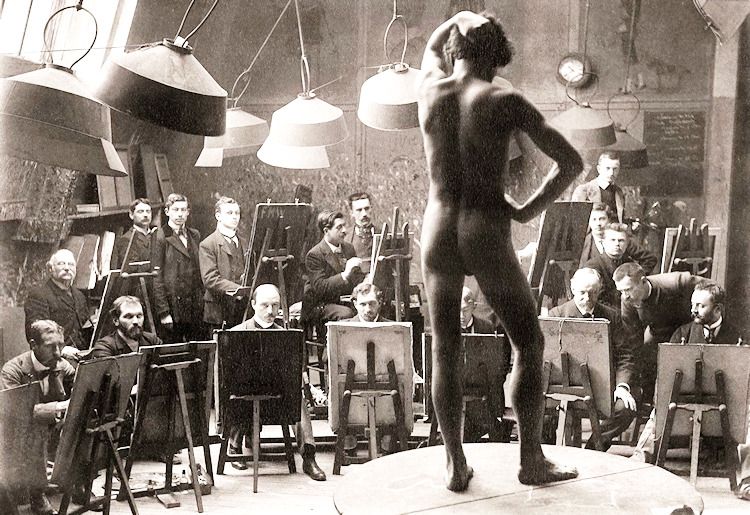
Les #BeauxArts, lieu unique où un homme nu qui ne bouge pas est l'être le plus important de la salle.
Capturer sa chute d'épaule ou sa tension musculaire, c'est là que tout commence pour un futur artiste.
Hommage aux modèles vivants qui prêtent leur corps à l'étude.
#Culture