The latest reservoir storage numbers are in for Oregon, and ... we're doing pretty well overall, especially compared with the last 4 years! The outlier is Cougar Reservoir, which has substantially altered operations in 2022 to increase flows on the mainstem Willamette.
Western Oregon was hit by a "flash drought" over the past 2-3 weeks, according to OR State Climatologist @laoneill25. Warm temps and east winds “sucked record amounts of moisture from the soil." Impact to farming, drinking water, wildfire, etc. Story:
https://t.co/vHd9UsXR6A
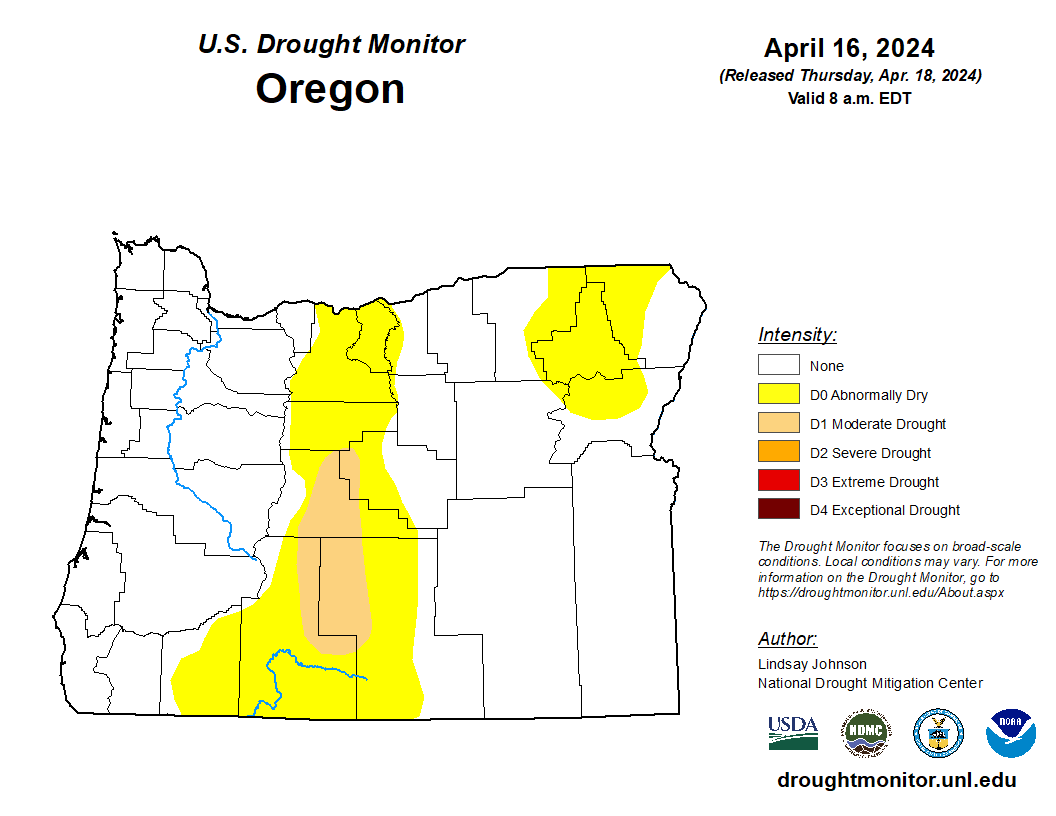
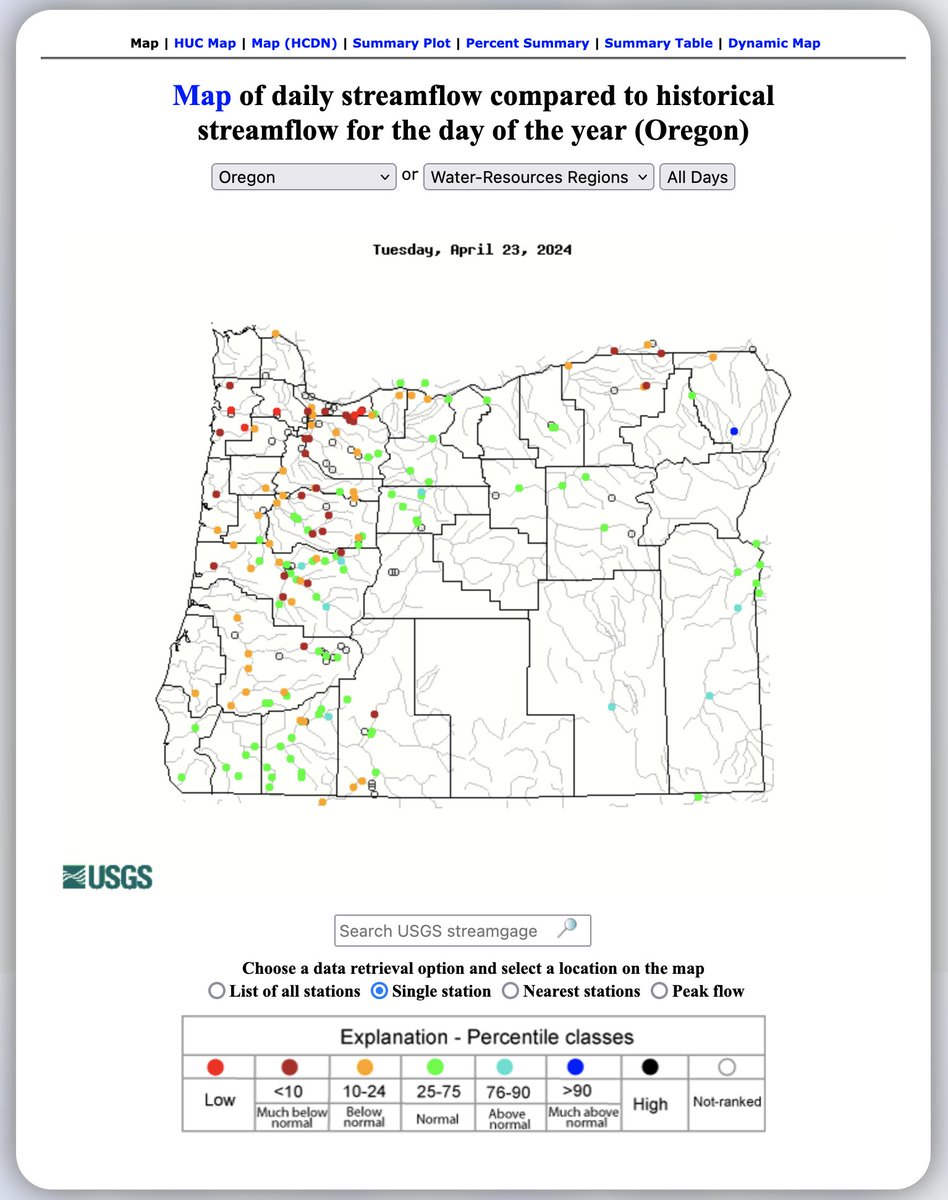
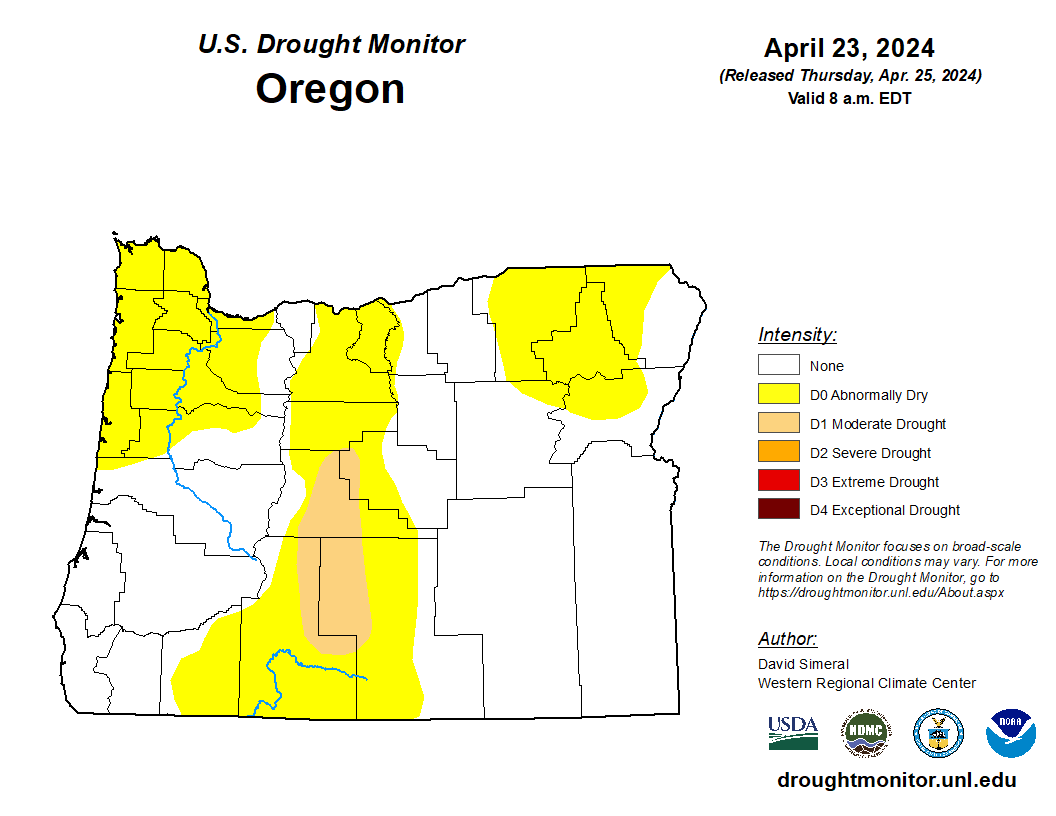
🔵 Since January 1, much of Arizona and New Mexico have observed normal to well-above-normal precipitation levels. Dry conditions expanded in western Oregon and Washington in response to short-term dryness and very low streamflows. https://t.co/YL48ikIX2d #DroughtMonitor
Although signals point to drought development, the good news is that most of Oregon's reservoirs are doing fairly well this spring. Good reservoir storage cannot mitigate all drought impacts, but it can provide valuable water supply during a dry summer.
Streamflows and soil moisture in western Oregon and Washington have dropped rapidly over the last 3 weeks due to poor precipitation and excess evaporation. The drought monitor tomorrow will start depicting these concerning trends. #orwx#wawx
Streamflows and soil moisture in western Oregon and Washington have dropped rapidly over the last 3 weeks due to poor precipitation and excess evaporation. The drought monitor tomorrow will start depicting these concerning trends. #orwx#wawx
Way back in April 11, 1904, Oregon had one of its warmest April days on record, with 80s and 90s in western Oregon. The map shows the daily highs available then. These types of hot days typically occur during offshore wind events with a strong high pressure ridge to the north.
@ILikeWx I'm working on looking at historical cyclone tracks. I have never seen a closed low travel straight north to Oregon from Baja before and wouldn't be surprised if it would be without precedent.
Why and how do non-native invasive plants contribute to wildfire risk? OCCRI director @efleishman discusses with Time magazine. https://t.co/f4cTf9wgBi @OSUCEOAS
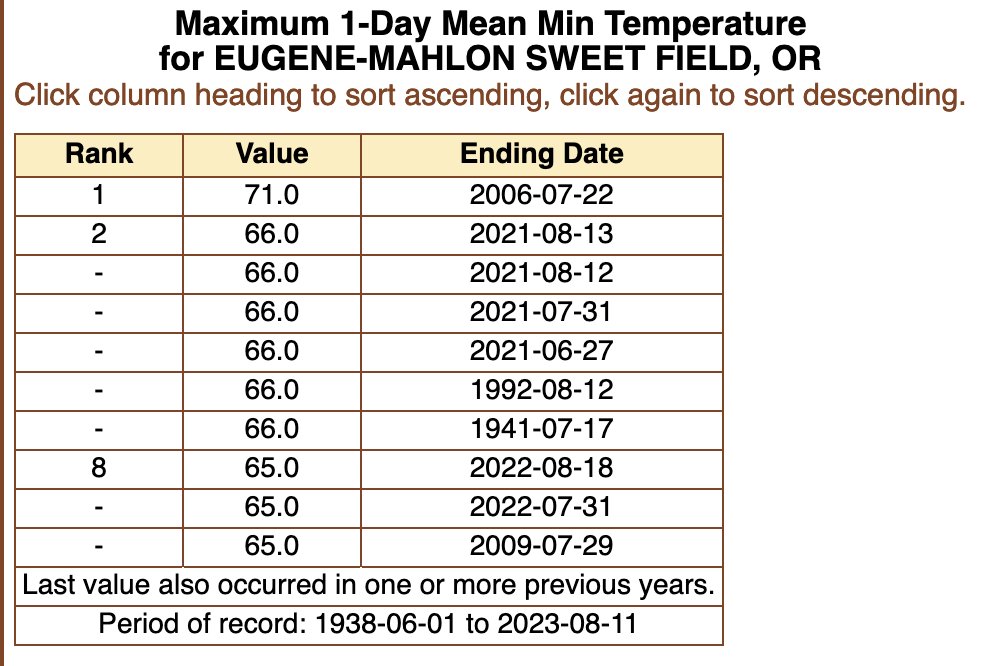
Western Oregon is headed for a heat wave over the next week that is forecast to be intense and long. Will it be historic? Short answer, yes, but not like June 2021. 1/
April was a much wetter and cooler month after record to near-record dry and warm conditions from early January into early April. Learn more in Oregon's May Water Supply Outlook Report: https://t.co/WOVXWfr7Y1 #snowsurvey
Reservoirs in NW Oregon boosted by a wet April and good snowpack, but those elsewhere are doing poorly. In those areas, storage levels are critically low and well below storage levels at this time last year. #ordrought#drought#orwx
@MarkNelsenKPTV @kHartos44 High-based thunderstorms in July in western Oregon are most often associated with monsoonal pulses throughout the desert southwest. You can often see signs of it by tracking altocumulus castellanus.
I'm going through old Oregonian articles looking at historical accounts of April snow in and around Portland. It appears earlier in the 20th Century, April snow occasionally happened but wasn't measured by the very few weather stations which monitored for it. 1/