Natural disasters aren’t natural. A storm doesn’t decide who has insurance, savings or somewhere safe to go. People built the systems that leave others exposed. People can change them.
Read #DisasterDivide:
https://t.co/CuKIbpazAs
#ClimateJustice#MakeRichPollutersPay
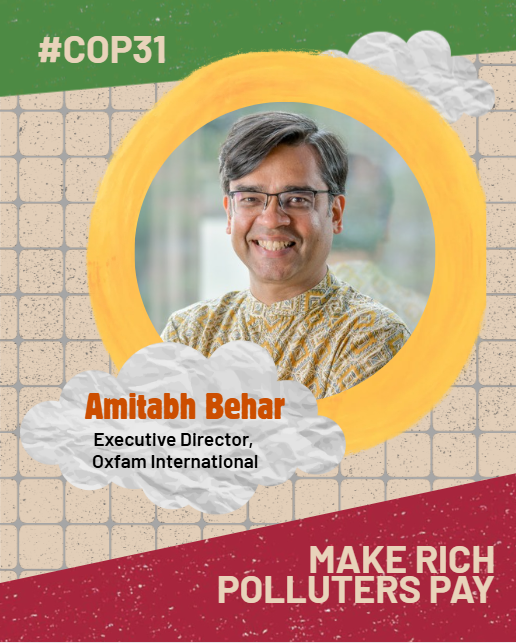
Looking forward to meet colleagues, friends, current and potential future allies during #COP31 this week in Turkey! Reach out if you want to meet #MakeRichPollutersPay
“The question is no longer whether women-led organisations should have a seat at the table. The question is whether the institutions controlling the table are ready to share power.”
🎥 Hear from Jeanne Franjeyeh, Director of Hemay Daeem Atta in Lebanon, on why meaningful participation must go beyond a seat at the table to include real decision-making power.
This #WPS2026, our new Oxfam briefing outlines steps to advance women-led organisations’ leadership and influence in the humanitarian system.
👉 Read the briefing: https://t.co/iGJ8KFdb9C
#HandsOffOurSpaces #WPS2026
New EQUALS episode is out!
Ahead of COP31, Sunil Acharya joins us to discuss Nepal's devastating floods, the climate finance gap & the inequalities shaping the climate crisis.
We explore the responsibility of rich polluters & what real climate justice should look like.
Listen: https://t.co/a1hPCsLcrS
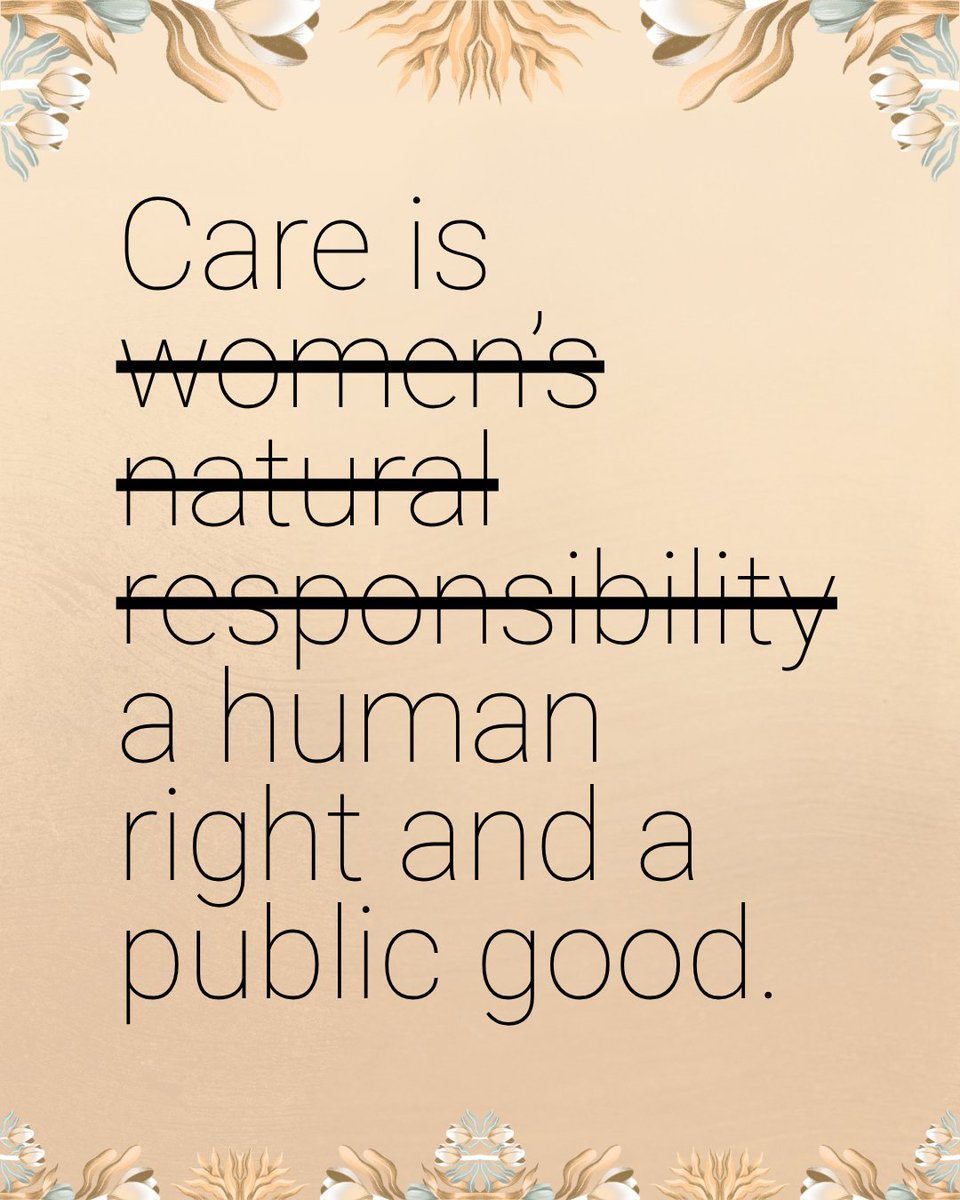
Care as a human right and a public good — not as private responsibility.
Governments must invest in universal public services and guarantee decent working conditions for care workers.
Explore the case for change in our briefing paper: https://t.co/Qghp4uFDTy
#UniteForFairChange
Under Kafala, migrant domestic workers’ immigration status is tied to their employer or sponsor, restricting their ability to leave a job or report abuse. Governments must end systems that undermine workers’ rights.
Read more: https://t.co/6yW5KOIIWf
#UniteForFairChange
Jose Reyeros brings the fight for the ocean's health to #COP31.
Fossil fuel expansion is pushing into the Gulf of California, threatening marine life and communities that depend on it.
Protecting our ocean means backing Indigenous community leadership and making the biggest polluters pay.
#MakeRichPollutersPay
Women & girls bear the cost of climate change yet they are left out of the decisions.
@NakabuyeHildaF, founder of Fridays For Future Uganda, East Africa’s largest youth movement,is calling for that to change at #COP31.
Young people demand a seat at the table #MakeRichPollutersPay
"We are seeing children in about a foot of water and it's water that is absolutely dirty, that is not fit to be living in, and certainly not being soaked in." @Oxfam humanitarian policy and advocacy lead Bushra Khalidi on #Gaza_Floods@AJEnglish
#COP31 kicked off in Antalya, Türkiye. The climate crisis is a crisis of inequality. A tax on the richest oil and gas firms could raise up to US$400bn in year one, above the US$300bn annual climate finance goal.
Oxfam KEDV’s Şengül Akçar urges governments to #MakeRichPollutersPay
For millions of people, the climate crisis is already a fight for survival. While communities face rising hunger, water scarcity and lost livelihoods, conflict and climate disasters are pushing people deeper into crisis.
Oxfam’s Disaster Divide report finds that conflict and climate related shocks have driven more than 87 million people into food insecurity across East Africa, Southern Africa and Southwest Asia.
As governments gather at COP31 in Antalya to negotiate emissions cuts and climate finance, hear from Oxfam in SWANA's Regional Director Sally Abi Khalil on why we’re here and why urgent climate action, fairer climate finance and accountability from the biggest polluters cannot wait.
#MakeRichPollutersPay #COP31
Collective organising wins rights. In South Africa, domestic workers gained unemployment insurance, a minimum wage and compensation for workplace injury and death. Their movements must be recognised and resourced.
Read more: https://t.co/6yW5KOIIWf
#UniteForFairChange
The richest 0.1% generate more consumption-based emissions than the poorest 3.5 billion combined, finds @Oxfam report. Yet those with the least resources often face the worst consequences of climate disasters https://t.co/0yHU0AyU7k
Addressing the climate crisis requires more than cutting emissions, @Oxfam argues. Governments must also confront the concentration of wealth, improve access to climate finance and ensure that disaster recovery policies protect vulnerable communities https://t.co/0yHU0AyU7k
Care keeps the world running, yet only 6% of domestic workers globally are comprehensively covered by social protection. Governments must invest in public services and protect workers’ rights.
We call for care to be a human right and a public good.
More: https://t.co/Qghp4uFDTy #UniteForFairChange
Fifteen years after ILO Convention 189 was adopted, only 40 countries have ratified it. The Convention recognises domestic workers’ rights and is in force in 38 countries.
Governments must implement international labour standards and end exclusion from labour protections.
Read more in Oxfam’s new paper on domestic workers’ rights: https://t.co/Qghp4uFDTy
#UniteForFairChange
Oxfam’s latest findings expose how the ultra-rich are responsible for a disproportionate share of carbon pollution, while ordinary people bear the brunt of the resulting floods, fires and famine.
The numbers are staggering. Keep scrolling for more 🧵
The richest 0.1% emit more carbon than the poorest 3.5 billion people combined. Climate disasters are widening inequality, with poorer & marginalized communities suffering the greatest impacts. Read @Oxfam's new report ahead of #COP31 https://t.co/BeOyLxonHZ #climatejustice
Digital labour platforms offering cleaning and homecare grew fivefold between 2010 and 2025. Governments must ensure digitalisation does not become another loophole for stripping workers of their rights.
Read more: https://t.co/6yW5KOIIWf
#UniteForFairChange
New research from @Oxfam shows the wealthiest 0.1% are making money from the climate crisis their pollution has caused, while buying protection for themselves.
@ClimateHome
https://t.co/XVM8ueooHM
When domestic workers organise, they win rights. Collective action helped secure ILO Convention 189 in 2011. Governments must protect workers’ freedom to organise and bargain collectively.
More: https://t.co/6yW5KOIIWf
#UniteForFairChange