The Future Won't Build Itself. That's Why This Hackathon Matters
The most transformative ideas rarely begin in boardrooms.
They often start with a student experimenting late at night, a developer trying to solve a personal problem, or a young builder asking a simple question: What if there was a better way?
The challenge has never been a lack of ideas. The challenge has always been having the right environment to turn those ideas into reality.
That is where the Zero to Query LingoQL Hackathon comes in.
Taking place from July 8 to July 21, 2026, this online hackathon is more than a competition. It is a launchpad for creators, innovators, and ambitious builders who are ready to move beyond learning and start creating solutions that can make a real difference.
At its core, the hackathon is designed around a simple but powerful belief: great products are built by people who are willing to solve real problems.
Participants will have the opportunity to leverage the LingoQL ecosystem to develop applications across multiple industries, from SaaS platforms and fintech solutions to automation systems, developer tools, and real-time applications. Instead of focusing solely on concepts, builders are encouraged to create functional products that demonstrate both innovation and practical value.
What makes this initiative particularly exciting is its emphasis on growth.
For many participants, this will be their first experience working on a project with real-world potential. They will learn how to think like product builders, collaborate with others, overcome technical challenges, and transform ideas into solutions that people can actually use.
These are experiences that extend far beyond the duration of the event.
The skills developed during the hackathon problem-solving, product development, collaboration, and execution are the same skills that define successful founders, engineers, and innovators across the technology industry.
Beyond the technical aspect, the hackathon creates something equally valuable: community.
Innovation thrives when talented people come together with a shared goal. By connecting students, developers, creators, and entrepreneurs from different backgrounds, the event creates opportunities for collaboration, mentorship, and long-term relationships that can continue well after the final submissions are made.
For students and early career builders, the impact can be significant. A single project built during the hackathon can become a portfolio piece, a startup idea, an internship opportunity, or even the foundation of a future company.
That is the true value of events like Zero to Query.
They do not simply reward participants for what they already know. They challenge them to discover what they are capable of becoming.
As technology continues to shape the future, initiatives that empower young builders are becoming increasingly important. The Zero to Query LingoQL Hackathon represents more than a chance to compete it represents an opportunity to learn, create, connect, and contribute to the next wave of innovation.
For every participant who has ever had an idea worth building, this could be the moment that idea takes its first real step into the world.
And sometimes, that first step is all it takes to begin something extraordinary.
Building a Complete Developer Ecosystem Through the HolyDigits101 Hackathon
Hackathons have traditionally been viewed as competitions where participants build projects within a limited timeframe and compete for prizes. While this model has proven effective in attracting talent and encouraging innovation, the most impactful hackathons today go a step further. They focus not only on the projects being built but also on the long-term growth of the people building them.
One opportunity I see for the HolyDigits101 Hackathon is positioning it as more than a blockchain development competition. Instead, it could evolve into a complete builder development ecosystem that nurtures participants before, during, and after the event.
The current structure already provides a strong foundation by introducing participants to blockchain technologies and giving them the opportunity to transform ideas into functional solutions. However, adding more community centered initiatives could significantly enhance both participant engagement and the overall impact of the program.
For example, introducing beginner focused learning tracks would help participants with little or no blockchain experience gain confidence and contribute meaningfully. This would make the hackathon more inclusive and encourage a broader range of students and aspiring developers to participate.
Community storytelling could also play an important role. Highlighting participant journeys, sharing progress updates, and showcasing personal growth stories throughout the hackathon would create a stronger sense of belonging and inspire others to join future editions. Often, the stories behind the builders are just as powerful as the products they create.
Regular mentor sessions and office hours could further strengthen the experience by providing participants with direct access to industry professionals, experienced developers, and startup founders. These interactions would not only improve project quality but also expose participants to valuable insights that extend beyond technical development.
Perhaps the most impactful addition would be post-hackathon support. Many promising projects lose momentum once a competition ends. By offering continued mentorship, networking opportunities, incubator pathways, or access to a builder community, HolyDigits101 could help participants continue developing their ideas long after the event concludes. This would increase the likelihood of projects evolving into real world solutions and successful startups.
Ultimately, the long-term value of a hackathon is rarely measured by the number of submissions received. Instead, it is measured by the number of builders it successfully develops, empowers, and inspires. By embracing a more holistic builder development approach, HolyDigits101 has the opportunity to create not just a successful hackathon, but a lasting platform for nurturing the next generation of blockchain innovators and technology leaders.
@Holydigits101
Why Initiatives Like the Holydigits101 Hackathon Matter in Today's Digital Economy
Technology is reshaping the world at an unprecedented pace. From finance and education to healthcare and communication, digital innovation continues to influence how people live, work, and solve problems.
Yet as these opportunities expand, an important question remains: how can more young people gain the skills and experience needed to participate in this rapidly evolving landscape?
The answer increasingly lies in practical, hands-on learning experiences that go beyond traditional classroom instruction. While formal education provides valuable foundations, many of today's emerging technologies require environments where learners can experiment, collaborate, and apply knowledge in real-world scenarios.
This is one of the reasons initiatives such as the Holydigits101 Hackathon have become increasingly important.
The gap between academic learning and industry demands is a challenge faced by many aspiring technology professionals. Concepts can be taught in theory, but true understanding often develops through building, testing, and solving actual problems.
What makes programs like Holydigits101 particularly valuable is their emphasis on creation. Participants are encouraged to explore new ideas, work with emerging technologies, and develop solutions that address practical challenges.
In the process, they gain technical skills while also learning how innovation can create meaningful impact within communities and industries.
Beyond the technical experience, hackathons cultivate qualities that are essential in today's workforce. Participants learn how to think critically, adapt to challenges, communicate effectively, and collaborate with others under pressure. These are skills that extend far beyond technology and remain valuable in virtually every professional field.
Equally important is the sense of community these initiatives foster. Innovation rarely happens in isolation. It thrives in environments where people can exchange ideas, learn from experienced mentors, and build relationships with others who share similar interests and ambitions.
The connections formed during these events often continue long after the competition ends, creating networks that support future growth and collaboration.
When viewed from a broader perspective, the value of technology programs is not measured solely by the projects produced during a single event. Their lasting impact comes from the people they inspire, the skills they help develop, and the opportunities they unlock.
Every developer, entrepreneur, designer, or innovator empowered through these experiences contributes to a stronger and more inclusive digital ecosystem.
As the global digital economy continues to expand, the demand for skilled and adaptable talent will only grow.
Preparing the next generation requires more than access to information. It requires access to experiences that encourage creativity, problem solving, and innovation.
Initiatives like the Holydigits101 Hackathon represent more than a technology event. They are investments in people. They provide aspiring builders with a platform to learn, create, collaborate, and imagine what is possible. In a world increasingly shaped by technology, that investment may prove to be one of the most important contributions to the future.
@Holydigits101
The Vision of Building a Sustainable Innovation Ecosystem Through HolyDigits101
Hackathons are often associated with competition, tight deadlines, and the excitement of building solutions within a limited period. They have become powerful platforms for creativity and innovation, bringing together talented individuals to solve real-world problems. Yet, for many organizations, the impact of these events ends once the winners are announced and the prizes are distributed.
HolyDigits101 appears to be taking a different approach.
What distinguishes HolyDigits101 is its recognition that meaningful innovation cannot thrive in isolation. While hackathons serve as important launchpads for creativity and problem solving, lasting impact emerges when participants have access to continuous learning, mentorship, collaboration, and opportunities for growth.
By fostering an environment where builders can develop their skills, connect with like-minded innovators, and continue refining their ideas, HolyDigits101 is helping to create a foundation for long-term success rather than short-term achievement.
This vision reflects a deeper understanding of how thriving technology communities are created. Strong ecosystems are not built through isolated events. They emerge from continuous learning, meaningful collaboration, mentorship, and access to opportunities that help individuals grow over time. While hackathons can spark innovation, ecosystems provide the foundation that allows innovation to flourish.
The philosophy behind HolyDigits101 recognizes that talent alone is not enough. Across many communities, there are aspiring developers, designers, and innovators with remarkable potential who lack access to the networks, guidance, and resources needed to turn their ideas into lasting solutions. By focusing on ecosystem development, HolyDigits101 is positioning itself as more than a platform for events. It is creating pathways for long-term growth and impact.
This approach acknowledges an important reality: a builder's journey does not end when a project is submitted. In many ways, that is where the real journey begins. Participants need mentorship to strengthen their ideas, communities that encourage collaboration, opportunities to showcase their work, and support systems that help them navigate challenges as they continue to build.
The importance of this vision becomes even clearer in rapidly evolving fields such as Web3, blockchain, and artificial intelligence. These industries change at a remarkable pace, making continuous learning and strong community connections essential. An ecosystem-focused model helps ensure that participants remain connected to knowledge, opportunities, and valuable networks long after a competition concludes.
Perhaps the most inspiring aspect of this vision is its emphasis on sustainability. Success is not measured solely by registration numbers, project submissions, or event attendance. Instead, the focus shifts to long-term outcomes: developers who continue building, innovators who launch impactful solutions, and communities that become stronger with each generation of participants.
The future belongs to organizations that understand the importance of both inspiration and continuity. HolyDigits101's vision demonstrates that meaningful impact is created not through a single event, but through the deliberate cultivation of an environment where builders can learn, collaborate, innovate, and grow.
Ultimately, the true measure of a hackathon's success is not what happens during the competition itself. It is what participants become afterward. By investing in ecosystem development, HolyDigits101 is helping ensure that the conclusion of a competition is not an ending, but the beginning of a much larger journey of innovation, growth, and lasting impact.
@Holydigits101
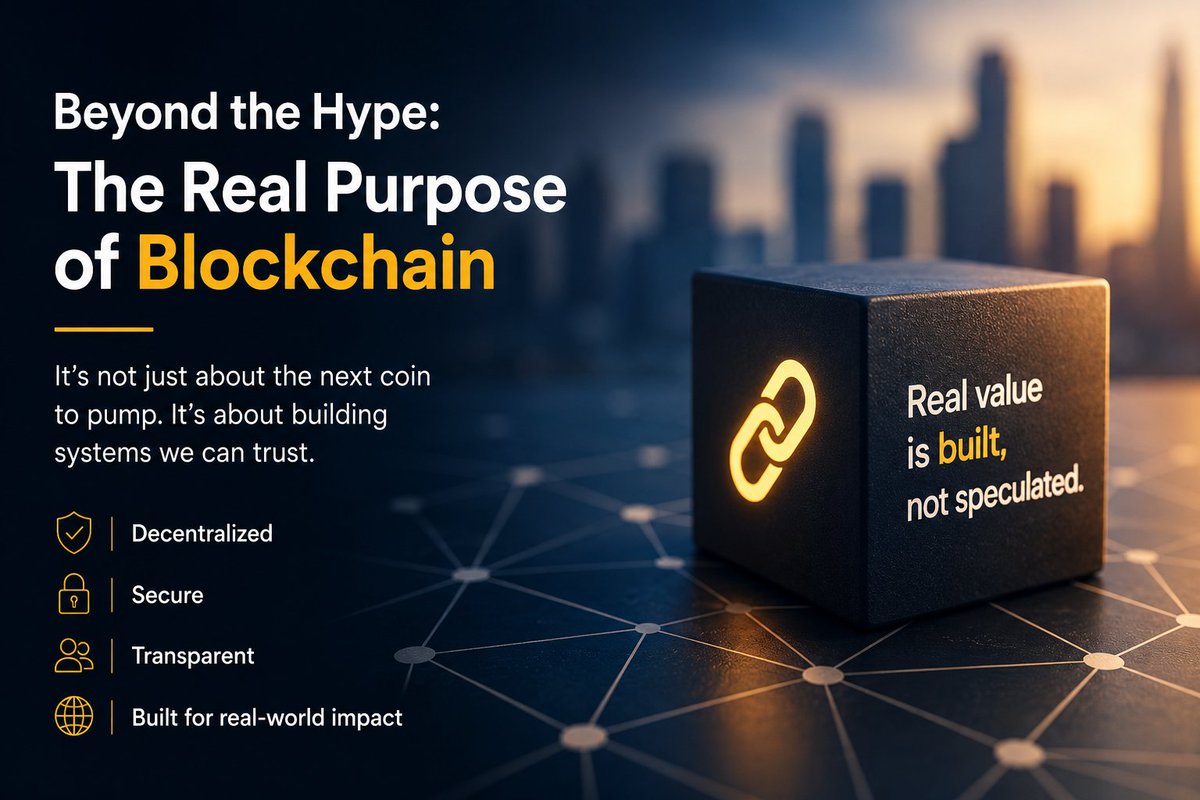
The Side of Blockchain Most People Overlook
Whenever blockchain comes up, the first thing many people think about is money.
Which coin is going up?
What's the next big project?
Where's the next opportunity?
There's nothing wrong with those questions, but they often distract people from what makes blockchain important in the first place.
For many people, blockchain starts and ends with tokens and price charts. But blockchain wasn't created just to help people trade assets. The bigger idea was to create a system where information and transactions could be verified without depending on one central authority.
Think about how most services work today. We trust banks to manage our money. We trust companies to store our data. We trust organizations to keep accurate records.
Blockchain offers a different approach. Instead of relying on a single institution, records are verified and maintained across a network.
It may sound technical, but the idea is actually quite simple: reduce the need for blind trust by making information easier to verify.
The interesting part is that many of the people entering the blockchain space never really look beyond the surface. They see the apps, the tokens, and the market activity, but not the people and systems working behind the scenes.
Developers are building the protocols. Validators are helping secure networks. Infrastructure teams are making sure everything runs smoothly. Without them, none of the visible products would exist.
It's a bit like admiring a skyscraper without thinking about the foundation holding it up.
As blockchain continues to grow, the projects that last may not be the ones making the most noise online. They may be the ones quietly solving problems, improving user experience, and building technology that people can rely on.
Real adoption won't happen because of hype alone.
It will happen when blockchain becomes useful enough that everyday people benefit from it without needing to understand every technical detail behind it.
So the next time you come across a blockchain project, don't just look at the price.
Look at the problem it's solving.
Look at the value it's creating.
Look at the people it's serving.
Because in the long run, the strongest blockchain projects won't be remembered for the attention they attracted.
They'll be remembered for the problems they solved.
YOUR PLACE IN WEB3
BLOCKCHAIN AND DeFi ARE NOT THE SAME THING
I've heard a lot of people use Blockchain and DeFi as if they mean the same thing. To be fair, it's an easy mistake to make because they're closely connected. But they're actually two different things.
Understanding the difference can help you better understand Web3 and where you fit into it.
BLOCKCHAIN: The Foundation
Blockchain is the technology that makes Web3 possible. It's a system that records and stores information across a network in a secure and transparent way.
The easiest way to think about it is this: blockchain is the foundation. It's the technology that supports everything else.
Without blockchain, there would be no DeFi, NFTs, on chain gaming, or many of the innovations we're seeing today.
DeFi: One of Blockchain's Biggest Use Cases
DeFi, short for Decentralized Finance, is exactly what it sounds like financial services built on blockchain technology.
Instead of relying on traditional institutions like banks, DeFi uses smart contracts to allow people to lend, borrow, swap assets, and access other financial services directly.
So while blockchain is the technology, DeFi is one of the things that technology makes possible.
The Difference in Simple Terms
A simple way to look at it is this:
Blockchain is the road.
DeFi is one of the vehicles driving on it.
One is the infrastructure, the other is a use case.
MY CONCLUSION
Blockchain and DeFi work hand in hand, but they are not the same thing.
Blockchain is the technology that powers decentralized systems, while DeFi is a financial ecosystem built on top of that technology.
The more you understand this distinction, the easier it becomes to see that Web3 is much bigger than just finance. There are opportunities in infrastructure, gaming, identity, social platforms, data ownership, and much more.
Knowing where each piece fits helps you better understand the space and find your own place within it.