Mask Off Moment
This is an anonymous account I use to post a bunch of deep tech content on X covering heavy industry, light industry, technology trends, industrial bottlenecks, weird explainers and esoteric insights. iykyk.
A lot of very talented people (many of whom run amazing companies) DM me saying please keep posting “this is the best content on X”. I get DMs from VCs asking about companies, and DMs from LPs asking about industrial and economic theories. This is all very flattering, and whilst I sometimes post a bit sporadically I do try and make the effort to tap out a new post most days.
The quality of people who follow @object_zero_ is frankly phenomenal, it’s a real privilege to have this channel in my pocket. 40k followers including world leaders, centi-billionaires, serial inventors and entrepreneurs, world renowned scientists, and engineers. I would say it’s a mix, but the reality is that it’s not a mix at all, it’s an extremely high mean and median.
I have posted about shipbuilding, nuclear power, the Kroll process, silicon carbide, laser interferometry, heavy steel forging, machine learning, design engineering, CFD, manufacturing methods, power transmission and HVDC. I post about energy and commodities and industry and global macroeconomics. I post about mines and prospecting, minerals on the sea bed and drilling and producing hydrocarbon basins.
Don’t worry… I’m not leaving. I’m not ill and I’m not asking for anything.
A quick apology… I would post here more often, except I don’t have the time. I am able to post with a bit more breadth and depth because I am genuinely engaged in these things. I don’t want to be presumptive, but I think the people who have reached out to talk to me about their work would attest to this.
I simplify a lot of the posts so I don’t collapse the audience, but if you reach out in the comments or DM you can get much sharper commentary.
So what is this post?
Well, it’s time that I start talking about what I am actually doing irl, who I am, what I am engaged in. Some people on X already know some loose details, some people have met me as Object Zero.
But irl, I work about 5,000 hours a year and have done so for 20 years, I believe hard work puts you in a privileged place. It changes you.
Over the years I’ve invented and developed new industrial technologies, I’ve built big things, I’ve executed major capital projects. I feel I understand what the world needs in the 2030s and where we are falling short.
If you believe you are capable of such things, then you have an obligation to society to go and do them.
I am confident I know what it’s possible to do, and what it takes to get it done.
I intend to solve our energy infrastructure, generation and transmission and the big BTM loads that are emerging.
I’ve already hired the best people in the world for this, people who have architected $6bn assets, people who have commanded $40bn fleets. I’ve hired the best research faculty from the best university.
This isn’t a game.
We’ve already built and tested the first prototypes, we are already completing the permission processes, the licences and the permits. All the elements already exist, it just needs 21st Century system integration.
Because technology has changed, the past is already obsolete, the genie is out of the bottle, the 21st century is getting built on a Western tech stack and/or an Eastern tech stack. There is no in between, there is no middle ground. Both sides have strengths and weaknesses, but if we want freedom we’re going to have to earn it again.
We are going to build the biggest products (by mass) that have ever been manufactured, we are going to build a lot of them.
They’re going to change the world, and we’re going to get more of this…
And what binds power?
• land
• permits
• grid access
• transformers and switchgear
• noise
• clean air
• supply chain
• fuel security
• casting machines
• suitable large lathes for turning shafts
• residential priority
• community political power
All the best sites are now taken, and every year the marginal development site gets worse and worse.
@bryanlethcoe Oh I can imagine, I did a lot of work with industry and BSEE on the next gen technology after Deepwater Horizon and we had it all ready to develop and commercialize, but then 2015 crash happened and the R&D funds disappeared.
Hyperbolic Paraboloids
In 2010, the Deepwater Horizon rig sunk in the Gulf and sadly claimed the lives of 11 men.
In the days and weeks that followed the Maccondo deepwater well flowed around 80,000 barrels per day into the Gulf at a depth of 5,000 ft below the surface.
Initially engineers thought it might have a been a problem with the float shoe. A float shoe is a one way valve that sits at the toe end of the pipe you run into an oil well to stop it collapsing.
To drill a well, you drill a hole, then you slide a pipe into your new hole, them you slide in a long tube down to the float shoe and you pump cement down the tube and up the outside of the pipe.
Once the cement cures, you drill a smaller diameter hole inside your new hole, and you just repeat this like a Russian doll.
Anyway, during Maccondo the entire subsea industry was given access to information to try and solve the unfolding crisis.
The float shoe was one suspect, the other was the Blow Out Preventer (BOP).
Now a subsea BOP is one helluva machine, it weighs 500 tons. It has to close several valves against pressures of 15,000 psi. It has to cut through six inches of hardened drill pipe.
It has to do all of that and seal.
There are API codes on how to design and test a subsea BOP, which means they are all the same.
In 2010, the BOP failed the prevent the blowout. It had one job.
The big problem with BOPs is that they are fundamentally ill designed. They must overcomes tremendous well bore pressure to close, they must also overcome tremendous shear resistance to cut drill pipe or drill collars.
The rams just don’t have the muscle to do it at such water depths, because of the constant entropy calculations of subsea accumulators.
What a BOP ram should do, is to use the well bore pressure to assist closing the rams. This changes a headwind to a tailwind.
This is actually quite easy to do, and the tech and designs exist (they’re just not what the API code describes).
The other interesting requirement is sealing, the best way to seal an 18-3/4inch well bore is with a gate valve.
Making gate valves this large is a real challenge, you have to machine a 24x24inch inconel block to a flatness of 2 helium bands, you have to do the same with the seats…
Or at least that was (still is) the conventional wisdom.
A much better (more sophisticated) approach is to understand that a BOP valve block has a well bore, but also has large cross bores that intersect the well bore.
When the wellbore pressure is applied to the BOP block, it deflects. The apertures in the ram body yawn wider, and the flatness that you spent so much time and effort producing is no longer flat. Not when it matters.
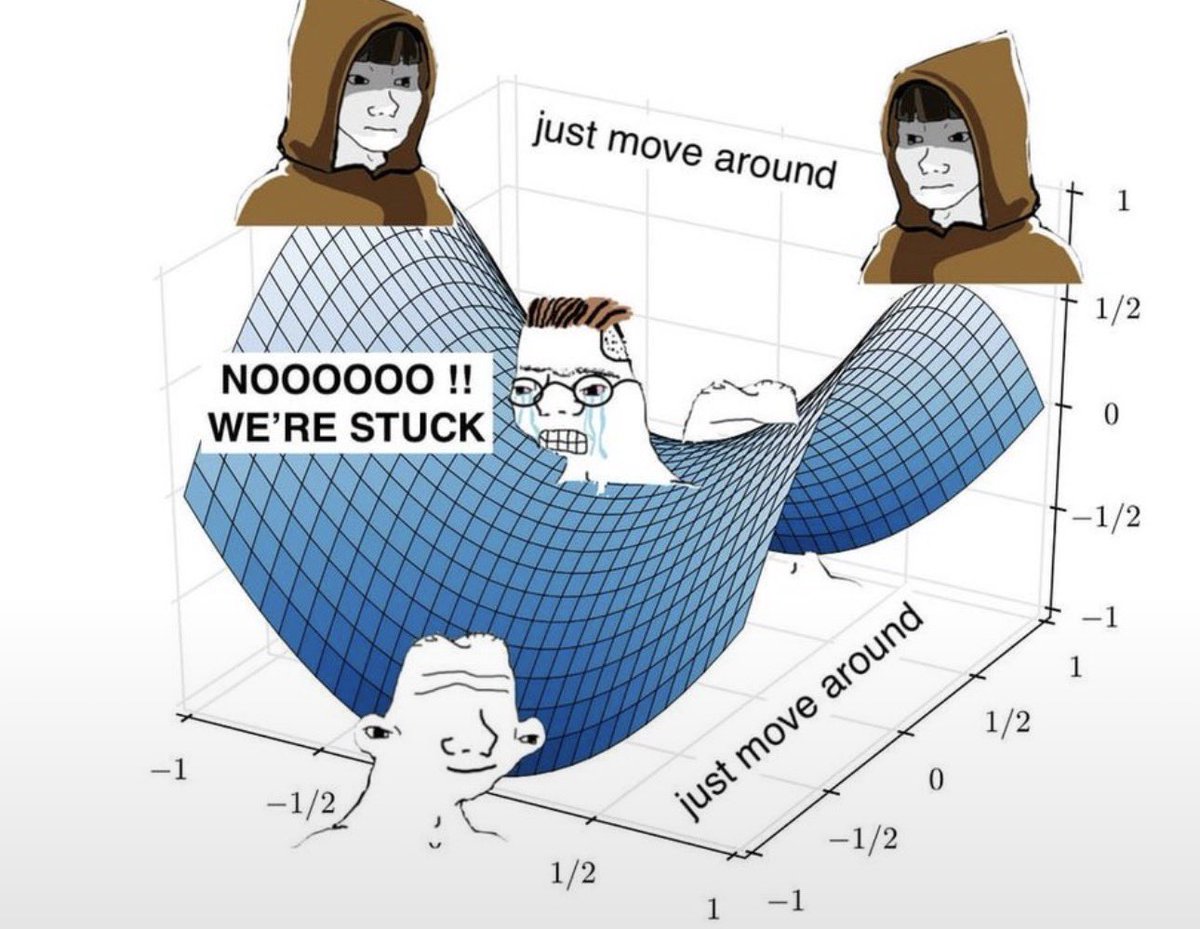
In fact the entire sealing contact plane across the gate block, the seat, the body all take on the hyperbolic paraboloid shape.
The contact stress around the seal is highly non-axi-symmetric which is fundamentally in contradiction to prevailing wisdom.
It’s always important to remember that as intended is not as drawn, and that as drawn is not as built, and as built is not as strained.
There are really 3 tiers of difficulty to MechE
You can design to drawn, you can design to built, and you can design to strained.
There’s a part of this that is competence, but really you have to deeply love what you are doing to be able to think about asymmetrical contact surfaces under various load conditions and face separation risks for stuff like this.
It’s a bit of a curse in that every time I see a tube of Pringles, I think of gate valves, industrial codes, bubble tests, and accumulator constant energy calcs with the laborious NIST table work.
But I’m also very confident I was the bleeding frontier of how to solve this esoteric issue from 2010-2015 and I paved a lot of SOTA into the record.
What I really enjoy now, is knowing how to get to the frontier of understanding for such things, and how to make progress into the abyss of problems that limit what we can do.
@bryanlethcoe Below a certain depth and well bore pressure the rams can’t close, irrespective of controls.
You can paralyse the rams with a well bore pressure that is far below the rated working pressure of the BOP stack.
@AlexDR3D@EricJorgenson There will be less detrimental environmental impact than any other form of energy on Earth.
If you want to speculate a lot of negative impacts then you’re going to be wrong, a lot.
@BrewNeuron Thanks, that’s very kind.
I think someone could improve on Civilisation’s Thermodynamic Corridor. It’s a valuable thing for us to understand.
@DirkBruere That’s as much a function of jurisdiction as endeavour.
And competent oversight is value additive, but yes there are lots of cases where well meaning oversight slips into gross incompetence.
We’re going to displace trillions of tonnes of CO2 emissions and save countless rivers from interference.
We’re going to unlock the development of dozens of countries to the point they can invoke clean air acts and contemporary environmental regulations without handicapping themselves economically.
@Vale53199081 This is true, but I understand those specific bottlenecks as well as anyone.
There are specific supply chains islands that we’re going to integrate.