I help Ohio law enforcement officers identify and understand the constantly changing landscape of case law so that they may always be Objectively Reasonable.
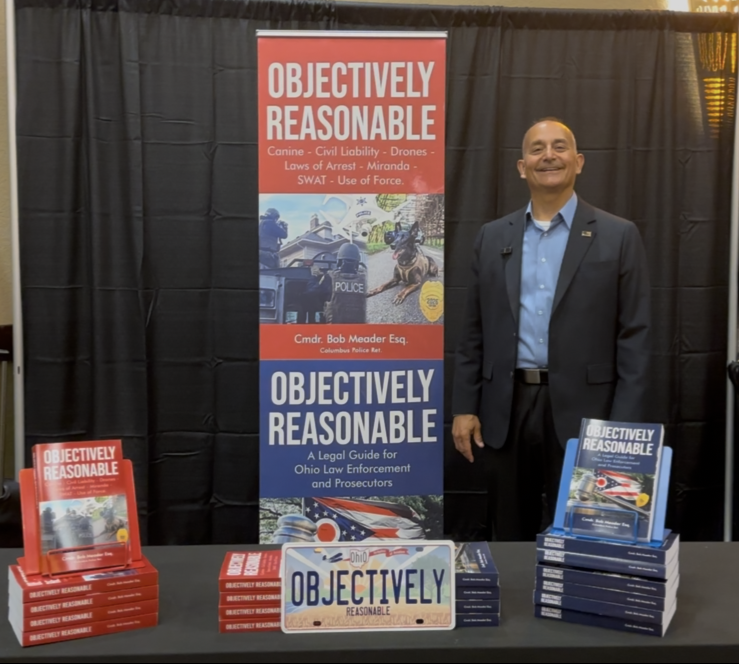
Today I am honored to launch my new books at the Ohio Tactical Officer Association annual conference.
Both books were written in Central Ohio, printed in Twinsburg, Ohio and specific for Ohio law enforcement officers - THE #HardestJobInAmerica.
Please stop by booth #500 to connect.
Can a Person Consume Marijuana in a Motor Vehicle if it is Parked on Private Property?
State v. Lewis is important because the Ohio legislature has reacted to the legal ambiguities in the previous Adult-Use Cannabis law, O.R.C. §3780 by substantially revising Ohio’s marijuana statutes effective March 20, 2026 under O.R.C. §3796. Those revisions now more clearly prohibit marijuana consumption in public places and establish additional vehicle-related restrictions. Lewis occurred under the former O.R.C. §3780 but now the law is clearer. Do you and your team know understand these changes?
#Police
#Law
#HardestJobInAmerica
https://t.co/9zDFCWg4cl
@Starrworld24 Thank you for your kind words Tracy. My books are for a very small niche - Ohio Law Enforcement Officers. Keep up your great work promoting books!
After months of research, writing, and reviewing the latest court decisions, I am excited to announce the release of two new Objectively Reasonable books for law enforcement officers and prosecutors.
My first book has been trusted by more than 30 law enforcement agencies throughout Ohio for promotional testing
Both books will be available this week at the Ohio Tactical Officers Association Conference in Sandusky and will be available exclusively through https://t.co/3uZYXl2zHx beginning Saturday, June 13, 2026.
These books are not available on Amazon or any other book platform and are offered exclusively to police officers and prosecutors.
Law Enforcement is THE #HardestJobInAmerica and these books help officers stay safe, smart and Objectively Reasonable.
#Law
#Police
When Can a Traffic Stop be Extended to Verify a Driver’s License After the Original Violation is Dispelled?
State v. Fips provides critical clarification on when an officer may extend a traffic stop under the Fourth Amendment. The Supreme Court of Ohio makes clear that once a stop is lawfully initiated, an officer is permitted to complete the mission of the stop, including verifying a driver’s identity and license status, even if the original reason for the stop is later dispelled.
#HardestJobInAmerica
#Police
#Law
https://t.co/0QJRqTDP9C
Can Law Enforcement Rely on the Collective Knowledge Doctrine to Extend a Traffic Stop for a Canine Sniff?
U.S. v. Trent is important because it reinforces extension of a traffic stop and the Collective Knowledge Doctrine that impacts modern traffic highway interdiction, narcotics investigation, doctrine of reasonable suspicion and canine deployments during traffic stops.
#HardestJobInAmerica
#Police
#Law
https://t.co/JLDSwEeSnR
Today, I was honored to attend @ChiefShughes retirement celebration with his family, team, former teammates and friends.
@CHIEFGILBERT1 and I were pleased to present him a barrel head representing his four agencies over nearly thirty years of service.
Thank you Scott for a lifetime of service and helping people who could not help themselves. You are a living example of 1 Peter 4:10.
I look forward to continuing to teach with you and wish you the very best in your next chapter!
May Law Enforcement Lawfully Pat Down a Suspect who has a Firearms Bulge in His Waistband?
In Re: T.B. identifies that aggressive patrol tactics keep the community safe. The case demonstrates how a minor misdemeanor jaywalking violation on four juveniles can mature into a felony stop when the Fourth Amendment is applied in proper sequence. Cincinnati Police may have saved a life on the night they removed two firearms from Avondale in October 2024.
#HardestJobInAmerica
#Police
#Law
https://t.co/mBs5eSmsZm
I chatted with some of the officers and they were very understanding because that is our world - as you said to expect the unexpected.
Ok, no electricity and instead of looking at a large screen, we have to squint to look at a small computer screen. No problem - we got this ... oh and its about 85 degrees ... yeah we got that too.
Not everyone at the hotel had the same ideology. That is why I so dearly appreciate our teammates - they always get the job done.
Today, I was honored to present the Drone Legal Update class, the class included officers from throughout Ohio and one who traveled very far from Latrobe, Pennsylvania.
Mid-morning a drunk driver hit a pole near the hotel and the power was out the rest of the day. The classroom got HOT - but the class hung in there and did great to get through the day.
A special thank you to Norwood Police for hosting and gifting me an exceptional unique drone coin!
Evaluation excerpts:
"Very valuable to look at cases that don't just deal directly with drones to understand the potential legal issues that we could encounter. All-encompassing approach to an evolving environment."
"Great training. Despite the unfortunate power outage, the material and instructions was engaging and well worth the small inconvenience."
"I believe this should be mandatory training for any pilots. Too few officers understand the legal side of things and this can help."
"Excellent class that all drone operators should attend."
Thank you team!
Upcoming CPT approved classes:
Drone Legal Update - June 29 - Olmsted Twp
Patrol Legal Update - July 22 - Independence
Patrol Legal Update - August 5 - Englewood
Patrol Legal Update - August 31 - Hamilton
Patrol Legal Update - September 2 - Lancaster
Patrol Legal Update - October 12 - Bowling Green
Drone Legal Update - October 19 - Franklin County EMA Patrol Legal Update - November 8 - Elyria
Canine Legal Update - November 17 - Avon
Patrol Legal Update - December 8 - Defiance
https://t.co/twfnjj013U
#GavelTravels
*Thanks for NPD for including the drone in the class pic!
Can a Reasonable Officer Safety Concern Legally Justify a Traffic Stop Extension to Call for and Await a Back Up Officer?
U.S. v. Santos reinforces a critical principle for law enforcement: officer safety is part of the mission of every traffic stop—not a detour from it. The Sixth Circuit makes clear that when officers develop articulable safety concerns—such as a “possibly armed” alert, violent criminal history, and suspicious behavior—law enforcement may take reasonable, minimally intrusive steps – such as calling and awaiting for backup – without violating the Fourth Amendment.
#HardestJobInAmerica
#Police
#Law
https://t.co/xv9xorQYWI
Today, I was honored to present to host Timberlake Police and many other Ohio agencies, the Detective Legal Update class to our investigative teammates. Making THE #HardestJobInAmerica ... easier.
Evaluation Excerpts:
"Meader’s experience was reflected in his presentation. The way he was able to apply legal concepts to cases presented and experiences of his own aided in student understanding."
"I’ve never been to a law enforcement training and been able to pay attention the entire time. His presentation skills and his ability to keep students engaged is incredible."
"Legal updates are the cornerstone of daily police work. Competent in person training outweighs the cost saving of online self guided coursework."
"This should be taught to every detective in every agency."
Thank you team!
Upcoming CPT approved classes:
Drone Legal Update - May 28 - Cincinnati
Drone Legal Update - June 29 - Olmsted Twp
Patrol Legal Update - July 22 - Independence
Patrol Legal Update - August 5 - Englewood
Patrol Legal Update - August 31 - Hamilton
Patrol Legal Update - September 2 - Lancaster
Patrol Legal Update - October 12 - Bowling Gree
Drone Legal Update - October 19 - Franklin County EMA
Patrol Legal Update - November 8 - Elyria
Canine Legal Update - November 17 - Avon
Patrol Legal Update - December 8 - Defiance
https://t.co/twfnjj013U
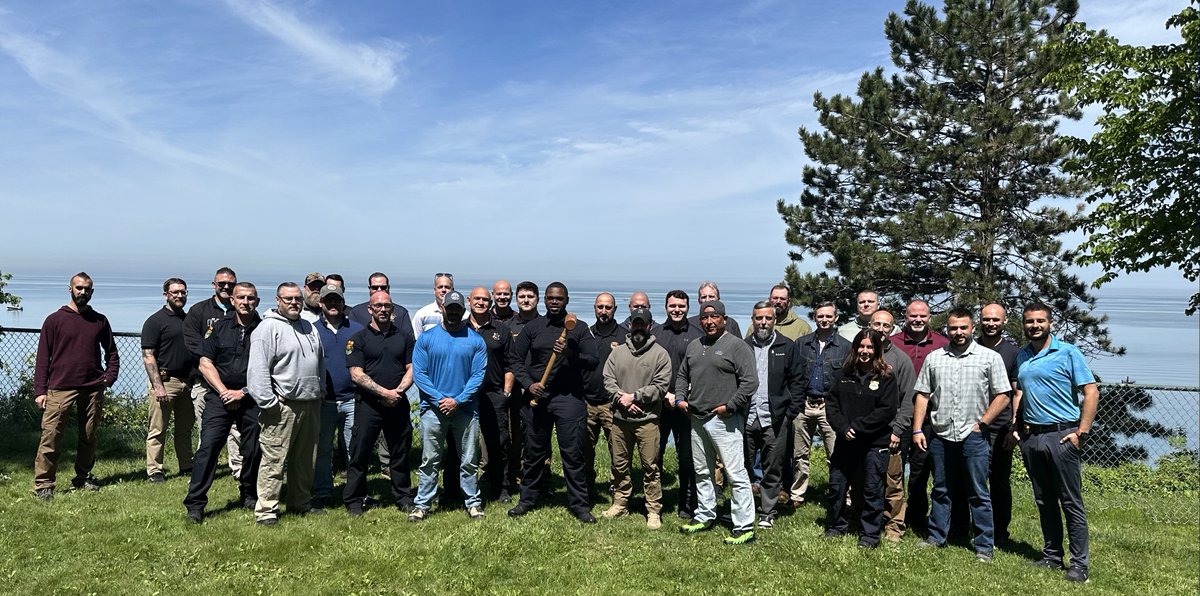
Beautiful picture with the Lake Erie background!
Today, Memorial Day, I honor my cousin Michael Aurady and all service members killed in action. Michael was a tunnel rat and was killed in action on Wednesday July 24, 1968 in the Vietnam Province of Quang Ngai.
Our country is free because of our military and today we honor those who gave the ultimate sacrifice.
Thank you to our veterans who have served and our teammates who continue to serve.
https://t.co/IRAok9QUOT
Can Officers Fire a Total of Fourteen Rounds at a Suspect Holding a Firearm, to Include Eight Shots to His Back and Still be Objectively Reasonable?
Vaugh v. Rea reaffirms that deadly force is objectively reasonable the moment a noncompliant suspect begins to draw a firearm. The Sixth Circuit had no hesitation in holding that once Mr. Isaifan gripped and began to turn with his weapon, the officers were justified in using deadly force. That is a critical line for officers: the law does not require you to wait until a weapon is fully raised or fired.
The case strongly rejects the argument that a high number of shots automatically equals excessive force. The court focused on whether the officers stopped shooting once the threat was neutralized—not how many rounds were fired.
#HardestJobInAmerica
#Law
#Police
https://t.co/mq9VVsjlMq
Today, I had the honor of presenting Legal Leadership to the Ohio Association of Chief's of Police First Line Supervisor class hosted by Hamilton Township Police. These are law enforcement leaders from throughout the State of Ohio, leading the men and women in THE #HardestJobInAmerica.
Upcoming classes:
May 26 - Detective Legal Update - Timberlake
May 28 - Drone Legal Update - Cincinnati
All classes are CPT certified!
https://t.co/twfnjj013U
Thank you team for the kind comments!
#Police
#Law
#GavelTravels
Is it Reasonable to Withhold Exculpatory Evidence if the Detective Feared for His Family’s Safety?
Ansari v. Jimenez is important because it reinforces that law enforcement officers and prosecutors have a constitutional duty to disclose exculpatory and impeachment evidence under Brady v. Maryland, 373 U.S. 83 (1963) and Giglio v. United States, 405 U.S. 150 (1972). This case also underscores that all law enforcement officers, most especially detectives are trained on Brady and Giglio Doctrines. Not trained on a computer, but actually trained. Don’t fail your training and don’t let your training fail you. Do not turn a suspect into a plaintiff.
https://t.co/BetDd4ljrZ
If detectives, supervisors, and command officers are not properly trained on Brady obligations, the consequences can include overturned convictions, civil liability, damaged credibility and years of litigation.
This exact Brady Doctrine issue will also be addressed during my upcoming Detective Legal Update class on Tuesday May 26, 2026 in Timberlake, Ohio. Certified for eight hours of CPT – 26CPT1027. Class is also certified for 6.5 hours of Continuing Legal Education for attorneys.
Topics include:
Brady obligations, Custodial Interrogation, Civil liability, Search warrants, Electronic evidence, Curtilage and Open Fields, Use of Drones for Investigations and much more!
Register: https://t.co/W2sejGDK6r
Can Law Enforcement Enter and Remain in a Home for Twelve Minutes to Assure that a Man is Not Suicidal … OR is that a Constitutional Violation?
Eurton v. Thomas gives officers practical legal guidance for one of the most dangerous, unpredictable and repetitive calls: a suicidal suspect inside a home. Eurton affirms that when officers can articulate a reasonable belief that someone is in immediate danger, they can act decisively enter, control the situation and ensure safety as an exigent circumstance, consent or a warrant is not required.
#HardestJobInAmerica
#Police
#Law
https://t.co/oO7iWbdV9M