Powering and securing the multi-trillion dollar Ethereum economy.
Distributed Validators = the end game of staking
Obol Stack = the home of agent businesses
Obol is now SOC 2 Type 1 compliant, audited for security, confidentiality and availability.
Institutions and operators running due diligence can request the full report here: https://t.co/6lwuW3kYFv
If you stake ethereum:native and you’re wondering what the risks are from this AI hacking wave, this podcast is for you.
Some hacks can only put you offline, that doesn’t cost much. Other hacks can cost you years or decades of staking rewards, if not everything. Make sure you know the difference, and that you’re getting to a Stage 1 setup minimum ASAP. I’m happy to answer Qs or help out on that journey, DM or reply below 👇
Validator Beat measures how many single points of failure a staking provider has removed. While hacks are going parabolic, are you sure a stage 0 setup is safe enough?
We've seen recent RCEs in Ubuntu, GoLang, Rust, and almost every piece of mission critical staking software out there. Vulnerabilities are a given at this stage, getting slashed is not. Don't stake your eth on setups with known single points of safety failure. Your $ETH deserves better.
Listen to the podcast to learn more!
Validators fail by committing safety or liveness faults. Most safety and liveness faults trace back to a single point of failure.
https://t.co/SMzqtCLaFt measures how many of those single points of failure an operator has removed.
In this new episode of Credible Commitments @OisinKyne meticulously unpacks Validator Beat.
In particular, we break down how Validator Beat shines a bright light in the dark forest of operators by enhancing transparency. You'll learn how the pizza is made as we sample each slice.
Later we debate issuance where Oisín contends that ETH is valuable because of decentralization and CROPS and that it has nothing to do with the issuance, a hard cap, or a fixed supply.
I push back on this, in a friendly debate.
Listen to a deep dive into https://t.co/3I1feIgbH6 and how to secure your $ETH stake in a world where software is getting hacked left, right, and center on the Credible Commitments podcast soon™️
Validators play a critical role in securing the Ethereum network.
In my upcoming episode with @OisinKyne he unpacks Validator Beat in full detail.
https://t.co/XgyDMUhxon
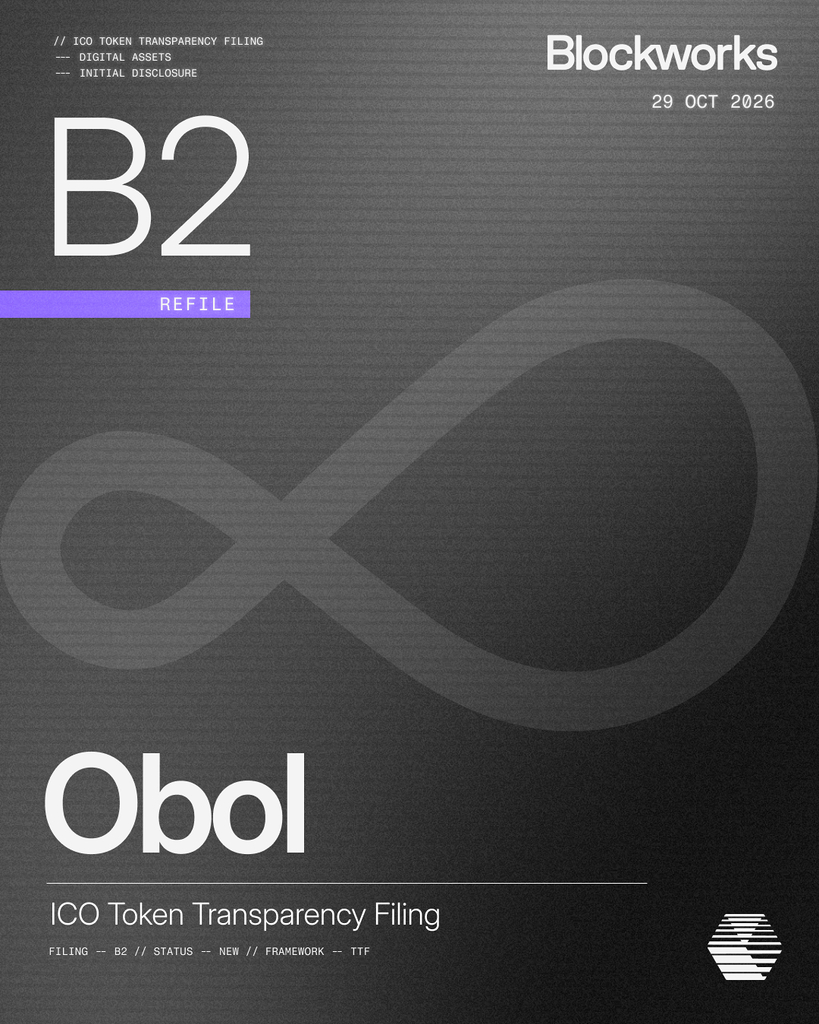
Our token transparency filing is out.
@Blockworks lists the $OBOL B2 as Complete. 0 gaps left.
Find full report at:
https://t.co/pZ5PvizAzk
We stay committed to the latest and the most comprehensive standard on token transparency.
Obol splits Ethereum validator keys across multiple operators so no single node can take a validator down.
Obol just filed a fully complete B2 Token Transparency Filing with 0 gaps remaining.
$OBOL live since May 2025.
How safe is your stake?
Rollups have L2Beat. Wallets have Walletbeat. The validators securing tens of billions of dollars in staked ETH have had nothing.
Today they do. Introducing Validator Beat.
https://t.co/3I1feIgbH6
This month has made it undeniable, running significant amounts of ethereum:native stake on single points of failure is not a safe long term strategy for your funds.
We’re introducing Validator Beat, a simple framework to make sure your stake is operated securely. Stage 1 means no single point of failure gets you slashed. Stage 2 means no single point of failure takes you offline.
Stage 0 validator failures could cost you weeks of rewards at best, or decades worth or even everything at worst. Don’t cut corners in a space with asymmetric downside like this, it’s picking pennies up in front of a steamroller.
How safe is your stake? It takes two minutes to find out.
Validator Beat is open, self-reported, and built in the open by Obol. It runs in your browser and does not save submissions.
→ https://t.co/kpFLCqwLGN
Run it, share your pizza, and tell us where the rubric is wrong. This is built to be argued with.
Full blog post: https://t.co/eNV21APyWB