That 2018 keyboard hid a fix Apple wouldn't admit to. Apple sold it as simply quieter, but when iFixit in San Luis Obispo pried off the keys that July, it found a thin silicone sheet under all of them, matching an Apple patent for keeping out dirt. Days later a leaked Apple repair guide said it was there to stop debris. Even so, a few grains of sand could still kill a key.
The 8-track exists because Bill Lear got fed up with someone else's tapes. In the early 1960s, Los Angeles car dealer Earl "Madman" Muntz sold a four-track player, and Lear, the Learjet founder, put them in his planes and even became a dealer. They kept jamming, so Lear had engineer Richard Kraus redesign it with twice the tracks. Ford offered it in the 1966 Mustang, and Muntz's version faded away.
Apple's 2013 try at an American-assembled computer got held up by screws. When it started building the $3,000 Mac Pro in Austin, Texas, the machine shop it hired could make only about 1,000 custom screws a day, and its owner often drove deliveries over in his own Lexus. Sales slipped by months, and Apple ended up ordering the screws from China.
A Mac Portable sent the first email from space. On August 9, 1991, astronauts Shannon Lucid and James Adamson typed it aboard the shuttle Atlantis, and it took three tries to get through to Houston. The message joked that they wanted more fuel so they could stay up longer, and signed off "Hasta la vista, baby, we'll be back!"
On December 31, 2008, Microsoft's Zune music players froze all over the world at once.
The Zune was Microsoft's answer to the iPod, launched in November 2006 for $249.99 with a 30 GB hard drive. It came in black, white and brown, and it could share songs wirelessly with other Zunes, something the iPod couldn't do.
On the last day of 2008, the 30 GB models got stuck on their startup screens. The cause was a bug in the clock software: 2008 was a leap year, and when the day counter reached 366, the code got caught in an endless loop. Microsoft's official fix was to let the battery run all the way down and turn the player back on after noon GMT on January 1. The players worked again, but Microsoft stopped making them in 2011.
Zhivkov wanted far more than a factory in his hometown. He said Bulgaria should become "the Japan of the Balkans," and for a while it nearly worked: by the late 1980s this small country was making about 40 percent of the computers used across the Soviet bloc, with some 300,000 people working in electronics. When communism fell in 1989, almost all of it fell apart within a few years.
The most replayed moment TiVo had ever measured came from a Super Bowl halftime show.
TiVo, launched in 1999, was one of the first digital video recorders sold to consumers. It recorded TV onto a hard drive, let you pause live broadcasts, and recorded your favorite shows automatically. Its founders, Mike Ramsay and Jim Barton, had worked at Silicon Graphics.
On February 1, 2004, during the Super Bowl XXXVIII halftime show, Justin Timberlake pulled at Janet Jackson's costume and exposed her breast for about a second. TiVo collected anonymous viewing data from its subscribers, and it announced that this was the most replayed moment it had ever recorded. Viewers had paused live TV, rewound it, and watched that same second again and again.
A $5 billion satellite phone network was sold for $25 million.
Iridium, backed by Motorola, launched in November 1998 with 66 satellites in low orbit, so a single handset could make calls from almost anywhere on Earth. The phones cost about $3,000, and calls could run several dollars a minute.
The plan assumed huge numbers of business travelers would sign up. But the phones were bulky, worked poorly indoors, and ordinary cellphones were spreading fast. Iridium filed for bankruptcy in August 1999, less than a year after launch, and there was talk of steering the satellites down to burn up. In 2000, investors led by former Pan Am executive Dan Colussy bought the whole system for $25 million. Iridium is still operating today.
Fun fact: Bose got into headphones because of a bad pair on a plane. In 1978, Amar Bose was flying from Zurich to Boston, found the airline's new headphones drowned out by engine roar, and worked out the math for noise cancelling before he landed. The first prototypes went to Dick Rutan and Jeana Yeager in 1986, who wore them on Voyager's nonstop flight around the world.
The very first "hello, world" had to be chopped into pieces. In Kernighan's 1972 guide to B, the language that came right before C, a short piece of text could hold only four characters, so he stored it as "hell", "o, w" and "orld" and printed them one after another. He said the phrase came from a cartoon he'd seen of a chick hatching from an egg.
On May 19, 1998, most of the pagers in the United States went silent at once.
At the time, about 40 to 45 million Americans carried pagers, small devices that beeped or vibrated and showed a number to call back. Doctors, repair workers and parents relied on them, and most signals were relayed through a single satellite called Galaxy IV.
That evening, Galaxy IV's onboard control computer failed, and the switch to its backup failed too. The satellite turned away from Earth, and an estimated 80 to 90 percent of US pagers stopped receiving messages. Some radio and TV feeds dropped off the air as well. Paging companies spent days moving service onto other satellites, and millions of people learned how much depended on one machine in orbit.
That kit came from the company that invented Bluetooth. Ericsson started the project in Lund, Sweden in 1989 to cut the cord on headsets. The name was only a placeholder, borrowed by Intel's Jim Kardach in 1997 from Harald Bluetooth, a Viking king who united Denmark. Marketing preferred PAN, but it already had tens of thousands of hits online, and the backup, RadioWire, couldn't clear a trademark check in time.
Months before this launch, Japan's government treated the PS2 like military hardware. In April 2000 its trade ministry put it under weapons export rules, saying the graphics chip was fast enough to help guide a missile, so taking more than a couple out of the country needed a license. The ministry soon relaxed it, but Sony still came up short here, shipping 500,000 for launch day, half the million it promised.
The yellow pages supposedly started by accident. As the story goes, a printer in Cheyenne, Wyoming ran out of white paper in 1883 while printing the town's phone directory, so he used yellow instead. The color stuck, and three years later Reuben H. Donnelley put out the first official Yellow Pages in Chicago.
The Ghostbusters game started life as a car combat game. Columbia wanted it out while the movie was still in theaters, which gave David Crane's team at Activision six weeks instead of the usual eight or nine months. Crane saved time by recycling a driving game he'd been tinkering with called Car Wars, swapping its armed cars for ghost-catching gear, and it went on to sell more than two million copies.
In 2009, the new president of the United States fought to keep his BlackBerry.
BlackBerry devices were made by Research In Motion, a company in Waterloo, Ontario, founded by Mike Lazaridis and Douglas Fregin. The early models around 1999 were two-way pagers with a tiny keyboard, and they pushed email to your hand the moment it arrived. Users got so hooked that people called it the CrackBerry.
Barack Obama used one throughout his campaign. Security officials worried that a president's phone could be hacked or used to track him. Obama pushed back and kept a specially secured BlackBerry that only a small group of contacts could reach. By the time he left office, BlackBerry had stopped designing its own phones.
Nokia actually had the future in its hands. In 2004, three years before the iPhone, its engineers in Finland showed off an internet phone with a big touchscreen, and the same team designed an online app store. Managers worried the phone cost too much and might flop, so both were shelved. "So management did the usual. They killed it," marketing manager Ari Hakkarainen later told The New York Times.
Nintendo's first handheld hit came from watching a bored businessman play with a calculator.
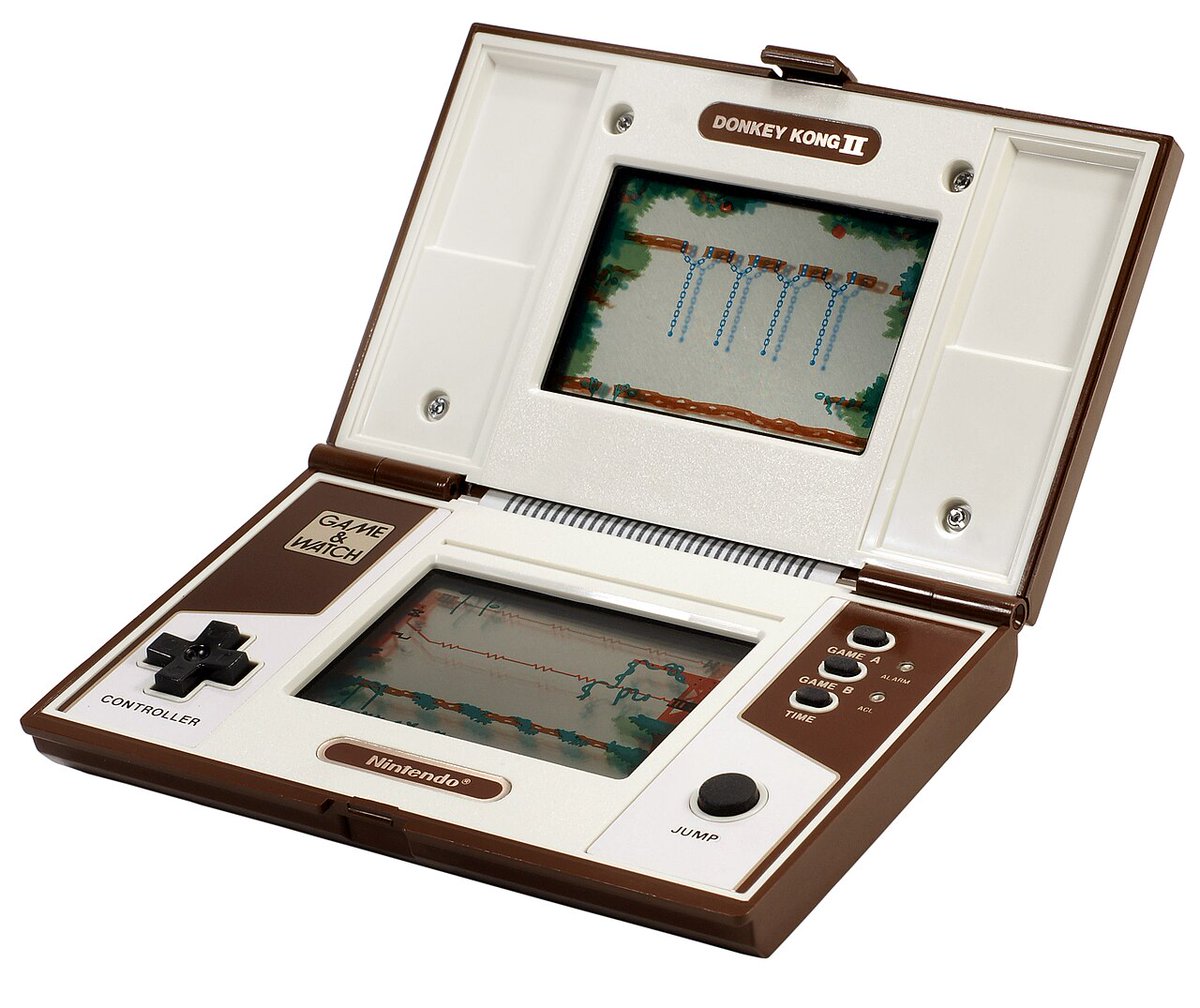
The Game & Watch was a line of pocket games with LCD screens that Nintendo launched in 1980. Each played a single game and doubled as a clock, hence the name. Nintendo sold about 43 million of them.
Designer Gunpei Yokoi got the idea on a bullet train, where he saw a salaryman killing time by pressing buttons on a calculator. One day Nintendo president Hiroshi Yamauchi's driver was out sick, so Yokoi drove him to a meeting and pitched a small game adults could play discreetly. In 1982, the Donkey Kong Game & Watch introduced a cross-shaped directional pad. Nintendo put it on the NES controller, and nearly every game controller since has had one.
Old hard drives have always been bad at keeping secrets. Between 2000 and 2002, two MIT grad students, Simson Garfinkel and Abhi Shelat, bought 158 used drives, mostly on eBay, for under $1,000. Only 12 had been properly wiped. The rest gave up medical records, personal email and more than 5,000 credit card numbers, including one drive from an Illinois ATM that still held a full year of transactions.
That message existed because people really didn't know what to do. Most PCs couldn't switch themselves off, since the power button was a plain switch wired straight to the power supply. Microsoft engineer Raymond Chen once watched a seatmate on a plane shut down a laptop, then hit Restart over and over, waiting for it to go dark. Intel's ATX design in 1995 finally let Windows cut the power itself.