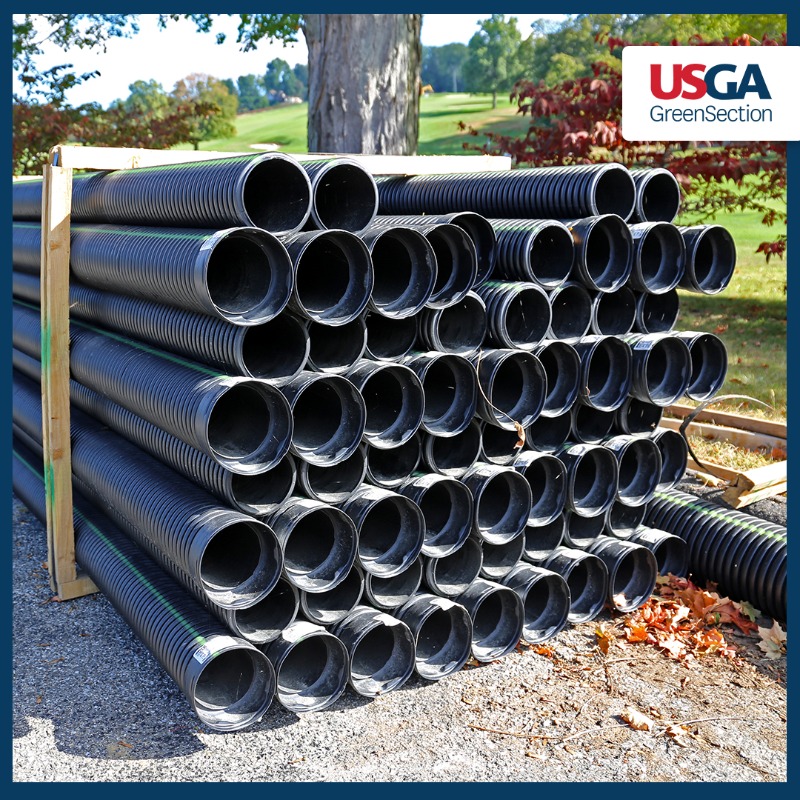
Excessive rainfall this summer contributed to turf issues that courses are still recovering from. Improving drainage this offseason will be a focus for many 👇
After a long summer of heavy play, some tees are definitely showing the scars. There are several key factors that drive divot recovery and a few easy ways for golfers to help the healing process 👇
What’s slowing those speeds?
Golfers' complaints of sluggish greens this season are backed by early Cornell research. Despite frequent rolling, high humidity is slowing ball roll, and achieving faster speeds would require intensive rolling efforts.
https://t.co/eUBZfNL5hD
Heavy summer rains and bunker washouts often go hand in hand. While we can’t control the weather, golf courses can reduce the risk of washouts by investing in some key improvements 👇
Rain is a good thing, but too much at the wrong time can be frustrating for golfers and superintendents. Here’s what to expect after wet weather and how to minimize the impact on course conditions 👇
Damaging a green out of anger, or for any other reason, shows a serious lack of respect for all the work that goes into preparing that surface and it creates problems for the staff and other golfers 👇
@WLagasseTurf@Turf_Hort_Nerd MTI here in Minnesota recommends turning power off to controllers in the winter. Mice seek any heat source. Could you use a rodenticide near the controllers?
As we head into another busy year on golf courses, the value of making time for maintenance has never been greater. Devoting a day, or even a few hours each week to maintenance leads to better playing conditions and higher efficiency
We have seen the golf on tv but we don’t always see what it takes to get it to that point. Here is just a small piece of the larger effort it takes to produce a world class golfing venue on tournament day