From 19 to 25 August, the #Philippines, the United States and #Australia conducted their 19th Multilateral Maritime Cooperative Activity in the #SouthChinaSea — described by #Manila as the West Philippine Sea and by #Washington and #Canberra as within the Philippine #EEZ.
Serials included communications, maritime domain awareness, anti-submarine warfare, replenishment at sea and division tactics, pointing to a more regularised pattern of trilateral at-sea coordination.
On 26 August, Senior Captain Zhai Shichen of the #PLA Southern Theater Command said STC naval and air units had conducted a routine patrol in the South China Sea from 21 to 25 August, and criticised the Philippines for bringing extra-regional partners into what Beijing terms so-called joint patrols.
#SouthChinaSea #MMCA #Philippines #USNavy #Australia #PLA
On 24 August, the Export-Import Bank of #Korea agreed KRW 300 billion (about USD 218 million) in facility and working-capital financing for LS Cable & System’s submarine-cable plant in Chesapeake, #Virginia — set to be the largest such facility in the United States.
The plant, due for completion in the second half of 2027 and commercial production in Q1 2028, will manufacture HVDC subsea cable for North American grid upgrades and European offshore wind.
Financing is being extended under Eximbank’s AI Transformation (#AX) programme, which treats data-centre power demand, offshore wind and HVDC cable as a single infrastructure chain.
#LSCable #KoreaEximbank #HVDC #SubseaCable #OffshoreWind #AIinfrastructure
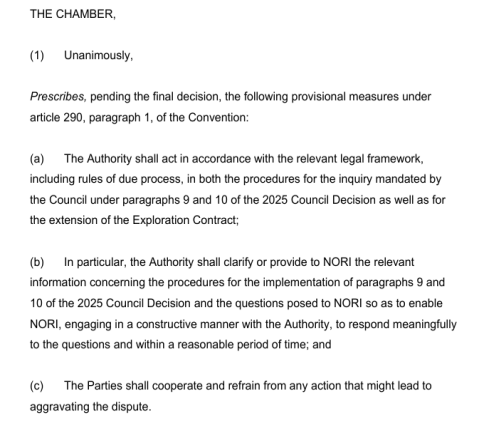
On 18 July 2026, the Seabed Disputes Chamber of #ITLOS prescribed provisional measures in #NORI v. #ISA and #TOML v. ISA.
The Chamber did not order the inquiry to be stayed. It held that the process may proceed, but that the Authority must conduct it in accordance with the applicable legal framework, including the due-process requirements of the 2025 Council decision, and must put the contractors in a position to respond meaningfully and within a reasonable time. The parties were further directed to cooperate and to refrain from any action that might aggravate the dispute.
#ITLOS #UNCLOS #ISA #lawofthesea
China and Russia have launched fourth joint scientific expedition to the Arctic, adding to a relationship that is expanding across research, energy, shipping and maritime operations
#science#expedition#arctic#cooperation#russia#china#security
https://t.co/98BG2vbASi
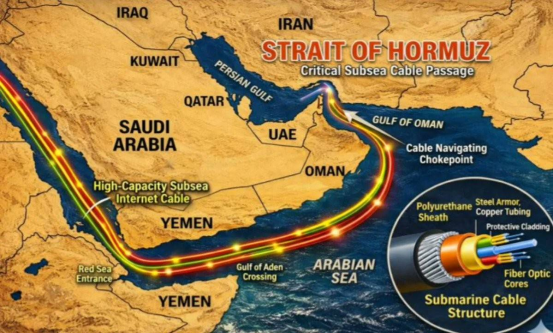
According to Nikkei (Aug 24-25), the Ministry of Internal Affairs of #Japan plans to request about ¥100 billion ($628 million) in the FY2027 budget to help domestic companies buy 3–5 specialized cable ships. The government would cover roughly half the cost — the first time Tokyo has directly subsidized these vessels.
A single ship now exceeds ¥40 billion amid the weak yen and rising material prices. Japanese firms still largely rely on chartering foreign vessels, while competitors like #SubCom, Alcatel Submarine Networks and #China’s HMN Tech already operate their own fleets.
With 99% of international data traffic running through subsea cables and AI-driven demand surging, Japan sees this as an economic-security priority. The move builds on the 2022 Economic Security Promotion Act and aims to cut repair times, reduce foreign dependence, and lift Japanese players’ global market share toward 35% by 2030.
Final numbers still need budget approval, but the signal is clear: Tokyo wants stronger control over critical digital infrastructure.
#SubseaCables #Japan #EconomicSecurity #DigitalInfrastructure #IndoPacific
#海底电缆 #日本 #经济安全 #数字基础设施
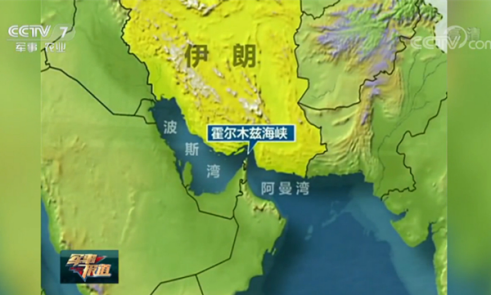
On 25 Aug 2026, an oil tanker was struck by an unidentified projectile , in the outer approaches to the Strait of #Hormuz. Engine room damaged, vessel lost all power. All crew safe. Name, flag & any spill details not yet disclosed.
#UN Secretary-General #Guterres calls for safe navigation, full respect for #UNCLOS, and an end to attacks on civilian shipping. A crisis working group has been set up.
#StraitOfHormuz #OilTankerAttack #UKMTO #MaritimeSecurity #UNCLOS #MiddleEast #EnergySecurity
Ding dong! We’ve got a new look~🎉
New name: @OceanLexLab
We’ll keep sharing ocean law research updates & making comments on global ocean affairs right here~
Come hang out with us! Feel free to drop any questions anytime 😄
See you at the new home! 🌊
OceanLexLab
This is a well-structured short paper with clear analysis and a persuasive opinion.
The author correctly identifies that Article 60 of #UNCLOS could, through a progressive interpretation, serve as a legal basis for establishing safety zones around submarine cables in the #EEZ. Although the conventional reading of “artificial islands, installations and structures” does not readily encompass submarine cables—and UNCLOS treats cables under separate provisions—this interpretive challenge should not be decisive.
Given the critical importance of submarine cables to global communications and the growing number of incidents, there is a compelling need for enhanced protection. States such as #Australia have already established domestic cable protection zones with clear legal consequences for violations. There is no principled reason why international law should reject the analogous application of Article 60’s safety-zone regime to submarine cables. On the contrary, such an approach would represent a logical and necessary evolution of the existing legal framework.
Can "Safety Zones" provide Safety to Critical Submarine Cables? https://t.co/Z3OP9AVZDj
American forces aboard USS George H.W. Bush (CVN 77) remain vigilant and ready both day and night during enforcement of the U.S. blockade against Iran. As of Aug. 24, CENTCOM forces have redirected 71 commercial vessels, disabled 3 and boarded 2 to ensure compliance. More than 40 vessels supporting humanitarian aid have been allowed to pass.
Black Sea Merchant Ships Under Repeated Attack: How Can Civilian Shipping Safety Be Guaranteed in Wartime?
On 22 August 2026, the Turkish-operated vessel Ural was struck by a drone near Novorossiysk in the Black Sea, resulting in one crew member killed and eight others injured.
Earlier, the Turkish cargo ship Necibe had also been attacked. Its crew was transferred to the Ural, which was then hit a second time. The damaged Ural has since arrived at the Turkish port of Samsun.Attacks on merchant vessels in the Black Sea have become frequent.
In July alone, more than 35 commercial ships were targeted, with fatalities among seafarers reported. The assaults have continued into August. Türkiye has expressed serious concern over the situation.The spillover of the Russia-Ukraine conflict continues to endanger third-party civilian shipping and highlights the practical challenges of protecting merchant vessels under existing international law frameworks governing the high seas and exclusive economic zones during armed conflict.
Source
https://t.co/sdf6XA1mZp
Despite challenges such as long winters and restrictions imposed by coastal States, Arctic shipping routes offer an important alternative connection between #EastAsia and #Europe. Their peaceful use and international cooperation in #Arctic navigation should be encouraged!
🚢🇰🇷South Korea is testing whether the Arctic can become a real commercial route to Europe.
PanStar Acro leaves Busan today on the country's first commercial Northern Sea Route voyage, carrying 837 TEU to the UK, Netherlands and Poland.
Seoul estimates the Arctic route can cut voyage times by 35%, and wants regular service by 2030.
Source: Reuters
Malaysia’s Salam Submarine Cable Project: Cross-Border Waters Pose Key Approval Challenge
MCMC is advancing the5,582 km Salam (Sambungan Kabel Dasar Laut MADANI) domestic submarine cable system to link Peninsular Malaysia with Sabah & Sarawak. Featuring 10 landing stations and 4 segments, the RM2 billion project aims to boost digital connectivity, network resilience and support 5G, data centres & AI growth.
TM is evaluating participation after MCMC’s mid-July 2026 call for proposals. Critical hurdle: 60–70% of the planned route crosses Indonesian waters. Formal Indonesian approval is required before seabed surveys can begin. Malaysia has submitted its request and awaits Jakarta’s decision — a decisive factor for the project’s progress.
Expected construction timeline: 2–3 years. Currently in early planning stage.
#SalamCable #SubmarineCable #Malaysia #DigitalInfrastructure #Connectivity #Indonesia #EastMalaysia #5G #DataCentres
#SalamCable #海底电缆 #马来西亚 #数字基础设施 #连通性 #印度尼西亚 #东马来西亚 #5G #数据中心
U.S. Forces Establish and Operate Southern Corridor Along Omani Side of Strait of Hormuz
According to reports by Axios and other U.S. media outlets on 19–20 August 2026, the U.S. military has opened and has been operating a southern shipping corridor (also referred to as the Omani route) on the Omani side of the Strait of Hormuz for several weeks. The corridor provides escorted transit for oil tankers, with approximately 15–20 vessels moving through each night. Current daily oil shipments via this route are estimated at around 10 million barrels — roughly half of pre-conflict volumes.
A substantial number of commercial vessels have shifted to this southern route to avoid waters claimed under Iranian regulatory control to the north. Iran continues to assert its authority over the entire strait, while indirect U.S.-Iran negotiations remain stalled.
It is important to note that the southern corridor is not an unrestricted, open waterway available to all tankers from all countries. Reports indicate it functions as a controlled passage coordinated and escorted by U.S. forces. Tankers typically must register or coordinate with U.S. authorities and join nighttime convoys to receive naval escort, air cover, and safety information. The arrangement primarily facilitates oil exports from Gulf states (including Saudi Arabia, the UAE, and Kuwait) as well as empty tankers returning to load cargo. Iranian-linked vessels are largely excluded amid the ongoing U.S. naval blockade of Iranian ports. Many ships deactivate AIS transponders to reduce detection risk, limiting full transparency of actual traffic. Iran maintains its claim of regulatory control over the strait and has indicated possible actions against vessels using the southern route, meaning residual operational risks persist.
Source:
https://t.co/Bi1plRIuDj