The Cost of Solving the Wrong Problem
The IMF recently published a finding that caught my attention.
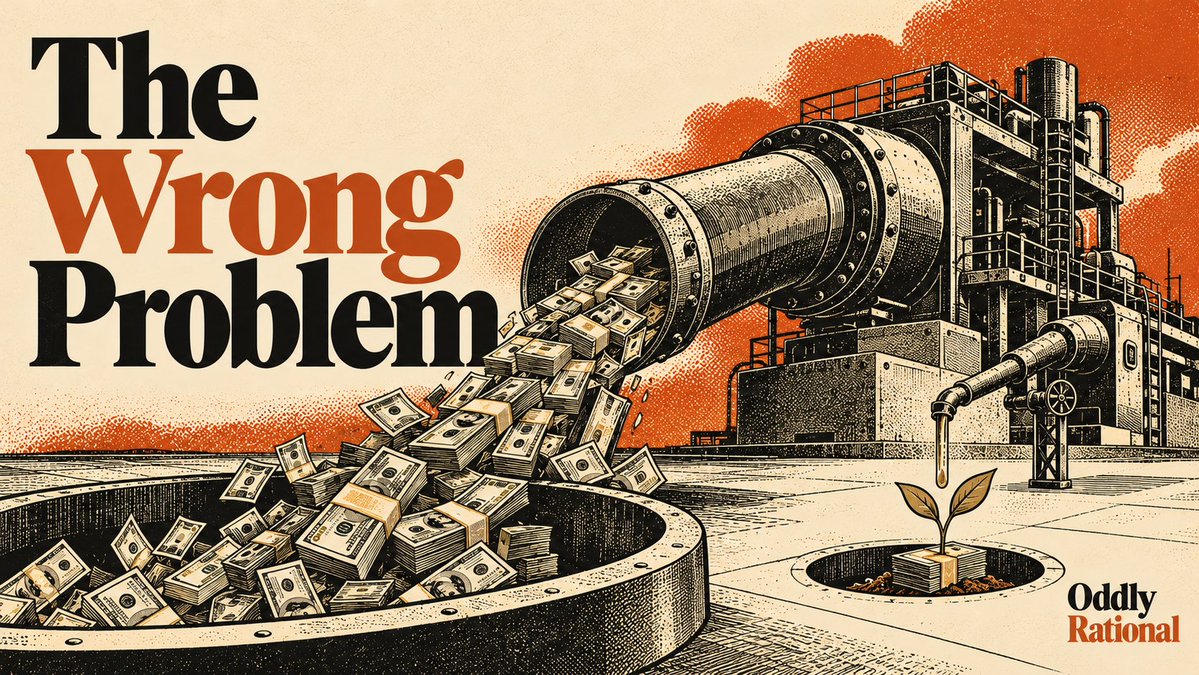
Protecting vulnerable households from rising prices through broad subsidies can cost 3 to 22 times as much as providing targeted financial support.
Same intended outcome. Dramatically different costs.
It's a useful reminder that solving a problem and solving it efficiently are two different things.
And I think businesses make this mistake more often than they realize.
Consider a company struggling with profitability.
The obvious response might be to launch a company-wide cost-cutting exercise.
Reduce headcount. Freeze recruitment. Cut discretionary spending. Squeeze suppliers.
The P&L might improve.
But what if the real problem lies elsewhere?
Perhaps a handful of customers account for most of the losses because their contracts are poorly priced.
Perhaps certain products generate attractive revenue but barely cover their variable costs.
Or perhaps the company is allocating too much capital to business lines that consistently earn below their cost of capital.
Across-the-board cost reductions might improve short-term earnings without addressing any of these underlying problems.
Worse, they could weaken profitable businesses while allowing the real sources of value destruction to continue operating.
A more disciplined approach begins by identifying where the economic problem actually sits.
Which customers destroy value? Which products generate attractive incremental margins? Which investments genuinely earn their cost of capital?
Then direct resources towards the specific activities that will change the outcome.
Of course, targeted interventions require better information. Sometimes broad measures are unavoidable when time is short or data is poor.
But that doesn't make them economically superior.
The principle is simple.
**Good management solves problems. Great management solves the right problems at the lowest economic cost.**
The Cost of Solving the Wrong Problem
The IMF recently published a finding that caught my attention.
Protecting vulnerable households from rising prices through broad subsidies can cost 3 to 22 times as much as providing targeted financial support.
Same intended outcome. Dramatically different costs.
It's a useful reminder that solving a problem and solving it efficiently are two different things.
And I think businesses make this mistake more often than they realize.
Consider a company struggling with profitability.
The obvious response might be to launch a company-wide cost-cutting exercise.
Reduce headcount. Freeze recruitment. Cut discretionary spending. Squeeze suppliers.
The P&L might improve.
But what if the real problem lies elsewhere?
Perhaps a handful of customers account for most of the losses because their contracts are poorly priced.
Perhaps certain products generate attractive revenue but barely cover their variable costs.
Or perhaps the company is allocating too much capital to business lines that consistently earn below their cost of capital.
Across-the-board cost reductions might improve short-term earnings without addressing any of these underlying problems.
Worse, they could weaken profitable businesses while allowing the real sources of value destruction to continue operating.
A more disciplined approach begins by identifying where the economic problem actually sits.
Which customers destroy value? Which products generate attractive incremental margins? Which investments genuinely earn their cost of capital?
Then direct resources towards the specific activities that will change the outcome.
Of course, targeted interventions require better information. Sometimes broad measures are unavoidable when time is short or data is poor.
But that doesn't make them economically superior.
The principle is simple.
**Good management solves problems. Great management solves the right problems at the lowest economic cost.**
# AI Has a Capital Problem
For much of the AI boom, the biggest concern was whether companies could secure enough chips.
Now, the conversation is shifting towards something more fundamental.
Money.
Broadcom CEO Hock Tan recently warned that capital could become the biggest constraint on AI expansion.
And the numbers are starting to explain why.
Anthropic is reportedly offering Blackstone a yield exceeding 10% to help finance a multibillion-dollar chip acquisition.
Think about what that means.
Before generating any return for investors, the infrastructure must first earn enough to cover financing costs, depreciation, operating expenses and eventually replacement.
That's a demanding proposition in an industry where the technology itself is evolving rapidly.
A data centre might operate for decades.
But the chips inside it could have a much shorter economic life.
If more efficient hardware arrives sooner than expected, or computing prices decline faster than anticipated, yesterday's investment assumptions can quickly become obsolete.
Of course, the demand for AI is real. Companies are spending enormous amounts because they see genuine commercial opportunities.
But demand is only one side of the equation.
The other is whether the revenue generated can justify the capital committed.
This is something we've seen before.
Telecommunications infrastructure expanded rapidly during the internet boom. The technology transformed the world, but not every investor financing that expansion earned an attractive return.
I suspect AI will be no different.
Some businesses will build enduring competitive advantages.
Others may discover that they were financing assets whose economics never justified their cost.
**A technology can change the world without making everyone who finances it wealthy.**
# AI Has a Capital Problem
For much of the AI boom, the biggest concern was whether companies could secure enough chips.
Now, the conversation is shifting towards something more fundamental.
Money.
Broadcom CEO Hock Tan recently warned that capital could become the biggest constraint on AI expansion.
And the numbers are starting to explain why.
Anthropic is reportedly offering Blackstone a yield exceeding 10% to help finance a multibillion-dollar chip acquisition.
Think about what that means.
Before generating any return for investors, the infrastructure must first earn enough to cover financing costs, depreciation, operating expenses and eventually replacement.
That's a demanding proposition in an industry where the technology itself is evolving rapidly.
A data centre might operate for decades.
But the chips inside it could have a much shorter economic life.
If more efficient hardware arrives sooner than expected, or computing prices decline faster than anticipated, yesterday's investment assumptions can quickly become obsolete.
Of course, the demand for AI is real. Companies are spending enormous amounts because they see genuine commercial opportunities.
But demand is only one side of the equation.
The other is whether the revenue generated can justify the capital committed.
This is something we've seen before.
Telecommunications infrastructure expanded rapidly during the internet boom. The technology transformed the world, but not every investor financing that expansion earned an attractive return.
I suspect AI will be no different.
Some businesses will build enduring competitive advantages.
Others may discover that they were financing assets whose economics never justified their cost.
**A technology can change the world without making everyone who finances it wealthy.**
Even Great Businesses Pay for Growth
TSMC just reported revenue growth of 51% and net profit growth of 69%.
Yet its gross margin fell from 67.7% to 66.4% quarter-on-quarter.
The culprit? Primarily the ramp-up of its next-generation 2nm chips.
There's an interesting lesson here.
Even the best businesses have to absorb the cost of their next phase of growth.
New technologies require investment. New facilities take time to reach optimal utilization. And capital is often committed years before the returns become visible.
That's why I find growth figures interesting, but incremental returns on capital far more revealing.
A company can report impressive earnings growth while requiring increasingly large investments to sustain it.
The question isn't whether the business is growing.
It's how much additional capital it takes to generate that growth, and whether the returns justify the investment.
Of course, TSMC is exceptionally well-positioned. Its investment in advanced chip manufacturing could strengthen its competitive advantage for years to come.
And one quarter of margin compression tells us little about its long-term capital efficiency.
But the underlying principle applies to every capital-intensive business.
Growth gets the attention. Returns on capital determine whether that growth creates value.
Even Great Businesses Pay for Growth
TSMC just reported revenue growth of 51% and net profit growth of 69%.
Yet its gross margin fell from 67.7% to 66.4% quarter-on-quarter.
The culprit? Primarily the ramp-up of its next-generation 2nm chips.
There's an interesting lesson here.
Even the best businesses have to absorb the cost of their next phase of growth.
New technologies require investment. New facilities take time to reach optimal utilization. And capital is often committed years before the returns become visible.
That's why I find growth figures interesting, but incremental returns on capital far more revealing.
A company can report impressive earnings growth while requiring increasingly large investments to sustain it.
The question isn't whether the business is growing.
It's how much additional capital it takes to generate that growth, and whether the returns justify the investment.
Of course, TSMC is exceptionally well-positioned. Its investment in advanced chip manufacturing could strengthen its competitive advantage for years to come.
And one quarter of margin compression tells us little about its long-term capital efficiency.
But the underlying principle applies to every capital-intensive business.
Growth gets the attention. Returns on capital determine whether that growth creates value.
# AI Should Change the Workflow, Not Just Speed It Up
Most companies use AI to do the same work, just faster.
Drafting emails, summarizing reports, writing formulas.
Useful? Certainly. Transformative? Not quite.
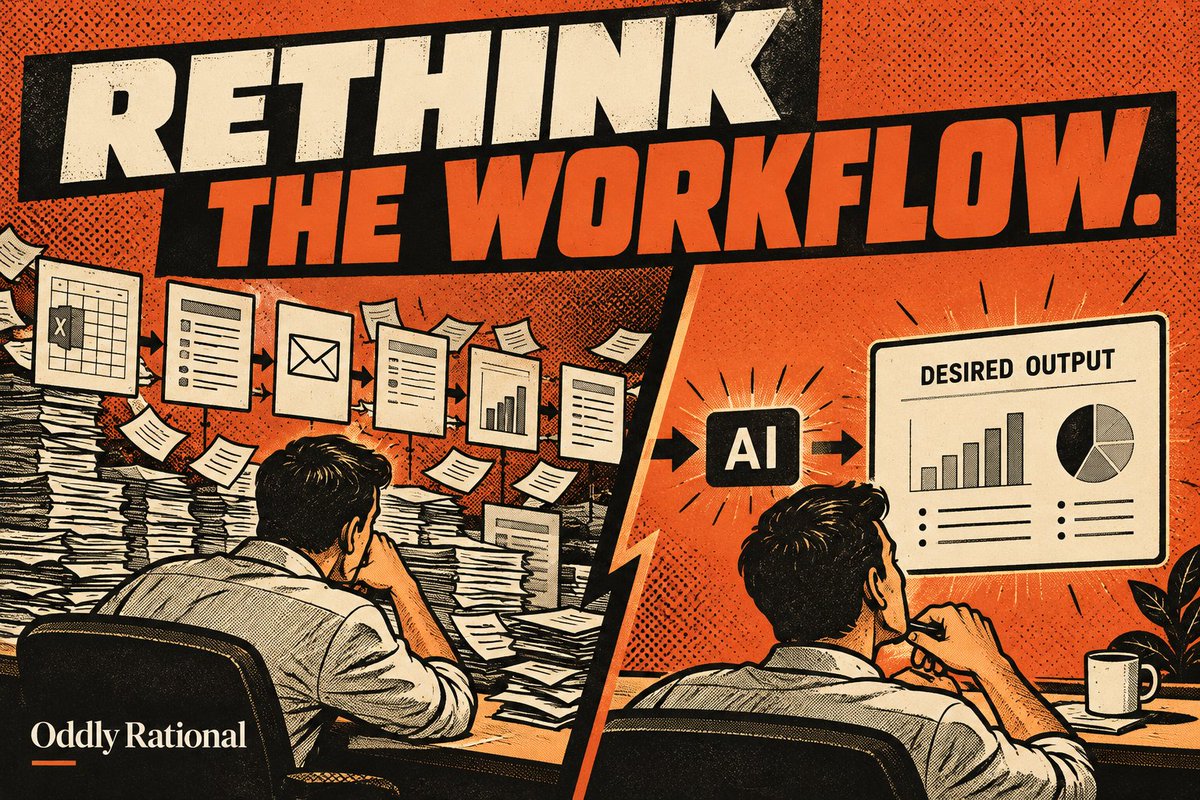
The real opportunity is to rethink the workflow itself.
**Start with the desired output. Then work backwards.**
What information is needed? Which steps add value? Which exist simply because that's how things have always been done?
Consider financial reporting.
Instead of using AI to write commentary faster, why not redesign the entire process?
Automate data collection. Flag exceptions. Let AI identify material variances and draft the initial analysis.
Leave finance professionals to focus on judgment and decisions, while retaining essential controls.
**The distinction is simple:**
AI-assisted work makes existing tasks faster.
AI-centric work questions whether those tasks should exist at all.
The biggest productivity gains may come not from doing more with AI, but from eliminating work that never needed to happen.
# AI Should Change the Workflow, Not Just Speed It Up
Most companies use AI to do the same work, just faster.
Drafting emails, summarizing reports, writing formulas.
Useful? Certainly. Transformative? Not quite.
The real opportunity is to rethink the workflow itself.
**Start with the desired output. Then work backwards.**
What information is needed? Which steps add value? Which exist simply because that's how things have always been done?
Consider financial reporting.
Instead of using AI to write commentary faster, why not redesign the entire process?
Automate data collection. Flag exceptions. Let AI identify material variances and draft the initial analysis.
Leave finance professionals to focus on judgment and decisions, while retaining essential controls.
**The distinction is simple:**
AI-assisted work makes existing tasks faster.
AI-centric work questions whether those tasks should exist at all.
The biggest productivity gains may come not from doing more with AI, but from eliminating work that never needed to happen.
The Best Customers Aren’t Always the Biggest
Revenue tells you how much a customer spends. Contribution margin tells you how much that relationship is actually worth.
But I think the real insight comes from what you do with that information.
Most businesses use profitability data to identify customers they can charge more or serve for less.
That's only half the equation.
A better question is: How can we make this customer more profitable by creating more value for them?
Perhaps it's a better product, a faster delivery, or a service that solves a problem competitors have overlooked.
When customers receive more value, they're often willing to spend more, stay longer, and become less sensitive to price.
Of course, not every additional dollar of customer value translates into profit. The economics still matter.
That's why I see contribution margin as more than a financial metric. It's a starting point for understanding where additional investment in customers can earn the best returns.
The goal isn't to extract the most value from each customer. It's to create more value—and capture a fair share of it.
The Best Customers Aren’t Always the Biggest
Revenue tells you how much a customer spends. Contribution margin tells you how much that relationship is actually worth.
But I think the real insight comes from what you do with that information.
Most businesses use profitability data to identify customers they can charge more or serve for less.
That's only half the equation.
A better question is: How can we make this customer more profitable by creating more value for them?
Perhaps it's a better product, a faster delivery, or a service that solves a problem competitors have overlooked.
When customers receive more value, they're often willing to spend more, stay longer, and become less sensitive to price.
Of course, not every additional dollar of customer value translates into profit. The economics still matter.
That's why I see contribution margin as more than a financial metric. It's a starting point for understanding where additional investment in customers can earn the best returns.
The goal isn't to extract the most value from each customer. It's to create more value—and capture a fair share of it.
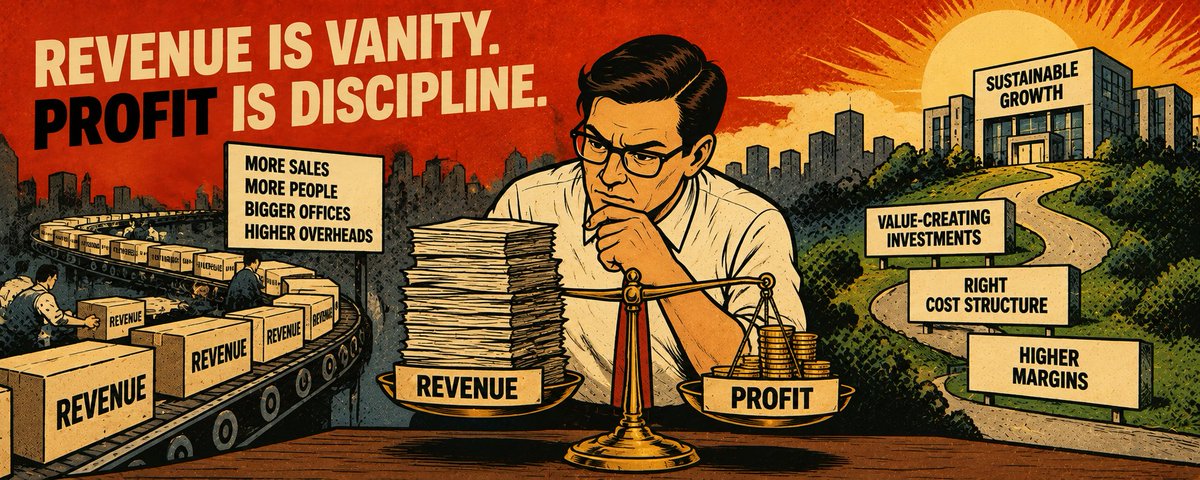
Revenue growth is impressive. But it doesn't necessarily mean you're building a better business.
I've seen companies chase growth while their cost structures quietly get out of hand.
More sales require more people, bigger offices, additional systems and greater overheads. And before long, revenue is growing, but profits aren't.
That's why I've always believed the quality of growth matters more than the headline number.
The goal isn't simply to cut costs. It's to understand which expenses genuinely create value and which ones merely add complexity.
Some costs should be reduced. Others deserve more investment (i.e. costs should go UP).
It takes skills to know which is which.
Revenue growth is impressive. But it doesn't necessarily mean you're building a better business.
I've seen companies chase growth while their cost structures quietly get out of hand.
More sales require more people, bigger offices, additional systems and greater overheads. And before long, revenue is growing, but profits aren't.
That's why I've always believed the quality of growth matters more than the headline number.
The goal isn't simply to cut costs. It's to understand which expenses genuinely create value and which ones merely add complexity.
Some costs should be reduced. Others deserve more investment (i.e. costs should go UP).
It takes skills to know which is which.
The path to financial success, whether in business or life, is rarely a straight line.
I'm a big believer in keeping things simple. But I've also learned that simplicity can sometimes hide the very problems you're trying to understand.
A business can report growing revenue while margins deteriorate. Profits can rise while cash flow gets worse.
The headline numbers rarely tell the whole story.
Sometimes, you need to dig into the details, question your assumptions and follow the numbers wherever they lead.
But there's a difference between unnecessary complexity and the complexity required to understand something properly.
Simplicity is often mistaken for the easy way out.
**But true simplicity is hard-earned. It takes working through the complexity, questioning assumptions, and understanding what really matters.
The hard part is making them simple.**
The path to financial success, whether in business or life, is rarely a straight line.
I'm a big believer in keeping things simple. But I've also learned that simplicity can sometimes hide the very problems you're trying to understand.
A business can report growing revenue while margins deteriorate. Profits can rise while cash flow gets worse.
The headline numbers rarely tell the whole story.
Sometimes, you need to dig into the details, question your assumptions and follow the numbers wherever they lead.
But there's a difference between unnecessary complexity and the complexity required to understand something properly.
Simplicity is often mistaken for the easy way out.
**But true simplicity is hard-earned. It takes working through the complexity, questioning assumptions, and understanding what really matters.
The hard part is making them simple.**
Customer obsession is one of the most underrated moats in B2C businesses.
And the beauty of it is that it compounds.
Every fast reply, hassle-free return and unexpected act of goodwill builds a little more trust.
Individually, these things seem insignificant. But over time, they add up.
Customers become more willing to buy again, try new products and recommend you to others.
That means lower customer acquisition costs, better retention and potentially greater pricing power.
The interesting part is that your competitors can copy your products, pricing and promotions.
But replicating years of accumulated customer trust is much harder.
Of course, great service costs money. The trick is knowing where the incremental goodwill is worth more than the cost of delivering it.
**Customer obsession isn't just good service. It's capital allocation into an intangible ASSET that compounds.**
Customer obsession is one of the most underrated moats in B2C businesses.
And the beauty of it is that it compounds.
Every fast reply, hassle-free return and unexpected act of goodwill builds a little more trust.
Individually, these things seem insignificant. But over time, they add up.
Customers become more willing to buy again, try new products and recommend you to others.
That means lower customer acquisition costs, better retention and potentially greater pricing power.
The interesting part is that your competitors can copy your products, pricing and promotions.
But replicating years of accumulated customer trust is much harder.
Of course, great service costs money. The trick is knowing where the incremental goodwill is worth more than the cost of delivering it.
**Customer obsession isn't just good service. It's capital allocation into an intangible ASSET that compounds.**
One of the biggest mistakes a new CFO can make is trying to change too much, too quickly.
I understand the temptation. You're new, expectations are high, and you want to prove your worth.
So you start introducing new systems, dashboards and processes.
But without understanding how things actually work, you risk automating the very problems you're supposed to fix.
I've always believed that good processes should come before good software.
Start by understanding critical workflows. Who does what? Who checks the information? What happens when something goes wrong?
Fix what's broken, simplify what you can, then consider automation.
An ERP won't fix unclear responsibilities, and a dashboard won't fix unreliable data.
Neither will help much if the only person who understands a critical process suddenly leaves.
Here's a simple test: If a key manager resigned tomorrow, could someone else take over without weeks of guesswork?
If not, you don't have a system. You have a person holding everything together.
**Software should scale good processes, not institutionalise bad ones.**
One of the biggest mistakes a new CFO can make is trying to change too much, too quickly.
I understand the temptation. You're new, expectations are high, and you want to prove your worth.
So you start introducing new systems, dashboards and processes.
But without understanding how things actually work, you risk automating the very problems you're supposed to fix.
I've always believed that good processes should come before good software.
Start by understanding critical workflows. Who does what? Who checks the information? What happens when something goes wrong?
Fix what's broken, simplify what you can, then consider automation.
An ERP won't fix unclear responsibilities, and a dashboard won't fix unreliable data.
Neither will help much if the only person who understands a critical process suddenly leaves.
Here's a simple test: If a key manager resigned tomorrow, could someone else take over without weeks of guesswork?
If not, you don't have a system. You have a person holding everything together.
**Software should scale good processes, not institutionalise bad ones.**
There's an interesting contradiction developing in the AI economy.
Everyone wants more computing power.
But computing power needs electricity, infrastructure and capital.
And those things are becoming more expensive.
The IMF is now warning about the combination of high energy costs, rising debt and the AI investment boom.
It's a useful reminder that technological progress doesn't happen independently of economics.
You can have extraordinary demand and still earn disappointing returns if your cost base rises faster than your revenue.
The companies that win won't necessarily be the ones building the most AI infrastructure.
They'll be the ones that can turn that infrastructure into sustainable cash flow.
Growth is impressive, but returns on capital pay the bills.
There's an interesting contradiction developing in the AI economy.
Everyone wants more computing power.
But computing power needs electricity, infrastructure and capital.
And those things are becoming more expensive.
The IMF is now warning about the combination of high energy costs, rising debt and the AI investment boom.
It's a useful reminder that technological progress doesn't happen independently of economics.
You can have extraordinary demand and still earn disappointing returns if your cost base rises faster than your revenue.
The companies that win won't necessarily be the ones building the most AI infrastructure.
They'll be the ones that can turn that infrastructure into sustainable cash flow.
Growth is impressive, but returns on capital pay the bills.