Do geopolitical allies receive friendlier IMF assessments? Our findings suggest not. Using sentiment analysis of IMF country reports, we find that appraisal tone tracks economic fundamentals, not alignment with the US or EU.
📖 https://t.co/cze7NGxFkY
#IMF#Research
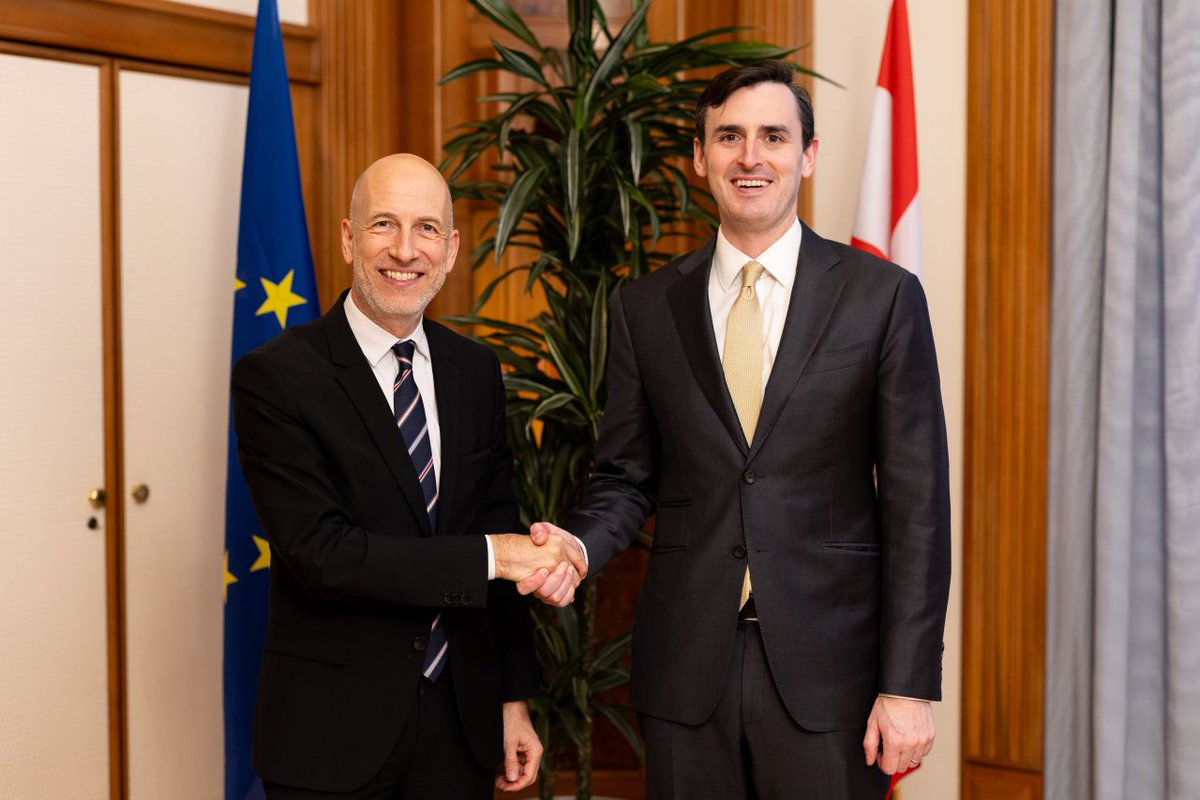
Great meeting with @MagratheanTimes of @oenb. We discussed Austria and Europe’s economic outlook, inflation and monetary policy, and how reforms that support innovation, investment, and a more integrated single market can help unlock Europe’s growth potential.
Österreichs Bankensektor bleibt widerstandsfähig. Unser aktueller Financial Stability Report zeigt jedoch weiterhin Risiken bei notleidenden Krediten, insbesondere im Gewerbeimmobiliensektor.
Mehr dazu: https://t.co/3vyAkqWAMx
📊 Update on the OeNB Euro Survey: The microdata from the 2025 wave are now available to researchers.
The dataset provides insights into the finances, perceptions and expectations of households in the CESEE region.
🔗 https://t.co/CElVAcW5Jy
#DataSharing#Research#OeNB
How much does geopolitical risk fuel inflation? Our latest bulletin shows that shocks in perceived geopolitical risk significantly increase Austrian inflation, mainly through higher energy and food prices. 📊
🔗 https://t.co/N1KRKx4qdq
#Research#Inflation
Von 3.11.2026 bis 24.1.2027 können sich Schulen der Sekundarstufe I (5. bis 8. Schulstufe,Alter etwa 10 bis 14 Jahre) für das Ready4Finance-Schulzertifikat bewerben. Auch Polytechnische Schulen teilnahmeberechtigt!
➡️ https://t.co/XHrBBVbRYI
At yesterday’s #OeNBTalks on International & Climate Economics, Governor Martin Kocher and a panel featuring Olaf Sleijpen, Benedikt Ennser and Sigrid Stagl discussed the links between inflation, energy security and climate action.
#OeNB#ClimateEconomics
In seinem Blog analysiert OeNB-Gouverneur Martin Kocher das Spannungsfeld zwischen steigenden Energiepreisen und höheren Anleiherenditen. Warum der EZB-Rat die Zinsen vorerst unverändert ließ & welche Risiken für die Inflation bleiben: 👇
https://t.co/NQg8ObDc4g
CESEE households are holding less euro cash as rising living costs and weaker real wages eat into savings. Yet euroisation remains persistent, while financial literacy on inflation and exchange rates is improving.
🔗 https://t.co/2uBFWugV1a
#OeNB#EuroSurvey
I have just informed my colleagues that I will step down as @ECB President on 7 February 2027.
It has been a source of great pride to serve this institution.
I thank all of those who have supported me on this journey over the past seven years.
Reminder: There are still a few spots available for tomorrow’s talk! Don’t miss this opportunity to join us for insightful discussions and valuable networking!
✨Register now!
https://t.co/9kEIXUir7p
Banken vergeben Kredite vorsichtiger, (Kredit-)Nachfrage bei Unternehmen und privaten Haushalten stabil: Seit 2003 analysieren #OeNB und @ecb das Kreditgeschäft im Euroraum. Dafür werden rund 160 führende Banken befragt.
🔗 https://t.co/ZQnc5yMyLP
#Kreditumfrage
Austria’s financial literacy remains stable at 69.4/100, but challenges persist. Young adults report lower financial well-being and income remains key for turning financial knowledge into investment decisions. 📊💡
🔗 https://t.co/W24ig3C6ff
#FinancialLiteracy#OeNB
Österreichs Haushalte verfügen erstmals über mehr als eine Billion Euro Finanzvermögen. Wertpapiere gewinnen an Bedeutung. Auch die Finanzkompetenz liegt auf hohem Niveau: 69 von 100 Punkten in der aktuellen OeNB-Erhebung. Mehr dazu:https://t.co/tAYt1vHFY4
🎙️Neue Podcast-Folge! Betrug im unbaren Zahlungsverkehr: aktuelle Zahlen, die häufigsten Betrugsmaschen und welche Schutzmaßnahmen wirklich helfen. Zu Gast:
OeNB-Vizegouverneurin Edeltraud Stiftinger und OeNB-Direktor Josef Meichenitsch
➡️ https://t.co/261j6G1FNZ