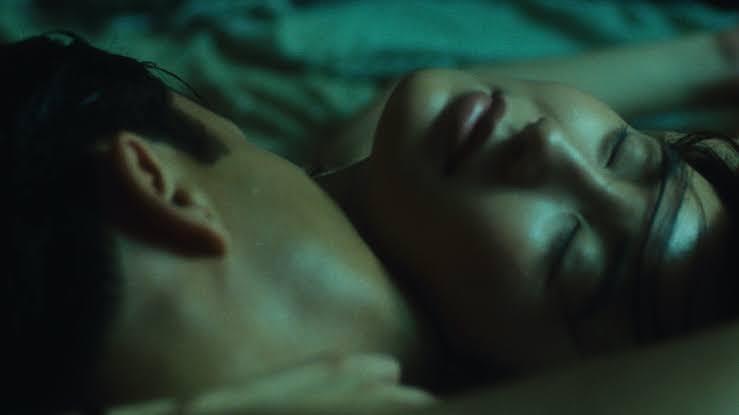
"An instant of reflection hurls me down. I reflect, and. . . the world in its eternal oneness is gone; nature closes her arms, and I stand like an alien before her and do not understand her."
— Friedrich Hölderlin
The Thin Red Line (1998), dir. Terrence Malick
#film#Literature
Tarantino hated this Kill Bill Vol. 2 scene so much
Simply because Michael Madsen insisted on using this hat.
He bought it in Mexico while filming a Western and started wearing it to rehearsals to shape Budd’s washed-up cowboy vibe.
Tarantino told him to ditch it. Madsen ignored him and kept showing up in it anyway.
So Tarantino rewrote the strip club scene on the day—adding the boss’s “shit kicker hat” rant just to call it out.
Madsen later said he “owed half [his] performance to that hat.”
Paweł Pawlikowski on his favourite movies from the 1970s:
"In the mid-seventies I got more into the art of cinema (and into the arts in general), which coincided with a great period in American cinema. I got seriously hooked on 'Taxi Driver' (1976), 'Badlands' (1973), 'Days of Heaven' (1978). These films with alienated heroes, where landscape becomes soul-scape. They made me realize that cinema can be this amazing space where images, words, faces, landscapes, and music all melt together in a mysterious way. Even now, my favorite films are those that take you out of yourself, that make you enter this other world on-screen. These three films did exactly that to me."
("Paweł Pawlikowski’s Top 10", Criterion, 2018)
@nguyenhdi For many of the students the literature that is proscribed is beyond their age. At least some of it. For example in Croatia you read Greek tragedies at the age of 15. Dostoevsky at 17 is good however. It depends.
Yoshishige Yoshida on Nagisa Ōshima and the Japanese New Wave:
"We never thought of ourselves as a movement, then or ever. Even though Oshima and myself are probably, more than others, known as the leading members of this Nouvelle Vague, if you ask me about any sort of communication between us, well, we actually had almost no communication with each other at all. One reason for this is that Oshima and I met only by chance. I entered Shochiku in 1955, and Oshima one year earlier in 1954. I was selected to work in the same team as Oshima, and so we met. At the time, as we were both assistant directors, we probably went drinking together from time to time, but philosophically speaking, we had no real communication with each other. I guess that the biggest difference in our personalities originates in our backgrounds. Oshima graduated from The University of Kyoto, where he studied, I believe, at the department of law. It is possible that he wanted to become a politician then. For me it was completely the opposite; while I cannot say that I had no interest in politics, I had absolutely no interest in becoming a politician... Although we did go out drinking a couple of times, it was only because this is what we usually did anyway during this period, since both of us liked drinking. However, it wasn't something that we often did just the two of us, but rather, we drank with the entire filming crew after work. Going with him only was no fun since he was bad when he got drunk."
— Yoshishige Yoshida, interviewed by Alexander Jacoby and Rea Amit, MidnightEye (2010)
⬇️ Yoshishige Yoshida • Nagisa Ōshima.
Wong Kar-wai on Chungking Express (1994) and Fallen Angels (1995):
"Chungking Express and Fallen Angels are one film that should be three hours long. I always think these two films should be seen together as a double bill. In fact, people asked me during an interview for Chungking Express: “You’ve made these two stories which have no relationship at all to each other, how can you connect them?” And I said, “The main characters of Chungking Express are not Fay Wang or Takashi Kaneshiro, but the city itself, the night and day of Hong Kong. Chungking Express and Fallen Angels together are the bright and dark of Hong Kong.” I see the films as inter-reversible, the character of Fay Wang could be the character of Takashi in Fallen Angels; Brigitte Lin in Chungking could be Leon Lai in Fallen Angels. All of their characters are inter-reversible. Also, in Chungking we were shooting from a very long distance with long lenses, but the characters seem close to us."
— Wong Kar-wai, interviewed by Han Ong, BOMB Magazine (Winter 1998 Issue)
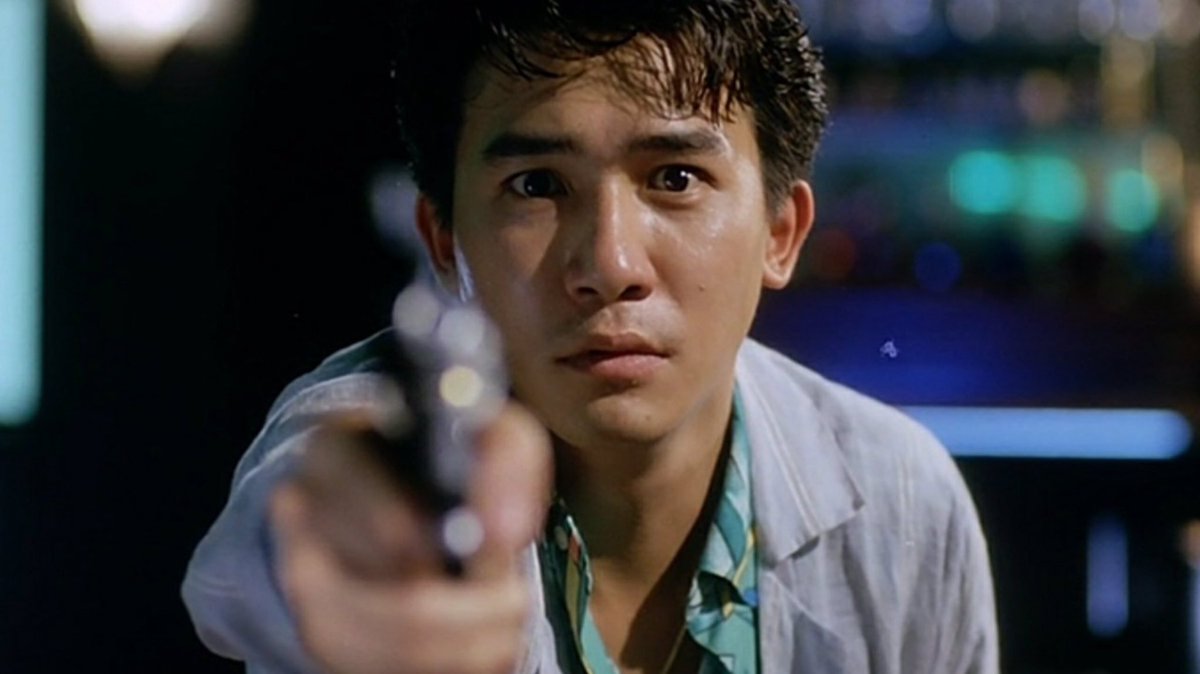
Days of Being Wild (1990), dir. Wong Kar-wai
"I've heard that there's a kind of bird without legs that can only fly and fly, and sleep in the wind when it is tired. The bird only lands once in its life... that's when it dies."
Seijun Suzuki on his cult masterpiece, Branded to Kill (1967)
“It was surreal, without my intending it to be. That’s a great success. I didn't intend to make it surreal. But that's how people see it. I consider that a triumph.”
Béla Tarr on whether "Werckmeister Harmonies" (2000) is about existential terror and chaos:
"I just wanted to make a movie about this guy who is walking up and down the village and has seen this whale. And, you know when we are working we don’t talk about any theoretical things. We only ever have practical problems. And it’s the same with the writer. Mostly we just talk about life. How it’s going on the street. We never talk about theoretical things. We never talk about Chaos or existential things. We just talk about someone coming into the room and he wants something and the other guy who is sitting there doesn’t want these things. That’s all."
(Béla Tarr's interview with Fergus Daly and Maximilian Le Cain, Senses of Cinema, 2001)
P.S: On this day, 26 years ago, "Werckmeister Harmonies" (2000) premiered in Cannes, France.
Léa Seydoux on why she started acting:
“I’m going to tell you something very intimate,” she tells Variety’s @DPD_ in this week’s cover story. “The reason why I do this job ... I never really wanted to become an actress, but I wanted to exist. The only way I found to exist was to have my image printed on a film and have the proof of my existence.”
Read the full cover story: https://t.co/O2FUHXV6cP
#Cannes jury president Park Chan-wook says "I don’t think politics and art should be divided."
" I think it’s a strange concept to think that they’re in conflict with each other. Just because a work of art has a political statement, it should not be considered an enemy of art. At the same time, just because a film is not making a political statement, that film should not be ignored. Even if we are to make a brilliant political statement, if it’s not expressed artfully enough, it would just be propaganda. So what I want to say is that art and politics are not concepts that are in conflict with each other, as long as they are artistically expressed, they are valuable."
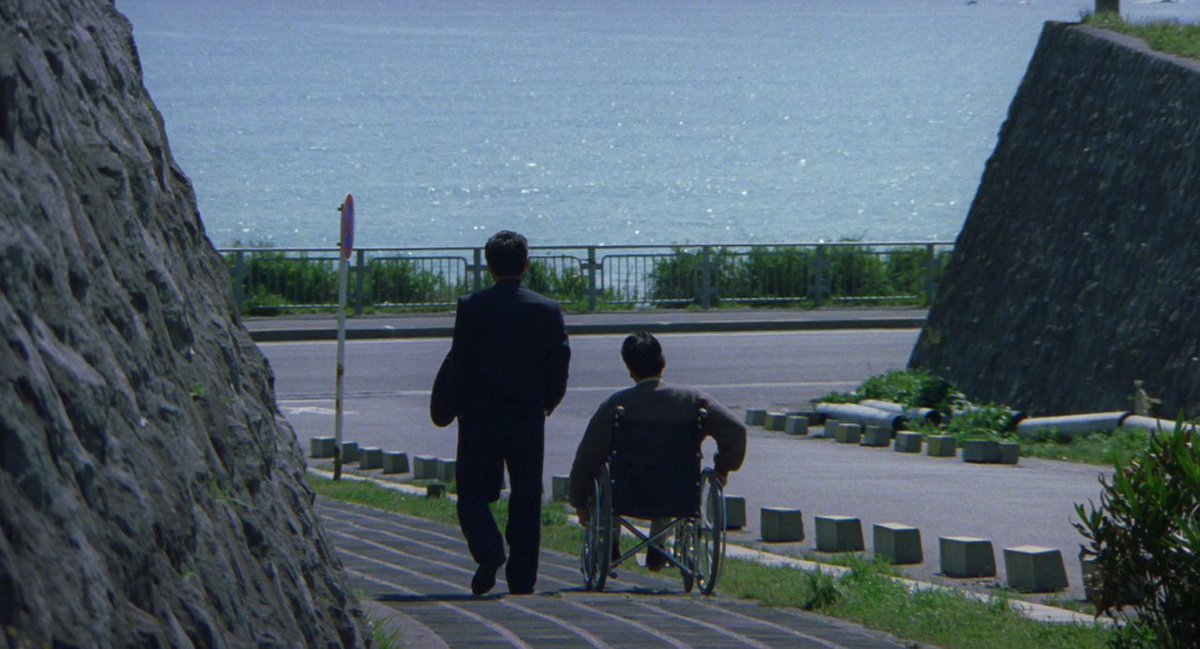
"when i was a cop, i never really looked at the ocean. now, it’s all i see. it’s funny how much you miss when you’re busy living."
hana-bi (1997) dir. takeshi kitano