250 years ago, a bold idea changed the course of history. Today we celebrate the people, principles, and enduring promise of the United States of America.
Happy 4th of July from the White House. 🇺🇸
🇺🇸 BATTERIES ARE QUIETLY CARRYING THE GRID WHILE EVERYONE SLEEPS ON THEM
Grid batteries in the U.S. are exploding in power: from under 2 GW in 2020 to nearly 30 GW by 2025.
In June, California’s battery packs supplied 26% of evening demand, more than gas plants.
They charge up when power’s cheap and demand is low, then kick in during peak hours to avoid blackouts and price spikes.
They’re also way faster than gas turbines, stabilizing voltage and frequency in literal milliseconds.
Oh, and they delay billion-dollar grid upgrades, saving money while keeping your socials running and Grandma’s fridge cold.
Every utility wants them, the market’s growing 27% a year, and the U.S. needs way more to stay competitive.
Because in energy, having backup isn’t optional, it’s survival.
Sources: NREL, EIA, Reuters, Grand View Research
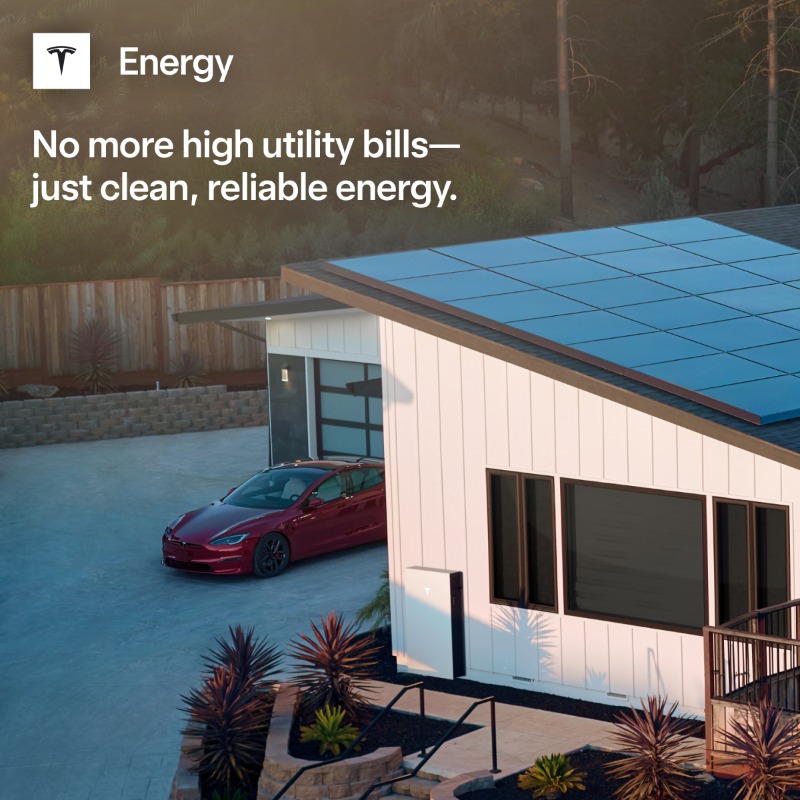
Tesla Powerwall helps you rely less on the utility grid and more on clean, renewable energy. Say goodbye to rising rates—and hello to total energy control.
Art Deco control tower at the Naval Air Station in Jacksonville, 1970. Commissioned in 1940, the NAS building contract went to Auchter Company (who built Gulf Life Tower and @uflorida's Century Tower), Batson-Cook, and Duval Engineering and Contracting Company of Jacksonville. ✨
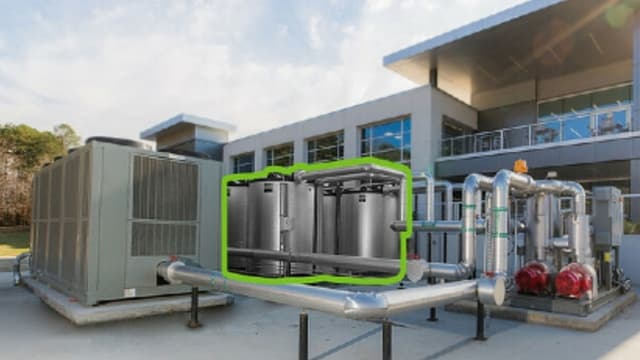
How ‘Ice Battery’ powers 4,000+ US buildings, cuts cooling energy use by 40% | Ameya Paleja, Interesting Engineering
Ice made the previous night serves to cool the building the next day while also delivering a 40 percent energy savings.
Worried about soaring temperatures this summer. The humble ice that helps you cool down in the sweltering heat is also helping over 4,000 buildings stay cool this summer without turning to air-conditioning systems. This has been possible by introducing the ‘Ice Battery’ installed in buildings such as the iconic Eleven Madison in New York.
As spring makes way for summer in the Northern Hemisphere, people are sweating not just because they have no vacation plans but also because of the rising heat and the accompanying rise in power bills. Estimates suggest that electricity bills in the US will swell to $784 on average this summer, a record in the past decade.
A sudden rise in electricity consumption isn’t just a worry for a household or commercial buildings. On a larger scale, the demand for cooling also puts pressure on the grid. Administrators must prepare for dramatic shifts in power demand throughout the day as offices open and shut. Power plants can’t just be built to meet peak power demand during fixed times of the year.
This is why alternate solutions need to be worked out for meeting energy demands, such as long-term energy storage or alternative cooling solutions to air conditioning systems like the Ice Battery.
Why is it an Ice Battery?
Using ice to meet cooling needs during the summer makes sense. This has been practiced for thousands of years and even turned into a trade in the 19th century when fast ships transported American ice to other parts of the world. Refrigeration technology has reduced dependence on fast transport but is equally energy-intensive.
The ‘Ice Battery’ devised by Trane Technologies uses this energy-intensive approach to make ice and cool buildings. The company estimates that the Eleven Madison building needs 500,000 pounds of ice every night, about three city buses of ice. Producing so much ice takes a lot of energy, but Trane Technologies uses a slick trick.
Instead of powering the ice makers during the day, when the energy charges are high, the systems work through the night, when demand and pricing are low. Ice made the previous night serves to cool the building the next day while also delivering a 40 percent energy savings, if air-conditioners were deployed instead.
While meeting the cooling needs of the building, ice also defers its peak power consumption times, acting like a battery of sorts and earning the moniker of the Ice Battery.
How effective is it, though?
Switching to ice and resulting in massive energy savings might sound like a cool idea, but it still uses large amounts of energy. Turning water into ice involves a change of state as the liquid turns into a solid. Researchers are working on solutions where water, mixed with certain molecules, can meet cooling needs at similar temperatures but does not have to undergo a change of state.
Additionally, storage of ice and water under buildings also consumes a lot of space. Retrofitting an ‘ice battery’ in an old building in congested spaces can be a herculean task, prompting other startups to look at more space-efficient means of storage of water.
Since the ice also works as a battery, cost comparisons must be made against conventional forms of energy storage, such as lithium-ion batteries (LIB). The latter are the most energy-efficient storage options available today but also the most expensive. Making LIBs involves many components to come together but has a limited lifecycle.
On the other hand, water-based energy storage is simpler to work with and will not lose its storage capacity, irrespective of the number of cycles it goes through. On the flip side, an ice battery can only meet cooling needs and is only a viable solution when peak and off-peak energy pricing has a significant difference.
Read more:
https://t.co/O8n2gd0MiJ