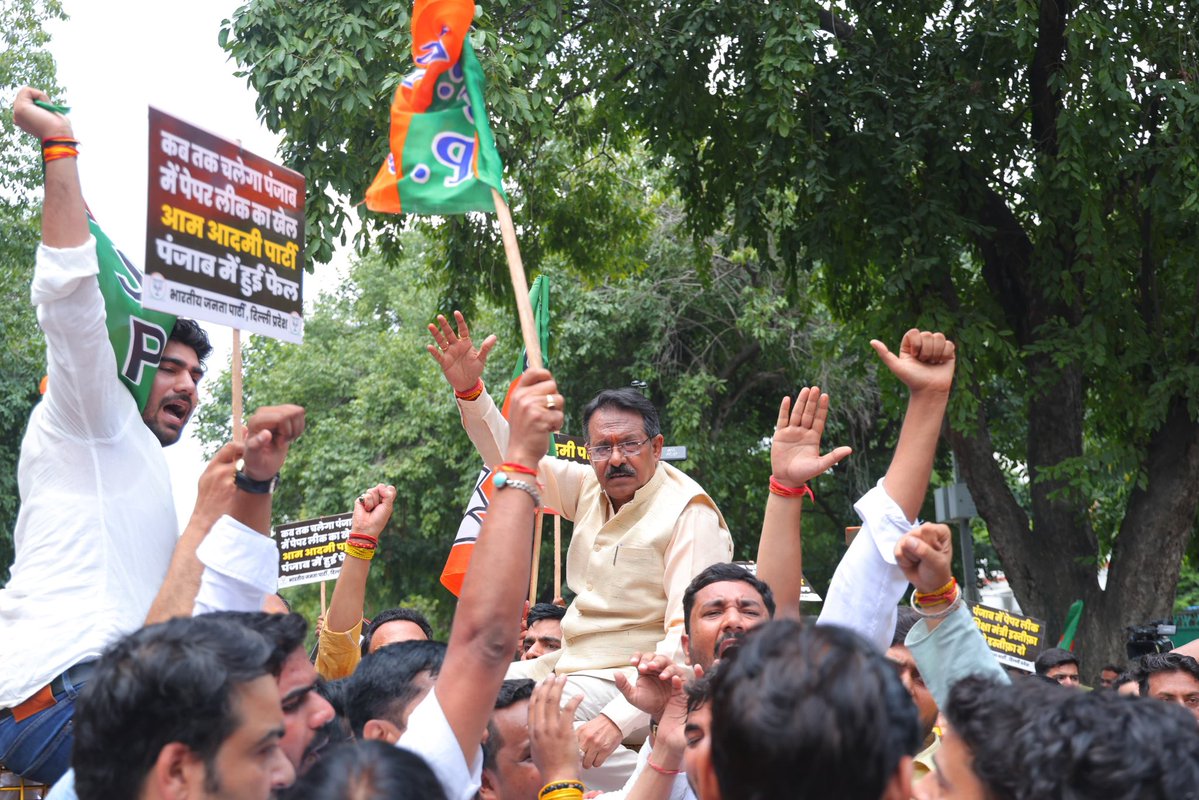
The BJP has launched a massive protest outside Arvind Kejriwal’s office in Delhi, demanding the resignation of Punjab’s Education Minister after a series of paper leaks and complete absence of accountability.
Instead of fielding 12th-pass Manish Sisodia to spin yet another narrative, the AAP leadership should ask Bhagwant Mann to sack Harjot Singh Bains.
But don’t expect that to happen. For Kejriwal, students’ interests are merely a matter of political convenience. His outrage over paper leaks is selective, dictated not by concern for students but by political expediency.
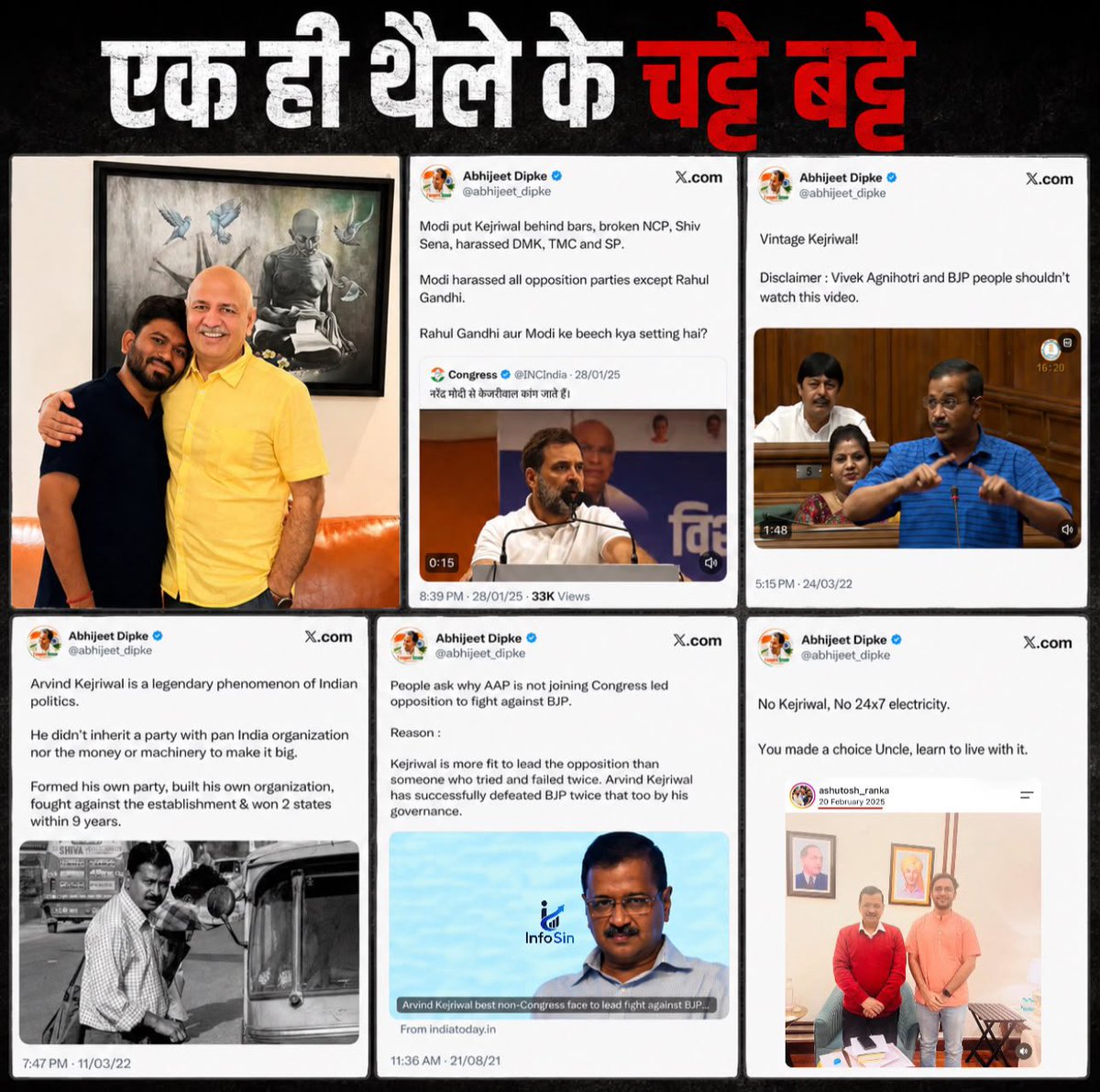
And what about their usual proxies? Dipke and gang, who were so vocal on paper leaks elsewhere, have suddenly fallen silent. After all, does anyone bite the hand that feeds them?
The JKSSB Junior Engineer (Electrical), Power Development Department exam leak and cancellation in 2025 shattered the dreams of thousands of JK aspirants. With the exam cancelled, the youth of Jammu & Kashmir are still waiting for accountability. Will responsibility be fixed on Ms. Sakina Itoo Ji? Will she step down?
Poochta Hai Jammu Kashmir
Taziyat or politics?
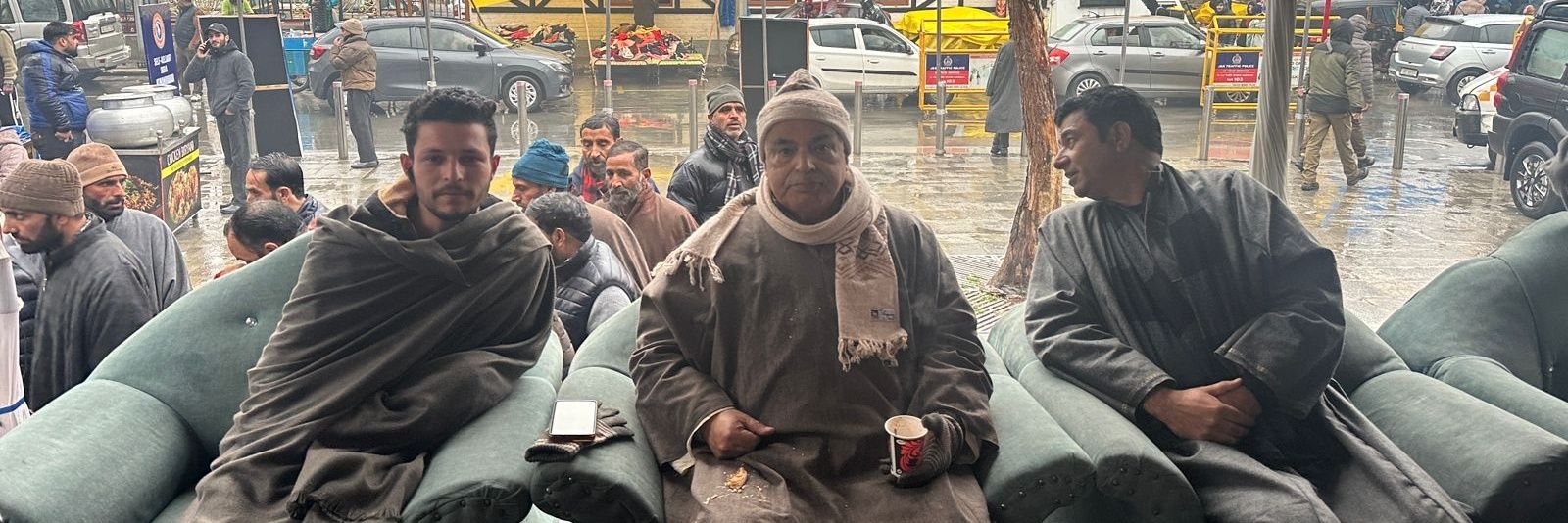
Cabinet Minister @JavedRanaa visited Loran, but his actions clearly reflected political intent rather than offering genuine condolences.
People deserve sincerity in grief, not opportunistic politics.
#Loran#JammuKashmir#Politics#Accountability
When it comes to the future of our youth,there can be no compromise.
Hon’ble PM Shri @narendramodi ji has constituted a High-Powered Task Force,chaired by Shri @NandanNilekani,to drive technology-led reforms ensuring integrity, transparency & credibility in national examinations
कारगिल विजय दिवस पर मातृभूमि की रक्षा के लिए अपने प्राणों का सर्वोच्च बलिदान देने वाले वीर अमर शहीदों को कोटि-कोटि नमन एवं विनम्र श्रद्धांजलि।
जय हिंद! 🇮🇳
#KargilVijayDiwas#BharatMataKiJai
On Kargil Vijay Diwas, honour the courage and valour of our brave soldiers who defended the nation.
Their service and sacrifices will always be remembered.
#KargilVijayDiwas 🇮🇳
Now that the protests are over, it is worth separating genuine student concerns from the political machinery that sought to exploit them.
Before anyone remembers this as an “apolitical movement”, it is important to recognise the umbilical cord that connected its leadership with the Aam Aadmi Party. Many of its prominent faces had long-standing associations with Arvind Kejriwal and Manish Sisodia, having worked with the AAP leadership or occupied political positions linked to the party. What was projected as a spontaneous students’ movement increasingly came to be fronted by seasoned political activists rather than ordinary students.
That is not to say every participant had political motives. Many young people joined with genuine concerns. Others were emotionally persuaded that they were part of a larger cause. They deserve empathy, not cynicism. But history suggests that once the headlines fade, many will realise they were used to advance the interests of political actors rather than the interests of students.
The answer to India’s educational challenges will not come from orchestrated agitation or political theatre. It will come through sustained reforms, institution-building and long-term investment. Over the past twelve years, the Modi government has consistently worked towards expanding opportunities, strengthening educational infrastructure and improving the ecosystem for future generations.
This generation is impatient, and understandably so. Many have not experienced the policy paralysis and neglect of earlier decades. That makes it even more important for us to engage with them, address their concerns respectfully, and demonstrate through facts and outcomes the value that is being created. India deserves informed debate, not manufactured outrage.
Prime Minister Shri @narendramodi's 'Mann Ki Baat' programme will air on July 26th, 2026, at 11 AM.
Watch live:
📺https://t.co/8pMHzDM0Z3
📺https://t.co/OsTaQ0x8Cs
📺https://t.co/BMkgu7YanR
📺https://t.co/IueJ2gTVfA
Shri Dharmendra Pradhan’s tenure as Union Education Minister will be remembered as one of the most transformative phases in the history of India’s education sector. Under the visionary leadership of Prime Minister Narendra Modi, his stewardship was marked by structural reforms, institutional expansion, greater inclusivity, technological modernisation and a renewed emphasis on India’s civilisational ethos. Rather than pursuing piecemeal changes, he laid the foundation for an education ecosystem designed to prepare India for the demands of the 21st century while remaining deeply rooted in its cultural heritage.
The defining achievement of his tenure was the implementation of the National Education Policy (NEP) 2020, the first comprehensive education policy in over three decades. It replaced the outdated 10+2 schooling structure with the 5+3+3+4 pedagogical framework, aligning education with the cognitive development of children. The policy shifted the focus from rote memorisation to experiential learning, critical thinking, creativity, multidisciplinary education and holistic development. It recognised the foundational years of learning as the most critical stage in a child’s development and sought to build strong literacy, numeracy and life skills from the very beginning.
One of the most visible manifestations of the NEP has been the PM SHRI Schools initiative. More than 13,000 schools across India have been upgraded into model institutions equipped with smart classrooms, ICT-enabled teaching, modern science laboratories, libraries, sports facilities and environmentally sustainable infrastructure. These schools are not merely centres of excellence but also serve as mentors for neighbouring institutions, raising educational standards across the system.
Recognising that education must adapt to the aspirations of modern students, Shri Dharmendra Pradhan oversaw the introduction of the Academic Bank of Credit (ABC), one of the most significant higher education reforms in independent India. Students can now accumulate academic credits digitally and exercise multiple entry and exit options during their academic journey. Whether earning a certificate after one year, a diploma after two years, a degree after three years or a research degree after four years, students are no longer forced into rigid educational pathways. This flexibility makes India’s higher education system more inclusive, learner-centric and globally competitive.
His tenure also accelerated the internationalisation of Indian higher education. India welcomed leading global universities, including Deakin University and the University of Wollongong, to establish campuses in the country. Simultaneously, premier Indian institutions expanded their global footprint, with IIT Madras establishing a campus in Zanzibar and IIT Delhi opening a campus in Abu Dhabi. These initiatives strengthened international collaboration, enhanced research partnerships and elevated India’s standing as an emerging global education hub.
Perhaps one of Shri Dharmendra Pradhan’s most enduring contributions has been the democratisation of education through the promotion of Indian languages. For decades, language acted as a barrier for millions of talented students seeking access to professional education. His ministry systematically dismantled these barriers by enabling engineering, technical education and entrance examinations in multiple Indian languages. NEET, JEE and CUET became available in 12 Indian languages, while CTET expanded to 19 languages. Technical textbooks were translated into Indian languages, B Tech programmes became accessible in regional languages, and emerging technologies such as artificial intelligence and machine translation were harnessed to ensure that knowledge could reach every corner of the country.
The promotion of Bharatiya Bhashas became a defining pillar of educational reform. Initiatives such as Bharatiya Bhasha Utsav celebrated India’s extraordinary linguistic diversity, while the Bharatiya Bhasha Summer Camp enabled crores of students to learn an additional Indian language through stories, songs, theatre and interactive activities. Research under the Indian Knowledge System received renewed encouragement, while universities and higher education institutions were empowered to teach and conduct examinations in local languages. NCERT initiated the publication of textbooks in 22 Indian languages, UGC enabled undergraduate and postgraduate education in regional languages, and NAAC introduced institutional incentives to encourage language inclusion. Through initiatives such as Tech FOR Bharatiya Bhasha, Tech IN Bharatiya Bhasha and Tech THROUGH Bharatiya Bhasha, technology itself became a vehicle for strengthening India’s linguistic diversity rather than replacing it.
At the school level, the NIPUN Bharat Mission represented another landmark intervention. By focusing on foundational literacy and numeracy, it sought to ensure that every child acquires essential reading, writing and mathematical skills by the end of Grade 3. This initiative recognised that strong foundational learning determines educational outcomes throughout a student’s life and therefore deserves the highest national priority.
Curriculum reforms during his tenure also reflected a broader effort to present students with a more balanced understanding of India’s history and national development. School curricula incorporated chapters on the Emergency, gave greater prominence to India’s civilisational heritage, regional dynasties such as the Mauryas, Cholas and Marathas, and included contemporary developments such as India’s surgical strikes. These changes sought to provide students with a fuller appreciation of India’s historical journey while strengthening constitutional values, national confidence and cultural awareness. The emphasis on mother-tongue education further reinforced the idea that linguistic identity and educational excellence can coexist.
Equally important was Shri Dharmendra Pradhan’s unwavering commitment to institutional accountability. He consistently maintained that any paper leak or examination malpractice is completely unacceptable and that those responsible must face the strictest legal consequences. At the same time, he drew a clear distinction between the criminal actions of a few individuals and the broader structural reforms transforming India’s education system. His approach combined stronger enforcement, institutional accountability, technological safeguards and continuous systemic improvements to ensure that examinations remain credible and fair for millions of students.
Beyond individual initiatives, Shri Dharmendra Pradhan’s larger legacy lies in fundamentally redefining the philosophy of education in India. His reforms sought to move education away from rigid structures towards flexibility, from memorisation towards understanding, from exclusion towards inclusion, from linguistic barriers towards equal opportunity, from fragmented policymaking towards integrated reform, and from colonial legacies towards an education system rooted in India’s own civilisational confidence while remaining globally competitive.
Under the leadership of Prime Minister Narendra Modi, the education sector has witnessed one of the most far-reaching transformations since Independence. The last 12 years have been marked by unprecedented policy reforms, expanded institutional capacity, increased access, greater inclusivity, technological innovation, international engagement and renewed confidence in India’s knowledge traditions. Shri Dharmendra Pradhan’s tenure will stand as an abiding legacy of these reforms—one that has strengthened the foundations of India’s education system and prepared it to empower generations of young Indians for decades to come.
If being a slimeball had a face, it would be Rajdeep Sardesai.
He writes a long post glorifying one of the prominent faces of the protest in the name of students, yet conveniently omits a detail that readers deserve to know: the individual is an AAP office bearer from Rajasthan and has been associated with them as a spokesperson for years.
That omission is not a minor oversight, it changes the entire picture.
CJP is nothing but “AAP 2.0.”
At 61, after decades in the profession, one would expect Rajdeep Sardesai to place the whole truth before his readers, not just the parts that suit his politics.
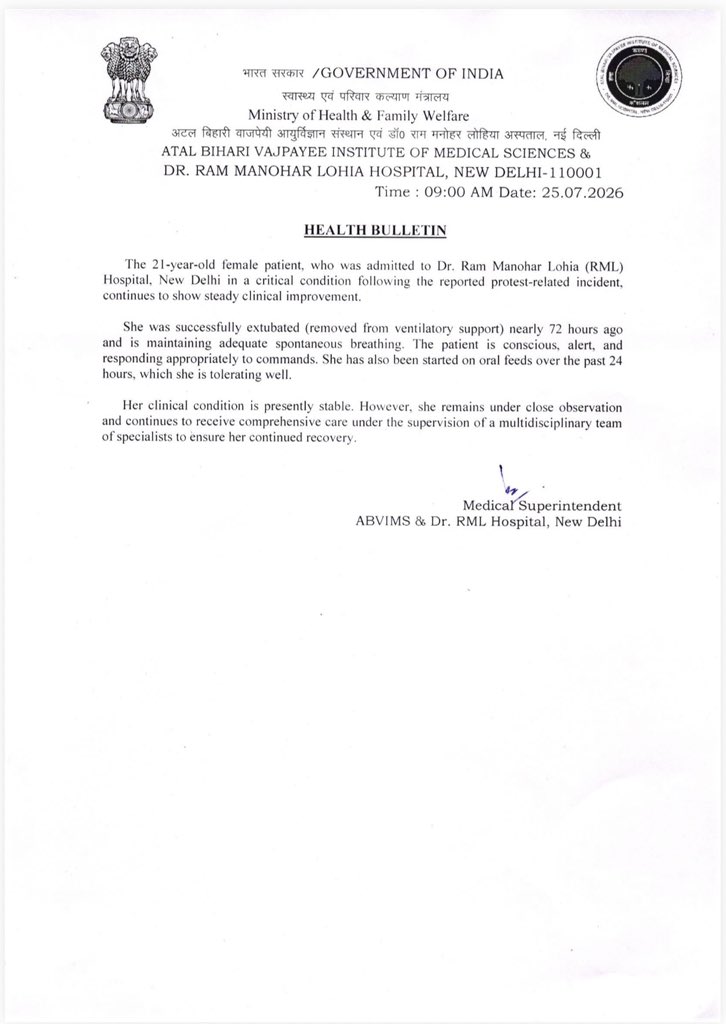
The latest health bulletin from RML Hospital brings encouraging news. The 21-year-old student injured during the protest is conscious, alert, breathing on her own, taking oral feeds, and continues to show steady clinical improvement. Wishing her a full and speedy recovery.
Equally important is a lesson for all of us. In the immediate aftermath of the incident, false claims about her death were circulated and amplified without verification. In moments of uncertainty, journalists, public figures, and those with large platforms have a responsibility to verify facts before making sensational claims.
Misinformation not only misleads the public but also causes immense distress to families and undermines trust. Accuracy must always come before outrage.
Hon’ble PM Shri @narendramodi Ji thanked India’s youth for the response and suggestions following his video and expressed his gratitude for the overwhelming support.
@PMOIndia
Tribute to the Braveheart
Martyr J&K Police Head Constable Ashiq Hussain Qureshi 🇮🇳🕊️
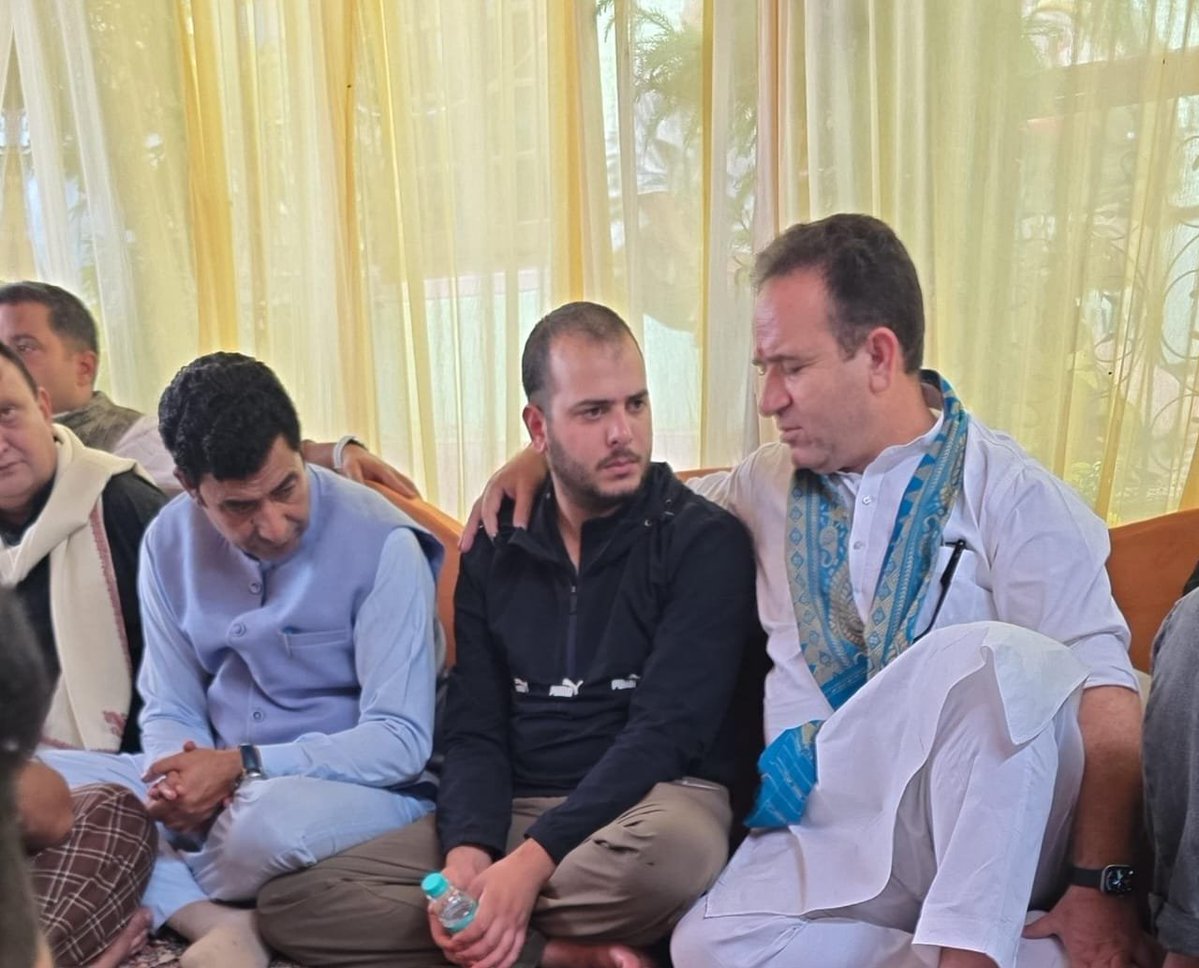
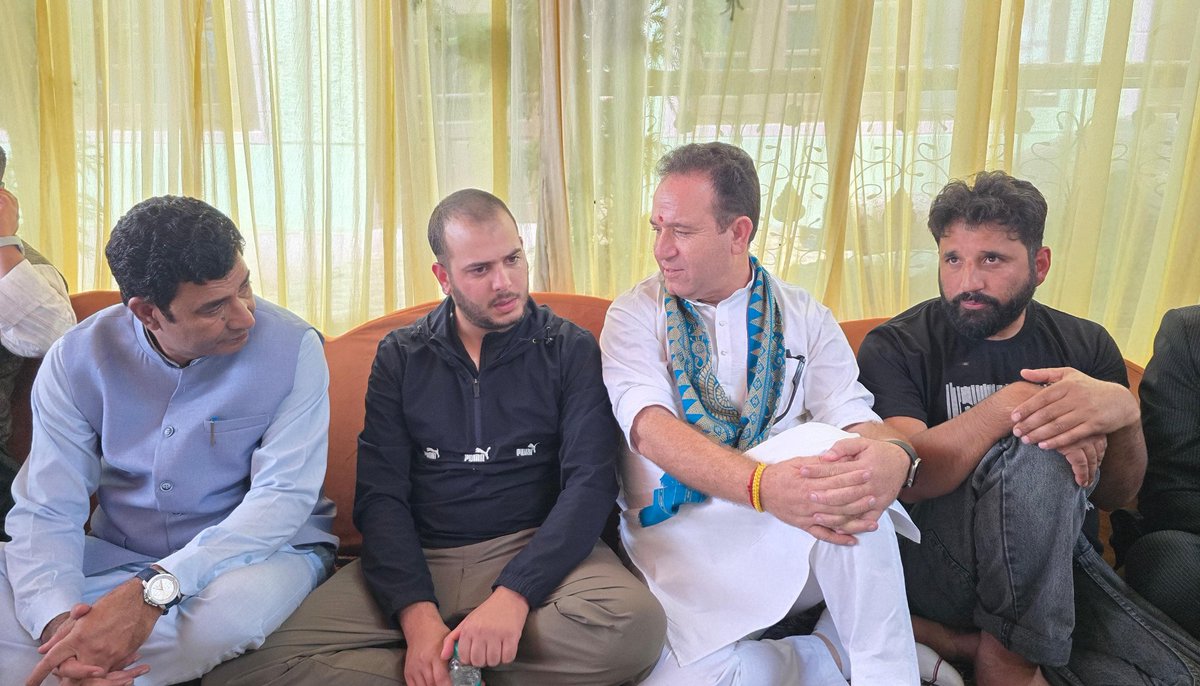
LoP J&K Assembly Sh. @Sunil_SharmaBJP, J&K BJP General Secretary Mohammed Anwar Khan, Secretary Arif Raja, District President Aga Ghazi Ruhullah, Senior Leader Dr. Ali Mohammed Mir, Co-Treasurer Sh. Raman Suri, Social Media Incharge Dr. Makson Tickoo, Social Media Co-Incharge Sajjad Raina, All Cells Co-Incharge Billal Parray, Protocol Co-Incharge Mudabir Baba, and Yuva Morcha General Secretary Majid Khan visited Lalpora, Beerwah, Budgam, to meet the family members of Martyr J&K Police Head Constable Ashiq Hussain Qureshi, who laid down his life in the line of duty during a terror attack in Anantnag earlier this week.
The leaders paid heartfelt tributes to the brave martyr and expressed their deepest condolences and solidarity with the bereaved family.
Salute to his supreme sacrifice and unwavering dedication to the nation. 🇮🇳🙏
Visited the home of martyred Head Constable Ashiq Hussain Qureshi in Budgam to pay respects and offer heartfelt condolences to his family.
Grateful to Hon’ble Union Home Minister Shri @AmitShah Ji for personally speaking to the martyr’s son and assuring the family.
Leader of Opposition @Sunil_SharmaBJP Ji, along with State General Secretary @manwarkhankmr and State Secretary Arif Raja, today visited the residence of martyred Head Constable Ashiq Hussain Qureshi in Budgam to express their heartfelt condolences to the bereaved family.
Visited the family of martyred Head Constable Ashiq Hussain Qureshi in Budgam to offer my heartfelt condolences. His supreme sacrifice in the service of the nation will always be remembered. My thoughts and prayers are with his family during this difficult time.
Justice for students remains the Modi Government’s foremost priority, with PM Modi’s late-night assurance reaffirming firm action against the paper leak mafia.
This decisive commitment paved the way for Sonam Wangchuk to end his fast in the presence of Union Ministers @JPNadda and @DrJitendraSingh
Now, the sole objective is to ensure accountability for the guilty and justice for every affected student.