Today is Monday. Kindly patronize us @SAConsult22 for your well curated Resumé, well detailed and plagiarism free Supporting Statement or SoP, IELTS Mentorship/Coaching and any other professional writing needs.
Our clients might be on your TL.
@akeula_trendy@maestro_harcom
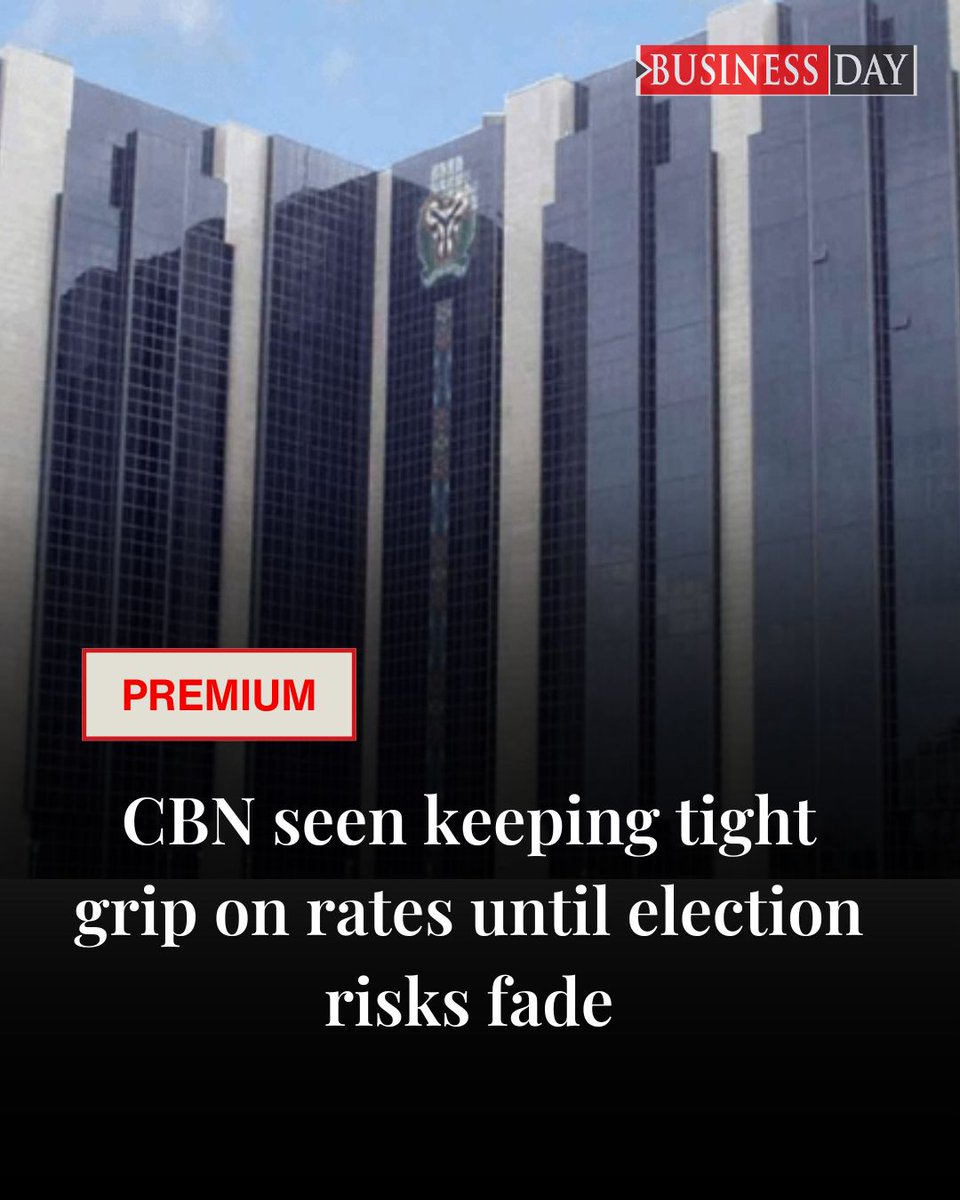
Nigeria’s central bank is expected to keep interest rates unchanged until the country’s election cycle draws closer to an end, as policymakers prioritise taming inflation and preserving exchange-rate stability over stimulating growth, according to economists.
The Central Bank of Nigeria (CBN) on Tuesday retained its benchmark Monetary Policy Rate at 26.5 percent for a second consecutive meeting, a decision widely anticipated by markets despite inflation easing marginally to 15.91 percent in June from 15.93 percent in May...
Read more: https://t.co/UW4MTa8ETz
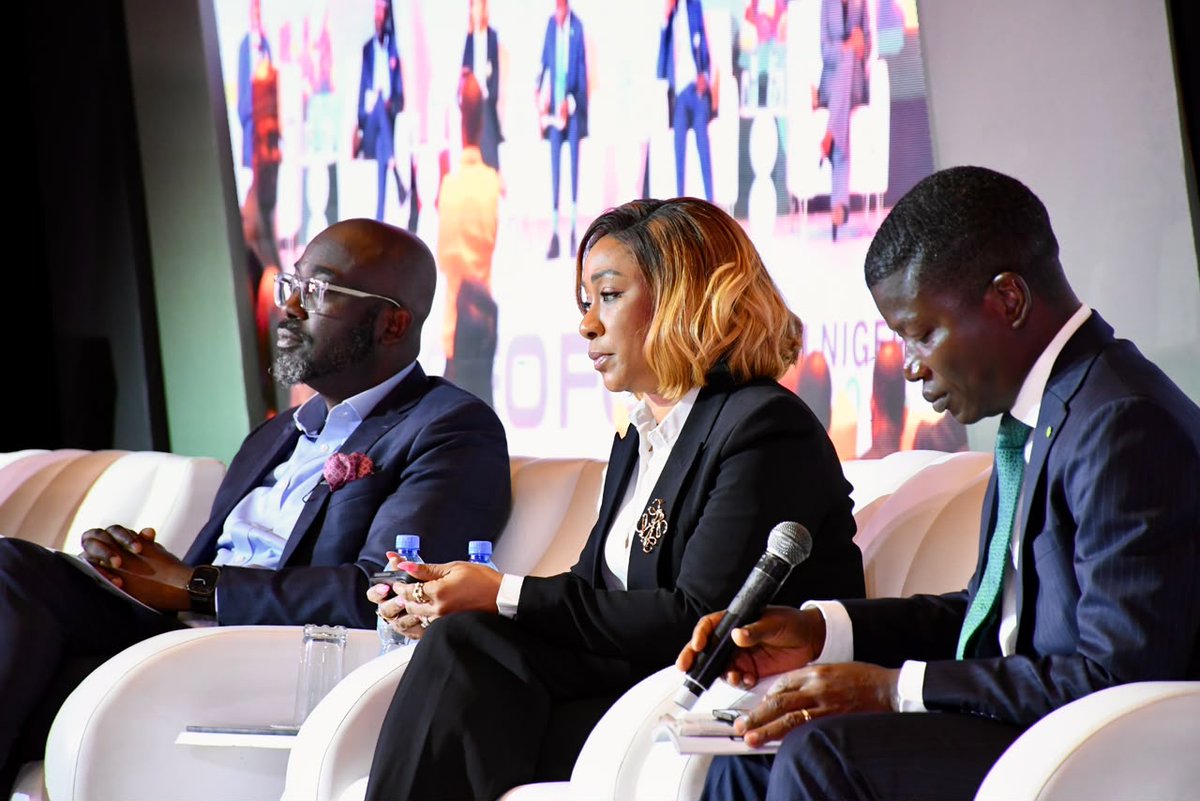
I was pleased to participate as a panelist at the 14th Annual BusinessDay CEO Forum, where business and public sector leaders came together to discuss this year’s theme, “From Stability to Shared Prosperity.”
The conversation reinforced that sustainable growth depends on creating an enabling environment where businesses can invest, innovate, and scale. I shared my thoughts on improving access to capital for SMEs, strengthening the investment ecosystem, and deepening collaboration between the public and private sectors to accelerate Nigeria’s economic transformation.
These conversations matter because lasting prosperity is built through collective action, sound policy, and leadership that looks beyond today’s challenges to tomorrow’s opportunities.
My appreciation to BusinessDay for creating this platform for meaningful dialogue.
#BusinessDayCEOForum #SharedProsperity #Leadership #EconomicTransformation #Nigeria #DeloitteWestAfrica
The Central Bank of Nigeria (CBN) has signalled that there might be no rush for an easing cycle even though inflation slowed in June, marking the first slowdown since the Middle East tensions began in February.
Olayemi Cardoso, the CBN governor said on Thursday, that authorities had projected that a rate cut was imminent as inflation began gradual cooling but the longer-than-necessary US-Iran war dimmed that outlook...
Read more: https://t.co/Zl6RmT8PGi
From Stability to Shared Prosperity.
A day of bold conversations, big ideas and meaningful connections at the 14th BusinessDay CEO Forum.
The stage, conversations, connections and everything in between, here are some of the moments that made the day memorable.
#Businessdayceoforum #Businessday
@IkejaElectric Good morning admin. I am here to report the unprofessionalism of members of your staff who came to install Mojec meter in my house on 9/7/2026.
I'm looking forward to hearing from you soon.
Thank you!
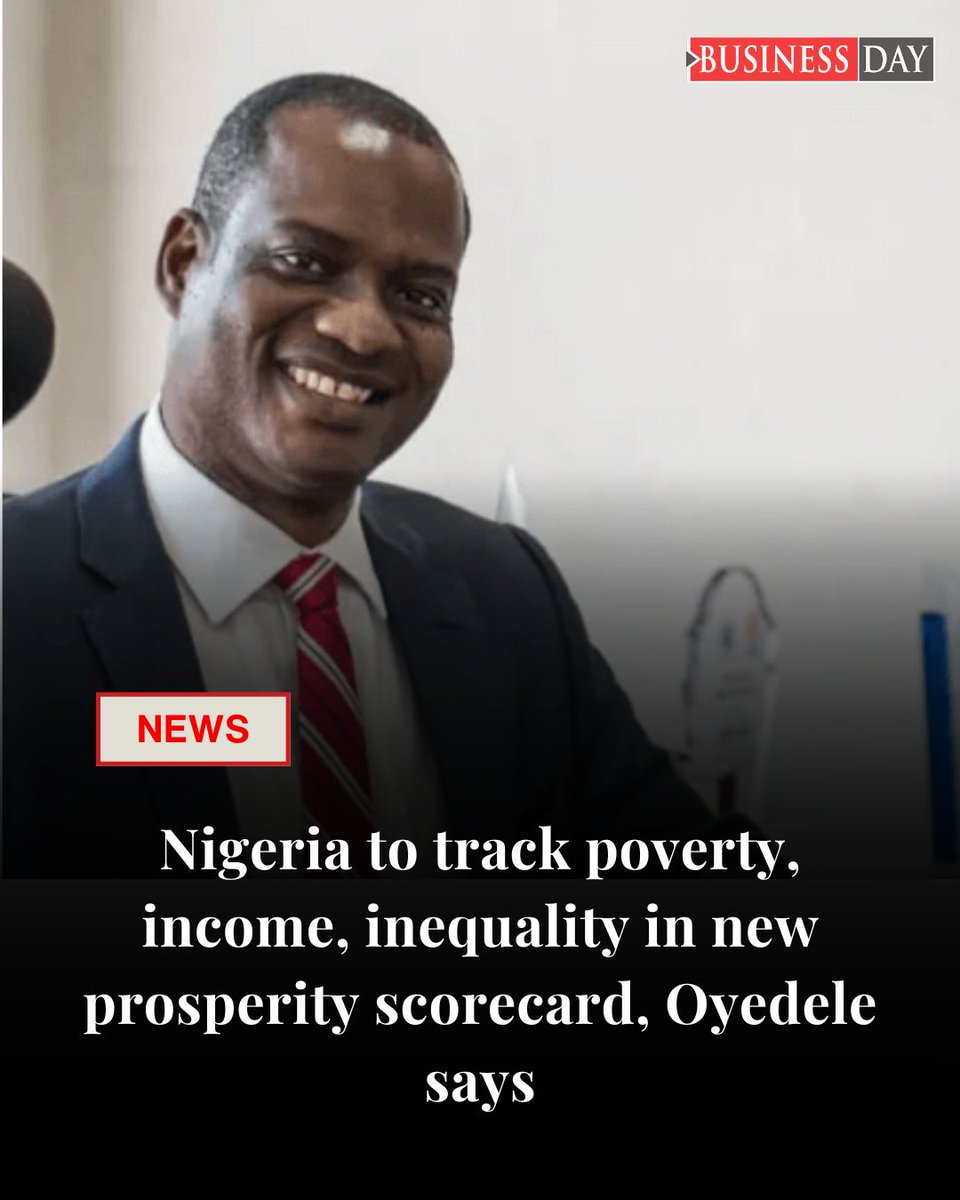
Nigeria will soon begin measuring the success of its economic reforms using a new scorecard tracking poverty, real incomes and inequality, as President Bola Tinubu’s administration seeks to demonstrate that macroeconomic stability is translating...
https://t.co/pIJESmqbGL
As Nigeria grapples with rising debt and growing demands for accountability, concerns are mounting over billions of naira allocated to projects that appear outside the mandates of federal agencies.
BusinessDay Investigations uncovered how regulatory bodies such as NAFDAC, SON and others were assigned infrastructure and constituency projects traditionally handled by other agencies.
Recent controversy surrounding similar allocations to the National Commission for Almajiri and Out-of-School Children's Education has reignited the debate.
Join Accountability Hour as we examine whether off-mandate projects are closing development gaps or weakening transparency, accountability and the integrity of Nigeria's budgeting system.
Saturday, July 11 | 12:00 Noon WAT | X Spaces
Join here: https://t.co/8AIYQoCiS4
The Presidency has issued a detailed statement explaining how it says a man, Adeniyi Adeyemi Matthew, allegedly created and operated a non-existent government agency while presenting himself as its director-general...
https://t.co/7PJnfLalKv
Fresh official documents have raised questions over the presidency's insistence that the Presidential Foreign Investment Promotion Council (PFIPC) never existed, revealing that the Office of the Secretary to the Government of the Federation (SGF)...
https://t.co/Y4dr2jKa5G
Nigeria's two biggest listed palm oil producers are committing billions of naira to plantations, mills, and processing facilities despite already posting record earnings, wagering that Africa's largest food market will remain structurally short...
https://t.co/5OpKp1JKY0
📊 NIGERIA'S HUNGER, POVERTY AND COST-OF-LIVING SNAPSHOT 🇳🇬
🍽️ Global Hunger Index Ranking
2022 — 103rd out of 121 countries (Serious)
2025 — 115th out of 123 countries (Serious)
Change — Nigeria fell 12 places in the ranking.
🔴 People Facing High Levels of Acute Food Insecurity
2023 — 18.3 million
2026 — 30.6 million
Change — +67.2%
📉 Poverty Rate
2023 — 56%
2026 — 63%
Change — +12.5%
🥗 Cost of a Healthy Diet (Per Adult Per Day)
2023 — ₦786
March 2026 — ₦1,513
Change — +92.5%
Between 2023 and 2026, Nigeria experienced a sharp rise in food insecurity, poverty, and the cost of maintaining a healthy diet. The number of people facing acute food insecurity increased by over two-thirds, while the cost of a healthy diet nearly doubled. At the same time, Nigeria's position in the Global Hunger Index worsened.
#StatiSense
(GHI, NBS, World Bank)
For 25 years, we have documented the moments that shaped business, policy, markets, and leadership in Nigeria.
From pivotal reforms to market shifts, leadership transitions to economic turning points, these pages have captured the evolution of a nation’s commercial landscape in real time.
To mark our 25th anniversary, we present 25 BusinessDay cartons; one for each year of our journey.
Each carton holds more than print. It holds memory, perspective, and the record of how far we have come as a business community and as a country.
A visual archive of history. A record of progress. A legacy still in motion.
Happy 25th Anniversary to @BusinessDayNg
Congratulations to its founders, board, management, editors, journalists, past and present staff, partners, advertisers, and readers whose collective efforts have sustained the institution through changing economic cycles, technological shifts, and evolving media landscapes.
As the publication marks its silver jubilee, we hope it continues to deepen its role as a credible source of information, analysis, and insight that supports better decision-making, stronger institutions, and a more informed society.
Congratulations on 25 years of impact, resilience, and service. Wishing the team continued success in the years ahead.
From all of us @proshare
'FA 📝
Working with the recent GDP figures released by the National Bureau of Statistics, we can see that the economy is expanding modestly, but growth remains too concentrated in sectors that reward capital, scale, and pricing power more than labour.
Therefore, it may be difficult for us to see concrete job creation in the way most people expect.
Of the 3.9% real GDP growth, two-thirds came from Services, with telecoms and financial services performing relatively better than the rest.
The parts of Services growing fastest are often high-value, asset-light, tech-enabled, and pricing-power-heavy sectors. Telecoms and financial services can grow revenue and profit without needing to hire millions of people.
Most players in the Services sector are not necessarily mass job-creation machines.
The sectors that typically absorb labour at scale are:
✑ Agriculture
✑ Manufacturing
✑ Construction
✑ Trade
✑ Logistics
We know why these sectors are constrained.
The broader economy can grow while poverty remains stubbornly persistent.
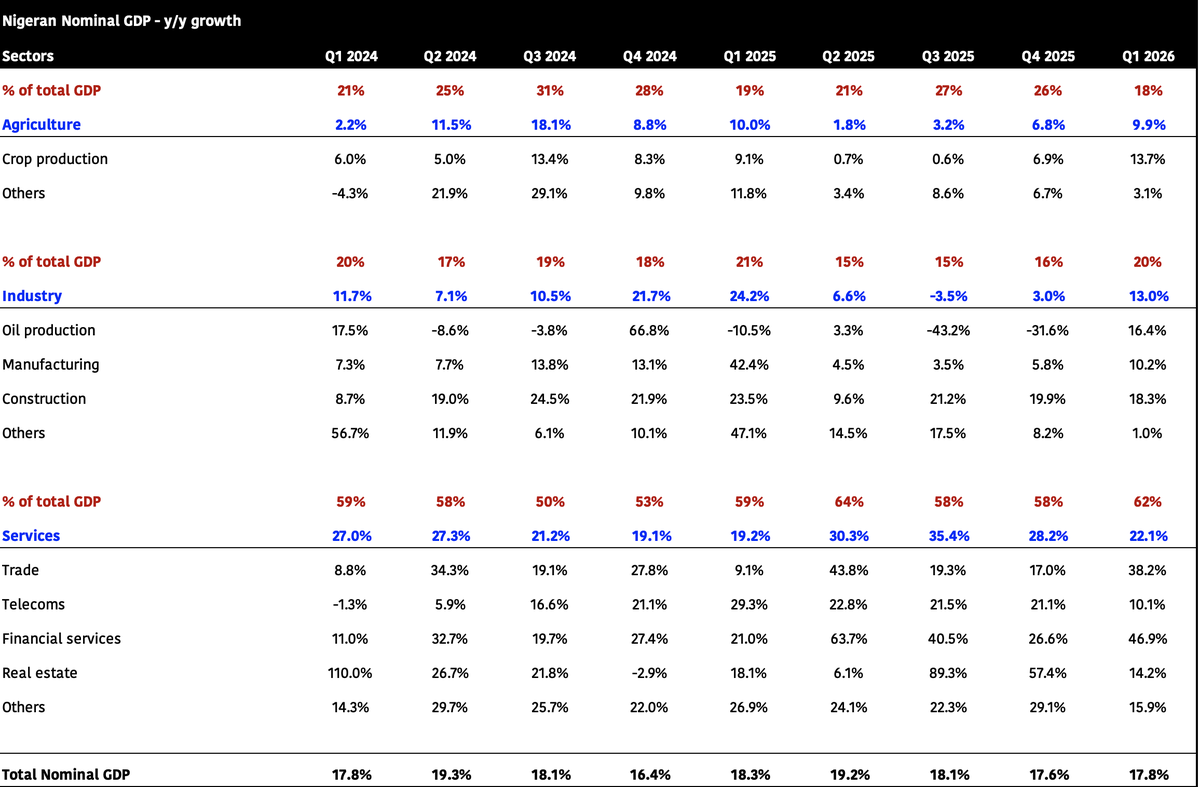
The nominal GDP table reveals something interesting about the Services sector. Companies in that sector typically have stronger pricing power. They can reprice more quickly.
Banks can reprice loans. Telecoms can monetise data consumption, real estate can reset rents, and traders can, at least partly, pass costs through.
Manufacturers, on the other hand, face a harder context. They deal with imported input, energy costs, weak consumer wallets, logistics costs, and still struggle to pass the full cost to customers without destroying volume.
Nigeria cannot sustainably reduce poverty if manufacturing is growing only 1% to 3% in real terms. That is too weak for a country with Nigeria’s population growth and unemployment problems.
Real GDP growth is about volume growth. No rational entrepreneur risks capital on 1%-3% volume growth.