DAIDAC is @CJIDAfrica’s digital research hub. We are at the forefront of navigating the complex interplay between technology, AI and information systems.
AI, algorithms and digital systems are reshaping Africa, but who is asking what all of this means for Africa?
At DAIDAC, we examine the technologies, systems and information environments shaping Africa’s digital future, and the policies needed to navigate them.
#FollowDAIDAC
Join DAIDAC for a conversation drawing on findings from our latest research to examine the challenges shaping Nigeria’s political information environment and the responses needed.
Register to join the conversation: https://t.co/JBSzf3sH0S
#DAIDAC#electioninnigeria#TrendingNow
Nigerians rely on information to understand political issues, assess public officials and make decisions, but access to political information does not always mean access to credible information.
Download and read more findings from the full report: https://t.co/SAaIh05KuH
82.8% of respondents in DAIDAC’s research acknowledged having unknowingly shared false information at least occasionally.
False information is not always shared by people who know it is false.
Explore more findings: https://t.co/SAaIh05cF9
#DAIDAC#PoliticalMisInformation
It has been seven days since Daniel Ojukwu was remanded in prison custody. His continued detention further hightlights concerns about press freedom, the safety of journalists and the environment in which independent journalism is practised in Nigeria.
As part of the @EUinNigeria funded Countering Disinformation and Empowering Democracy in Northwestern Nigeria project, CJID’s OSINT fellows uncovered how synthetic images and videos fuel misinformation and public fear.
Read more findings like this via: https://t.co/lGrp0VwMET📌
In 2024, Daniel Ojukwu spent 10 days in detention for investigating how N147 million meant for classrooms was paid to a restaurant. Two years later, he is back in prison over the same reporting.
What does information disorder mean for political decision-making in Nigeria?
The information people encounter shapes how they understand public issues, assess political actors and form opinions.
1/3
DAIDAC’s latest research examines these dynamics through survey responses from 501 people, exploring exposure to false information, trust in information sources and the implications for public judgement and democracy.
2/3
Social media is where many people turn to for political developments, follow public debates and form opinions, but how much do they trust the information they find there? And what does this gap mean for political decision-making in Nigeria?
Download here: https://t.co/SAaIh05KuH
How does information disorder shape political decision-making in Nigeria?
This research examines Nigerians’ experiences with misinformation, disinformation and malinformation, and the implications for public trust and democratic participation.
Download: https://t.co/SAaIh05KuH
How much of what shapes your political opinion is based on information you have actually verified?
We researched how information disorder intersects with political decision-making in Nigeria and the wider implications for democratic participation.
Read: https://t.co/SAaIh05KuH
Why are more people in West Africa starting to see military rule as a solution?
Across digital platforms, military leaders are being portrayed as heroes, with influencers and AI-generated content helping push that image.
Our latest analysis examines evidence of coordinated influence efforts, including the use of local influencers to promote pro-military narratives in Nigeria and AI-generated content glorifying military leaders such as Burkina Faso’s Ibrahim Traoré.
You can build a global audience, attract hundreds of thousands of views and still have fewer opportunities to earn from that reach because of where you live.
The digital economy creates opportunities, but who gets to benefit from them?
Read here: https://t.co/6FdPEpJXvF
With 2027 approaching, Nigeria must strengthen its capacity to detect, verify and respond to AI-driven election disinformation.
DAIDAC examines the risks and what must be done before the polls. Read the full analysis: https://t.co/qDV1zdCyVA
#TrendingNow#NigeriaDecides2027
Is Nigeria prepared for the 2027 elections?
AI-generated audio, images and videos are making it harder to distinguish authentic evidence from fabricated content. And as deepfakes become more common, politicians can also dismiss genuine evidence as fake.
Are journalists, fact-checkers, INEC and digital platforms equipped to verify disputed content quickly, independently and credibly before it influences electoral decisions?
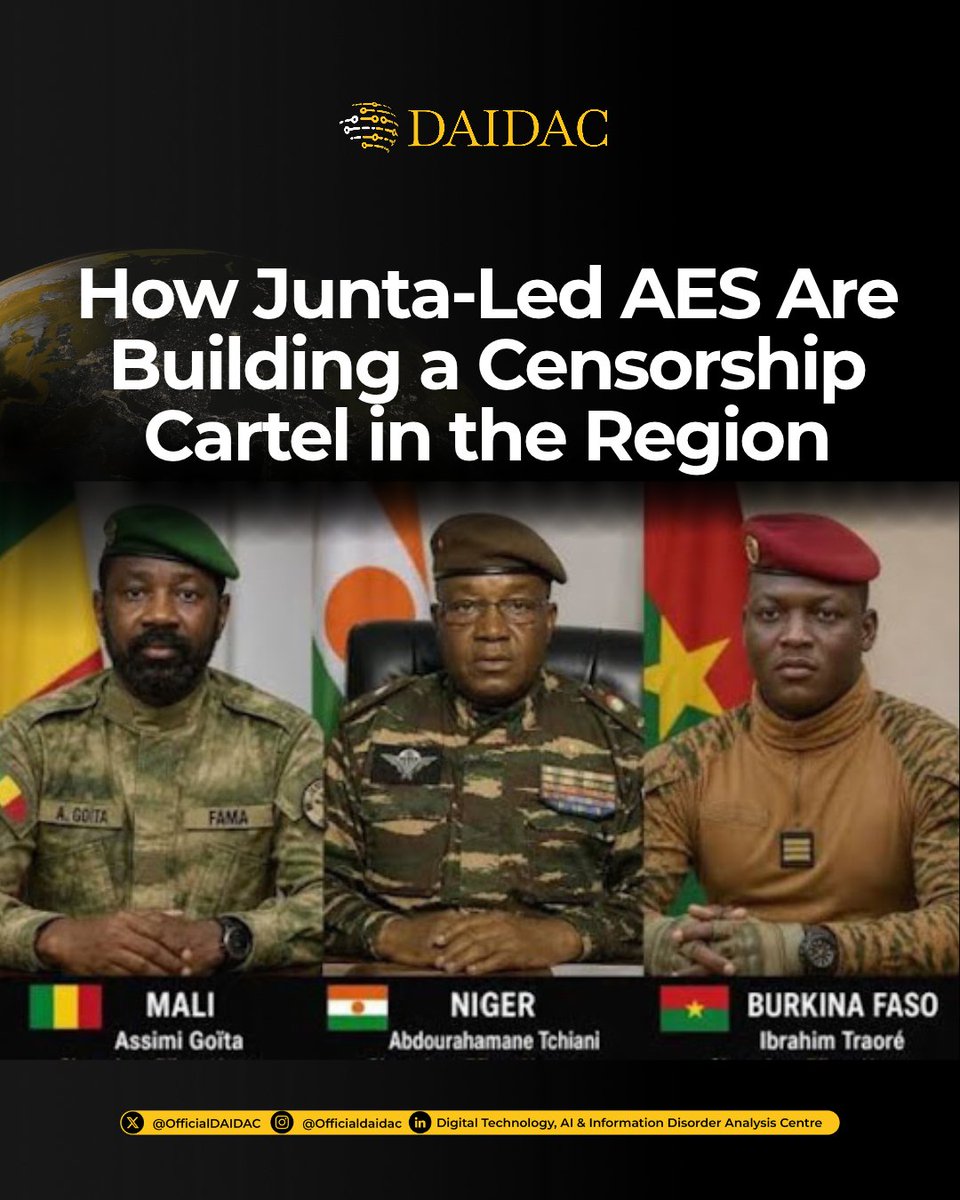
In Mali, Burkina Faso and Niger, DAIDAC’s investigation traces how military-led governments are reshaping the information environment through restrictive laws, media suspensions, pressure on journalists and cross-border regulatory action.
Here’s what the investigation found👇
The concern is not only the suppression of independent reporting. It is also the expansion of an information environment where regime-aligned narratives gain ground while critical voices face growing risks.
8/9