Founder @VortyXAgency
Here to accelerate entropy • Fighting regulatory capture one tweet at a time • Full Self-Driving truther• Sustainable future or bust🚀
Grok Summary of Elon Musk's Fireside Chat at JPMorgan HQ today.
Elon on why SpaceX Is Going Public Now
SpaceX has been cash-flow positive and self-funding since around 2014–2015. Past private rounds were mainly liquidity events for employees and early investors (everyone at the company gets stock), not capital raises.
The shift now is driven by an enormous upcoming capital expenditure phase:
•Deploying over 100,000 next-generation Starlink satellites
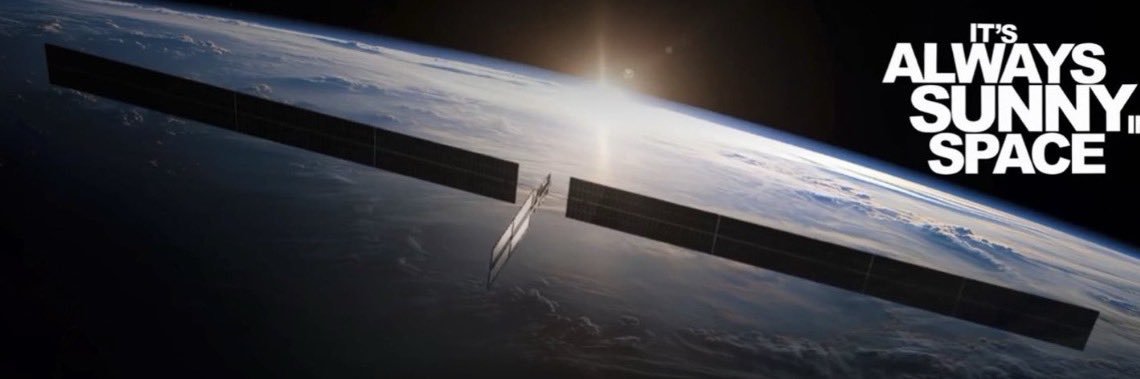
•Building large-scale AI data centers in orbit
This is no longer a survival story — it’s a massive growth/infrastructure build-out story.
Starship: The Game-Changer for Space Access
The core breakthrough is full reusability — something no previous orbital rocket has achieved.
•Once fully reusable, the cost to orbit drops to roughly just the cost of propellant.
•Starship uses liquid oxygen + liquid methane (the cheapest possible propellant, cheaper than jet fuel).
•Result: Cargo to space could cost less than flying cargo across an ocean on an airplane.
Future versions target even bigger leaps: Starship V3 aims for ~100 tons to orbit with full reusability; V4 targets over 200 tons per launch and potentially hourly launch cadence.
Starlink V3: A Massive Connectivity Leap
The next-generation satellites are dramatically more capable (10–20× vs. current versions):
•Custom SpaceX chips “far beyond state of the art”
•~100× more bandwidth than today’s system
•Roughly half the latency (lower altitude orbits)
•Much larger satellites (roughly the size of a small bus — only Starship can launch them efficiently, with capacity for ~50 at a time)
These could eventually help reduce reliance on vulnerable undersea cables.
Orbital AI Data Centers & “Star Power”
AI and robots will require enormous bandwidth compared to humans (a computer can need trillions of bits per second vs. a few hundred for a person).
Space solves two big terrestrial problems:
•Power: Building power plants on Earth faces heavy local opposition. In space, solar power (“star power”) can scale massively — Elon noted humanity could increase its energy use by a factor of a million and still use only a tiny fraction of the Sun’s output.
•Data centers: Orbital versions are simpler than comms satellites (mainly solar panels + radiators). They connect via lasers to the Starlink constellation, then use cloud-penetrating radio frequencies to reach the ground reliably in any weather.
Moon First, Then Mars
Elon argued a self-sustaining city could be built on the Moon faster than on Mars initially. The Moon’s lack of atmosphere and low gravity enables electromagnetic railguns/mass drivers to launch massive AI compute payloads into deep space without traditional rockets.
Potential scale from the Moon: well over 1,000 terawatts per year of AI compute (vs. roughly 1 TW/year feasible from Earth launches).
Mars remains the long-term prize — described as a “fixer-upper” planet that could one day be terraformed with liquid oceans and breathable conditions.
Not Hotels — Foundational Infrastructure
SpaceX sees itself more like the historic Union Pacific railroad than a space tourism or hospitality company. The goal is to build the underlying infrastructure so others can build the future economy on top of it.
U.S. Tech Independence & Terafab
A major vulnerability: America currently has zero high-volume computer memory fabs. New facilities (e.g., Micron in Idaho) won’t reach meaningful volume until 2028+. Existing and planned capacity falls far short of AI-driven demand.
This is why SpaceX is advancing its own advanced chip efforts (logic, memory, packaging) — referred to as Terafab in context.
The orbital platform will be open: customers can deploy NVIDIA GPUs, Google TPUs, Amazon Trainium, or others. SpaceX also plans to offer its own chips and AI software on the platform.
Starshield & National Security
SpaceX’s Starshield division provides secure military communications and supports U.S. Department of Defense and intelligence needs (some details are classified). Elon emphasized being strongly pro-American and viewing this work as vital.
Leadership & Culture Insights
•Long-tenured leadership (e.g., Gwynne Shotwell ~24 years since 2002; CFO Brent Johnson ~15 years) because people deeply believe in the mission of making humanity multi-planetary and turning science fiction into reality.
•On hiring and leadership: Raw intelligence/IQ matters, but character and “having a good heart” matter enormously too.
•Personal note from Elon: He’s become noticeably more “chill” and laid-back than 20 years ago.
Overall Tone
The conversation was visionary, optimistic, and grounded in technical reality. Jamie Dimon was highly engaged and positive, framing it as a landmark opportunity at the intersection of finance and frontier innovation. The event blended big-picture inspiration (multi-planetary future, star power, AI infrastructure) with concrete engineering and business milestones.
@elonmusk Your career and businesses are amazing. A real model of perseverance for succeeding. I mean the last meters are always the most difficult. You know how to master them. And this is precisely what is so precious.
Elon Musk on America’s critical chip shortage:
“What’s the limiting factor? We see the limiting factor as being able to make chips - both logic, memory, and packaging
There is not a single high-volume computer memory fab in America right now. Zero
Micron is building one in Idaho, but it won’t reach volume production until 2028
Others in New York are targeting 2029–2030
Even under the best-case assumptions, it’s not enough to meet the demand that AI will require
That’s why we need to build the TerraFab.
Otherwise, there simply won’t be enough chips”
"I'm incredibly pro-American, and I always have been. SpaceX does do a lot of work for the Department of War. We have a division called Starshield, which provides military communications. We're helping the Department of War and intel part of the government, we're a vital element of that."
— @elonmusk
Elon saying he’s more chill and laid-back now, while still carrying the full weight of multiple world-changing companies, reveals something important about sustainable leadership.
The pressure and responsibility haven’t gone away — he’s simply learned to hold them with steadier hands and clearer perspective.
That shift doesn’t slow the mission down. It actually makes the long game possible. The people who keep pushing humanity forward for decades are usually the ones who’ve figured out how to carry the load without being crushed by it.
Il y a une chose que peu de gens ont compris, et qui sera pourtant évidente dans dix ans.
Nous ne vivons pas une crise. Nous vivons une bascule. Et tout ce qui ressemble aujourd'hui au chaos n'est que le bruit d'un vieux monde qui refuse de mourir pendant qu'un nouveau se met en marche.
Le premier verrou qui saute, c'est le mental. Pendant soixante ans, l'Occident a été infecté par un virus qui lui faisait haïr sa propre réussite. La honte de bâtir, la suspicion de l'excellence, la sacralisation de la plainte. Elon a fait ce que personne n'osait faire, il a nommé le virus à voix haute et il a refusé de s'y soumettre. Quand un seul homme montre que l'on peut bâtir sans demander la permission, des millions comprennent qu'ils le peuvent aussi. Le sortilège se brise toujours par l'exemple, jamais par le décret.
Le deuxième verrou, c'est la géographie de l'audace. L'Occident n'a pas perdu sa place parce qu'il était devenu faible, il l'a perdue parce qu'il avait décidé d'avoir peur. Peur du risque, peur du nucléaire, peur de la croissance, peur de lui-même. Or la frontière revient là où l'on ose à nouveau. Les fusées repartent, les usines reviennent, l'énergie redevient un projet plutôt qu'une culpabilité. L'Occident ne reprend pas son trône par nostalgie, il le reprend parce qu'il recommence à construire pendant que les autres administrent.
Le troisième verrou, c'est la rareté elle-même. L'intelligence devient abondante, le travail devient abondant, l'énergie devient abondante. Le gâteau cesse d'être fixe, et le jour où le gâteau cesse d'être fixe, toute la logique du ressentiment s'effondre d'un coup. On ne se bat pas pour partager l'infini. La réussite de l'autre cesse d'être ma perte. L'abondance est l'antidote chimique à la haine.
Et c'est là qu'arrive la plus belle partie, celle dont on ose à peine parler.
Une fois la survie résolue, la vie redevient un jeu. Pas un jeu futile, le plus sérieux des jeux. Un monde où chacun n'a plus à se demander comment survivre, mais quelle est sa place, sa quête, sa contribution à quelque chose de plus grand que lui. Certains bâtiront des villes pensées comme des œuvres, d'autres feront avancer la science comme une aventure, d'autres dessineront, soigneront, exploreront. Et au sommet, une seule grande quête commune, la seule à la hauteur de l'espèce, ouvrir le cosmos.
Des hôtels sur la Lune, des vaisseaux vers Mars, des sphères de Dyson, des étoiles colonisées. Ce n'est pas de la science-fiction, c'est le prochain objectif de niveau. La Terre n'était que le tutoriel.
Le vrai conflit du siècle ne sera plus le riche contre le pauvre. Ce sera le gardien contre l'explorateur. Ceux qui veulent un petit monde qu'ils contrôlent, et ceux qui veulent un monde immense qui les dépasse.
Je sais de quel côté je me tiens.
L'avenir est radieux. Il est temps de jouer pour de vrai, et il est temps de construire.
Interesting presentation to see how Starlink has been successful in revenue and ebitda . This will allow SpaceX to develop the best possible and efficient space technology in the future and AI business is the breakthrough to go higher ! Still a lot to do but nice move, Elon ! Let’s go SpaceX 🚀⚡️👀
The strategy of Space X has been indeed to allow the commercial business, affordable.
Design to cost for the clients first 🙌 sounds a good choice, a long term approach - very rare in nowadays business.
Investment for the future, it’s exponential with Elon, for the pleasure to see the technology wins 😍. So good 😅.
SpaceX’s literally destroyed the cost to orbit so much even you can afford the ticket to ride on it in the future
- For decades, launch cost to low Earth orbit was roughly $18,500 per kg
- Falcon 9 brought that down to around $2,700 per kg
- Falcon Heavy pushed it closer to $1,400 per kg
➝ Now Starship is targeting a 99%+ cost reduction
When the cost of reaching orbit falls by orders of magnitude, space stops being a rare government program and starts becoming industrial infrastructure
Starlink, orbital manufacturing, lunar cargo, AI compute, and Mars all depend on one thing:
getting cost to orbit as close to zero as possible
That is why Starship matters so much....It is not just a bigger rocket
It is the cost reset that opens the next economic frontier
Interesting presentation to see how Starlink has been successful in revenue and ebitda . This will allow SpaceX to develop the best possible and efficient space technology in the future and AI business is the breakthrough to go higher ! Still a lot to do but nice move, Elon ! Let’s go SpaceX 🚀⚡️👀
Nice program tonight : the General Relativity and all on the 1919 eclipse that allows Einstein to confirm his theory and ahead of the August eclipse.
- Albert Einstein’s theory of gravity, published in 1915. It describes gravity not as a force between masses (as in Newton’s law), but as the curvature of spacetime caused by mass and energy.