1. Is your father present in your life? 2. How does your mother treat your retired father?
3. You date fraud boy before?
4. What is "bare minimum" to you?
5. Do you seek validation from retweets and likes?
6. How much do you mind your business on a scale of 1 - 10?
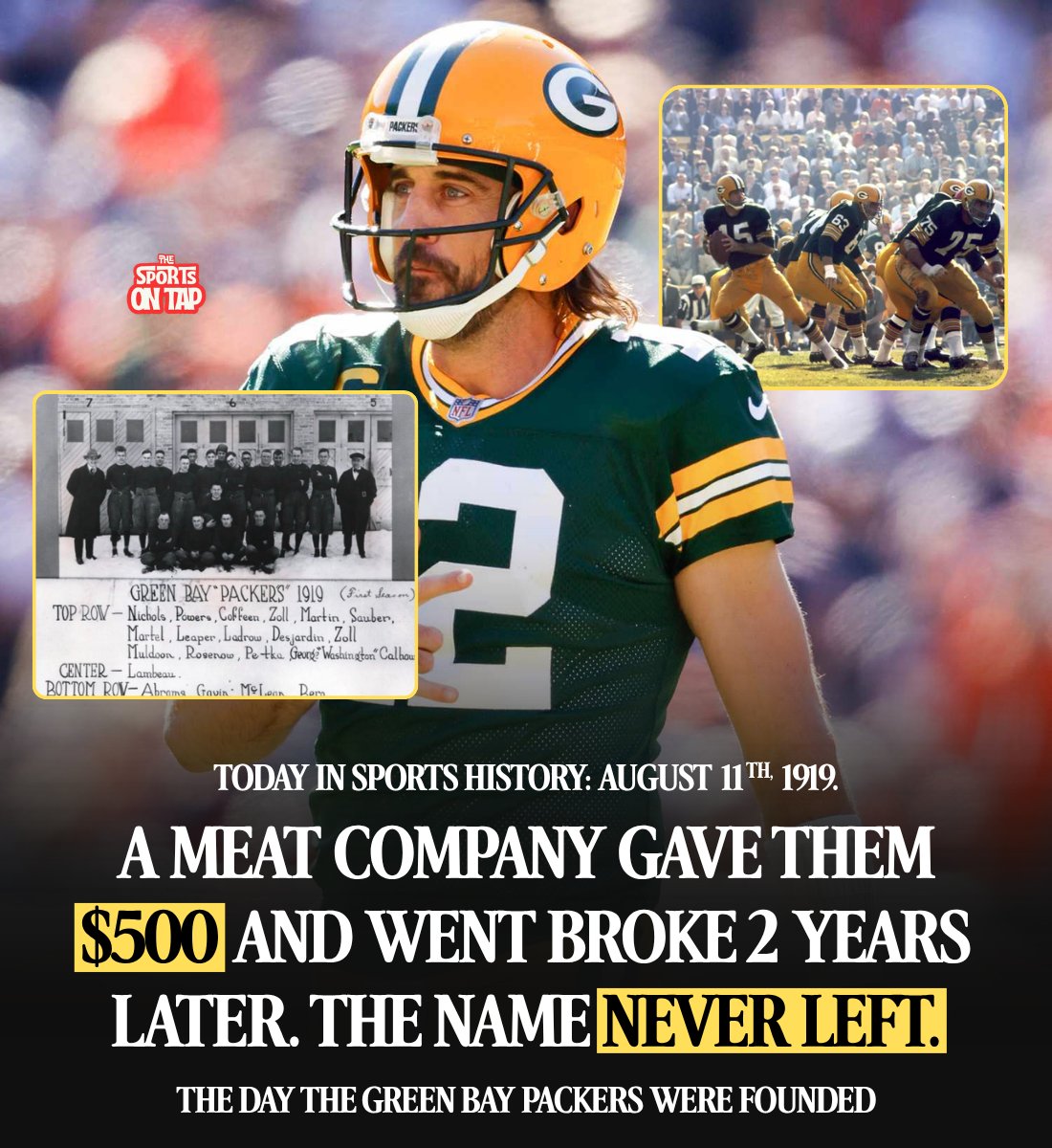
TODAY IN SPORTS HISTORY: 107 years ago today, a 21 year old shipping clerk talked his boss into giving him $500 for football uniforms.
That meat company went out of business two years later.
Its name is still on the field every Sunday.
August 11, 1919. Green Bay, Wisconsin. Population around 15,000.
A group of local athletes crowd into the editorial room of the Green Bay Press-Gazette. Most of them are former high school players from Green Bay East and West.
Two men called the meeting.
Earl "Curly" Lambeau was 21. He'd been a standout at Green Bay East, then went to Notre Dame and made Knute Rockne's varsity team as a freshman, before a brutal case of tonsillitis ended it and sent him home.
He needed a job, so he took one as a shipping clerk at the Indian Packing Company, a canned meat outfit.
But he still wanted to play football.
The other man was George Whitney Calhoun, the city editor at the Press-Gazette. A newspaperman who could put anything he wanted in front of the entire town.
They'd been talking about it all summer. Calhoun started running ads in his own paper inviting players to show up.
Then Lambeau went to his boss and asked for money.
The Indian Packing Company gave him $500 for uniforms and equipment, plus use of the company athletic field. There was one condition.
The team had to carry the company's name.
Two days later, the Press-Gazette referred to them in print as the Packers for the first time.
That's it. That's the whole origin. A canned meat sponsorship agreement.
They played home games at Hagemeister Park, which had no real seating. Fans stood along the sidelines and passed a hat around to pay the players.
They went 10-1 that first season.
In 1921 they joined the league that would become the NFL. They immediately went broke and forfeited the franchise, and Lambeau had to scramble to find new backers to get it back.
Meanwhile the Indian Packing Company was already gone. Sold to Acme Packing, and out of existence by 1921.
The sponsor lasted about two years. The name has lasted 107.
And the rest of it is the most improbable story in American sports.
Green Bay is the smallest market in the entire NFL, by an enormous margin, in a league where every other small market team folded or moved decades ago. The Duluth Eskimos. The Pottsville Maroons. The Canton Bulldogs. All gone.
The Packers survived because in 1923 they did something no other team has ever done. They sold shares to the public and became a community owned, non profit corporation.
No billionaire owner. No threat to relocate. The fans literally own the team.
That's why they're still there.
Thirteen NFL championships, more than any franchise in history. Four Super Bowls. Curly Lambeau won six titles as coach before he resigned in 1949, and the stadium carries his name. Vince Lombardi won five in seven years, and the Super Bowl trophy carries his.
Don Hutson. Bart Starr. Reggie White. Brett Favre. Aaron Rodgers.
All of it traces back to a 21 year old with tonsillitis asking a meatpacking plant for uniform money on this day in 1919.
The oldest team name still in use in the NFL belongs to a company that has not existed since Woodrow Wilson was president.
For more stories like this, follow us on any platform @thesportsontap
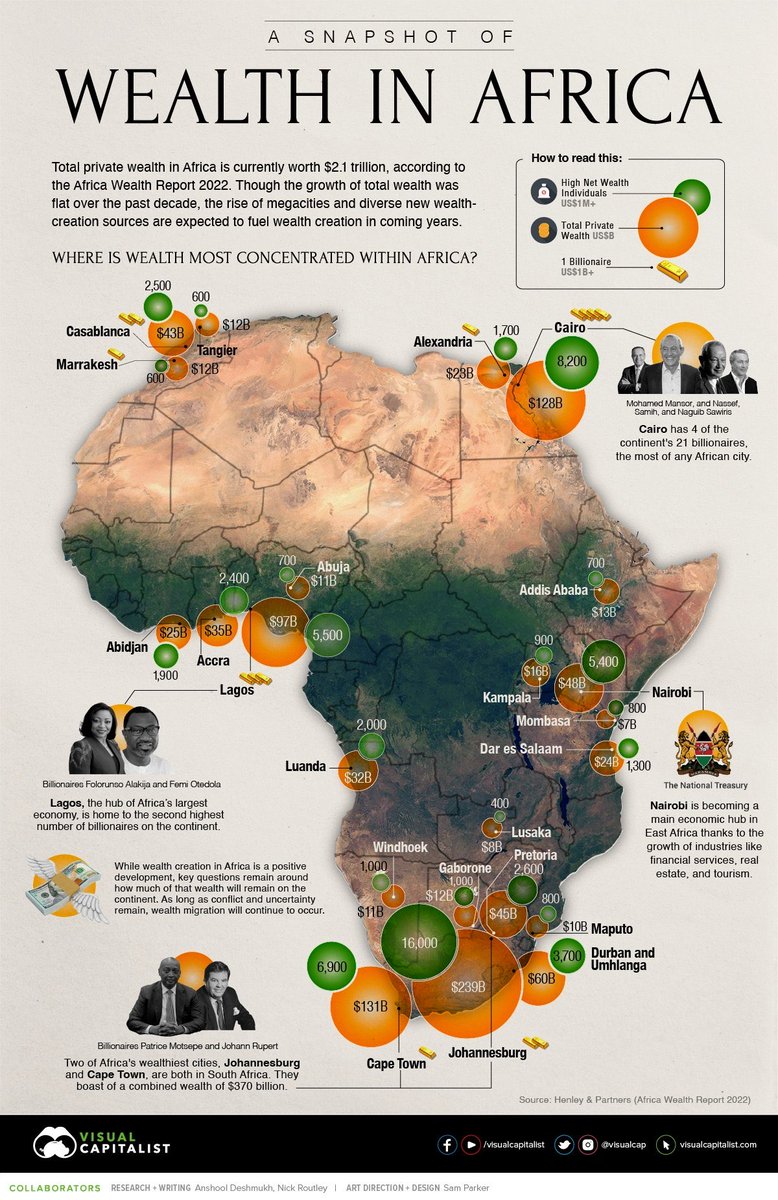
I was talking with my wife yesterday morning about family and legacy and how things can go completely wrong when you don't think big enough. I was looking at that massive house the Nigerian rich guy built in the 70s and wondering what would have happened if he lived simpler and invested that money in other assets. The thing is, we will never know. He lived his best life and was happy.
In the 80s, a relative spent $900m to build a wood-processing factory in Benin City, largely funded by cash generated from their wood-export business—with very little financing. I don't think that factory is functional today. I only learned yesterday for the first time that he had passed away. His first son left the family business early and broke out on his own. He never really made as much money as his father did. His father was the biggest Edo timber baron.
I still remember visiting them every Christmas with my Dad, and I recall the hold the man had on local politics and the lumber and rubber industry. All of that is gone now; he and my dad have both passed away. Just like wealth, influence is ephemeral.
They made the right move to start processing locally for export after exporting raw lumber and rubber for a while, but things didn't eventually pan out. One particular mistake I think they made was not investing enough in the talent pipeline and depending solely on outsiders. The factory had a lot of technical issues, and their boiler for the wood dryer blew up once.
When it came to capital, they also didn't invest enough in other industries like banking, which was ramping up in Nigeria in the 90s to hedge their bets. Many rich people invested in the young bankers, and it paid off.
Also, unlike Chief Ibru and others, they didn't invest in other countries and in other currencies to hedge against currency risks. In their Benin home in the 90s, my cousins used to boast that they had a “safe of last resort” that held the cash equivalent in Naira of $20 million at the time. If all else failed, the family had that cash to build up from.
Banks were failing in Nigeria at the time, so I understood that ultimately flawed logic. The man was not literate, so he made those kinds of blunders. His son, however, had a PhD, but he left to run his own business.
In contrast to my relatives, when Oceanic Bank was being set up. Chief Ibru wired only a million pounds in to pay for the license. He had diversified wisely. His wife and kids eventually ran the bank, but it is now defunct. So, maybe they both still suffered the same fate.
All of this happened to very wealthy Nigerian families that I know very well within my lifetime. Did I learn lessons from them? I don't know yet. I have been reviewing all I have done in the last two decades, and I don't have $20m cash in a safe and can't yet wire £1m to start a bank.
Chief Ibru told me point blank what to do over 20 years ago. If I had invested in fisheries, as he advised and as the late Emmanuel Ijewere corroborated, would my life have been different? Maybe. Instead, I didn't listen, and I invested in tech startups.
Those startups have created wealth on paper but largely unrealized. One thing is for sure: even when they are realized, I won't be overinvesting in the same asset class again. I don't want to make the mistake of having $20m cash in a safe. This is exactly what digital assets were for me with FTX. I was wiped out. Startup investments aren't that different from crypto or stocks, and they are riskier.
If I survive it all this time around, I will listen to Chief Ibru and sell fish, but maybe in a different “asset-light " way. It is important to read the signs. Learn from the good and avoid the bad. Always be learning.
Funniest thing in physics history is that the Royal Society couldn't afford to publish Newton's Principia because they had just blown their entire budget on a massive, highly detailed encyclopedia called De Historia Piscium (The History of Fishes).
The fish book was a catastrophic commercial flop. The Society was left so completely broke they couldn't bankroll the foundational text of classical mechanics. It gets worse: they couldn't even make payroll for their clerk, Edmond Halley (of Halley's Comet fame). Instead of a salary, they literally paid him in unsold copies of the fish book.
Halley, however, had enough scientific intuition to recognize what Newton was building. He believed in the work so much that he personally bankrolled the Principia out of his own pocket.
It is wild to think about. The rigorous, mathematically formalized thought experiments that completely re-engineered our understanding of the physical world, and permanently altered the trajectory of human civilization -- were almost entirely derailed by a bad institutional bet on fish anatomy.
> be Travis Kalanick
> co-found Uber, build it into a global giant
> get pushed out as CEO in 2017 after a wave of scandals
> vanish from public view for 8 years
> quietly build CloudKitchens into a multi-billion dollar ghost-kitchen empire the whole time
> resurface in 2026 with a new company: Atoms, robotics across food, mining, transportation
> raise $1.7B led by a16z
> take a check from Uber itself, the company that pushed you out
> acquire Pronto, a mining-autonomy startup run by Anthony Levandowski
> the same Levandowski convicted of stealing Waymo's self-driving trade secrets, later pardoned by Trump
> the same theft that cost Uber $245M in the Waymo settlement
> reunite your old Uber CFO and half your old leadership around you
> say you want to out-ship Waymo itself
the two names most associated with Uber's downfall in 2017 are now building an autonomous vehicle company together. silicon valley really doesn't believe in endings. it does sequels.
Ask 100 builders which model they run every day. You'll hear Fable 5. You'll hear GPT-5.6 Sol. You won't hear Gemini.
That's why Jeff Dean and Demis Hassabis were necessary changes. Sundar is making the right move, and expect more until Google rights the ship.
Count the flagship releases since November. OpenAI shipped 5.2, 5.4, 5.5, and 5.6. Anthropic shipped Opus 4.6, 4.7, and Fable 5. Google shipped Gemini 3 and the 3.1 point release. Gemini 4 was promised for June. It's August. In this market a nine month gap is a generation.
The money already voted. Anthropic's run rate passed $70B, up from $9B in December. Menlo Ventures has Claude at 40% of enterprise LLM spend, OpenAI at 27%, and Google at 21%. Google won't even disclose a Gemini revenue number. Companies disclose good numbers.
Usage is moving the same direction. ChatGPT holds 900M weekly actives. Claude jumped from 4% to 13% of US mobile AI daily actives in two months. Gemini's 950M monthly users mostly arrive through default placement in Search and Android, and defaults don't survive a better model. Both rivals poached star Google researchers this summer. Alphabet fell 4% on its own reorg news. The market graded the org chart.
Now read the reorg. Demis moves up to chairman. Koray runs DeepMind as an SVP reporting straight to Sundar, no CEO title. Jeff Dean leaves after 27 years with Sanjay Ghemawat, Oriol Vinyals, and Quoc Le. MapReduce, AlphaStar, and seq2seq, gone in one press release.
DeepMind spent 12 years protected as a research lab. That ended yesterday. Sundar just made the model his direct report.
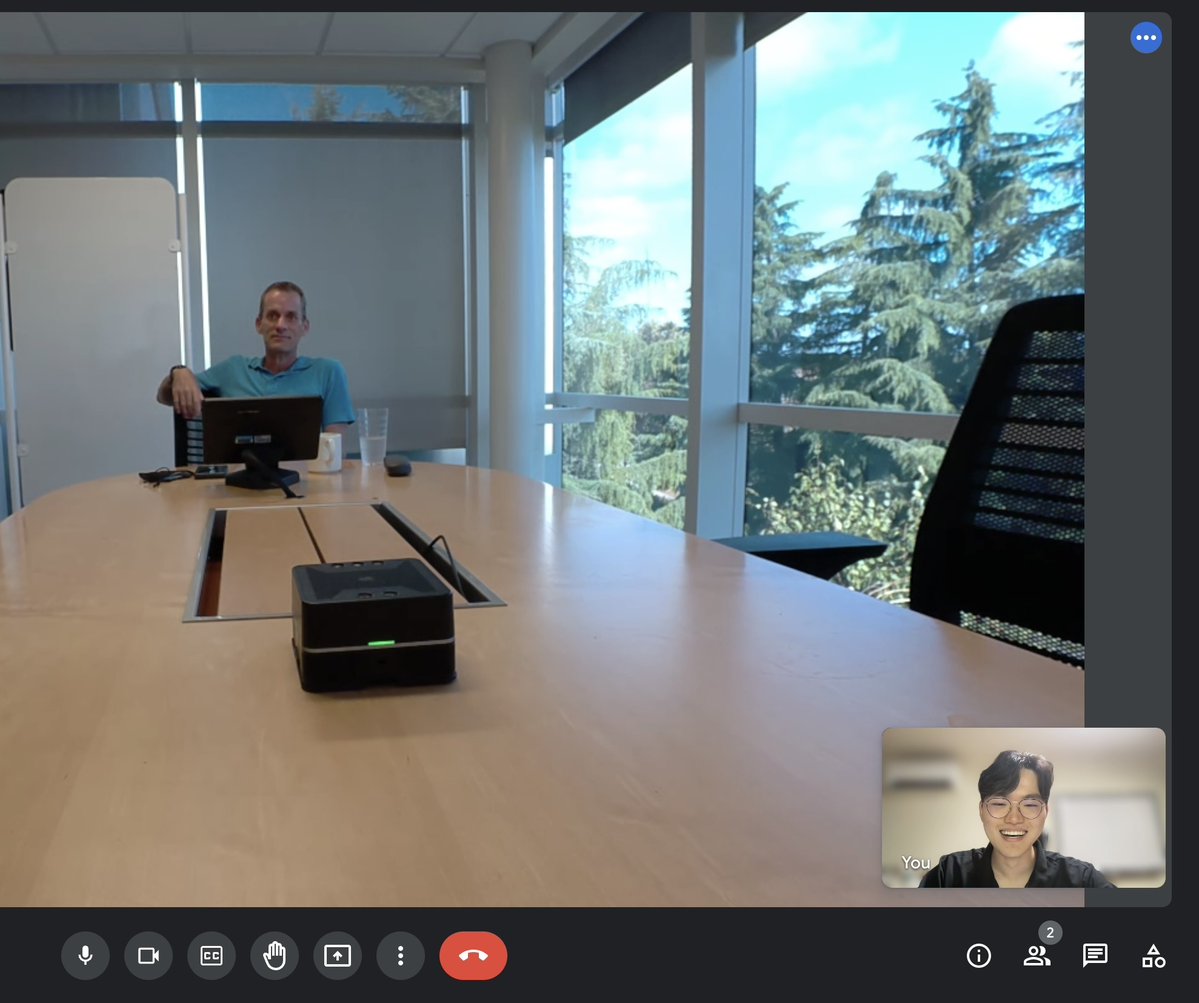
In 2022, as a Google intern, I sent a random calendar invite to Jeff Dean.
He accepted.
His calendar was accessible even to interns, so I figured I had nothing to lose.
The next day, I sent this photo to my team. Everyone was shocked.
It’s hard to imagine Google without Jeff. He’s been one of my biggest inspirations.
Thank you for everything, Jeff.
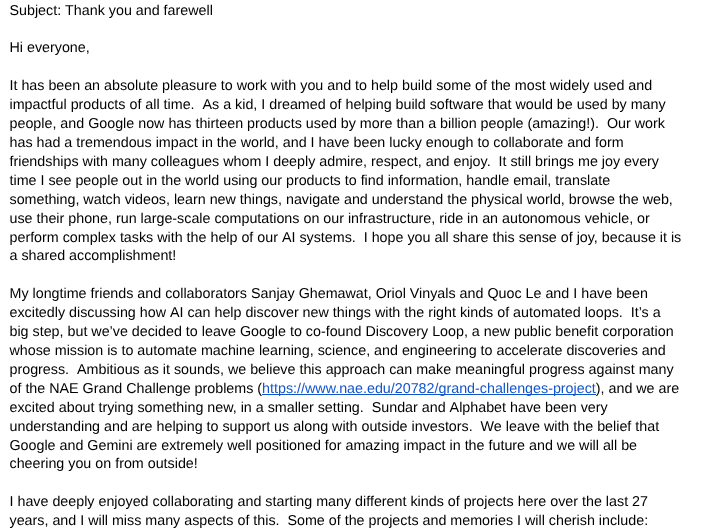
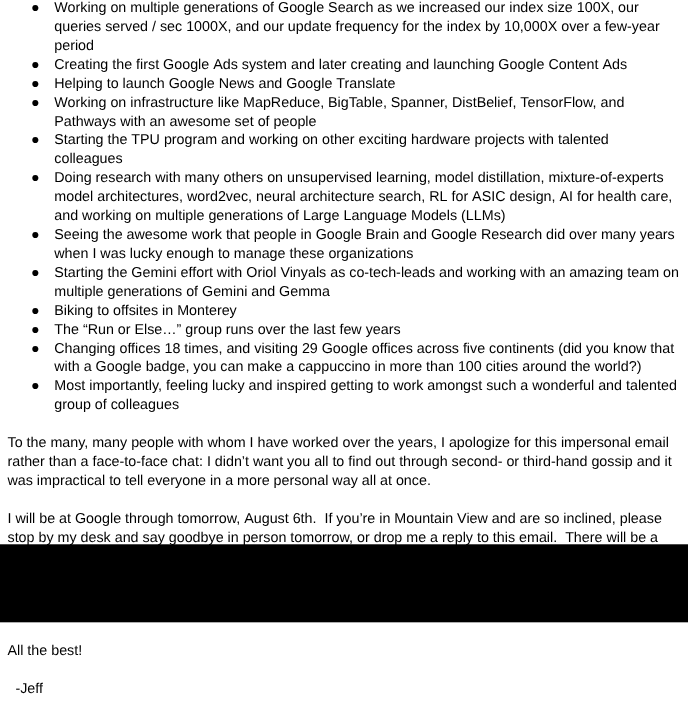
Tomorrow will be my last day at Google after 27 years, and watching it grow from 25 people to 190,000+ has been an amazing journey. Below is a note I shared with many people internally at Google today. An excerpt is:
It has been an absolute pleasure to work with you and to help build some of the most widely used and impactful products of all time. As a kid, I dreamed of helping build software that would be used by many people, and Google now has thirteen products used by more than a billion people (amazing!). Our work has had a tremendous impact in the world, and I have been lucky enough to collaborate and form friendships with many colleagues that I deeply admire, respect, and enjoy. It still brings me joy every time I see people out in the world using our products to find information, handle email, translate documents, watch videos, learn new things, navigate and understand the physical world, browse the web, use their phone, run large-scale computations on our infrastructure, ride in an autonomous vehicle, or perform complex tasks with the help of our AI systems. I hope you all share this sense of joy, because it is a shared accomplishment! Thank you to all of my colleagues at Google over many years!
Now I'm excited to go start @DiscoLoopAI with my longtime friends and colleagues @Sanjay_Ghemawat, @OriolVinyalsML, and @quocleix.
(Updated post: slightly redacted to not have some personal info)
A hedge fund returned 50% a year for ten years straight. In 2005 the man who ran it sat on a desk at Columbia and taught the entire method to 30 students for free. No bank, no fund, no business school has ever promoted the recording.
His name is Joel Greenblatt. He ran Gotham Capital from 1985 to 1994. Almost nobody sustains 50% annually for a single year. He did it for ten. Then in 1995 he returned all outside capital, kept running his own money, and walked into a classroom.
The first lecture is about corners of the market where the usual buyers are structurally forced to sell regardless of price. Spinoffs, restructurings, situations where an index fund must dump a stock the day it leaves the index. He does not teach a screener or a formula. He teaches why these corners exist at all, and why they keep existing after everybody knows about them.
The uncomfortable part is what he says about diversification. He held very few positions. It runs directly against everything the business school teaches two floors down. Columbia charges $80K a year in tuition. The man upstairs gave away the method for free.
Every screener is free now. Every filing is searchable. The constraint was never information. It was knowing which information to ignore.
Filmed from the back row, audio uneven, students blocking the frame. He gave away 50% a year to a room of 30 people. Almost nobody traded on it.
One classroom. One camera. The full lecture is free. It is in the video.
Matt Damon says he and Ben Affleck sold the “Good Will Hunting” screenplay for $600K, thought they were set for life, and needed another job just a year later
Matt Damon: “When we sold Good Will Hunting, when we sold the screenplay, we thought that was absolutely it.”
“We were like broke a year later.”
“We sold the screenplay for 600 grand.”
“Which was just so much more money than either of us had ever considered.”
“We split it.”
“After taxes and agent, lawyer, and all that stuff… we were down under 150 each.”
“The first thing we did was buy brand new Jeep Grand Cherokees.”
“We were renting this place in L.A.”
“It didn’t take long for us to be like…”
“‘Dude, we gotta get another job.’”
two guys with a bloomberg terminal in a singapore bedroom started a fund in 2006 with under $3 million. it's now $6 billion, has compounded roughly 20% net a year for twenty years, and the ceo says it would be a $20 billion fund today if they hadn't done this one thing.
Suhaimi Zainul-Abidi, on why he gave up an estimated $14 billion:
"funds don't really die because of poor returns. most funds, given the appropriate amount of time, should be able to recover."
"markets go against them, returns drop, and investors run for the doors."
"there are many things a manager controls. you can control your strategy. you can control your terms. the one thing you can't control is redemptions."
"once you've taken in money and set your redemption terms, when that notice comes in, it's an obligation. there's no negotiation."
"no matter how inappropriate it may be, based on your strategy, to sell those assets, you have to do it to raise money."
so in 2018 he soft-closed the liquid share class and forced everyone into fixed terms.
important lesson about capital with conditions is not always worth it.
When I was in University, I had one course mate whom we all knew would never be happy, even though he had more money than us. His problem was not finacial, it was mental.
He was always in competition with who wasn't competing with him, to gain validation from who wasn't giving him validation. When he needed accommodation, he asked for the most expensive on the street. When he wanted to buy a phone, he asked for the latest and most expensive. When he wanted to buy clothes, he wanted the expensive ones. He just wanted to be able to say his was more expensive than yours, and he had a habit of talking down on anything you do to elevate himself.
I think he struggled to do that with me because he wasn't sure of my finances. I wasn't a spendthrift. I wasn't a gadget freak or shopping freak. I was really just a quiet person in school but he knew people said I was a kind and generous person, and believed I came from a well to do family. But he found an opportunity one day when I came back from a family holiday in the USA in Year 3. While my friends were teasing me that I entered the US and came back instead of running away, the werey killed the laughter with "why did you people even go to the US? Dubai is better. Everyone that has money is going to Dubai. US is overrated." If a pin dropped at that moment, you would hear the sound.
The way they changed it for him was funny. At that point, they had had enough. Sometimes, I wonder how he is doing in this social media era where the quest for validation is at an all time high with people flaunting wealth and an exaggerated version of their reality. How many people will he compete with?
A 22-year-old student teacher in Illinois sent a private Snapchat message to her boyfriend and two roommates.
A student had walked up to her laptop and deleted her lesson plan mid-class. frustrated, she typed something like "should I shoot him" with a gun emoji. venting. four people. private group chat.
An hour later, police walked into her school and arrested her.
here's what happened in between.
Snapchat's AI scanned the private message. flagged it as a potential threat. automatically reported it to the FBI. the FBI forwarded it to local law enforcement. deputies arrived at the school within the hour.
she cooperated immediately. handed over her phone. when shown the message she said: "oh yes. okay. yeah. i'm realizing that was a bad joke. i did not mean it at all serious at all."
police determined she was not a threat. school officials determined she was not a threat. prosecutors reviewed and issued a disorderly conduct charge. she was released the next morning. she lost her student teaching placement.
This means:
Snapchat scans private messages.
Not just public posts or stories. private group chats between you and your closest contacts. automated AI. no human reviewed it first, got flagged and reported.
Snapchat AI → FBI → local police → school → arrest.
in under an hour.
Snapchat's privacy policy says it may share your information with law enforcement when it believes there is a risk of harm. the definition of "risk of harm" is determined by an algorithm.
you are not told when a message is flagged.
you are not told when a report is filed.
you find out when the police arrive.
the message was private.
it wasn't.
A man who went to prison for talking people out of their money filmed himself doing it live, then sold the method as a course. 7 million people have watched him work.
The man is Jordan Belfort. The film about him made him famous. What almost nobody has done is watch the real one, on camera, running the actual technique on a real prospect for 22 minutes with no script and no edit.
And the way he does it is the reason to watch.
He barely talks about the product. The first minutes are almost entirely questions, and every answer gets used against the person later in his own words. He is not persuading. He is collecting.
Then the phrase the comments turned into a meme. He ends his key sentences with four words that make agreement feel like the neutral option and refusal feel like rudeness. Once you notice it, you cannot unhear it, and you will catch it in the next call you take.
One viewer broke the whole method into 9 steps in a comment. It got 12 thousand likes, which tells you people are studying this video like a manual.
Here is the uncomfortable part. Every technique in it is ordinary sales advice: listen, mirror, remove friction, set expectations. That is exactly what makes it worth studying. The tools were never the crime. The intent was.
Learn what is being done to you and it stops working on you. That is the only defense there is.
22 minutes. No script. It is in the video.
To ensure Genghis Khan’s burial place remained a secret, more than 2,000 people who attended his funeral were reportedly executed. The executioners were then killed by members of his escort, who are also said to have taken their own lives after completing the mission. Nearly 800 years later, Genghis Khan’s final resting place has never been found.
According to later historical accounts, Genghis Khan requested a modest burial with no grand monument or public tomb. After his death in 1227 during the Mongol campaign against the Western Xia, his body was reportedly returned to his homeland in Mongolia.
Tradition claims extraordinary measures were taken to keep the burial site secret. More than 2,000 people connected to or encountered by the funeral procession were reportedly executed, followed by the executioners and eventually members of the escort, leaving as few witnesses as possible.
Although historians cannot verify every detail of these accounts, Genghis Khan’s tomb has never been conclusively identified despite centuries of searching, making it one of history’s greatest archaeological mysteries.
He couldn’t, because by the time Odysseus returned to Ithaca, the suitors had spent years believing he was dead. They had grown arrogant, controlled his palace, consumed his wealth, and even plotted to murder Telemachus. If Odysseus had simply walked in and declared, “I’m the king. Everyone leave,” many of them likely would have laughed, denied his identity, or attacked him on the spot. He was badly outnumbered, and not everyone in the palace was loyal to him.
That’s why Athena advises him to return in disguise. The disguise allows Odysseus to discover who is still faithful, test Penelope and the servants, confirm which allies he can trust, and catch the suitors completely off guard. Only once he has Eumaeus, Philoetius, and Telemachus on his side and the suitors trapped without their weapons. He then reveals himself. In the Odyssey, reclaiming the throne isn’t just about being the rightful king, it’s about proving it with strength, intelligence, and the favor of the gods.
Had he returned like Agamemnon did, it would have been his doom
Stop comparing Leopold Aschenbrenner to Bill Hwang...
Hwang is the GOAT of degenerates and Leopold is a sheep compared to him
Did you know that Hwang turned $200M to $36B and it was ALL personal capital?
This guy literally led prayer circles in the conference room before trading days started
He had $160B stock exposure on just $36B of capital
His blowup happened in two days and he literally caused the collapse of one of the most prestigious investment banks
Banks lost a total of $10B combined because of his collapse
Leopold is nothing compared to Bill
Christopher Nolan revealed that, throughout his entire career, he has only witnessed a film crew spontaneously applaud an actor’s performance on set twice. The first instance was Heath Ledger’s unforgettable portrayal of the Joker in The Dark Knight. The second came decades later with Samantha Morton’s performance as Circe in The Odyssey.
The Odyssey has made a massive impact at the box office, reportedly earning $300 million worldwide in its opening run and becoming one of the biggest debuts of Christopher Nolan’s career.
When adjusted for inflation, the film represents Nolan’s strongest opening since The Dark Knight Rises. Its success highlights the continued demand for ambitious, large-scale original filmmaking, especially when a legendary story is brought to life on the biggest possible screen.
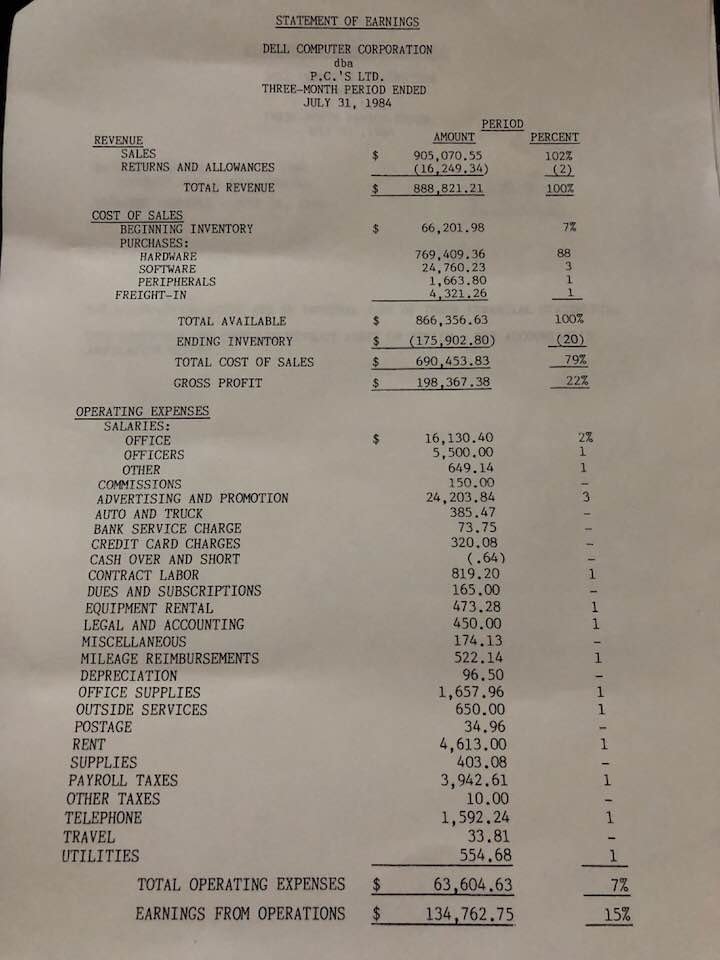
This one page changed my life.
42 years ago today, it convinced my parents I shouldn't go back to college.
I started by upgrading PCs from a dorm room.
Today @Dell is helping build the infrastructure that powers AI, from the edge to some of the world's largest AI factories.
You never know which small decision will change everything.
Keep building🚀🙏 #PlayNiceButWin