On Monday, Montreal city council votes on a motion to cut the city's ties with Israel. I am speaking up because this motion is dangerous for Montreal, and my reason has nothing to do with which side of that war you are on.
My family arrived in Montreal in 1956 as refugees. This city gave us safety, dignity and the chance to build. That promise has drawn generations of immigrants here from every corner of the world.
I am not going to debate a war on the other side of the world, and that is exactly the point. A municipal government has no jurisdiction over foreign policy. Cities do not end wars.
But a motion like this lands right here at home. Jewish Montrealers are less than one percent of this city and the number one target of hate crimes. Those are police statistics, not opinions. Our synagogues and schools have been targeted, and families I know are scared in a way I have never seen.
When city hall singles out one community's connection to a foreign conflict, it brings no peace anywhere. It brings fear here.
Montreal has real emergencies. Housing. Homelessness. Infrastructure. That is the job.
This city has been a safe haven for my family and so many others, and it must remain one for everyone. @SorayaMartinezF showed real leadership in June. Council should reject this motion on Monday.
I’ve written and researched the whole seven front war since 7th October. It has been my whole professional life. I’ve written many papers and have just finished my book. I have written both positive and negative critiques of the war.
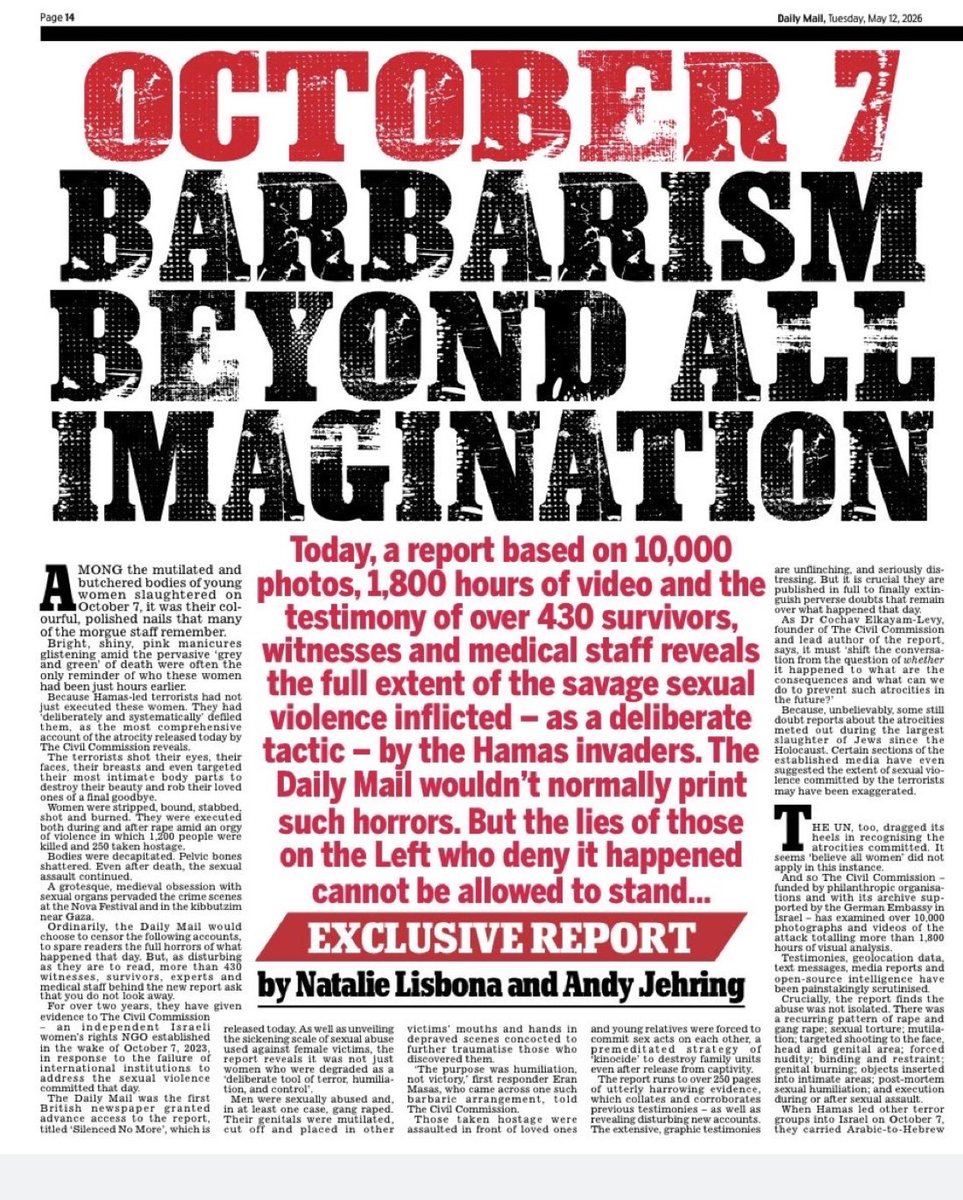
All of that feels irrelevant in this context. The most meaningful thing I have done since 7th October is bear witness and relay the horrors done that day. I have seen part of the sexual crime evidence in this report (above and beyond the 47 minute reel) and it remains the most horrific thing I have seen in my life. Nothing Israel has done in Gaza comes remotely close to the horrors of 7th October. The Gaza war and 7th October don’t deserve to be in the same conversation when it comes to atrocity. No comparison.
The rapes are the thing Hamas and their supporters are most scared of being exposed to the world. Every time I have written about what I have seen, 5x the usual amount of bots descend upon my replies. Abuse and outright denial.
Now, the evidence I have seen, and more, is out there. When Yoav Gallant said Israel was fighting human animals in Hamas, he was absolutely correct.
Read it for yourself: https://t.co/IxWkDeLxMV
אני כל כך גאה
להיות ישראלי.
חבר בקהילה האנושית
הקשוחה והאיתנה ביותר בעולם.
4 עובדות על כלכלת ישראל 2025 בפרספקטיבה בינ״ל. על גבול המדע הבדיוני.
שבת שלום :)
למען אחינו החוזרים אלינו בשעות הקרובות, אני מתחננת: תמצאו חן!!!
דחוף!
תמצאו חן בעיני השני. תתאמצו, תחפשו עד שתמצאו חן בעיניים של מי שאתם כועסים עליו, מתנגדים אליו.
איזה זיק של חן. יש לכולנו כזה.
ואת החן הזה, גם אם הוא קטן ושברירי, תאהבו! תאהבו רק את החן הזה. תתרכזו בו. ותאהבו אותו אהבת חינם.
למען אחיי ורעיי החוזרים אלינו היום או מחר, ומגיע להם שנקבל אותם יחד.
למען הילדים היתומים של בני סעדיה.
למען האלמנה שלו רחלי.
למען בעלי.
למען ילדיי.
למען הפצועים בגוף ובנפש.
זה דורש מאמץ. אבל אם תחשבו עליהם ועל מה שהם עברו, תבינו עד כמה זהו מאמץ קטן אך הכרחי.
למצוא חן, בתוך ים של אי-הסכמות.
לאהוב את החן (רק אותו, לא ביקשתי למחוק את המחלוקות!)
אהבת חינם.
למחלוקות תיגשו רק לאחר שהצטיידתם באהבת חינם.
למען אחיי ורעיי אדברה נא שלום בך.
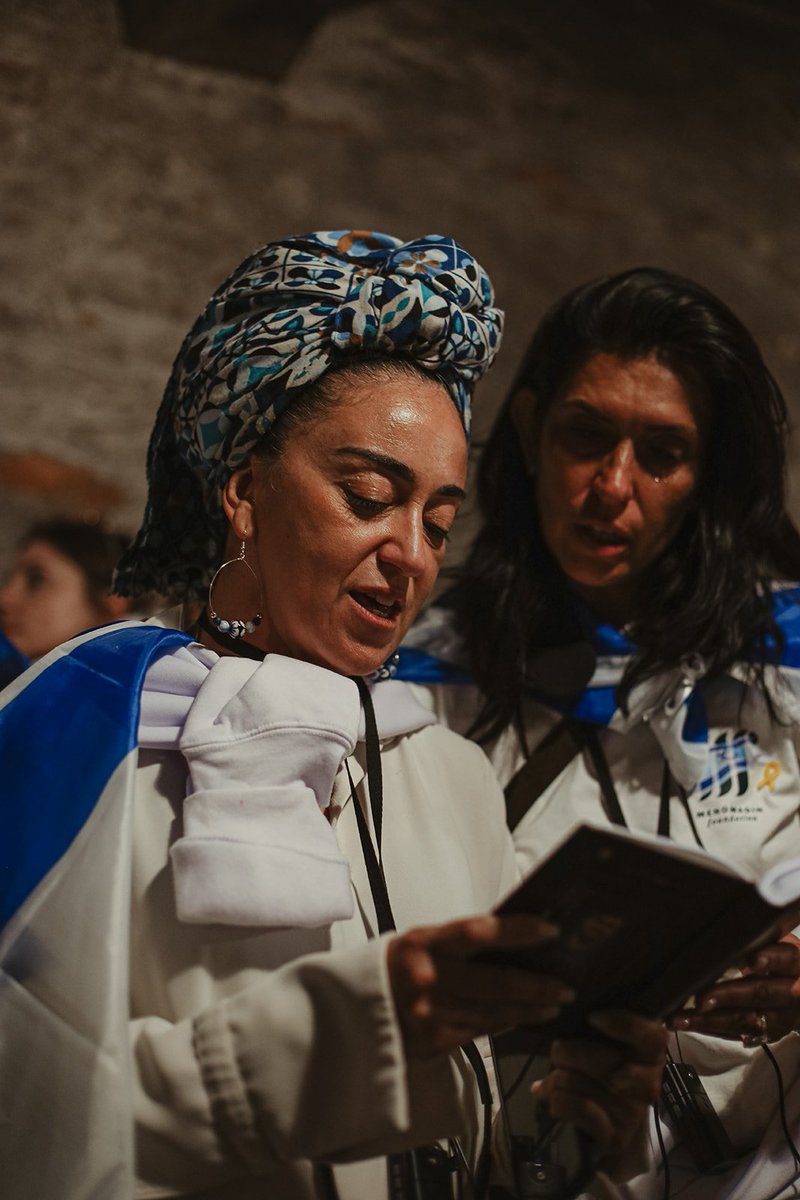
בתמונה: אני ושלי שם-טוב, אמא של עומר, באושוויץ, בתוך תא הגזים, מתפללות יחד, למען אחינו.
פרופורציות.
The U.S. bombed the Islamic Republic’s nuclear sites.
What comes next?
What’s the situation in Iran right now?
What’s the best way to end this war?
What are the people of Iran really concerned about?
Listen to my message.
Party mile for Germany’s provincial virtue junkies.
Nothing captures the idiocy of Germany’s morally rotten, comfort-drunk Karens quite like this video.
While enjoying every right Western democracy grants them, they dance gleefully in front of the Mullah regime’s flags—the brutal theocracy that rapes, blinds, and murders Iranian women for demanding those same rights.
Dear Members of the @PulitzerPrizes board,
My name is Emily Damari. I was held hostage in Gaza for over 500 days.
On the morning of October 7, I was at home in my small studio apartment in Kibbutz Kfar Aza when Hamas terrorists burst in, shot me and dragged me across the border into Gaza. I was one of 251 men, women, children, and elderly people kidnapped that day from their beds, their homes, and a music festival.
For almost 500 days I lived in terror. I was starved, abused, and treated like I was less than human. I watched friends suffer. I watched hope dim. And even now, after returning home, I carry that darkness with me - because my best friends, Gali and Ziv Berman are still being held in the Hamas terror tunnels.
So imagine my shock and pain when I saw that you awarded a Pulitzer Prize to Mosab Abu Toha.
This is a man who, in January, questioned the very fact of my captivity. He posted about me on Facebook and asked, “How on earth is this girl called a hostage?” He has denied the murder of the Bibas family. He has questioned whether Agam Berger was truly a hostage. These are not word games - they are outright denials of documented atrocities.
You claim to honor journalism that upholds truth, democracy, and human dignity. And yet you have chosen to elevate a voice that denies truth, erases victims, and desecrates the memory of the murdered.
Do you not see what this means? Mosab Abu Toha is not a courageous writer. He is the modern-day equivalent of a Holocaust denier. And by honoring him, you have joined him in the shadows of denial.
This is not a question of politics. This is a question of humanity. And today, you have failed it.
Most Israelis are still unaware of Hamas’s latest act of unimaginable depravity. In a few hours, they will wake up to the horrifying news that the Bibas children were brutally murdered, while Hamas cynically sent back the body of an unrelated woman, claiming she was their mother.
Hamas is beyond a travesty—it embodies atrocities that defy definition. If they believe such acts will weaken Israeli society, they are making the classic mistake of authoritarians and fanatics. In reality, the resolve to dismantle their rule is only strengthening.
As for those in the West who supported them - whether openly or through silent backing - your moral failure will follow you for life.
As we agonize and wait for this coming Sunday, take the time to read this beautifully moving post by @havivrettiggur ❤️🎗️🇮🇱🎗️❤️ and welcome this special Shabbat with intention and a prayer for our sisters and brothers who are still held in captivity 💔
“The Torah speaks in human tongue,” the Sages of the Talmud tell us again and again. The Torah, they explain, isn’t speaking to God but to us. And so it employs metaphor and simile and narrative structure. It does not think it is history or science, it does not pretend to be a literal truth.
It literally tells the story of the creation of man *twice*, in Genesis 1 and 2, each time differently and with a different purpose. Even its more straightforward narratives - think Noah’s flood - are that special sort of story that grows with you; it is one tale when you’re five, another when you’re 25 and another still when you’re 65.
The Torah is, by its own sense of itself, not a chronicle of the actual measure and development of life and history, but a window into their meaning and purpose.
The portion of the Torah we will read this Sabbath, called simply, “Names,” is excruciating and beautiful, the beginning of the story of the redemption from slavery through Moses’s great awakening and slow shouldering of responsibility for his people.
And it starts, like so many great beginnings in the Torah, with a list of names.
These are the names of the family of Israel that went down into Egypt, one of the long lineage narratives of Biblical literature.
Why start such a grand and pivotal story with a list of names?
Because names are vital to the Torah’s sense of the world. They are the superpower by which mankind rules the world, by which we discover it. Adam became master of his world when he named it. It is how we know ourselves and our surroundings and the context and meaning of things.
The Torah seems to know that we do not live in the objective world science tries to measure. That world is out there, perhaps, but we do not live in it. We live in a simulation of that world running inside our heads. Naming a thing brings it out of nameless objectivity into meaningful existence, into the lived reality of the simulation.
We name our people and our tribes and our loved ones and ourselves, and thus we know who we are.
And from this naming, the Torah shows us, freedom is born. Shemot begins the tale that will lead Moses to stand before the genocidal tyrant and demand in God’s name, “Let my people go that they may serve me!”
The tyrant refuses, of course, and thus begins his long, bitter downfall.
“Let my people go that they may serve me,” God tells Pharaoh through Moses. Freedom, God says, is service. Freedom isn’t achieved merely with the lifting of the yoke of another’s control. Freedom is attained only when independence gives way to devotion.
In this Sabbath’s reading, then, we have most of the components of the Torah’s understanding of the human: Know who you are, and thus who you are responsible for and answerable to.
Or as our Sages put it in the Mishnah (Ethics of the Fathers 3), “Know where you come from, where you are going, and before whom you are slated to give an accounting.”
Thirty-three names now burn in the collective hearts of the Jewish people, our brothers and sisters locked in Pharaoh’s dungeons who stand on the precipice of their liberation, a negotiated liberation with tyrants who have already catalyzed their eventual downfall.
I will be praying for them this Shabbat, and for dozens more of our brethren trapped in that darkness. And I will do so by naming them, by bringing them into my inner world, making them real and substantive so that I can offer my abject apology, at least until such time as I can do so to their faces.
Freedom begins with a name.
Name them, make them part of your world, so that when they emerge from their dim dungeons, the world that will receive them will be all the larger, so that they will know and feel, if not now then soon, that they are truly and forever redeemed.
Romi Gonen, 23
Emily Damari, 27
Arbel Yehud, 29
Doron Steinbrecher, 31
Ariel Bibas, 5
Kfir Bibas, 2
Shiri Silberman Bibas, 33
Liri Albag, 19
Karina Ariev, 20
Agam Berger, 21
Danielle Gilboa, 20
Naama Levy, 20
Ohad Ben-Ami, 58
Gadi Moshe Moses, 80
Keith Siegel, 65
Ofer Calderon, 54
Eli Sharabi, 52
Itzik Elgarat, 70
Shlomo Mansour, 86
Ohad Yahalomi, 50
Oded Lifshitz, 84
Tsahi Idan, 50
Hisham al-Sayed, 36
Yarden Bibas, 35
Sagui Dekel-Chen, 36
Yair Horn, 46
Omer Wenkert, 23
Sasha Trufanov, 28
Eliya Cohen, 27
Or Levy, 34
Avera Mengistu, 38
Tal Shoham, 39
Omer Shem-Tov, 22
Shabbat shalom.