@LSedger Well, Between 1788 and 1868, Britain sent a total of around 162,000 convicts (from England, Wales, Ireland, and Scotland) to Australia. For the first few decades, the colony was essentially a penal colony – free settlers arrived later and in smaller numbers.
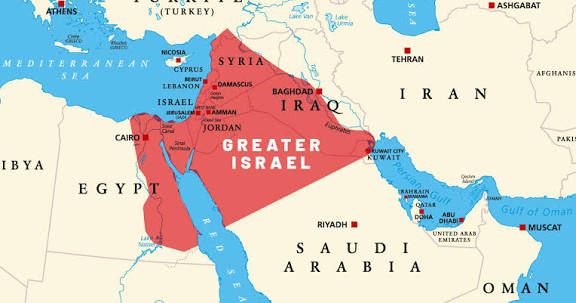
Former General of the US Army Wesley Clark on the military strategy after 9/11 attacks: "We are going to take out 7 countries in 5 years: Iraq, Syria, Lebanon, Libya, Somalia, Sudan and finishing it off with Iran" [2007] #September11th
First World War (1914–1918):
Human Losses: Total casualties (soldiers and civilians) are estimated at 15–22 million dead and 23 million wounded. Approximately 90–95% of these occurred in Europe, as the main battles were fought on the Western and Eastern Fronts (France, Belgium, Russia, Serbia, Germany, Austria-Hungary). Conflicts outside Europe (e.g., Africa, the Pacific, the Middle East) were limited.
Material Damages: The majority of destroyed infrastructure (cities, railways, factories) was in Europe, particularly in France, Belgium, and the Balkans. For instance, France and Belgium suffered severe damage to industrial regions like Nord-Pas de Calais. Exact percentages are challenging to pinpoint, but estimates suggest over 80% of physical damages were in Europe.
Economic Impacts: European economies were crippled by the war (e.g., Germany paid reparations of 132 billion gold marks). Most global war expenditures (estimated at $186 billion in contemporary terms) came from European nations and the U.S., with Europe bearing a heavier burden due to direct damages.
Estimate for Europe: Approximately 85–95% of total damages (human, material, and economic) can be attributed to Europe, including the European part of Russia, heavily impacted by the Eastern Front.
Second World War (1939–1945):
Human Losses: Total casualties are estimated at 70–85 million, including 50–55 million civilians and 21–25 million soldiers. Europe (including the USSR) accounted for 35–40 million deaths, roughly 50–60% of the global total. The USSR alone lost 26.6 million (including 8–9 million due to famine and disease), Poland 5.6–5.8 million (20% of its population), and Germany 5.3 million soldiers. Asia, particularly China (15–20 million), and the Pacific also saw significant losses.
Material Damages: Europe endured immense destruction – the USSR lost 70% of its industrial infrastructure (1,710 cities, 70,000 villages), Poland 30% of its buildings, and Germany 39% of urban housing. Western Europe, including France, Belgium, and the Netherlands, saw 20–30% of homes destroyed. While Asia (e.g., Japan, China) also suffered, Europe was the primary theater of land operations, accounting for an estimated 60–70% of global material damages.
Economic Impacts: War expenditures exceeded $1 trillion (in contemporary terms), with Europe facing greater economic collapse than the unscathed U.S. Britain, for example, transitioned from creditor to debtor, and European nations relied on the Marshall Plan. Approximately 70–80% of global economic damages (including infrastructure and industrial losses) occurred in Europe.
Estimate for Europe: Overall, 60–70% of the Second World War’s damages (human, material, and economic) occurred in Europe, including the European part of the USSR, one of the hardest-hit regions.
Conclusion:
First World War: ~85–95% of damages in Europe, as the conflict was predominantly European.
Second World War: ~60–70% of damages in Europe, reflecting the war’s broader global scope (Asia, Pacific), though Europe (including the USSR) remained the primary theater.