On July 6 SAMHSA announced about $281 million for federal grant programs, much of it focused on OUD medication and overdose prevention, writes @kastaliamedrano, "...while simultaneously redefining MOUD and naloxone access as unrelated to harm reduction."
https://t.co/8qyLCFrsTf
ASAM applauds the introduction of the Modernizing Opioid Treatment Access Act 2.0 in the Senate. This bill aims to expand access to methadone, a lifesaving treatment for OUD.
https://t.co/1ijR3ELz6x
Hear directly from ACAAM President Dr. Randall Brown as he shares reflections on the future of addiction medicine, the importance of community, and ACAAM’s continued commitment to advancing education, advocacy, and patient care.
Watch his message below. ⬇️
Predictive validity of Alcohol Use Disorder Identification Test – Consumption (AUDIT-C) for register-based alcohol-attributable events among general-population men and women of different ages https://t.co/GpbIYiXKqi
Check out the episode "Access to Medications for Opioid Use Disorder Among Veterans with Homeless Experience in Permanent Supportive Housing" from the podcast This Week in Addiction Medicine.
Listen now: https://t.co/KIgGi31dAf
This cohort study assessed 10,110 US veterans with homeless experience and opioid use disorder (OUD) residing in permanent supportive housing, with respect to factors associated with receipt of medications for opioid use disorder (MOUD).
To learn more, check out The ASAM Weekly.
Check out the episode "Medicaid Managed Care Plan Alignment with State Substance Use Disorder Treatment Coverage Requirements" from the podcast This Week in Addiction Medicine.
Listen now: https://t.co/t9m3PvPCrp
Initiating weekly long-acting injectable buprenorphine (LAIB) without prior sublingual buprenorphine (“direct-to-inject” or DTI) may reduce buprenorphine initiation barriers.
To learn more, check out The ASAM Weekly.
10 years ago, governments came together at the #UNGASS2016, committing to align drug policy with health and rights.
That commitment remains unfulfilled. Punitive approaches dominate, while reform is ongoing but uneven.
The next decade must be different! https://t.co/7WJwr5Lk6P
Check out the episode "Machine Learning– and Multilayer Molecular Network–assisted Screening Hunts Fentanyl Compounds," from the podcast This Week in Addiction Medicine.
Listen now: https://t.co/sO00HiYzTH
Check out the episode "Disparities in Treatment and Referral After an Opioid Overdose Among Emergency Department Patients" from the podcast This Week in Addiction Medicine.
Listen now: https://t.co/pkkXkb25Bq
ICYMI: LAC created a new guide for providers, harm reductionists, attys & others on combatting local opposition to substance use programs! Includes overview of anti-discrimination protections, case examples & strategies for overcoming NIMBYism: https://t.co/RlNDErMJnl
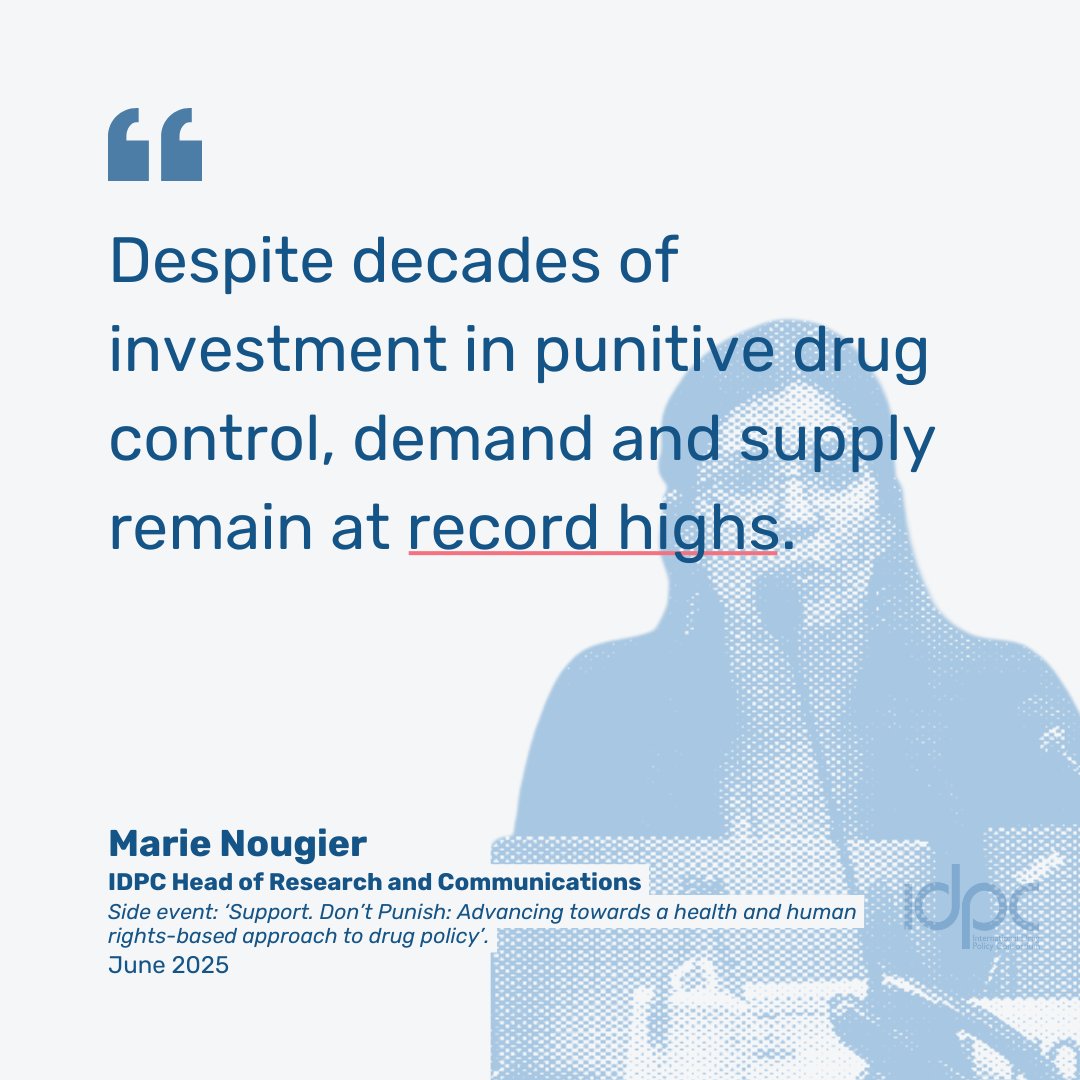
Punitive drug policies haven’t worked. Around the world, alternatives are being trialled with success. Important conversation from the UN in Geneva.
🔴 WATCH THE RECORDING: https://t.co/lHymPtm291
🚨 With the FY26 appropriations process underway, several members of Congress are calling for increased funding for programs addressing America’s persistent shortage of #SUD treatment providers including STAR-LRP and the Addiction Med Fellowship Program >>>https://t.co/4O6RaQjkiX
The idea that we should wait for rock bottom -- wait for the disease to get worse before seeking treatment is dangerous and isn't backed by science. Decades of research has proven that the earlier someone is treated, the better their outcomes.
We are excited to release season 3 this Thursday! It features six brand new episodes that we hope will change the practice of any healthcare professional who cares for patients with substance use disorders!