Tax Education Series
Topic: Managing Corporate Tax Audit (Episode 1)
Today, I will set a context specifically on the reason for corporate tax audit and also a brief about the self-assessment system.
What is Tax Audit?
A tax audit is an examination of an individual or organization's financial records and tax returns by the tax authorities to ensure compliance with tax laws and regulations. It is a mechanism put in place by the Revenue Authority to checkmate the self-assessment system of tax and ensure compliance.
What is the self-assessment system?
The self-assessment system is a tax system used by many countries that requires individual taxpayers and businesses to calculate their own tax liability and report it to the tax authorities voluntarily. This means that instead of the tax authorities determining the tax liability and sending a tax bill, as is the case in traditional tax systems, taxpayers are responsible for assessing their income, gains, deductions, and tax credits accurately.
In a self-assessment system, taxpayers are required to file a tax return, usually annually, detailing their income and expenses for a specific tax year. This return must then be submitted by a designated deadline (in the case of Nigeria, within 6 months after the accounting year-end) and it is the taxpayer's responsibility to ensure the accuracy and completeness of the information provided.
What Triggers a Tax Audit?
Tax audits can be triggered in various ways some of which include:
- Discrepancies and Errors in Financial Information: Discrepancies between reported income and information provided by employers, banks, or other third parties can raise red flags.
- High Income and Complex Returns: Businesses with high incomes or complicated tax returns are more likely to be audited to ensure accuracy.
- Abnormal deductions and credits: Claiming excessive deductions or credits that seem out of proportion to reported income can attract attention.
- Industry/Sectorial Audit: In many instances, this is common with the FIRS. Certain industries may be subject to higher scrutiny due to historical non-compliance issues.
- Random Selection: Sometimes, a company can be chosen without any reason. Just a random check.
Types of Tax Audits:
There are two main types of tax audits:
1. Desk Review/Audit: This is usually a non-invasive type of audit, conducted via mail, or a few correspondences. During the desk review, the tax authorities may request certain documentation or clarification on items on the taxpayer's tax return. The goal of the desk review is to confirm the accuracy of tax returns.
2. Field Audit: A field audit is the most comprehensive and typically takes place at the taxpayer's place of business. In a field audit, a tax auditor will thoroughly examine financial records and supporting documents.
In the next episode, we will continue the discussion on how to prepare for tax audits. Feel free to share this with your accountant friend, business leaders, CEOs, and all who may need it.
#taxwithrichy #taxeducation
Unique Career Paths for Accounting & Finance Graduates
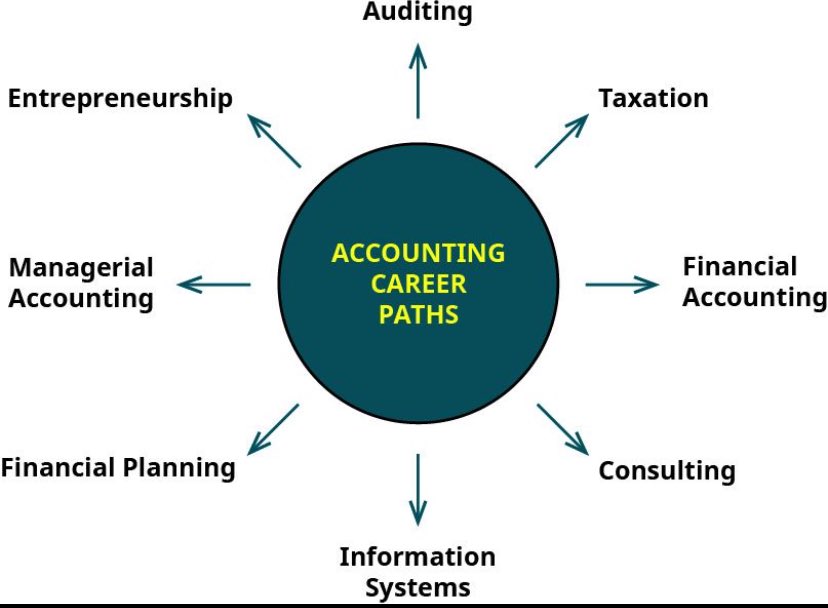
Having participated as a guest speaker in a couple of student gatherings especially at the tertiary level, a recurring question I often encounter revolves around the dilemma faced by young graduates in choosing a career path. In this post, I'll provide a brief overview of interesting career paths and job titles that accounting graduates can explore. I also included a few comments to encourage those that may want to explore the field. Enjoy the read.
🛒 Financial Analyst: In this role, you will be responsible for analyzing financial data to provide insights for decision-making and investment opportunities. This does not require years of experience for you to start.
🛒 Internal Auditor: You will evaluates internal controls, risk management, and compliance within organizations. Good for entry level.
🛒 Treasury Analyst: This require you to maanage financial assets, including cash, investments, and debt for organizations. Good for entry level, you can become a manager within a short period.
🛒 Tax Accountant: You will specialize in tax-related matters (like me), prepares tax returns, and ensures tax compliance. Very interesting for tax enthusiasts.
🛒 Management Consultant: Provides strategic advice on financial management and operational efficiency to organizations. You will have broad knowledge of various businesses.
🛒 Transfer Pricing Specialist: This is a specialized field dealing with different entities within a multinational corporation to ensure compliance with tax regulations. The professionals in this field are very few, so they are in high demand.
🛒 Tax Consultant: Offers expert advice on tax planning, compliance, and strategies to minimize tax liabilities for individuals and businesses. You will work with a consulting firm and grow to become a partner.
🛒 Audit Associate: Assists in financial statement audits, ensuring accuracy and compliance with accounting standards. You will work with a consulting firm and grow to become a partner.
🛒 Account Officer: Manages financial accounts, processes transactions, and ensures accurate record-keeping for organizations. This will strengthen you double entry skills.
🛒 Risk Analysi: Identifies and mitigates potential risks affecting an organization's financial well-being. Safeguard the company.
🛒 Forensic Accountant: Investigate financial irregularities, fraud, and assist with legal proceedings. Good for experienced hire.
The opportnities are numerous, and I trust this concise overview provides clarity about the various roles available in the accounting and finance space. Best wishes to all grauduates wishing to explore any of the fields.
#personalgrowth #careerdevelopment #accountingandaccountants
Who can straighten the paper?
During a summer camp conference I attended In 2013/2014, one of the guest speakers gave us an exercise. He asked each of us to pick a plain sheet of A4 paper, after which he instructed us to squeeze it fiercely. As teenagers, we obeyed the instruction while trying to imagine what he wants to achieve. Of course, some of us sqeezed life out of the paper.
After some minutes, he then asked us to unfold the paper and straighten it back to the way we met it. Then comes the challenge: can we straighten it perfectly? Is it even possible for us to restore it back to how we met it? We tried, but the creases (scars) on the paper stubbornly remained.
This seemingly trivial exercise was then transformed into the message for the day.
The crumpled paper symbolizes the lasting impact of our choices. Just like the wrinkles that remain no matter how hard we try to smooth them out, our decisions leave permanent marks on our lives. Although, some scars may fade, but others become reminders that shape our journey and potentially hinder our progress. This emphasizes the importance of making thoughtful choices to minimize lasting negative consequences.
For students in school, your own paper might just be your academic standing. You dont want to graduate with a class of degree that wont secure you a job. For employees, your own paper might be on-the-job performance, you dont want to have 5 years experience, and still not be able to execute jobs independently without supervision. For parents, you also have your own paper(s) which shapes the future of your children. How are you handling the paper? We all have your papers.
So, let's embrace a mindful approach to life. By making conscious choices and seeking guidance, we can create a story with fewer wrinkles and more chapters bursting with growth and opportunity.
Remember, the beauty of life lies in learning from others, crafting a narrative free of regret, and ultimately achieving a life less crumpled, and more open to possibilities.
Please dont squeeze your paper.
For those of us who do not understand what is going on here. I will try my best to explain the meaning of MPC, MPR, CRR & Liquidity Ratio. WALK WITH ME & retweet for others.
Monetary Policy Rate or MPR is a tool employed by Central Banks, & it is used to control money supply in the economy, lending rates & inflation as well.
If a central bank is a mechanic, then screw drivers & spanners are the MPR.
The 400 basis points simply mean 4%. Therefore, Yemi Cardoso’s Monetary Policy Committee (MPC) raised MPR by 4%. From 18.75% to 22.75%.
Raising the MPR could curb inflation & woo investors. Because investors like higher interest rates when they buy government issued treasury bills & government bonds.
Investors stay away from a country when inflationary rates are higher than interest rates. But I ncreasing interest rate from 18.75% to 22.75% could also lead to slower economic growth, lower consumer spending, & higher interests on loans. So it’s a double-edged sword.
The CBN is targeting inflation with this policy. But has it worked in the past? THE ANSWER IS NO! Emefiele tried it several times, & it kept on failing. It won’t work on food inflation by the way. The biggest driver of inflation in Nigeria is Food Inflation.
Using monetary policies to target food inflation is counterproductive, because farmers can’t go to their farms. You need to fix the supply side first, before the polices can work.
Food inflation can only be tackled when farmers return to their farms. This can only happen when you fight insecurity to a standstill.
Again, raising Cash Reserve Ratio (CRR) to 45% means that banks are now required to retain 45% of customer’s cash deposits with the CBN. So CRR is the CBN debits to commercial banks. It means that First bank or Access Bank must keep 45% of your cash deposits with the Central Bank of Nigeria.
This way, banks will no longer retain huge amount of cash in their vaults to lend to customers. Therefore higher CRR discourages borrowing & lending at the same time.
Liquidity ratio is banks balance sheet, or health status. It tells you if a bank is able to pay off its debts & liabilities. Or if a bank has kwashiorkor.
Liquidity ratio is a bank’s cash balance + assets it can easily convert to cash; like vehicles & real estate. A healthy Liquidity ratio must always be maintained because it measures the total liabilities of the bank, which is typically their customer’s cash deposits.
A liquidity ratio of 30% mandates bank to have current assets of up to 30% against their liabilities. Less than 30% shows that a bank is unhealthy.
“The Asymmetric Corridor of +100/-700 basis points around the MPR” simply means that the Central bank will lend to commercial banks at 23.75% (22.75 + 100). But it will borrow from commercial banks at 15.75% (22.75-700).
Remember that when you see +100 basis points, it means 1%. And when you see -700 basic points, it means -7%.
By this. the CBN is telling the commercial banks not to keep their cash with the CBN & earn so little (15.75%). The CBN is telling the banks to go out there & find lenders in the real sectors so that the banks could earn higher interests.
If the Central bank wants to reduce the cash in circulation, it can adjust this corridor, then pay the commercial banks higher rates, & the banks will move their cash away from their vaults to the CBN, therefore reducing the cash in circulation & inflation as well.
Did I try? I be JJC, abeg no fex. 😅😅
If you are from the trenches, pray!
pray regularly. The system is not built for you to survive
Speak up! Ask!
Never stop asking. It doesn't matter how many NOs you get.
Being shy or timid is your greatest enemy.
For a lot of us, the economic resources we need at some point won't come from our parents. So you have to develop the confidence to ask people by providing some form of value in return.
Closed mouths will never get fed
"The ability to speak effectively is a requirement rather than a gift"
God will bless us🙏❤️