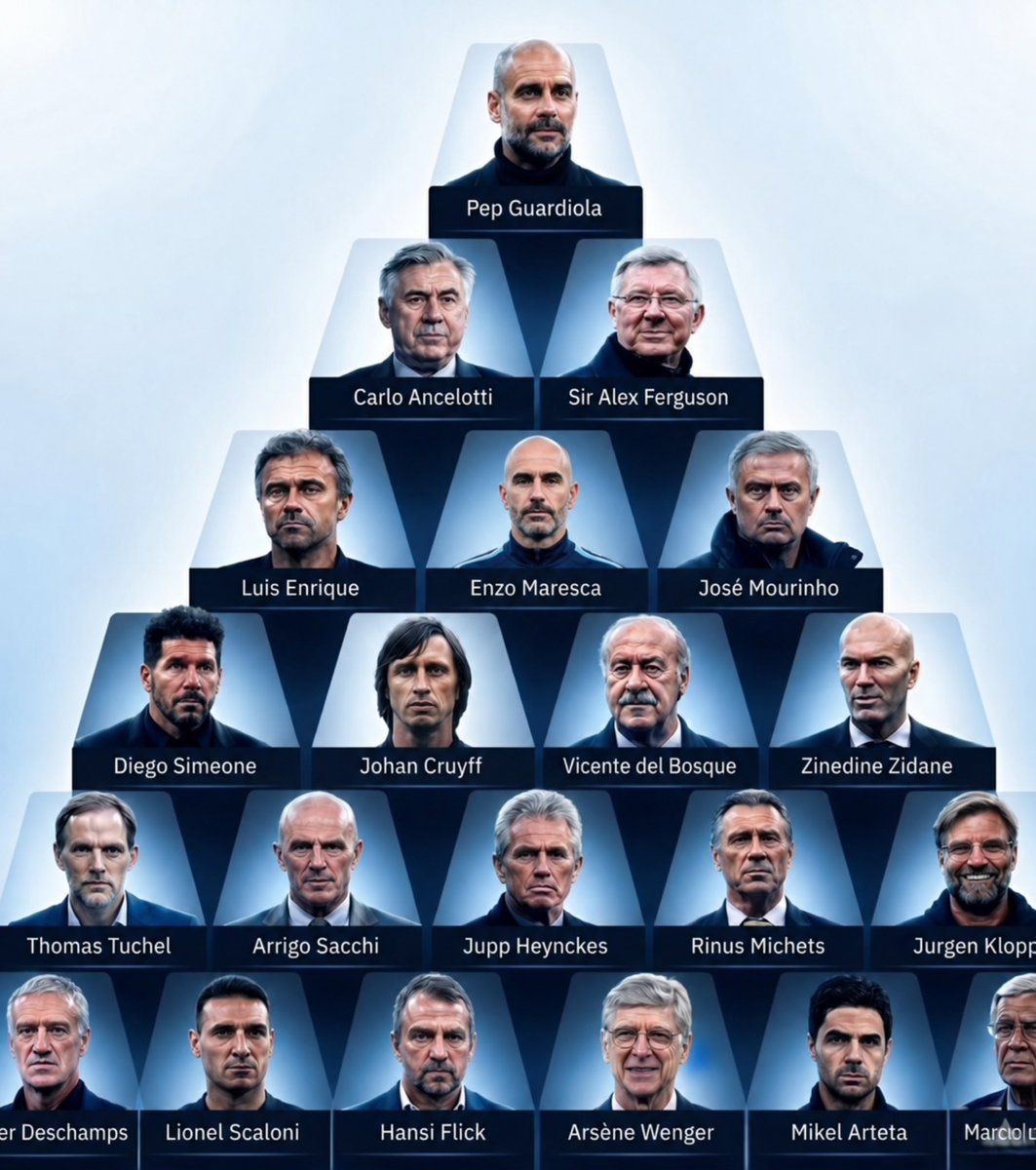
@biolakazeem I guess he went against his own judgement. Typical Ancelotti would not take Endrick and Neymar to the world cup, but the pressure from the Brazil public prior world cup forced him.
PRESS RELEASE
FEDERAL MINISTRY OF FINANCE
5 July 2026
𝐑𝐄𝐒𝐏𝐎𝐍𝐒𝐄 𝐓𝐎 𝐑𝐄𝐂𝐄𝐍𝐓 𝐌𝐈𝐒𝐑𝐄𝐏𝐑𝐄𝐒𝐄𝐍𝐓𝐀𝐓𝐈𝐎𝐍𝐒 𝐎𝐍 𝐏𝐔𝐁𝐋𝐈𝐂 𝐄𝐗𝐏𝐄𝐍𝐃𝐈𝐓𝐔𝐑𝐄
The Federal Government has noted recent public commentary alleging that approximately two percent of GDP amounting to over ₦8 trillion was spent outside the approved budget based on references to the IMF Representative in Nigeria and the Fund's 2026 Article IV Consultation Report. These claims are incorrect and risk misleading the public regarding the government's financial management.
For the avoidance of doubt, the Federal Government does not operate a "shadow budget" or expend public funds outside the constitutional and statutory framework established for public finance.
Under Sections 80 - 83 and 162 of the Constitution of the Federal Republic of Nigeria, 1999 (as amended), public funds may only be withdrawn and expended in accordance with the Constitution and laws enacted by the National Assembly. Accordingly, Federal Government expenditure is incurred pursuant to duly enacted Appropriation Acts, Supplementary Appropriation Acts, and other statutory authorities enacted by the National Assembly. In addition, multi-year capital projects which necessarily span multiple budgets are implemented in accordance with extant laws and approved provisions for capital rollovers where applicable. These are recognised features of public financial management and should not be misconstrued as expenditures outside the budget.
It is inaccurate to suggest that trillions of naira have been secretly spent outside legislative approval. Such allegations should have identified the specific projects purportedly executed without appropriation or legal authority and present credible evidence in support of the claim. To be meaningful, assertions of this magnitude must be supported by verifiable facts rather than conjecture.
For the purpose of public education, it is important to distinguish between appropriation, expenditure authorisation, financing, and fiscal reporting.
Nigeria's public finance framework contains several statutory transfers, first-line charges and intervention mechanisms established by Acts of the National Assembly. These include, among others:
- Statutory allocations and contributions to development commissions and other agencies created by law.
- Cost of collection and cost of administration retained by designated revenue-collecting agencies as expressly provided under relevant legislation.
- Capital expenditure approved in separate budgets for some agencies and the Federal Capital Territory by the National Assembly.
- Special interventions approved by law to address national priorities such as security, infrastructure, disaster response, and other strategic national programmes or emergencies.
- Debt service obligations and other statutory transfers that are authorised under applicable legislation.
These expenditures are neither secret nor illegal. They are established by law, disclosed in various fiscal reports, and subject to applicable oversight, audit and accountability mechanisms. Their treatment for reporting purposes may differ from their presentation in the annual Appropriation Act, particularly under international statistical and reporting standards adopted by the Federal Government. Such classification differences should not be misrepresented as evidence of unlawful expenditure.
It is equally incorrect to suggest that the reported amount represents an increase in budget deficit. A fiscal deficit is determined by the relationship between total government revenues and total government expenditures. Whether a capital project is financed through annual appropriations, supplementary appropriations, statutory transfers, approved intervention mechanisms, or other lawful financing arrangements does not, by itself, increase the fiscal deficit.
Indeed, the IMF's observation relates primarily to the comprehensiveness, timing and presentation of fiscal reporting rather than the legality of expenditure. Like many countries, Nigeria continues to strengthen the alignment between budget presentation and international fiscal reporting standards as part of ongoing public financial management reforms. As a matter of fact, His Excellency, President Bola Ahmed Tinubu, GCFR had himself formally requested the National Assembly to end the practice of running multiple and overlapping budgets, and rather harmonise into a single, cohesive framework during his presentation of the 2026 Appropriation Bill to a joint session of the National Assembly on December 19, 2025.
The Federal Government remains firmly committed to prudent fiscal management, transparency and accountability. Recent reforms have significantly strengthened public financial management with ongoing improvements in budget assumptions and credibility, transparent revenue administration, digitalisation of government financial processes, and stronger treasury management. These reforms have been acknowledged by the IMF itself and other multilateral institutions, as well as international credit rating agencies, major media organisations and investors.
Public debate is both welcome and essential in a democratic society. However, it should be based on facts and an accurate understanding of Nigeria's constitutional and fiscal framework. Mischaracterising technical observations as evidence of unlawful expenditure neither advances informed public discourse nor strengthens democratic accountability.
The Federal Government will continue to uphold the rule of law, maintain transparency in the management of public resources, and work with the National Assembly, oversight institutions, development partners and the Nigerian people to further strengthen fiscal governance in line with international best practices.
Signed:
Taiwo Oyedele
Honourable Minister of Finance and Coordinating Minister of the Economy
Federal Republic of Nigeria
To Nigerians:
Please note that the fed govt has flew multiple batches of stranded Nigerians (many with expired residence permits) from South Afrika back into Nigeria. 100% free. Returnees got settlement packages, including money, from the govt.
I am saying this because there was noise all over the internet, insults on govt, when they were yet to return. Since govt flew them back and gave them incentives, they’ve kept quiet, no acknowledgement.
You might say that it’s the responsibility of the govt—even when many went there illegally, overstayed, committed terrible crimes, caused problems—but if we blame govt, we should also acknowledge the same govt when they do something right.
Nigerian resources belong to us all. But some categories of Nigerians have been selfishly entitled to more than usual. Huge resources are invested on them while the rest of us get nothing. Dis you know how much Nigeria spent to get those Nigerians out of Ethiopian prisons? These same categories also happen to be the most ingrate. Imagine!
I INDEPENDENTLY SEARCHED NIGERIA'S BUDGET DOCUMENTS FROM 2019 TO THE PRESENT. HERE IS WHAT I FOUND ABOUT THE PFIPC SCANDAL THAT NOBODY IS TALKING ABOUT.
THE NAME DID NOT COME FROM NOWHERE
Everyone is focused on Adeyemi the man. Nobody has gone back to ask where the name "Presidential Economic Advisory Council" actually came from. I did. And the answer changes this entire story.
The Presidential Economic Advisory Council is not a Tinubu creation. Tinubu's economic body is called the Presidential Economic Coordination Council. He established it in March 2024, inaugurated it in July 2024, and chairs it himself alongside Dangote, Elumelu, the Senate President and the Governors Forum Chairman. It has a different name, a different structure and a different budget code.
The Presidential Economic Advisory Council is a creation of Buhari. Buhari established it in September 2019 to replace the Economic Management Team that Osinbajo was heading. It had real named members. Prof. Doyin Salami as chairman. Charles Soludo. Bismark Rewane. Eight economists reporting directly to the President with a defined mandate and a legal institutional identity.
When Tinubu came in and created the PECC in 2024, the Buhari-era PEAC was never formally dissolved. No gazette removing it. No Budget Office circular revoking its institutional identity. It simply went dormant. But dormant in Nigeria's government system is not the same as deleted.
That dormant status is exactly what was exploited.
Peter Obi: "I am going to make sure we have primary healthcare centres in all 8,000 wards across Nigeria"
Meanwhile it was Soludo's administration that commissioned the first-ever General Hospital in Onitsha South LGA, a state where Obi was an active governor for eight years. For eight good years Obi couldn't build a hospital in one of the major local govts in Anambra.
But he's promising a healthcare centre across the nation, and in four years too, because he said he wants just one tenure. What a joke.
This picture means something to an entire generation of Dutch people.
I'm one of them.
My parents came to Holland as Moroccan immigrants.
I was born there.
Dutch passport.
Dutch better than my Arabic.
The first 18 years of my life, Holland fed me, schooled me, raised me.
The Moroccans helped rebuild Holland.
Holland gave them roads, schools, a future in return.
Fair trade.
But we never really integrated.
That's not on one side.
That's on everyone.
We learned to speak for our grandparents, because they never got to learn the language.
We brought our food.
We brought our culture. Mosques. Books and humor.
We had fun.
We hung out.
We went to each other's weddings and loved the mix of it.
And still.
We never really became one.
The politicians made sure to categorize us.
They needed us to be outsiders, while we were busy acting like insiders.
So a wall went up between neighbors.
Then yesterday a silly game with a ball put two teams on the same grass.
Two continents.
Two cultures.
Except they're not two teams.
They're teams stitched together by the same life.
The Dutch know the Moroccans. Intimately.
The Moroccans know the Dutch. Intimately.
The Moroccans in Morocco spend every summer selling to the Moroccans from Holland.
The Dutch spend every day next to Moroccans. In School. At The local butcher. The streets.
The Moroccan team is full of Moroccans carrying Dutch passports.
The Dutch team is full of their actual friends, neighbors, and colleagues.
Such a simple game.
Such a complicated story.
When I look at this image I don't see football.
I see high school.
I see pride.
I see distance.
I don't see compassion.
I see resentment.
And that's exactly how we lived in beautiful Holland.
Together. Happily.
And quietly, unconsciously, apart.
I left when I was 18.
I went back to Morocco.
I resented Holland.
For years it was me vs them.
Now I understand what I actually have.
I can read two cultures from the inside.
And I get to choose.
What I carry with me.
What I leave behind.
Because every culture has its gold.
And every culture has its rot.
The trick is knowing which is which.
Love. Be kind to each other.
@yabaleftonline This is a selfish call, everything doesn’t have to be about you. Finding solution to the insecurity problem in the country, should be greater than your ambition.