It is with more sadness than mere words can convey that we have to report that our beloved Ozzy Osbourne has passed away this morning. He was with his family and surrounded by love.
We ask everyone to respect our family privacy at this time.
Sharon, Jack, Kelly, Aimee and Louis
Con la OC sobre Cambio Climático de la @CIJ_ICJ se tendrá un panorama claro del desarrollo en el D. Internacional (junto a las OC de la @CorteIDH y el @ITLOS_TIDM) sobre las obligaciones comunes pero diferenciadas de los Estados para la reducción de emisiones GEI antropogénicos.
PRESS RELEASE: The #ICJ will deliver its Advisory Opinion on the Obligations of States in respect of Climate Change on 23 July 2025 at 3 p.m. (The Hague).
Watch live on @UNWebTV.
Link to the press release: https://t.co/98TLgkUW6b
El #cambioclimático en #ALC es un reto urgente. La región experimenta un aumento en la frecuencia e intensidad de sequías, incendios forestales y tormentas extremas. El #financiamientoclimático🌎 es esencial para promover economías sostenibles y resilientes. #DíaDelMedioAmbiente
#TIDMAffaire31: Lors d’une audience publique, le Tribunal a rendu aujourd’hui son avis consultatif sur la Demande soumise au #TIDM par la Commission des petits États insulaires sur le changement climatique et le droit international https://t.co/DBar4aRxtY
2/2 En vísperas de la solicitud de OC referente a emergencia climática y DDHH ante la @CorteIDH , este caso representa un desarrollo importante a considerar por el tribunal regional el cual ya está fortaleciendo el estándar con el reciente caso “Habitantes de La Oroya vs Perú”.
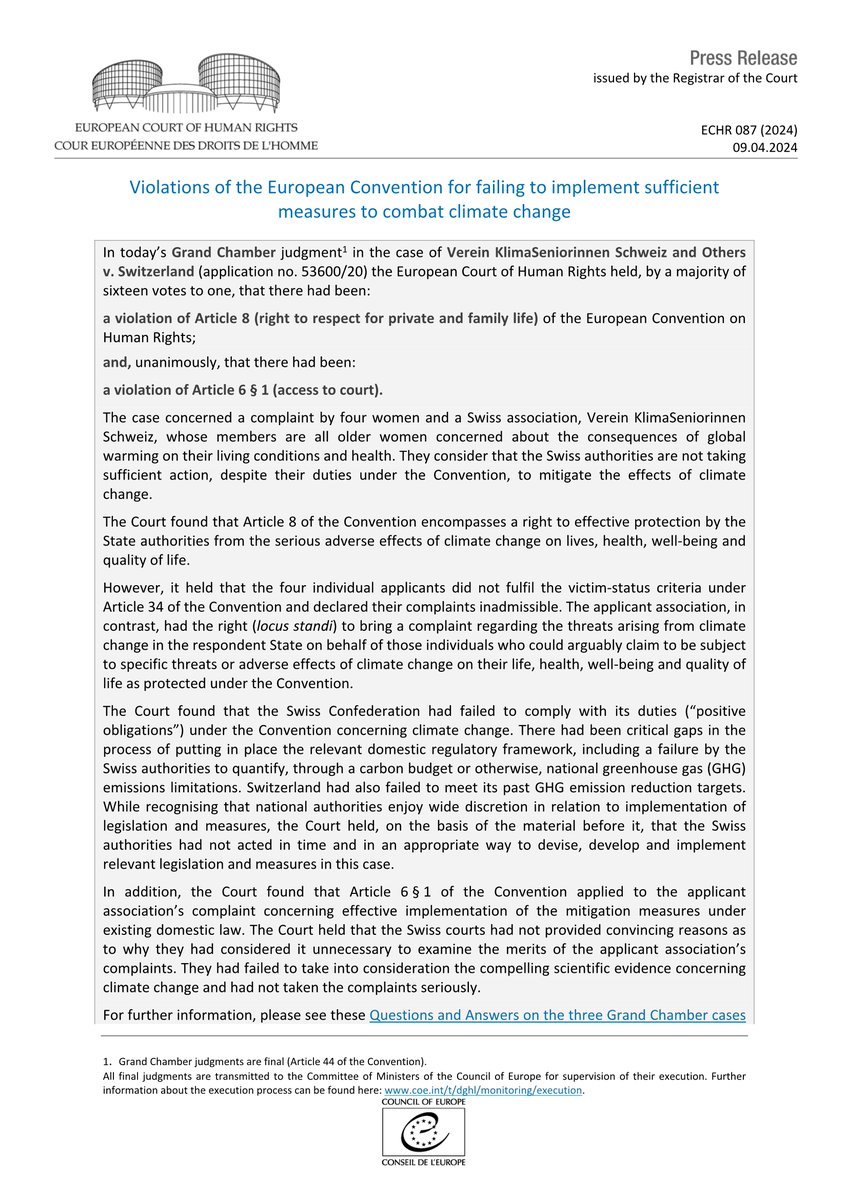
1/2 El TEDH en el caso KlimaSeniorinnen Schweiz y otros, reconoció que Suiza no garantizó el derecho a la protección efectiva contra los efectos adversos del cambio climático en la vida y la salud de las personas.
Judgment Verein KlimaSeniorinnen Schweiz and Others v. Switzerland - Violations of the Convention for failing to implement sufficient measures to combat climate change
https://t.co/9yp2paHV4I
#ECHR#CEDH#ECHRpress
#LaCorteInforma | Corte convoca a audiencia pública con la que busca profundizar en conceptos sobre la constitucionalidad del Acuerdo de Escazú y su ley aprobatoria
Auto 545 de 2024
M.P. Jorge Enrique Ibáñez Najar
➡️ https://t.co/Dn0s3pkGyw
UN Security Council adopts resolution demanding:
- an immediate ceasefire in Gaza for the month of Ramadan leading to a lasting sustainable ceasefire
- the immediate and unconditional release of all hostages
Read more ⤵️
https://t.co/psZVlwFIdp
@CorteIDH responsabiliza a Perú 🇵🇪 por daños al medio ambiente en el caso Habitantes de la Oroya vs. Perú.
Voy con hilo con tres puntos fundamentales de la sentencia:
Such promising and revolutionary technology needed some extensive regulatory framework and the EU just delivered. I’m eager to read about the first results throughout the year.
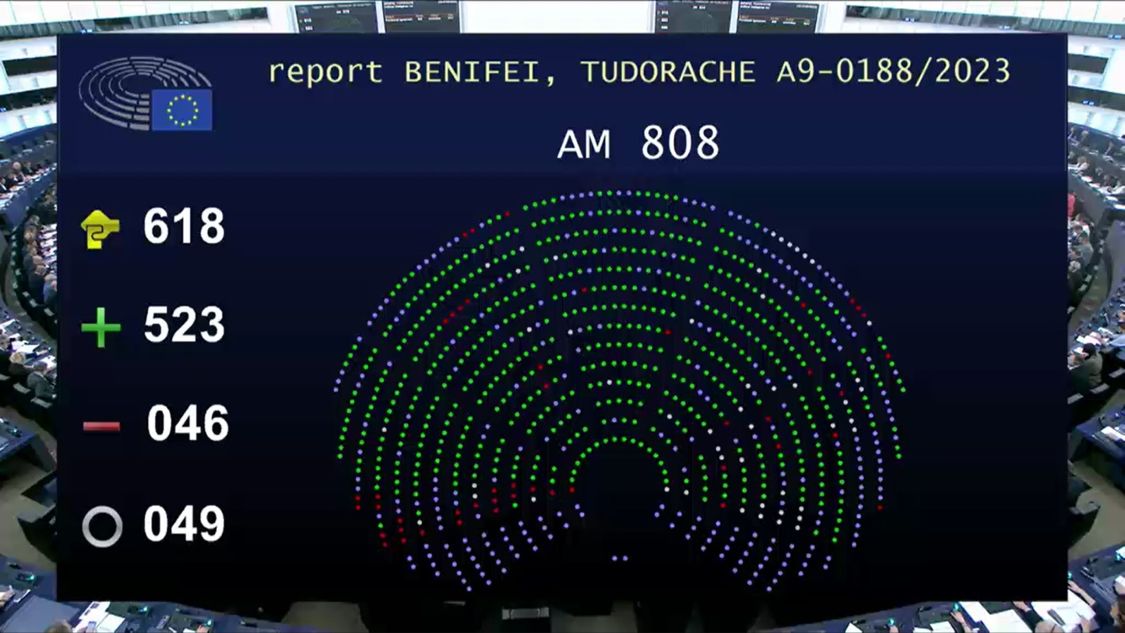
🚨BREAKING: The European Parliament has just APPROVED the AI Act. What everyone should know:
➵ The AI Act follows a risk-based approach. Some AI systems are banned, such as those involving:
- Cognitive behavioral manipulation of people or specific vulnerable groups;
- Social scoring: classifying people based on behavior, socioeconomic status, or personal characteristics;
- Biometric identification and categorization of people;
- Real-time and remote biometric identification systems, such as facial recognition.
➵ Some AI systems fall in the "high-risk" category, such as those involving:
- Critical infrastructures (e.g. transport) that could put the life and health of citizens at risk;
- Educational or vocational training that may determine the access to education and professional course of someone’s life (e.g. scoring of exams);
- Safety components of products (e.g. AI application in robot-assisted surgery);
- Employment, management of workers, and access to self-employment (e.g. CV-sorting software for recruitment procedures);
- Essential private and public services (e.g. credit scoring denying citizens opportunity to obtain a loan);
law enforcement that may interfere with people’s fundamental rights (e.g. evaluation of the reliability of evidence);
- Migration, asylum, and border control management (e.g. automated examination of visa applications);
- Administration of justice and democratic processes (e.g. AI solutions to search for court rulings).
➵ High-risk AI systems will be assessed before being put on the market and also throughout their lifecycle. People will have the right to file complaints about AI systems to designated national authorities.
➵ Generative AI, like ChatGPT, will not be classified as high-risk but will have to comply with transparency requirements and EU copyright law. Some of the obligations are:
- Disclosing that the content was generated by AI;
- Designing the model to prevent it from generating illegal content;
- Publishing summaries of copyrighted data used for training.
➵ The AI Act is expected to officially become law by May or June, and its provisions will start taking effect in stages:
- 6 months later: countries will be required to ban prohibited AI systems;
- 1 year later: rules for general-purpose AI systems will start applying;
- 2 years later: the whole AI Act will be enforceable.
➵ Fines for non-compliance can be up to 35 million Euros or 7% of worldwide annual turnover.
➵ If you want to learn more about the AI Act, including challenges, opportunities, and practical insights, join my live session with @BertuzLuca, @JcMalgieri & @RistoUuk on April 4th (register using the link below).