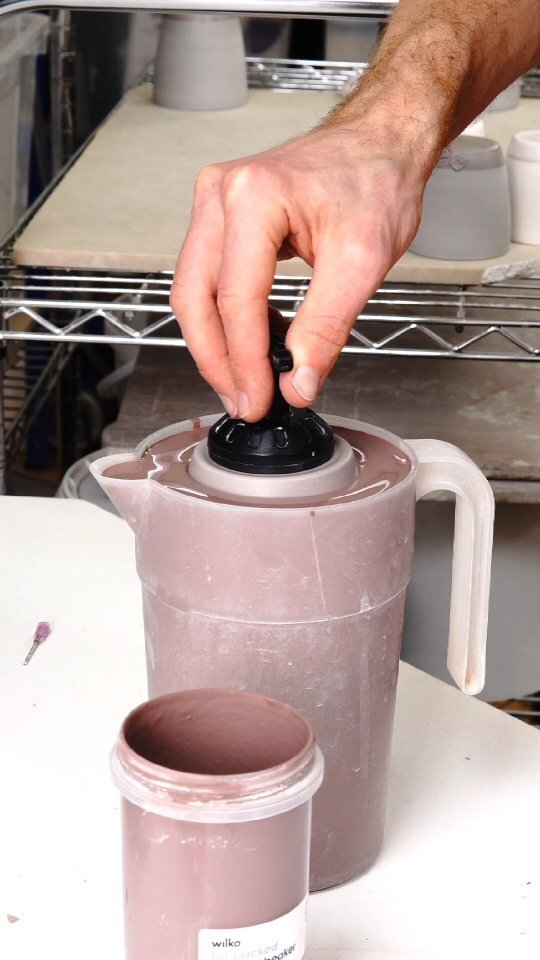
Autumn Drippy Slip Mug. I hadn't made one of these for a little while (until earlier today), but the great thing with the Limited Edition Drippy Slip pieces is that I can revisit old designs far more easily than with glazes. This is because I only need a… https://t.co/GMQZt64Xej
Makers and customers, how do you feel about free gifts with orders? And what was the best/worst free gift you've received?
As a customer, I find that an unexpected and thoughtful free gift is often my favourite part when receiving an order. I know what … https://t.co/FKR0JNJMQw
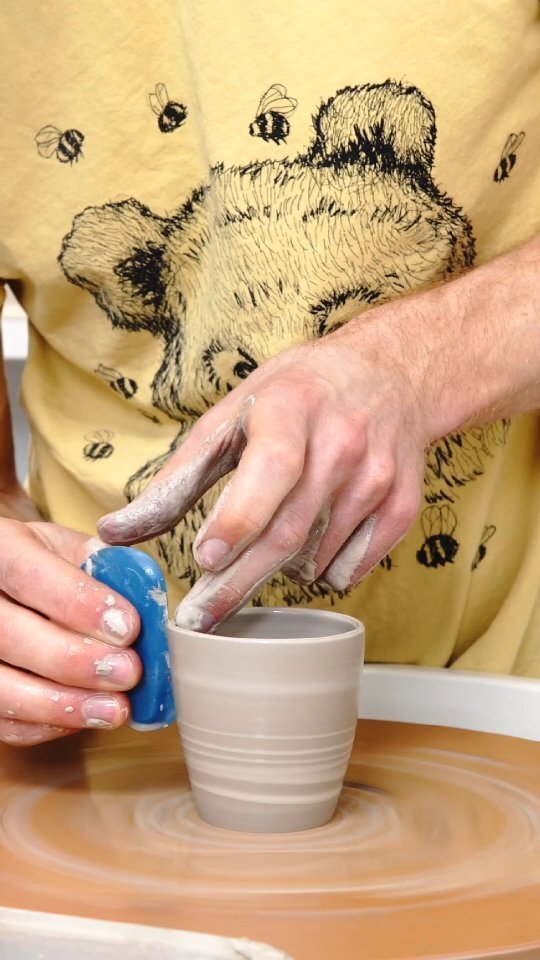
Throwing little tumblers. I use around 150g for these, and they have several purposes.
Firstly, they're perfect for glaze tests. I can get a representative test for how a glaze will behave on a mug, but these are small enough to dip in a test batch (whe… https://t.co/uYuegRP86E
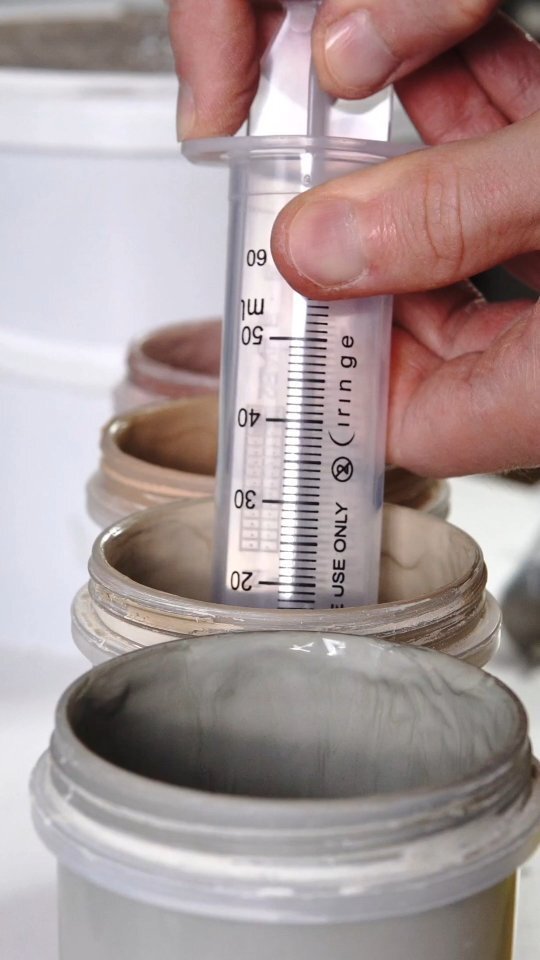
There are a few reasons I switched to slipcasting my test tiles. The main one was the convenience and efficiency I could get by having tiles that displaced the majority of the volume of these little 50ml containers, meaning I could dip the tile fully in … https://t.co/0fheEBeL9W
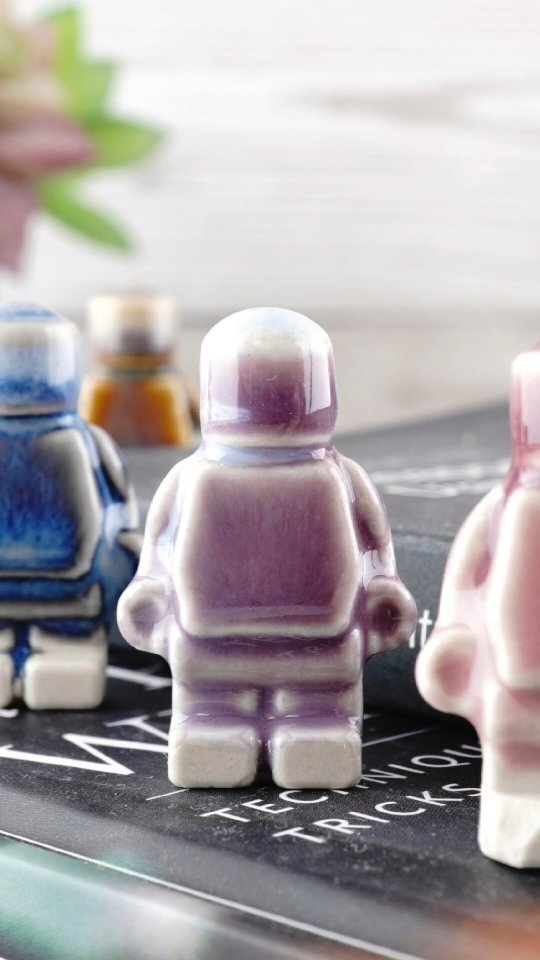
A better look at the slipcast Lego #testtiles from a few days ago (I know having still images at the end of a fairly long video is better than no images, but it's kinda frustrating trying to get a good look at them).
These were only intended as a demons… https://t.co/jt5wbl4PWJ
Following on from yesterday's Lego slipcasting video, this is the overview of the making process for the mould (except with dinosaur fridge magnets here)
Essentially, I'm taking a silicone mould designed for food, and casting the outside in plaster to e… https://t.co/XrgxLy7RyN
Slipcasting Lego people!
This might be my favourite silicone mould yet. There is a bit of cleaning up required because of the supports in the original mould (those lines I'm pointing the compressor into to pop them out) but the cast pieces are great tes… https://t.co/0lVgtpjzvC
Glaze issues (part two, Pinholes are such a pain that they get their own post)
I've had a few pieces pinhole with my new Floating Pink recipe, so I've been thinking about them more this week than usual.
The glaze has relatively high boron and the blist… https://t.co/zQgyjUE9cr
Glaze issues (part one, I'll post the Pinhole infographic in a moment)
There are plenty of ways a glaze can go wrong. Some are predictable and avoidable, others are just bad luck and random chance. You can make life easier for yourself by using glazes t… https://t.co/sqKgyXGzOk
Throwing a mug body in dark clay.
I taper the bottom of my mugs so they can comfortably sit inside other mugs in a cupboard. There's definitely a sensible range for this, as going too far will make them unstable but not going far enough makes them frust… https://t.co/O3sTRAQUfb
OldForge Floating Pink (with and without added 0.1% cobalt to make it purple) with FirstFive Flux.
The flux causes it to flow and phase separate. In a normal glaze this is a fun effect, but even more so in a chrome-tin pink. The phase separation can cau… https://t.co/ovGfRWv3ZX
I leave my pieces on their @hartleyandnoble batts overnight (covered), so I can return them to the wheel the next day and trim them the right side up before wiring off.
I use a triangle turning tool to remove excess clay at the base and give an undercut… https://t.co/LHZ8c1Mq27
The May opening of my shop is in about 10 minutes, and this is a reminder that you can change the handle style of any mug. Quite a few people ordered the two finger handle design last month, and it's really cool to see the design being used and enjoyed b… https://t.co/kkEzhNvfSL
A kiln is a box for keeping in heat, and can reach white hot temperatures with no more power than a standard household appliance like a kettle, but they need to draw that power over a much longer time. (note: this is only true in countries like the UK wi… https://t.co/DJKEz46yRS
Pouring and dipping the main glaze that goes into the Space Jellyfish combo. I've finished glazing the last of the pieces in it today, and should get them all fired over the weekend.
The shop reopens again on Saturday at 5pm BST, but there won't be any … https://t.co/OnSkgnuZc9
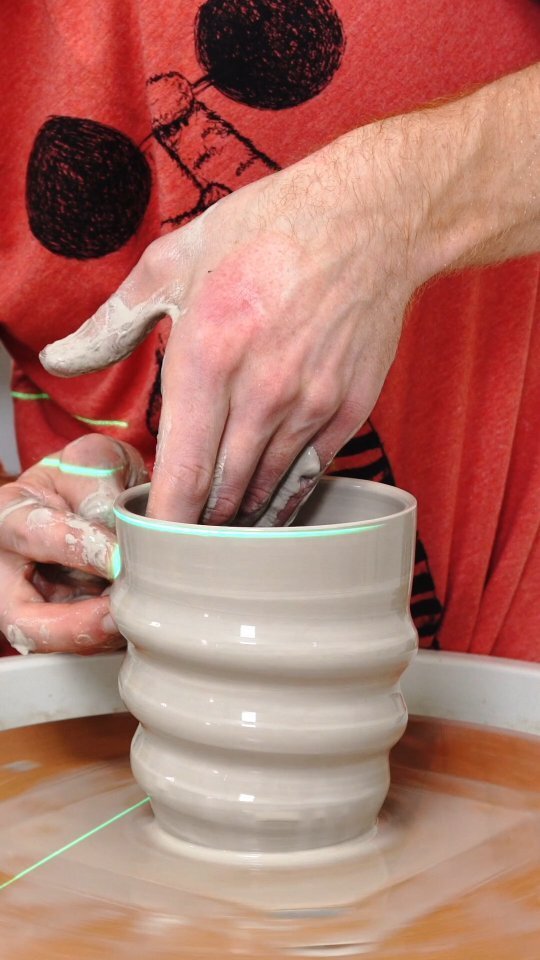
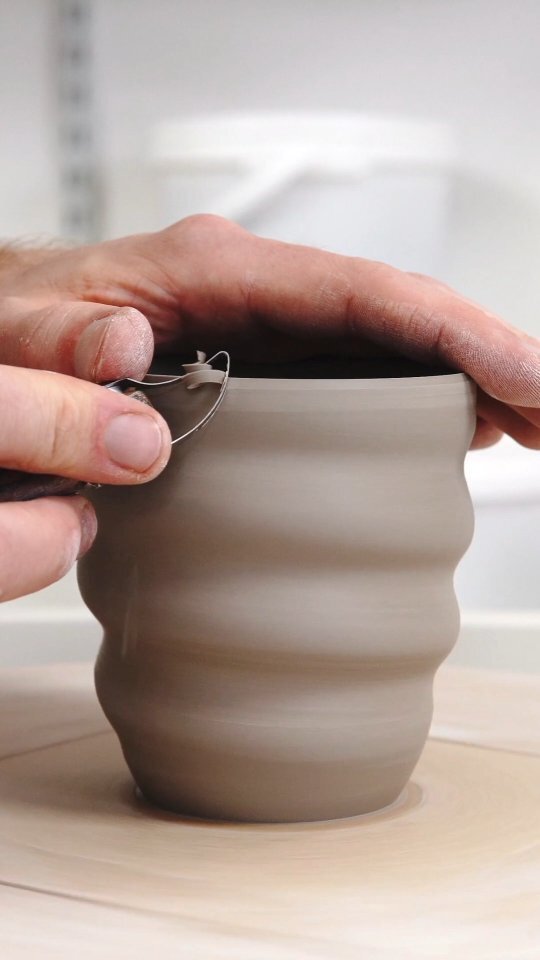
Throwing a Swirly Mug in light stoneware clay.
These are a very pleasing shape to hold, especially when they contain a warm drink on a cold day, as the swirls make perfect grooves for fingers to sit in.
#pottery#clay#ceramic#ceramics#handmade#hand… https://t.co/2KrE2wPnXI
#testtiletuesday, but not a standard test tile.
These small tumblers (they usually hold 100-150ml) are my favourite way to test new glazes. They're big enough to give a pretty good representation of how a glaze will function on a full sized mug, but sma… https://t.co/n8bEniWune
Throwback to this time last year, and the limited edition Bee Happy mugs. I wasn't intending to bring them back until now, but I'd forgotten how much I liked the pattern!
The shop reopens this Saturday at 5pm, and these might be making an appearance (th… https://t.co/Sm1C2llPWd
Throwing drip catchers. These are disks of clay with a raised centre that sit underneath pieces in the kiln, and protect the kiln shelves from any glaze drips.
I throw them with anywhere from 50-200g clay depending on the size I want, but I'm not precis… https://t.co/hhhUJ79ICz
Essentially, try to reduce the number of ways you could ruin a glaze application!
Glazing is my favourite part of the process (by which I mean developing and testing glazes, the actual dipping and pouring is less interesting) but I know a lot of potters… https://t.co/WEvBMNuskh