Associate producer @izzit.org; Consultant, Free to Choose Network; Teacher of the Moral Sciences: Psychology, Philosophy, Economics, Ethics, Entrepreneurship.
@SteveStuWill students who are certain that lower numbers of women in STEM is due only to discrimination are shocked to see this graph. As the graph shows, how well women are treated is inversely correlated. As the sociological landscape flattens, the biological landscape emerges.
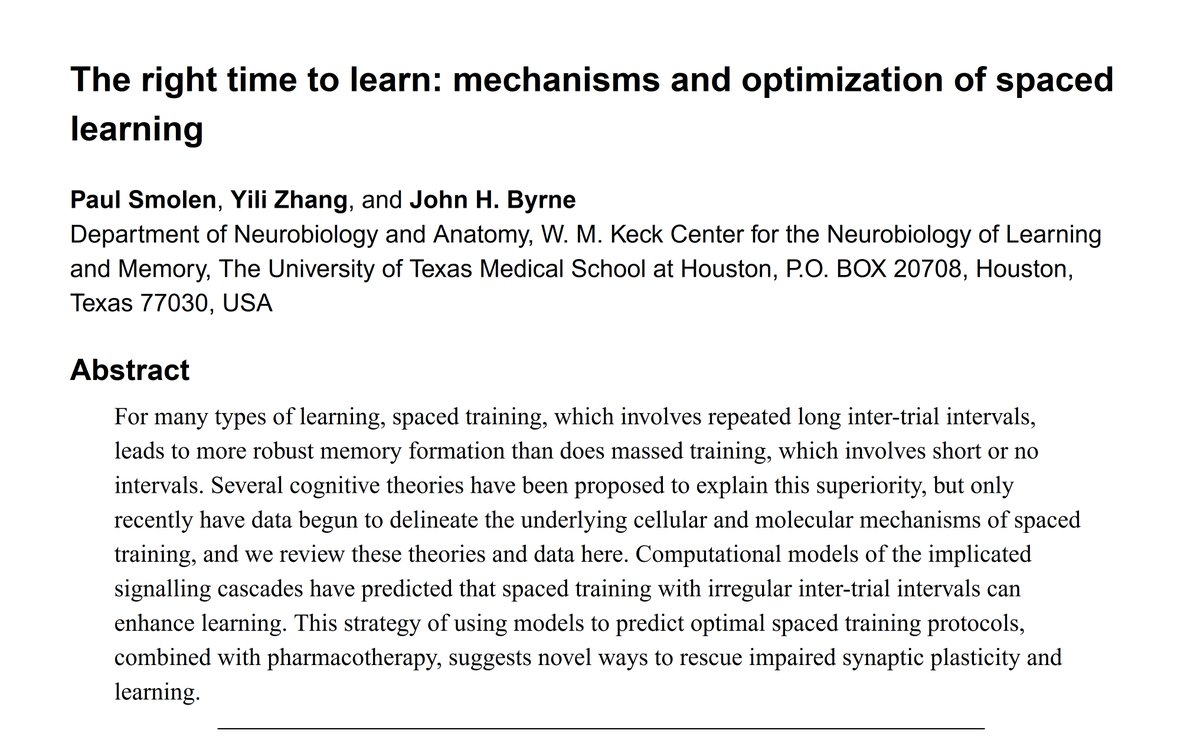
Bilginin kalıcı olması için aralıksız peş peşe çalışmak etkili değildir.
Çünkü hafızamızı oluşturan sinapsların ve enzimlerin "hazır" olması için belirli bir süre gerekir. Bu yüzden aralıklı tekrar hafızamızda kısa süreli yığılmış tekrardan daha kalıcı iz bırakır.
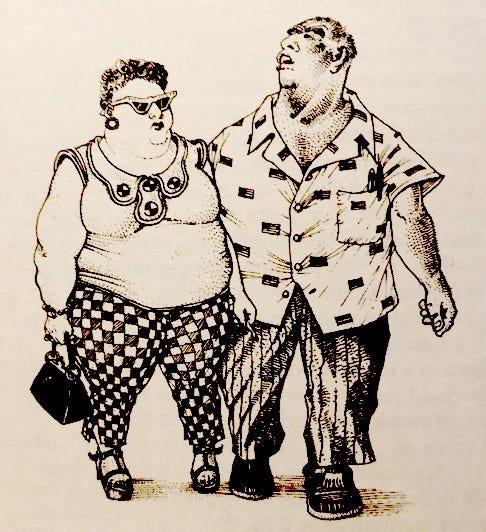
One problem is an obsession with comfort. People in the past dressed and built to present a sense of uplifting refinement and dignity, not just to be as comfortable as possible. That has been lost, and so you see obese buffoons waddlng about in cookie monster pajama pants
The bigger problem, and the one that led to that being swallowed hook, line, and sinker by much of society, is prole drift: the tendency of the proclivities and habits of the underclass to, in an egalitarian democracy, gradually become the habits and proclivities of everyone. Paul Fussell drew attention to this in his book Class in the 80s, and it has gotten far worse since then
This killed any societal spirit that would trend towards beauty, rather than mere gaudiness or incitement to lust. For one, the underclass certainly puts comfort before dignity, and so we're getting a full dose of that. But it's everything else too, paticularly the general apathy about anything "nice" and a total lack of sense regarding manners, decorum, cultivation, and so on
Who would build a cathedral in a land of cargo shorts and sandals or tank tops and sweatpants? Who would build a restaurant panelled with oak or with a marble floor if the patrons will wear in their ball caps and eat a steak with their hands? Who is going to get out the silver and china when they're worried their guest will pocket a teaspoon? No one. And so it's not done, and all the little things that made life beautiful are replaced with what is easy, efficient, and cheap
I look at this photo and can’t help but wonder what was going through their minds.
They were trapped above the impact zones of the World Trade Center, standing at shattered windows, desperately searching for air, help, or some impossible way out.
Did they call home? Did they pray? Did they tell the person beside them they were scared? Did they still believe someone was coming to save them?
We know how the story ends. They didn’t.
But in this photograph, they didn’t know that yet. They were still sons, daughters, husbands, wives, mothers, fathers and friends—still hoping.
That is the part of 9/11 that absolutely breaks me.
May we never allow these faces to become just another photograph in a history book. Never forget. 🇺🇸💔
Using a HEPA air purifier improved cognitive function by 12% in middle-aged and older adults.
And they only used it for a month!
That's a meaningful improvement in a short amount of time, all from a simple purchase you can make for your home.
As higher education has gone from an elite pursuit to something much more common, the average IQ of US undergraduates has fallen from around 120 in the mid-20th century to around 102 today - barely above the population average.
https://t.co/qvH7EMpDCM
How bad was life before modern science, technology, and economic growth? Awful.
The example I will use in class this Wednesday is Henry Clay (1777-1852). He was one of the most powerful men of his time in the U.S., not just among the elite but among the elite of the elite: Speaker of the House, Secretary of State, Senator, and three-time presidential candidate. He was also rich and a large slaveholder. The U.S. was among the richest countries in the world (perhaps only behind Great Britain) and among the most technologically advanced. And we are not talking about the early Middle Ages, but about the first half of the 19th century.
Given the constraints of his time, he had nearly everything within reach.
Clay and his wife, Lucretia (both in the photograph), had eleven children: six daughters and five sons. He buried all six daughters. By 1835, all were dead: two as infants, two as children, two as young mothers. He also buried a son in a war his father had opposed. Another son, Theodore, fractured his skull as a child, but since nobody could treat him, he spent decades in an asylum in Lexington.
Think about this for a second: seven children dead and one handicapped out of eleven, in the first half of the 19th century, among the elite of the elite, in one of the richest and most advanced places on the planet.
And I was angry yesterday because my cell phone coverage in Toddington (England) was poor.
Dan's argument is sharper than "use AI carefully." His real claim: students should only use AI for things they already know how to do *well*. Not brainstorm-with-AI-but-draft-yourself, which is basically what every district policy says. He argues that's the wrong line entirely.
His point is that those policies borrow a workplace model �� AI as associate, student as lead, product is the thing. But for students, the product isn't the point. The essay itself has no value; it exists so the student practices building an argument, integrating sources, thinking like a reader. Skip that mental work and the assignment is hollow, even if the output looks great.
So his real test isn't "how much AI is too much" — it's "would doing this yourself teach you something." If yes, no AI. If you've already mastered it and repeating it teaches nothing, AI's fine — like a calculator once you know arithmetic.
I like this argument a lot.
And I noticed he never once says "offloading." That word already carries a verdict — like something was shirked. Dan just asks whether a step was a *learning* step or a merely *supportive* one.
That's why it matters to me. Most discourse treats any AI use as offloading — a small moral failure — instead of asking Dan's actual question, which is whether that specific step is where the learning happens. His framing lets the answer be boring and mixed: fine here, real cost there. https://t.co/E1AZ00frip
Socialism destroys wealth before it even builds it, because it severs the link between effort and reward at the root.
Consider the Soviet collective farms. When the Bolsheviks forced peasants onto kolkhozy after 1929, grain output collapsed almost immediately. Why would a farmer work sixteen-hour days when the state claims the harvest? He wouldn't. He didn't. Soviet agricultural output remained so depressed that the USSR imported American grain through the 1970s and 1980s, paying in hard currency its own system couldn't generate. The incentive to produce disappears the moment production stops belonging to the producer.
You see this everywhere socialism touches. Venezuela's Chávez nationalized over 1,200 private companies between 1999 and 2012. Output in those sectors didn't rise; it cratered. PDVSA, the state oil company, produced 3.2 million barrels per day in 1998. By 2020 it produced under 400,000. Managers stopped caring because the profit signal, the one mechanism that communicates what people actually want, got switched off.
The incentive problem is only half the indictment. The other half is the destruction of choice.
When the British National Health Service controls your healthcare, you don't negotiate price, quality, or timing. You wait. In August 2026, NHS England carries a waiting list of roughly 7.5 million people. You get what the committee decided you deserve, when they get around to it. A market lets you trade your own resources for the care you value most. A bureaucrat's judgment replaces yours, permanently.
Central planners cannot possess the dispersed, local, constantly changing knowledge that prices carry automatically. Destroying price signals evaporates wealth.
When students copy slides word-for-word or save shared files, it feels like high engagement. But does having an external record actually help them learn?
Recent research in cognitive psychology reveals a hidden cost to this habit. When learners store information externally, a process known as cognitive offloading, and expect to have access to those notes later, their brain essentially opts out of the deep mental work required to retain it.
. Expecting access weakens encoding: When learners know notes will be available later, their processing becomes so superficial that unexpected note loss leads to recall worse than mindless tasks like counting vowels.
. Accessible notes suppress retrieval: Having the answers in front of them causes learners to skip the mental search needed to reconstruct context and meaning, relying on mere recognition instead.
Offloading is great for managing working memory during complex problem-solving, but using it as a shortcut during initial teaching compromises schema formation.
To counter this, we need intentional friction in the classroom:
. Pause during direct instruction for students to synthesize ideas in their own words before writing.
. Protect retrieval practice by using two-stage checks: close the notes to recall from memory first, then open them to verify and correct.
Read the full post here:
https://t.co/i9IxpH3F9F
Learning needs friction. The brain is fundamentally resistant to cognitive friction (bone-lazy) and will always take the path of least resistance unless certain constraints are put in place. This is why discovery learning is so ineffective and why careful instructional design is so crucial. Also a nice illustration here why chatbots should be banned in the classroom. https://t.co/AslzJVOAF1