It's New Year, so time to look back and forward. These are 10 things I think we need to recognise in 2026. It’s a response to what I think are profoundly damaging mistaken assumptions I’ve heard and read from practitioners, journalists, and analysts in 2025. Warning: very long🧵
“You might not choose to have a war with the Russians, but the Russians are certainly choosing to prepare to conduct a war against you,” @georgewbarros, lead analyst on Russia and geospatial intelligence at the @TheStudyofWar said during a panel at the Defending the Baltics 2025 conference. “We’re watching every day how they’re preparing their economy, operational concepts and their military thinking about the next war.” https://t.co/J60aBNZz6Q
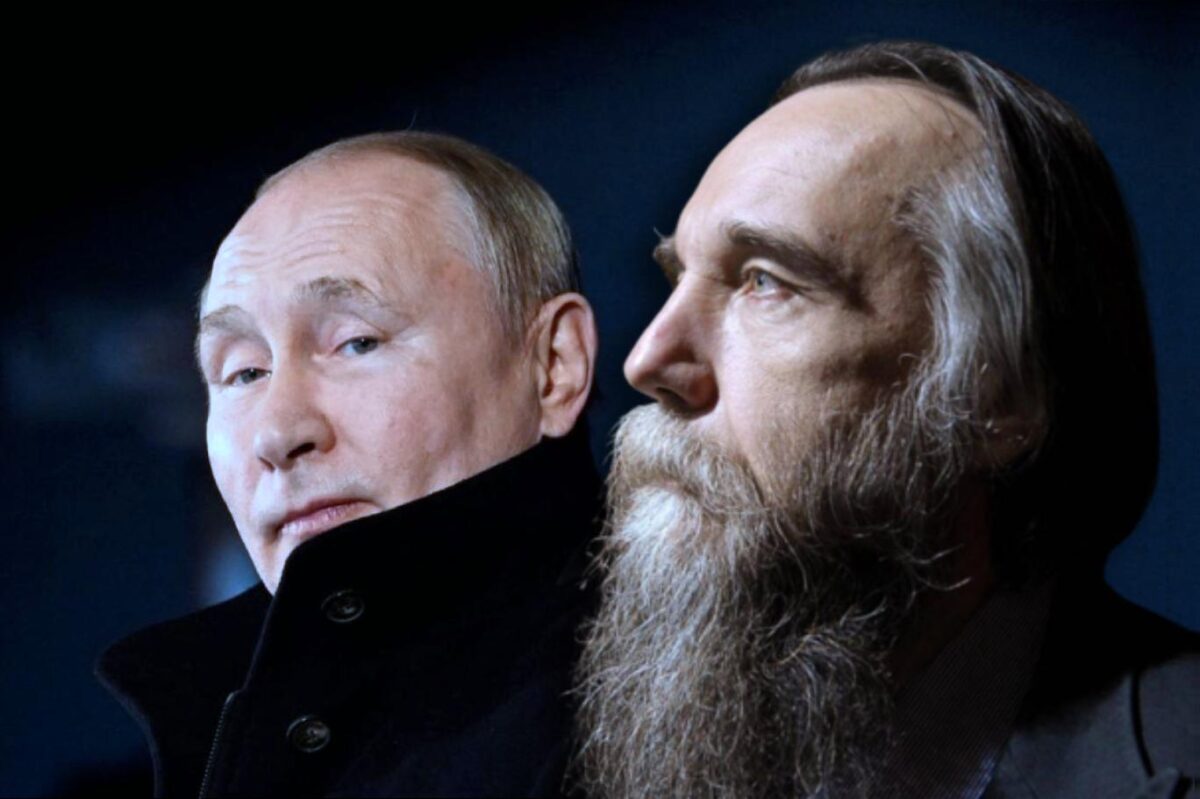
Russian philosopher Dugin on Ukraine.
Russia doesn't hide its true intentions.
"Ukraine will be ours entirely within a maximum of two years. Possibly much sooner. There will be no sovereignty left there at all, since Ukrainians are absolutely incapable of using it. They never have been and never will be. This is not the case. As far as I know, work is in full swing on a detailed plan for integrating Ukrainian society into the unified space of the Russian World. Work is underway on textbooks, emergency programs for mass treatment and psychological rehabilitation. A project for administrative restructuring is already prepared. Most likely, these territories will receive a new name. Possibly ‘Old Lands.’ But this is still being discussed. As for preserving or abolishing the Russophobic dialect spoken by the Nazis, there is no consensus. I support partially keeping it, but not everyone agrees. We approach this matter very seriously, carefully, and thoroughly. This is not for propaganda, but for major long-term work."
It is not Europe that is at war with Russia; it is Russia that is at war with Ukraine – and potentially with many in Europe. We understand what they are capable of and what they might do, but Europe fears the word “escalation.” And Europeans always assume that, because they are developed states that respect law and values, Europe’s steps – any response from them – will be an escalation.
And I believe the opposite: Russia does not like weakness. Any intellectual responses – precisely the kind Europe finds – read as weakness to Russia. Weakness creates a certain Russian flavor. The Russians sense that weakness, and they want, while no one is strong enough yet to pressure them, to inflict damage and take some extra gain for themselves. In Ukraine’s direction, that gain looks like preventing Ukraine’s development, destroying our identity, and taking our land – in short, political gains. In the energy sphere – Slovakia, Hungary, Eastern Europe, and Germany as well – the aim is to keep everyone permanently hooked on their energy.
Weakness does not produce dialogue with Russia. To the Russians, it is simply weakness – and that means they can impose their narratives. That is what is happening. So, to answer the question: what are all these violations of European airspace by drones across different countries – they are tests. Tests of Europe, tests of its responses: all of Putin’s drone attacks are probes to see what they are capable of. A test of how America will respond to the current threat to European NATO members. There’s no smoke without fire, and I believe all these probes are dangerous for Europe’s integrity.